

Share this article


Why You Should Build an eCommerce Platform: Features and Benefits
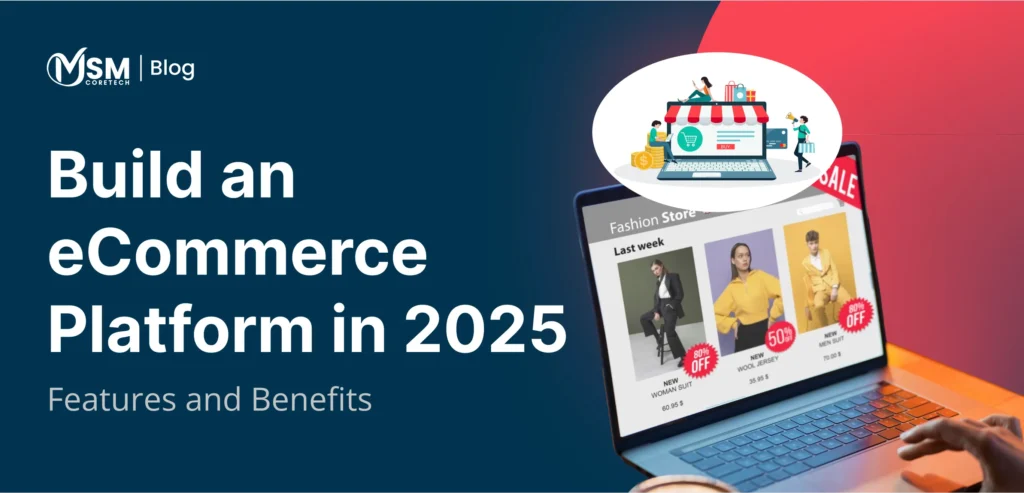
Launching an e-commerce store can be exciting; however, it is also a difficult task. If you step into the business as a fresher and are planning to launch a web-based store, you’re likely to explore different platforms. Also, you will look at different alternatives to software and think about seeking different ways to expand your business. For professionals who are into technology and those who are familiar with e-commerce, their focus can be more on addressing operations and ensuring your platform is future-ready.
The world of online shopping in 2025 will expand like never before. The fact that people love shopping from home is demonstrated by the fact that e-commerce sales are predicted to reach $8 trillion. Whether it is about food, gadgets, or even presents, the seamless procedure of shopping online has altered our shopping habits for good.
Chances of competition arise simultaneously with growth. Businesses are now coming up with upgraded and dynamic professional websites that engage and hold visitors. Currently, the foundation of any successful online business is a well-crafted e-commerce website development service. Consumers always wanted to have a smooth shopping experience, safeguard transactions and have pages that instantly load. And to deliver this, there is a crucial role of proper planning and dedication to the e-commerce website development.
In this post, we will understand the features and reasons to develop an eCommerce platform, major challenges and important points to consider while developing an eCommerce store.
Understanding of an eCommerce Platform?
ecommerce app development platform is a method of crafting an online platform that allows other businesses to sell their goods and services online. It includes forming the tools, software and systems crucial for running a personalised online store that involves listing products, processing payments, managing customers and shipping.
As a result, the digital platform is the basis for the entire shopping experience that allows businesses to sell their goods or services to consumers online. Some of the examples of bespoke eCommerce platforms are Shopify, WooCommerce and Magento
Here are the prominent features of an e-commerce platform:
Product Management
This feature allows you to create, edit and arrange your product listings. You can upload HD pictures and detailed descriptions, define inventory prices and levels and categorise your merchandise to offer easy navigation.
Payment Processing
Securely accepting payments is important for any business online. The best eCommerce platforms are merged with various payment processors. Customers can, however, pay with debit or credit cards or digital wallets.
Order Management
The platform helps you in monitoring its fulfilment soon after an order has been placed. You can track your order status, print shipping labels, and work with shipping carriers to ensure timely delivery.
Marketing Analytics Tools
Several platforms offer tools to connect to marketing platforms, manage promotions and monitor website visitors and their behaviour. These data are less important to optimise your sales. Therefore, by employing these insights, businesses can create more targeted campaigns and enhance their overall customer engagement.
Storefront Creation
This is the digital space where customers can explore your items, add them into the cart and then make the payment to complete the shopping. ecommerce development Company offer flexibility to design and create an attractive and friendly Online store that shows the brand’s image.
Inventory Management
An eCommerce platform keeps track of your inventory levels in real time, so you don’t have to worry about manually checking out of stock items. Also, it is possible to program automated alerts to notify you whenever inventory dips below a certain level. Inventory management will ensure you have enough stock to satisfy customers’ demands.
Checkout and Shopping Cart
Customers complete their purchase here. The platform facilitates a seamless checkout process, allowing customers to check their carts, enter their shipping details and complete the transaction safely.
Customer Relationship Management (CRM) Tools
You can ask the e-commerce app development services company to integrate CRM tools to help you control customer data, track purchase history and send certain marketing campaigns.

Key Reasons to Develop an eCommerce Platform in 2025
Online shopping has several advantages for businesses that aren’t planning to open an actual shopfront. Because of eCommerce platforms, you can create a budget-friendly website and then sell your items online. Also, it is possible to drive customers to the online store and reach global customers. Here are the top benefits of developing a custom eCommerce store in 2025 –
Rise in Sales
To generate more sales, you need to have 24/7 availability of stores and unlimited customer reach. eCommerce stores use advanced technology to ease transactions and enhance customer relations. When you build a digital store to sell your products, you automatically enhance sales and can adjust your stock to meet your customer’s expectations.
You can offer products or services overseas by adjusting prices as per the global market. This will enable you to spend less on your store and make more capital at the same time, securing a substantial amount of money and instantly growing your business.
Insights to Customer Data
Your eCommerce store will help you in getting a better understanding of the needs and preferences of your clients and potential customers. It aids you in creating an impactful digital marketing strategy to ensure you can target them with ads. Consumers can easily provide their home addresses, phone numbers, email addresses, and other information to an eCommerce website they trust.
Track Logistics
Monitoring logistics is an important part of retail marketing and eCommerce . However, an e-commerce is much simpler than a physical shopfront. You can outsource fulfilment to ensure customers enjoy advantages such as two-day shipping or simple return processing.
Everything is also available online, which makes it simple to track sales and identify patterns that may eventually aid in the expansion of your company.
Automation
The Best eCommerce platforms offer complete automation, which adds financial systems, inventory management, shipping and customer support. All this can be in one place and can be managed by a single user at their leisure.
The majority of your questions can be answered by chatbots, and artificial intelligence can provide a more individualised communication experience. This level of automation assists businesses in saving time, reducing errors and elevating customer satisfaction.
Boost Marketing Performance
A well-designed website aids you easily in sharing details about your services with your customers. Whether you’re delivering information about your products, blog posts or other informative content, your site must be designed to ensure that users get the information they need instantly and effectively. Better user engagement leads to better marketing performance as a result of this outcome.
Fast -Loading Speed
Fast loading speed is crucial for your online eCommerce store, as it may influence your online business in a negative way. An eCommerce site has multiple pages for each product. Therefore, it becomes quite challenging to balance the loading speed of your website.
Lower Overhead Expenses
An online store is less expensive compared to a brick-and-mortar store. You don’t have to lease or purchase a store or electricity, water, or an internet connection. You don’t have to hire security personnel or cleaning personnel either.
Your primary overhead costs for an online store typically are:
- Domain name and hosting
- Building a website or subscribing to a platform
- Inventory (if dropshipping isn’t used)
- Marketing (optional, but highly recommended)
Relative to having a physical shopfront at a massive expense, these expenses are extremely small.
International Reach and Expanded Customer Base
Your shopfront is accessible to customers around the world. You’re no longer geographically limited. Online marketing techniques like SEO, email marketing, and social media ads allow you to reach people worldwide.
You can sell 24/7, even when you are asleep. Visitors from other time zones can visit your site and order whenever they wish, which has the effect of multiplying your potential earnings.
No Physical Storefront Necessary
One of the best advantages of eCommerce is that you do not need a store. It takes a lot of money and effort to rent out a place, furnish interior space, pay rent, and run the shop. It can cost a tremendous amount in big cities.
Online stores permit you to bypass it all. You can start selling instantly with just a good website without troubling yourself with any physical space or property security concerns.
Simple Buying Process
Online shopping is fast and convenient. Consumers can search, compare, and buy products within minutes, all without an inch of movement from home or a word spoken to anyone. This is especially important in today’s fast-paced life where everyone wants instant access to products.
They are also capable of shopping from sources other than the ones in their proximate neighbourhood, hence giving them more choices
Convenience for Buyers and Sellers
One of the biggest reasons that people enjoy shopping online is flexibility. They can shop at any time, from any place. It’s either early in the morning or at midnight; the shop is open.
Flexibility is enjoyed by sellers as well. With modern technology such as automation, AI chatbots, and order management software, it becomes convenient to operate your business with less material.
SEO Brings Organic Traffic
Search Engine Optimisation (SEO) is definitely worth it for web stores. When you’re highly ranked on Google, you can receive free (organic) traffic without spending money on advertising.
To take advantage of SEO, your website must be:
- Well-structured and quick
- Garnished with good content
- Updated constantly
Organised with SEO-friendly functionality (such as meta tags and clean URLs)
The higher you are ranked, the more traffic—and potential customers—you’ll receive.
Secure Payment Gateways
Security matters when shopping online. Customers must feel safe when providing their bank or credit card information.
A safe eCommerce site should:
- Use SSL/TLS encryption
- Adhere to PCI DSS regulations
- Possess reputable payment options like PayPal, Stripe, or Amazon Pay
Secure payments are essential to build customer trust and protect your business from fraud.
Key Factors to Consider When Building an eCommerce Website
Making a successful online shop is more than selecting a platform. Here are the factors for successful e-commerce website development services. –
1. Potential to Grow
Consider your future. Will your shop expand to have more products or customers? Select a platform that can expand with your business and that can accommodate features such as more room, faster servers, or more integrations.
2. Mobile Optimization
We all do shop on the phone nowadays. Your store needs to be attractive and functional on mobiles. Having a mobile-responsive site allows you to sell more and enhance the buyer experience.
3. Customization and Flexibility
Your store needs to be for your brand. Ensure the platform helps you change colors, fonts, layout, and design. It should be able to help you add functionality as you expand.
4. Support and Security
Select a platform that offers:
- Trustworthy customer support
- Security features such as firewalls and backups
- Maintenance and updates regularly
- These features guard your store and soothe your mind.
5. Product Inventory Requirements
Your product list will determine how you choose your platform. If you have lots of products or multiple product variations (sizes, colours, etc.), select a platform that will support large inventories without charging you extra.
6. Budget
Platforms vary in ability and expense. Some have a monthly charge, while others have a commission per sale. Plan for all fees, including:
- Hosting fees
- Payment processing fees
- Add-ons and apps
- Developer fees (if custom-created)
Select what your budget and objectives can handle.
7. SEO-Friendliness
Select one that makes SEO simpler. Consider:
- Option URLs
- Blog and content support
- Alt tags for images
- Fast loading speed
All assist with greater search engine visibility.
8. Multiple Payment Options
Customers love options. Provide various payment methods such as:
- Credit/debit cards
- PayPal
- Digital wallets
- Bank transfers
Streamlined, hassle-free checkout that does not allow abandoned carts.
Defining eCommerce Business Models
Before you launch your online shop, you need to select the appropriate business model. There are three popular ones:
1. Dropshipping
You do not have inventory when dropshipping. You simply buy the product from a third-party vendor when someone purchases an item, and they ship it directly to the consumer.
Benefits:
- Low initial investment
- No inventory management
- Scalable
Popular platforms: Spocket, Modalyst, Printful
2. Subscription Model
Paying subscribers on a periodic basis (e.g., monthly, quarterly, yearly) to receive your products or services. This model is well-suited for:
- Replenishment (e.g., razors, vitamins)
- Curation (e.g., mystery boxes)
- Access (e.g., premium content)
Examples: Dollar Shave Club, Blue Apron, Birchbox
3. Conventional B2B/B2C
- B2B (Business to Business): Selling to businesses
- B2C (Business to Consumer): Selling to end-consumers directly
Examples: Amazon, Walmart (B2C); Alibaba, Uline (B2B)
Essential Features in an eCommerce Site
Here are the most prominent features in an eCommerce Site –
1. Mobile Responsiveness
Your site must function perfectly on every device—desktops, tablets, and mobile phones. Responsive design automatically adjusts to screen size and makes your customers well-equipped to shop anywhere.
2. Inventory Management
You need an automated process for real-time stock management. Some things to consider:
- Live updates of stock levels
- Low-stock alerts
- Out-of-stock alerts
This stops you from ever overselling and letting down customers.
3. Third-Party Integrations
Your store must be integrated with other software such as:
- Email marketing software (e.g., Mailchimp)
- Social media sites (e.g., Instagram, Facebook)
- Shipping and fulfillment (e.g., Shippo, EasyPost)
- Payment gateways
- CRM systems
This saves time and boosts efficiency.
4. Easy-to-Use Interface
An easy-to-use, simple website improves the purchasing experience. Must-have design suggestions:
Simple menu and categories
Search function
Ordered product pages
High-quality product images
If customers can’t find what they’re looking for, they’ll leave your site.
5. Order Management System
From the moment a customer places an order to the moment it’s sent out, poor functionality, your site must:
Track order status Handle returns elegantly Offer shipping notifications
This makes your business more professional and elevates the trust factor with customers.
6. Analytics and Reporting
You need to be able to monitor:
Sales performance Website traffic Customer activity Conversion rates
Use Google Analytics or built-in dashboards to know what is working and what is not.
Major Challenges with Developing an eCommerce Website
Running an eCommerce business can be very fulfilling. But it comes with numerous challenges. Understanding these challenges and overcoming them is important to long-term success.
Here are a few common challenges faced by eCommerce businesses:
1. Competing in a Saturated Market
Thousands of websites are vying for business. To differentiate:
- Provide unique products or services
- Provide superior customer service
- Do SEO and social marketing
- Develop loyalty programmes.
- Develop a remembered and trusted brand.
2. Cart Abandonment
Customers place products in the cart but don’t buy. To correct this:
- Send reminders by email
- Provide limited-time deals
- Streamline the checkout (fewer clicks)
- Make it quick and easy to buy.
3. Returns and Refunds
Returns are the reality of online shopping. Reduce them by:
- Providing thorough product descriptions
- Providing size charts and proper photos
- Having an easy return policy
- Making the return process a breeze delights customers
4. Site Maintenance and Technical Issues
A slow or crashed website loses business. Avoid it by:
- Selecting good hosting
- Regularly updating plugins and software
- Activating firewalls and SSL certificates
- Backup your site periodically
Employing technical support if necessary. A smooth site fosters trust.
How does MSM Coretech help you with eCommerce website development? MSM Coretech is a popular eCommerce website development company that emphasises delivering intuitive and user-friendly website development services to simplify buying and selling. With e-commerce development services, we have a proven experience in various business models such as B2B, C2C, B2C and C2B. Additionally, we also practise secure payment gateways into scalable eCommerce solutions. This ensures safe and secure transitions for both businesses and customers.
Final Thought
The popularity of online shopping has emerged significantly with the rise of several e-commerce sites that offer a convenient method of shopping. Moreover, businesses are associating with a custom e-commerce development company to leverage the benefits of online e-commerce stores and generate substantial profits.

Related Posts
How to Build a Smart eCommerce Store Using AI and IoT?
Online shopping is getting smarter every year. Today, people expect online stores to know what they want, suggest the right...
Read More
How to Build an eCommerce Store for Selling Auto Parts Online?
Buying auto parts has become much easier than before. Today, customers do not want to spend hours visiting different shops...
Read More
B2B eCommerce Website Development Guide: Features, Cost, and Best Platforms
Buying and selling between businesses used to mean phone calls, emails, PDF price lists, and a sales rep who had...
Read More


 Verified Review




 +44 7427829444
 71-75, Shelton Street, Covent Garden, London, United Kingdom, WC2H 9JQ