

Share this article


Top 5 Software Development Companies in Australia
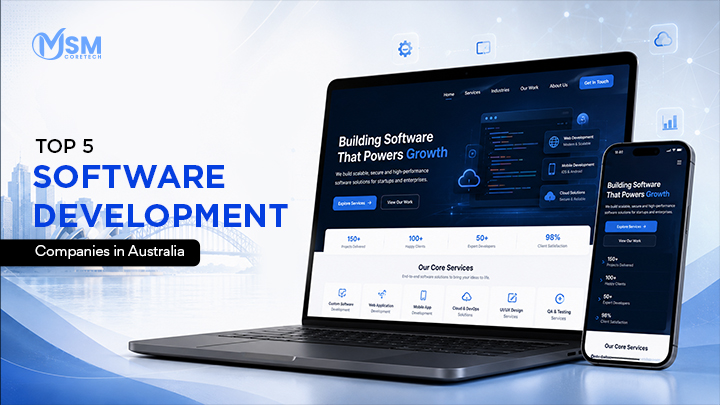
Every business, sooner or later, runs into the same wall: the software it uses simply wasn’t built for the way it actually operates. Spreadsheets multiply, manual processes eat up hours, and off-the-shelf tools force teams to bend their workflows to fit someone else’s idea of “standard.” This is usually the moment a business starts searching for a software development company in Australia that can build something that actually fits.
But picking a development partner is not like picking a vendor for office supplies. Software is infrastructure. It touches how your staff work, how your customers interact with you, and how your data is stored and protected. A rushed decision can mean months of wasted budget, a product that never gets adopted, or a system that becomes obsolete the moment your business scales. A well-informed decision, on the other hand, can give you a genuine competitive edge by automating the boring stuff, opening new revenue channels, and giving your team tools that make their jobs easier rather than harder.
Australia’s technology sector has grown into a mature, competitive market. From Sydney’s fintech scene to Brisbane’s government-modernisation specialists and Melbourne’s app development veterans, there is no shortage of talent. The challenge isn’t finding a company it’s finding the right one for your specific goals, budget, and industry. This guide walks through what a software development company actually does, why businesses are increasingly choosing custom-built solutions, the key factors to weigh before signing a contract, and a detailed look at five of the country’s most talked-about software development companies in Australia: MSM CoreTech Innovations, Appinventiv, WorkingMouse, Wave Digital, and EB Pearls.
Whether you’re a startup founder building your first MVP, an operations manager tired of managing five disconnected systems, or an enterprise IT lead planning a legacy modernisation project, this article is designed to give you the practical, informative grounding you need before reaching out to any vendor.

Comparison of the Top 5 Software Development Companies in Australia
| Company | Headquarters | Best Suited For | Key Strength | Typical Project Size |
|---|---|---|---|---|
| MSM CoreTech Innovations | Australia (with delivery support internationally) | Startups, SMEs, growing businesses across varied industries | Flexible engagement models, blended dev + marketing service, emerging tech (AI/blockchain) | Small to mid-sized projects |
| Appinventiv | Multiple Australian cities (Sydney, Melbourne, Brisbane, Perth) | Enterprises, government bodies, ASX-listed companies | Scale, government panel accreditation, deep compliance focus | Mid-to-large enterprise projects |
| WorkingMouse | Brisbane | Government agencies, enterprises with legacy systems | Structured methodology, model-driven engineering, onshore delivery | Mid-to-large modernisation projects |
| Wave Digital | Melbourne | Startups and businesses needing app-first solutions | 20+ years of app specialisation, hands-on senior involvement | Small to mid-sized app projects |
| EB Pearls | Sydney | SMEs to larger organisations needing custom or e-commerce builds | Long track record, structured discovery process, large in-house team | Small to large projects |
Also Read : Shopify Development Company in Australia
Top 5 Software Development Companies in Australia
Below is a closer look at five companies that regularly come up in conversations about software development in Australia, each with a different focus, delivery model, and ideal client profile.
1. MSM CoreTech Innovations
Intro: MSM CoreTech Innovations positions itself as an innovation-driven custom software development company in Australia, working with startups, SMEs, and growing enterprises across a wide spread of industries, including education, manufacturing, and social platforms.
Services: The company’s service list spans custom software development, website development, mobile app development (native iOS/Android and cross-platform frameworks like Flutter and React Native), software consulting, blockchain development, AI/ML-driven solutions, cloud deployment with automated CI/CD pipelines, and industry-specific builds such as education software and manufacturing management systems. It also offers ongoing digital marketing services alongside development, giving clients a single point of contact for both building and promoting a product.
Why Choose Us: MSM CoreTech emphasises a customer-centric, transparent process from ideation through to launch with an in-house team that blends design, engineering, and marketing skills. The company highlights flexible engagement models (dedicated teams, fixed-scope delivery, and hybrid arrangements), which makes it accessible to businesses at different stages of growth, from an early-stage startup needing an MVP to an established company modernising its digital presence. Its focus on emerging technology, including blockchain protocols and AI-based features, appeals to businesses wanting future-ready systems rather than a purely conventional build.
2. Appinventiv
Intro: Appinventiv operates as a large-scale digital product engineering company with a dedicated Australian arm, serving ASX-listed enterprises, government departments, and high-growth startups across Sydney, Melbourne, Brisbane, and Perth.
Services: Appinventiv’s offering is broad and enterprise-oriented: custom software development, AI and machine learning integration, mobile app development, IoT solutions, cloud-native architecture, legacy system modernisation, and sector-specific builds for fintech, healthcare, manufacturing, mining, logistics, and retail. The company also provides software consulting focused on aligning technology decisions with Australian regulatory frameworks, along with digital transformation and IT strategy advisory services.
Why Choose Us: Appinventiv’s scale is its main differentiator a decade of delivery experience across the Asia-Pacific region, ISO-certified engineering processes, and status as an approved supplier on government procurement panels including the Digital Transformation Agency’s software marketplace. For enterprises and government bodies that need a vendor comfortable navigating complex compliance requirements (such as APRA standards or the Privacy Act), Appinventiv’s structured, governance-heavy approach can reduce risk considerably. Its size also means it can staff larger, more complex projects than smaller boutique studios might be able to handle.
3. WorkingMouse
Intro: Based in Brisbane, WorkingMouse has built a reputation around one particular specialism: untangling legacy systems for government agencies and enterprise clients through a structured, model-driven engineering approach.
Services: WorkingMouse’s core offerings include custom software development, legacy system modernisation, model-driven engineering (via its proprietary Codebots platform), talent-as-a-service (embedding developers within client teams), and private/local AI solutions for organisations with strict data sovereignty requirements. The company also runs structured product discovery and roadmapping engagements before development begins, aiming to reduce the risk of scope creep later in a project.
Why Choose Us: WorkingMouse’s “Way of Working” methodology built up over more than a decade of government and enterprise projects is designed to bring more predictability to a process that can often feel unpredictable. Its 100% onshore, in-house delivery model appeals to organisations wanting full accountability without offshore handoffs. The company holds government panel accreditations across multiple Australian states and has a track record of published research into software modelling and AI-assisted code generation, which reflects a genuine investment in improving delivery methodology rather than simply reselling generic development labour.
4. Wave Digital
Intro: Wave Digital is a Melbourne-based app and web development company with one of the longest track records in this list, having built custom apps since the early 2000s for startups, corporates, and government clients.
Services: The company focuses primarily on custom mobile app development (iPhone and Android), web application development, API integrations with platforms like Xero and Salesforce, cloud infrastructure setup, app strategy and product discovery, UX/UI design, and ongoing app maintenance and hosting support. Wave Digital also supports early-stage founders through prototype development and technical proof-of-concept work before committing to a full build.
Why Choose Us: Wave Digital’s “people-led, not technology-led” philosophy means projects start with the problem a business is trying to solve, rather than a particular tech stack. Its longevity in the Melbourne market, partnerships with Apple’s developer network and AWS, and a track record with recognisable Australian brands make it a credible option for businesses, particularly startups, that want a specialist app-development partner rather than a broad, do-everything agency. Its smaller, tightly focused team can also mean a more hands-on relationship with senior staff compared to larger firms.
5. EB Pearls
Intro: EB Pearls is a Sydney-headquartered software development company operating for over two decades, with delivery teams also based internationally, serving startups, SMEs, and larger organisations across sectors including healthcare, finance, and government.
Services: EB Pearls offers custom software development, mobile app development, e-commerce platform builds, AI-native systems such as chatbots and retrieval-augmented generation pipelines, UX/UI design, staff augmentation (“leasing” senior developers into a client’s team), and post-launch support. The company structures its engagements around a defined discovery process intended to lock down project scope before development begins, reducing the likelihood of budget blowouts.
Why Choose Us: EB Pearls highlights ISO 9001 and ISO 27001 certification, a large in-house engineering team, and a portfolio that includes work with well-known Australian organisations. Its emphasis on documented decision-making and structured handover processes is aimed at businesses that have been burned before by vendors who deliver a product but leave behind messy, hard-to-maintain code. For businesses wanting a mid-to-large scale partner with deep experience across both mobile and e-commerce projects, EB Pearls presents itself as a stable, process-driven option.
This comparison isn’t about ranking one company as universally “the best” it’s about matching a company’s strengths to your specific project. A startup building its first app might get more attention and speed from a specialist like Wave Digital, while a government department modernising a decades-old system might be better served by WorkingMouse’s structured methodology, and an enterprise needing broad compliance coverage might lean toward Appinventiv’s scale.

What is a Software Development Company?
A software development company is a business that designs, builds, tests, deploys, and often maintains digital products and systems on behalf of its clients. This can include websites, mobile apps, enterprise software, e-commerce platforms, internal tools, APIs, and increasingly, AI-powered systems like chatbots and automation pipelines.
Most software development companies in Australia offer some combination of the following:
- Discovery and consulting — understanding a business’s problem before writing a single line of code
- UI/UX design — mapping out how users will actually interact with the product
- Custom software development — writing bespoke code tailored to a specific business need
- Website development — building marketing sites, portals, or web applications
- Mobile app development — native or cross-platform apps for iOS and Android
- Quality assurance and testing — ensuring the product works reliably before launch
- Deployment and DevOps — setting up cloud infrastructure, CI/CD pipelines, and monitoring
- Ongoing support and maintenance — fixing bugs, adding features, and keeping systems secure after launch
Some companies specialise narrowly, for instance, focusing purely on mobile apps, while others position themselves as full-service software development services in Australia, providers capable of handling everything from a first prototype to a multi-year enterprise transformation. Understanding which category a company falls into is one of the first things you should clarify before engaging them.
It’s also worth distinguishing a website development company in australia from a staffing agency or freelance marketplace. A genuine development company typically has an internal team, an established delivery process, and accountability for the end product, not just a collection of contractors billing by the hour.
Why Do Businesses Choose Custom Software Development Services in Australia?
Off-the-shelf software is convenient, but convenience has a ceiling. Once a business grows past a certain point, generic tools start to create more friction than they remove. This is why demand for custom software development in Australia has grown steadily across nearly every industry.
Here are the core reasons businesses make the switch:
1. Software That Matches the Business, Not the Other Way Around
Off-the-shelf platforms are built for the average user. Custom software is built for your specific workflows, your specific data, and your specific customers. There’s no need to work around limitations that don’t apply to your business.
2. Scalability
A system built specifically for your business can be architected to grow with you, handling more users, more transactions, and more complexity without requiring a total rebuild every 18 months.
3. Competitive Differentiation
If every competitor in your industry uses the same generic SaaS tool, there’s no differentiation in how you operate. Custom-built systems can become a genuine advantage faster service, better data insights, or a smoother customer experience.
4. Integration With Existing Systems
Many businesses run a patchwork of legacy systems, spreadsheets, and third-party tools. Custom development can stitch these together through APIs and automation, removing manual data entry and reducing errors.
5. Long-Term Cost Efficiency
While the upfront cost of custom software is usually higher than a subscription tool, businesses often save money over time by avoiding per-seat licensing fees, workaround tools, and the productivity loss that comes from forcing staff to use software that doesn’t fit their job.
6. Data Ownership and Security
With custom software, a business owns its code and data outright. This matters increasingly in regulated industries like healthcare, finance, and government, where data sovereignty and compliance with frameworks such as the Australian Privacy Principles are non-negotiable.
7. Local Time Zone and Regulatory Alignment
Working with a software development company in Australia rather than an overseas vendor with no local presence often means smoother communication, an understanding of Australian compliance requirements, and support during Australian business hours.

Key Factors to Consider Before Hiring a Software Development Company
Before you sign a contract or hand over a deposit, it pays to slow down and evaluate potential partners carefully. Here are the factors that matter most.
1. Portfolio and Industry Experience
Look at what the company has actually built. Have they delivered projects in your industry: healthcare, fintech, logistics, education, retail? Industry-specific experience often means fewer surprises and faster onboarding, because the team already understands common pitfalls and compliance requirements.
2. Technical Expertise and Tech Stack
Ask what technologies the team specialises in, and whether those technologies are a good fit for your project’s long-term needs not just what’s convenient for the developer. A company that can explain why it recommends a particular stack, rather than defaulting to whatever it always uses, is a good sign.
3. Communication and Project Management
Software projects fail more often due to poor communication than poor code. Ask how the company runs projects: Agile sprints, fixed milestones, weekly stand-ups and how you’ll be kept in the loop.
4. Pricing Transparency
Some companies offer fixed-price quotes; others work on a time-and-materials basis. Neither is inherently better, but you should understand exactly how you’ll be billed, what’s included, and what counts as a change request that might cost extra.
5. Post-Launch Support
A product doesn’t stop needing attention the day it launches. Ask about maintenance packages, bug-fix turnaround times, and how updates are handled once the initial contract ends.
6. Client Reviews and Testimonials
Third-party review platforms can offer a more balanced picture than a company’s own website. Look for patterns across multiple reviews rather than relying on a single glowing (or scathing) comment.
7. Data Security and Compliance
For any business handling sensitive data, ask about security certifications, data storage locations, and compliance with frameworks relevant to your industry.
8. Cultural and Communication Fit
This is easy to overlook, but a development partner you’ll work closely with for months (or years) needs to communicate in a way that works for your team. A short discovery call can tell you a lot about whether the working relationship will be smooth.
Why MSM CoreTech Innovations Stand Out Among Australian Software Development Companies?
Among the companies profiled above, MSM CoreTech Innovations occupies a useful middle ground for many Australian businesses. It isn’t a sprawling enterprise agency with layers of account management, and it isn’t a narrow, single-service specialist either it sits in a sweet spot for businesses that want genuine custom development without the overhead that often comes with much larger firms.
A few things make this software development company in Australia a strong option worth shortlisting:
- Breadth without losing focus: MSM CoreTech covers custom software, website development, and mobile app development under one roof, meaning a business doesn’t need to coordinate between multiple vendors for related work.
- Emerging technology fluency: The team’s stated experience with AI, machine learning, and blockchain protocols means clients aren’t limited to conventional builds if their project calls for something more advanced.
- Flexible engagement models: Businesses can choose dedicated teams, fixed-scope delivery, or hybrid arrangements depending on budget and project certainty useful for startups that may not know their exact long-term needs yet.
- Combined development and marketing support: Because the company also offers digital marketing services, businesses building a new website or app can pursue visibility and growth strategy alongside the technical build, rather than treating them as separate projects.
- Transparent, ideation-to-launch process: The company frames its work around understanding a client’s business needs first and recommending the right technology stack second, a sequence that tends to produce more usable end products than starting with a preferred toolset.
Naturally, no single company is the right fit for every business. A large enterprise with heavy regulatory obligations may need the scale of a bigger firm, and that’s a fair consideration. But for the very common case of an SME, startup, or mid-sized business looking for a custom software development company in Australia that can move quickly, communicate clearly, and adapt its engagement model to the client’s stage of growth, MSM CoreTech Innovations is worth a serious look.
Also Read: Website Development Process in Australia
Custom Software Development vs Off-the-Shelf Software
One of the first strategic decisions a business faces is whether to build custom software or buy an existing product. Both have their place, and the right choice depends on the specific problem being solved.
Off-the-Shelf Software
Advantages:
- Lower upfront cost
- Faster to implement, often ready to use immediately
- Regular updates handled by the vendor
- Large user communities and documentation
Disadvantages:
- Limited customisation: you adapt your process to the software, not the other way around
- Ongoing subscription costs that scale with users or usage
- Features you don’t need alongside gaps in features you do need
- Data stored on third-party infrastructure, which can raise compliance concerns
- Vendor lock-in and dependency on another company’s roadmap
Custom Software Development
Advantages:
- Built precisely around your workflows and data
- Scales with the business without needing a platform migration
- Full ownership of code, data, and intellectual property
- Can integrate deeply with existing systems
- Competitive differentiation your systems aren’t identical to a competitor’s
Disadvantages:
- Higher upfront investment
- Longer development timeline before launch
- Requires an ongoing relationship (or in-house team) for maintenance and updates
- Success depends heavily on choosing the right development partner
Which Should You Choose?
As a general rule: if your need is generic accounting, email, basic project management an off-the-shelf tool is usually the smarter choice. If your need touches the core of what makes your business different, or if you’re stitching together multiple disconnected systems, custom software development in Australia tends to deliver far more long-term value. Many businesses actually land somewhere in the middle, using off-the-shelf tools for standard back-office functions while investing in custom software for the systems that directly serve their customers or set them apart from competitors.
Industries That Benefit Most from Software Development Services in Australia
While almost any business can benefit from better software, certain industries see outsized returns from investing in software development services in Australia.
- Healthcare
Patient record systems, telehealth platforms, appointment scheduling, and compliance-focused data handling all require software that meets strict privacy and security standards an area where custom-built systems typically outperform generic tools.
- Finance and Fintech
Payment processing, fraud detection, budgeting apps, and lending platforms demand precision, security, and compliance with financial regulations, making custom development almost a necessity rather than a nice-to-have.
- Education
Learning management systems, student information portals, and e-learning tools benefit from software tailored to specific curricula, accessibility requirements, and institutional workflows.
- Manufacturing and Logistics
Inventory tracking, fleet management, predictive maintenance, and supply chain visibility tools can dramatically reduce downtime and operational costs when built around a company’s actual equipment and processes.
- Retail and E-commerce
Custom storefronts, loyalty programs, and inventory systems that integrate directly with point-of-sale hardware and payment gateways help retailers compete without being boxed into a generic platform’s limitations.
- Government
Public sector agencies increasingly need software that can be modernised without full replacement, aligns with data sovereignty requirements, and meets strict procurement and accessibility standards.
- Startups Across All Sectors
Early-stage companies often need an MVP built quickly and cheaply enough to test a concept, followed by the ability to scale that product without a full rebuild once it gains traction.
Latest Trends in Software Development in Australia
The software landscape shifts quickly, and Australian businesses are increasingly expected to keep pace. Some of the trends currently shaping software development in Australia include:
1. AI-Native Development
Rather than adding AI as an afterthought, more development companies are building AI capabilities chatbots, recommendation engines, automated data processing directly into the architecture of new products from day one.
2. Data Sovereignty and Local Hosting
With growing scrutiny around where data is stored and processed, businesses (and particularly government clients) are prioritising vendors who can guarantee Australian-based hosting and compliance with local privacy law.
3. Low-Code and Model-Driven Engineering
Tools that generate boilerplate code from models or templates are speeding up development timelines, allowing teams to focus more time on the genuinely custom parts of a build.
4. Cloud-Native Architecture
Businesses are moving away from monolithic systems toward cloud-native, microservices-based architecture that’s easier to scale, update, and maintain over time.
5. Cybersecurity by Design
Rather than treating security as a final check before launch, more development teams are embedding security practices code reviews, penetration testing, compliance audits throughout the entire build process.
6. Sustainability-Conscious Development
Some Australian firms are now factoring in the environmental footprint of their software choices, from server efficiency to “green coding” practices aimed at reducing energy consumption.
7. Continued Growth of Remote and Hybrid Delivery Teams
While onshore delivery remains valued for compliance-sensitive projects, many companies now blend local project leadership with distributed engineering teams to balance cost and quality.
How Much Does Custom Software Development Cost in Australia?
Cost is one of the most common questions businesses have, and unfortunately, there’s no single number that applies to every project. That said, here’s a general guide based on common project types:
- Simple MVP or basic app: Roughly AUD $15,000–$70,000, depending on features and platform
- Mid-complexity custom software (with backend logic, integrations): Roughly AUD $70,000–$250,000
- Enterprise-grade or highly regulated systems: AUD $250,000 and upward, often significantly more depending on scale, security requirements, and integration complexity
Factors That Influence Cost
- Scope and feature complexity — the number of user roles, integrations, and custom workflows
- Platform requirements — web-only vs. native mobile vs. cross-platform
- Design complexity — highly custom UI/UX takes longer than templated designs
- Compliance needs — healthcare, finance, and government projects often require additional security and audit work
- Team location and structure — onshore teams generally cost more per hour than offshore teams, though this doesn’t always translate into a higher total cost if it means fewer delays or rework
- Post-launch support — ongoing maintenance contracts add to the total cost of ownership over time
Because pricing varies so much, the most reliable way to get an accurate number is to request a detailed quote after a discovery conversation, rather than relying on a rough online estimate. Most reputable companies will walk through your requirements before offering a fixed price or a time-and-materials estimate.
Also Read : WordPress Website Development Companies in Australia
How to Choose the Right Software Development Partner?
Bringing everything together, here’s a practical checklist for choosing a software development company in Australia:
- Define your goals clearly before reaching out. The more specific you can be about the problem you’re solving, the more accurate the quotes and advice you’ll receive will be.
- Shortlist 3–5 companies based on portfolio, industry fit, and reviews; don’t just go with the first result you find.
- Ask about their discovery process. A company that skips straight to a quote without understanding your business is a red flag.
- Request case studies relevant to your industry, not just a generic portfolio.
- Clarify communication expectations — how often will you get updates, and through what channel?
- Understand the pricing model — fixed price, time and materials, or a hybrid and what happens if scope changes mid-project.
- Ask what happens after launch. Will they offer maintenance, and at what cost?
- Check for compliance and security credentials relevant to your industry.
- Trust your gut on communication style. You’ll be working closely with this team for months a good working relationship matters as much as technical skill.
- Start small if you’re unsure. A smaller pilot project or MVP can be a low-risk way to test whether a company is the right long-term partner before committing to a larger build.
Final Thoughts
There’s no universal “best” software development company only the best fit for your specific business, budget, and goals. Some businesses need the scale and compliance depth of a large enterprise firm like Appinventiv. Others need the structured, government-tested methodology of WorkingMouse, the long-standing app specialisation of Wave Digital, or the process-driven, security-certified approach of EB Pearls. And for many startups and growing SMEs looking for a flexible, full-service partner that blends custom development with digital marketing support, MSM CoreTech Innovations offers a compelling combination of adaptability and technical breadth.
Whatever direction you lean, the underlying principle stays the same: take the time to properly evaluate a potential partner’s experience, communication style, and process before committing. A well-chosen software development company in Australia doesn’t just build you a product it becomes a long-term partner in how your business operates and grows.
FAQ’s
It designs, builds, tests, and often maintains custom software, websites, and mobile apps tailored to a business’s specific needs, rather than offering a generic, one-size-fits-all product.
Custom software is built specifically around your business’s workflows and data, offering more flexibility and ownership, while off-the-shelf software is cheaper and faster to deploy but less adaptable to unique needs.
Costs vary widely — from around AUD $15,000 for a simple MVP to well over $250,000 for enterprise-grade or heavily regulated systems. The exact cost depends on complexity, platform, and compliance requirements.
A basic MVP might take 8–12 weeks, mid-complexity projects often take 4–6 months, and large enterprise systems can take 6 months or longer, depending on scope.
Working with a software development company in Australia often means easier communication, better alignment with local compliance requirements, and support during Australian business hours — though many Australian firms also blend local leadership with international delivery teams to manage cost.

Related Posts
Top 5 CRM Development Companies in Australia
Australian businesses are generating and managing more customer data than ever before. However, many organisations still rely on outdated methods...
Read More
Top 5 SaaS Development Companies in Australia
Software-as-a-Service (SaaS) has transformed the way businesses operate by replacing expensive on-premise software with cloud-based applications that are accessible anytime,...
Read More
Top 10 IT Companies in Australia
Australia has emerged as one of the fastest-growing technology markets in the Asia-Pacific region. While the country has long been...
Read More


 Verified Review




 +44 7427829444
 71-75, Shelton Street, Covent Garden, London, United Kingdom, WC2H 9JQ