

Share this article


How to Develop a Doctor Appointment Booking App Like Zocdoc (Cost, Features & Timeline)
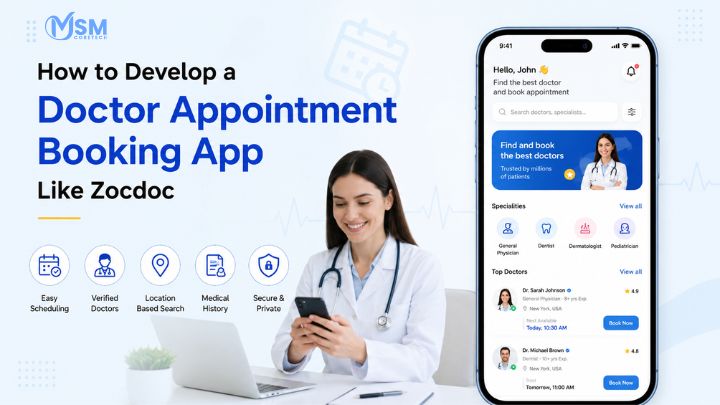
Healthcare is becoming digital faster than ever, and today patients expect the same easy and quick experience from their doctor’s clinic that they get from food delivery or ride-hailing apps. No one wants to stay on hold for twenty minutes just to book a doctor’s appointment. This change in patient expectations is the main reason why so many healthcare businesses, hospital groups, and startups want to build their own doctor appointment booking app.
In 2026, digital health platforms are no longer just a “nice to have”; they are quickly becoming the main way people find doctors, read patient reviews, check available appointment times, and pay for consultations, all from their smartphones. Zocdoc changed this experience by turning a slow process filled with phone calls into something people can do in just a few simple taps, and its success has encouraged many entrepreneurs and healthcare companies to create similar platforms for their own regions, medical specialties, or target markets. If you are planning to build a doctor appointment booking app like Zocdoc, this guide is made for you. Below, we explain what a doctor appointment booking app really is, how it works, the important features it should have, the technology used to build it, the doctor appointment booking app development cost, and a realistic doctor appointment booking app development timeline, all explained in very simple and easy-to-understand language so you can plan your project with complete confidence.
What is a Doctor Appointment Booking App?
A doctor appointment booking app is a mobile or web app that helps patients connect with doctors, clinics, and hospitals. It lets them search for healthcare providers, check available appointment times in real time, book appointments, make online payments, and even talk to a doctor through a video call without making a phone call.
You can think of it as a digital reception desk that is always available. Instead of calling a clinic during working hours and waiting for someone to answer, patients simply open the app, look through doctor profiles, read reviews from other patients, choose a time that works best for them, and book their appointment in less than two minutes. At the same time, doctors and clinic staff get an easy-to-use dashboard where they can manage their schedule, prevent double bookings, and reduce missed appointments by sending automatic reminders.
- General appointment booking apps: These are broad marketplaces (like Zocdoc) that list doctors across many specialties, insurance plans, and locations, letting patients compare and choose freely.
- Telemedicine-first apps: These focus mainly on video consultations rather than in-person visits, ideal for mental health, dermatology, or general physician consults.
- Clinic or hospital-specific apps: Built for a single hospital chain or clinic network to manage their own patients and doctors, without listing outside competitors.
- Specialty-focused apps: Platforms built around one niche, such as dental care, physiotherapy, eye care, or fertility clinics.
- Hybrid apps: A mix of booking, telemedicine, e-pharmacy, and diagnostic lab booking all in one super-app, which is where the industry is heading in 2026.
Real-World Examples
Some real-world platforms clearly show that doctor appointment apps can be built in many different ways based on user needs. Zocdoc is a popular platform in the USA that allows patients to find doctors using their insurance, read real patient reviews, and book same-day appointments with ease.
Practo, which is widely used in India and Southeast Asia, combines doctor search with online consultations, lab test bookings, and medicine delivery in one platform. Healthgrades mainly focuses on doctor reviews, detailed doctor profiles, and hospital quality information so patients can make better and more confident healthcare decisions. Doctolib, which is widely trusted across France and Germany, is well known for its simple appointment scheduling process and strong connection with public healthcare systems. Looking at these platforms is a smart first step before you decide how to develop a doctor appointment booking app that matches the needs of your own target audience.
Why Build an App Like Zocdoc?
In 2026, healthcare businesses, hospital networks, and even new startups are all asking the same question: should they build their own appointment booking platform, or continue using phone calls and old booking systems? The numbers make the answer very clear. Digital healthcare is one of the fastest-growing industries in the world today, and patients are choosing app-based booking instead of traditional scheduling. Below are some of the latest market numbers that show why this is the right time to invest.
Market Statistics
THE GLOBAL DIGITAL HEALTH MARKET is expanding rapidly. Industry researchers such as Grand View Research and Fortune Business Insights estimate the global digital health market at somewhere between roughly $420 billion and $492 billion in 2026, growing at a compound annual growth rate of over 20% through the early 2030s. Even the more conservative estimates put the market on track to cross $1 trillion within the next decade. This growth is being driven by rising smartphone use, an aging population, and a general shift toward preventive, tech-enabled healthcare.
TELEMEDICINE GROWTH is one of the strongest sub-trends inside this market. The telemedicine market size is $123.39B in 2026, projected to reach $441.35B by 2034 is above 117.27%. North America alone accounts for close to half of this market, largely because of strong reimbursement policies and high smartphone penetration among patients.
AI adoption in healthcare is also growing very quickly. According to digital health investment data from Rock Health, AI-based healthcare startups received more than half of all U.S. digital health funding in 2025, which is a big increase compared to the previous year. Industry experts also say that AI-powered diagnostic and appointment scheduling tools are making healthcare more accurate and efficient, which is why AI features are now becoming a standard part of new booking platforms instead of just an optional feature.
Simply put, the demand for easy-to-use, digital healthcare services is real; it is growing very fast, and it is not going to slow down anytime soon. Businesses that build a doctor appointment booking app today are placing themselves in one of the fastest-growing markets in the tech industry.
How Does a Doctor Appointment Booking App Work?
Before looking at the features and cost, it is important to understand how a doctor appointment booking app works, from the patient’s first tap to the final follow-up. Below is the complete process, step by step, just the way it works on platforms like Zocdoc.
1. Patient Registration
The process starts when a new user downloads the app and signs up using their email, phone number, or a fast social media login. During this step, the app usually asks for basic details like their name, age, gender, and location so it can begin showing personalized doctor recommendations from the very beginning.
2. Search Doctors
After signing up, the patient goes to a search screen where they can enter a doctor’s name, a medical problem, or simply look through different categories. This search bar is the main part of the app, so it should be quick and able to handle typing mistakes or incomplete words.
3. Filter by Specialty & Location
Patients can then filter the results based on their needs, like specialty (cardiologist, dermatologist, pediatrician), how far the doctor is from their current location, gender preference, spoken language, and accepted insurance. Good filters are what make the difference between a confusing app and one that is truly easy and helpful to use.
4. View Doctor Profiles
After using the filters, patients can open each doctor’s profile to check their qualifications, years of experience, clinic location, consultation fees, patient reviews, and clinic photos. This is usually the final moment when a patient decides whether to book an appointment or continue looking.
5. Check Availability
The app then shows a live calendar that displays which time slots are available, which ones are already booked, and the days when the doctor is not available. It must update in real time so that two patients can never accidentally book the same time slot.
6. Book Appointment
After finding a suitable time slot, the patient confirms the date, time, and reason for the appointment with just a few simple taps. Some platforms also ask a few short questions before the visit so the doctor can be better prepared in advance.
7. Online Payment
For paid consultations, the app lets users make payments safely through a secure payment gateway, using cards, digital wallets, or insurance co-pay details, based on the region and business model.
8. Appointment Confirmation
Right after booking the appointment, the patient gets a confirmation screen along with an SMS, email, or push notification that includes the appointment date, time, doctor’s name, and clinic address, and often provides an option to add it to their calendar.
9. Video Consultation
For telemedicine appointments, the app starts a secure, HIPAA-compliant video call at the scheduled time, with a waiting room feature that lets patients know they’re in the right place before the doctor joins.
10. Prescription & Medical Records
After the consultation, the doctor can create a digital prescription right inside the app, and both the prescription and visit details are automatically saved in the patient’s medical history for future use.
11. Ratings & Reviews
In the end, the patient is asked to rate their overall experience and write a short review, which helps other patients make better decisions and gives the doctor helpful feedback about their service quality.
Must-Have Features of a Doctor Appointment Booking App
Now let’s talk about the part that most people are most interested in: the features that are actually included in a doctor appointment booking app. To make it easy to understand, we’ll divide this into three panels: Patient, Doctor, and Admin because this is exactly how apps like Zocdoc are organized and work behind the scenes.
Patient Panel
- Easy Registration: Patients can quickly create an account using their phone number, email, or social login, so they can start using the app in less than a minute without filling out long forms that often make people leave the process.
- Profile Management: Patients can easily update their personal details, add family members, upload their insurance information, and manage their communication preferences from one simple profile screen.
- Advanced Doctor Search: A smart search bar that helps patients find the right doctor by understanding specialties, symptoms, and doctor names, even if they are not completely sure what they are looking for.
- Filters & Sorting: Patients can filter the results by distance, price, ratings, availability, doctor gender, and language. They can also sort the results by relevance, nearest location, or the earliest available appointment slot.
- Appointment Booking: The simple booking process allows patients to choose a doctor, select a suitable time slot, and confirm their appointment in just a few taps, with the full price clearly shown in advance.
- Calendar Integration: After an appointment is booked, it can automatically sync with the patient’s phone calendar (Google or Apple), so they never miss or forget their scheduled visit.
- Online Consultation: Built-in video and chat features allow patients to talk with a doctor from home, which is especially helpful for follow-up visits and small health concerns.
- Secure Payments: Built-in payment gateways let users pay consultation fees, co-pays, and subscription charges safely, while supporting cards, digital wallets, and in some cases, insurance payments too.
- Digital Prescriptions: After every visit, patients get a digital prescription that they can easily view, download, or send directly to their preferred pharmacy.
- Appointment History: A complete record of all past and upcoming appointments, along with notes and prescriptions, helps patients easily keep track of their complete healthcare journey.
- Push Notifications: Automatic reminders for upcoming appointments, changed visit schedules, or new messages from the doctor help people avoid missing their appointments much more often.
- Reviews & Ratings: Patients can give ratings to doctors and read reviews from other people, helping build trust and making it easier for new users to choose with confidence.
- Favorite Doctors: A simple save feature helps patients keep their favorite doctors for fast and easy booking during future visits.
- Health Records: A safe digital place stores lab reports, prescriptions, and visit summaries, giving patients one simple place to keep their complete medical history.
Doctor Panel
- Doctor Registration: Doctors can sign up by adding their professional details, license number, specialty, and clinic information to get listed on the platform.
- Profile Verification: Before a doctor profile goes live, it is carefully checked by verifying licenses and reviewing credentials to keep the platform trusted and reliable.
- Appointment Management: Doctors get an easy dashboard where they can view, accept, reschedule, or cancel appointments without having to call patients directly.
- Calendar Scheduling: An easy scheduling tool helps doctors mark holidays, set their working hours, and manage multiple clinic locations from a single screen.
- Video Consultation: Doctors can use the same secure video feature as patients to provide online consultations, share reports on screen, and write consultation notes during the live session.
- Patient Records: Doctors can quickly see a patient’s medical history, old prescriptions, and previous visit notes before every appointment.
- E-Prescription: A built-in prescription tool helps doctors create and send digital prescriptions in just seconds, reducing the need for paperwork.
- Earnings Dashboard: Doctors can easily check the consultation fees they have earned, see pending payouts, and track their monthly earnings and revenue trends directly within the app.
- Availability Management: A simple toggle option allows doctors to mark themselves as available or unavailable at any time, and patients can instantly see the updated availability in real time.
- Analytics: Doctors can easily see simple reports like how many patients they have treated, their average ratings, the busiest booking hours, and how many patients did not show up.
Admin Panel
- Dashboard: A main control panel lets the platform owner easily see the total users, active doctors, bookings, and revenue in real time, all in one place.
- User Management: Admins can view, edit, suspend, or verify patient and doctor accounts to make sure the platform stays safe, clean, and trusted by everyone.
- Doctor Verification: A dedicated process helps the admin team check licenses and credentials before approving new doctors to join the platform.
- Appointment Monitoring: Admins can see all bookings across the platform, help solve any disputes, and track cancellation or no-show trends.
- Payment Management: A simple finance dashboard tracks transactions, refunds, doctor payments, and platform commission, auto-reconciled.
- Reports & Analytics: Simple reports on user growth, revenue, popular specialties, and regional demand help guide business decisions.
- CMS Management: Admins can easily update the app banners, blog posts, FAQs, and notices without a developer for small changes here.
- Notification Management: A tool for sending specific push messages, promotional deals, or system-wide updates to patients and doctors.
- Customer Support: A simple in-app help system, usually with live chat or a ticket tool, helps quickly solve patient and doctor problems and issues.
- Security & Compliance Controls: Admins can control user access rights, check data security, and keep the platform compliant with healthcare rules for better safety.
Advanced Features to Stay Ahead in 2026
Basic booking features are enough to start, but staying competitive in 2026 requires going one step further. These are advanced features that top apps use to stand out and deliver a smarter, more personal experience for users.
- AI Doctor Recommendations: Machine learning checks a patient’s symptoms, past history, and choices to recommend the most suitable doctors, instead of a general list.
- AI Appointment Scheduling: Smart AI algorithms automatically suggest the best available time slots based on doctor patterns and patient urgency, reducing scheduling back-and-forth.
- AI Medical Chatbot: A simple chat assistant answers common questions, helps patients use the app, and guides them to book the right specialist in simple, easy languages.
- Voice Search: Patients can look for doctors or symptoms using voice commands, which is especially helpful for elderly users or users on the go.
- Symptom Checker: A simple AI questionnaire helps patients know possible causes of their symptoms and guides them to the right type of specialist. For better care.
- Wearable Device Integration: Connecting with devices like Apple Watch or Fitbit lets doctors see live health data like heart rate or activity levels during checkups in real time.
- Digital Health Records: A more modern type of storing health records that uses standard formats so providers can share records safely between providers easily.
- Family Account Management: One login allows a user to manage all my appointments for children, parents, or dependents from one account.
- Insurance Verification: Automated checks verify patient insurance coverage and copay amount before booking, preventing billing surprises later.
- Multi-language Support: The app automatically shifts to a patient’s preferred language, which is important for reaching various or international markets.
- Real-Time Ambulance Booking: For urgent care platforms, an emergency button connects patients to nearby ambulance services with live tracking.
- Smart Reminders: Real-Time Ambulance Booking: More than simple alerts, AI-based reminders change timing based on a patient’s past missed visits to reduce missed visits.
- Electronic Health Records (EHR/EMR) Integration: Connecting with hospital EHR/EMR systems enables smooth data sharing between the app and existing clinical software.
- AI Health Insights: The app can examine a patient’s current data to mark potential health risks and propose preventive check-ups before problems worsen.
- OCR Prescription Scanner: Patients can take a photo of a paper prescription, and OCR turns it into a digital record automatically now.
Technology Stack Required for Doctor Appointment App Development
Picking the right tech stack is one of the most important choices you’ll make, as it impacts app performance, scalability, and long-term maintenance cost in 2026! Here’s what most modern doctor appointment booking apps are built on in 2026.
- Frontend: Flutter and React Native are the two most popular options for making patient and doctor apps, because both allow you to build a single codebase that runs on Android and iOS, reducing development time and cost greatly.
- Backend: Node.js is preferred for its speed and real-time features (good for live appointment slots), while Laravel and Django are solid choices for teams preferring PHP or Python and needing strong built-in security features here.
- Database: PostgreSQL and MySQL manage structured data like appointments and billing safely, while MongoDB is often used with them for flexible data like chat logs or health records files.
- Cloud: AWS, Microsoft Azure, and Google Cloud all provide healthcare-specific compliance tools like HIPAA-eligible services, reliable uptime, and the ability to scale as your user base grows.
- APIs: Twilio provides SMS and voice alerts, Stripe and Razorpay process payments for different regions, Google Maps supports location-based doctor search, Firebase handles push notifications, and Agora or Zoom SDK runs the video consultation feature.
- AI Technologies: OpenAI APIs, Google Vertex AI, and Azure AI are commonly used to drive chatbots, symptom screeners, and smart doctor recommendation engines without building machine learning models completely from scratch.
Step-by-Step Doctor Appointment Booking App Development Process
Creating an app like Zocdoc isn’t something that happens overnight; it follows a structured process that any experienced doctor booking app development company will walk you through. Here’s what that process typically looks like from start to finish.
Step 1: Market Research & Competitor Analysis
Before coding starts, the team studies your target market, reviews competitors like Zocdoc or Practo, and finds gaps you can improve over existing players more effectively.
Step 2: Define Business Model
Next, you choose how the platform will earn money: commission bookings, subscriptions, featured listings, or a mix, as this affects later feature decisions choices.
Step 3: Choose Essential Features
According to your budget and target users, the team chooses must-have features for launch instead of advanced features added later in the development phase two.
Step 4: Create UI/UX Design
Designers create simple wireframes and clean mockups for every screen, aiming to make booking quick and easy for both patients and doctors alike.
Step 5: Select Technology Stack
After designs are approved, developers complete frontend, backend, database, and cloud setup that runs the app’s long-term systems reliably.
Step 6: Develop MVP
The team creates a Minimum Viable Product with main booking, search, and profile features, so you can launch quickly and start collecting real user feedback.
Step 7: Integrate APIs
Payment gateways, video call SDKs, maps, and alert services are linked and tested to ensure each third-party feature works smoothly without issues.
Step 8: Testing & Quality Assurance
The app is tested carefully for function, security, performance, and compliance to find bugs before real patients and doctors ever see them safely checked.
Step 9: Deploy App
Once testing is finished, the app is uploaded to the App Store and Google Play, and the web version, if any, goes live on your domain.
Step 10: Maintenance & Feature Updates
After launch, the team checks performance, fixes problems, and adds new features from user feedback and constantly changing healthcare rules.
Doctor Appointment Booking App Development Cost
This is usually the first question every founder asks, so let’s explain it simply: the doctor appointment booking app development cost depends greatly on complexity, features, and the development team you choose. Here is a simple breakdown.
| App Type | Estimated Cost | What’s Included |
|---|---|---|
| Basic MVP | $10,000 – $20,000 | Core booking, search, patient/doctor profiles, basic payments |
| Medium Complexity | $20,000 – $50,000 | Video consultations, advanced filters, notifications, admin panel |
| Advanced Zocdoc-like App | $50,000 – $100,000+ | AI features, EHR integration, multi-language, full compliance, scalability |
Cost Factors
Many factors change your final number up or down in these ranges a bit:
- Features: More features (especially AI, video consultation, and EHR integration) directly increase development hours and cost.
- Platform (Android/iOS/Web): Building for both Android and iOS, plus a web dashboard, costs more than launching on a single platform first.
- UI/UX Design: Custom, polished design work takes longer than using template-based designs, but pays off in user retention.
- AI Integration: Adding AI chatbots, recommendation engines, or symptom checkers adds both development time and ongoing API usage costs.
- Security: Healthcare apps need stronger encryption, secure authentication, and audit trails, which all add engineering effort.
- Third-party APIs: Payment gateways, video SDKs, and mapping services often come with both integration costs and recurring usage fees.
- Compliance: Meeting HIPAA, GDPR, or other regional healthcare regulations requires extra development, documentation, and legal review.
- Development Team Location: Hiring a doctor booking app development company in North America or Western Europe costs more per hour than teams in South Asia or Eastern Europe, though quality can be excellent in both.
- Maintenance: Post-launch support, bug fixes, and regular updates typically cost 15-20% of the original development budget per year.
Development Timeline
Along with cost, the doctor appointment booking app timeline is another key planning factor founders must decide at a very early stage. Here is a realistic phase-by-phase breakdown of how healthcare app projects unfold in reality
| Phase | Duration |
|---|---|
| Research | 1–2 Weeks |
| UI/UX Design | 2–4 Weeks |
| MVP Development | 8–12 Weeks |
| Backend Development | 10–14 Weeks |
| Testing | 2–4 Weeks |
| Deployment | 1 Week |
Overall Timeline: Most projects take around 4 to 8 months from start to launch, based on how many features you add and how complex your compliance needs are. Simpler MVPs can launch near the 4-month point, while feature-rich platforms with AI and EHR integrations usually reach about 8 months timeline range.
Healthcare Compliance & Security Requirements
Healthcare apps deal with very sensitive personal data that exists, so compliance is not optional; it is the base your whole platform is built on, from day one. Any serious doctor booking app development company will insist on these standards from day one. Day one.
- HIPAA Compliance (US): If you operate in the United States, HIPAA sets strict rules for how patient health information is stored, transmitted, and accessed, and non-compliance can lead to serious legal penalties.
- GDPR (Europe): For European users, GDPR governs how personal data is collected and processed, giving patients strong rights over their own information.
- HITECH: This US regulation works alongside HIPAA, specifically pushing for secure adoption of electronic health records and stronger data breach reporting.
- HL7/FHIR Standards: These are technical standards that allow different healthcare systems to exchange patient data in a consistent, structured format, which matters if you plan to integrate with hospital EHR systems.
- SOC 2: This certification proves your platform follows strict standards for data security, availability, and confidentiality, which builds trust with enterprise healthcare partners.
- End-to-End Encryption: All sensitive data, from chat messages to medical records, should be encrypted both in transit and at rest so it can’t be intercepted or misused.
- Multi-Factor Authentication (MFA): Requiring a second verification step at login significantly reduces the risk of unauthorized account access.
- Secure Cloud Storage: Using HIPAA-eligible or region-compliant cloud storage ensures patient data is housed in properly secured, audited environments.
- Role-Based Access Control (RBAC): Limiting what each user type (patient, doctor, admin, support staff) can see and do keeps sensitive data accessible only to those who genuinely need it.
Revenue Models for a Zocdoc-Like App
A great app also needs a solid way to earn funds. Here are the most common earning models healthcare platforms use, often combined for a stronger overall plan.
- Appointment Booking Fees: A small fee charged either to the patient or the doctor every time a booking is successfully made through the platform.
- Subscription Plans: Doctors or clinics pay a recurring monthly or annual fee for premium visibility, extra features, or unlimited bookings.
- Featured Doctor Listings: Doctors pay extra to appear at the top of search results, similar to sponsored listings on other marketplace apps.
- Telemedicine Consultation Fees: A percentage or flat fee taken from every video consultation booked and completed through the app.
- Commission on Payments: The platform takes a small percentage cut of every payment processed, whether that’s a consultation fee or a lab test booking.
- Premium Membership: Patients pay for a premium tier offering perks like priority booking, discounted consultations, or faster support.
- Healthcare Advertising: Pharmaceutical brands, health insurers, or wellness companies pay to advertise within the app to a highly targeted healthcare audience.
- Pharmacy Partnerships: Partnering with pharmacies to fulfill digital prescriptions creates a referral revenue stream for every prescription filled.
- Diagnostic Lab Partnerships: Similar to pharmacy tie-ups, partnering with diagnostic labs for test bookings generates commission on every referral.
- Insurance Referral Programs: Connecting patients with insurance providers for plan sign-ups or verification services can create an additional referral income stream.
Common Challenges in Developing a Doctor Appointment Booking App
No healthcare app project comes without its challenges. Knowing these challenges in advance helps you plan around them instead of getting caught off guard in the middle of the project.
- Regulatory Compliance: Healthcare rules are different in every country and even in every state, so building a platform that stays compliant wherever you operate needs careful legal and technical planning.
- Data Security: Medical data is very valuable to cybercriminals, so security should never be treated as something added later; it must be built into the system from the very beginning.
- Real-Time Appointment Synchronization: Preventing double bookings on different devices and for different doctors needs a strong backend system that updates immediately across the whole system.
- Scalability: An app that runs fine for one thousand users can fail when it reaches one hundred thousand, so the system must be built to scale early always.
- Doctor Verification: Manually checking every doctor’s license and qualifications takes a lot of time, but it is very important for keeping the platform trustworthy and ensuring patient safety.
- Third-Party API Integration: Connecting different outside services like payments, video, maps, and SMS in a smooth way, without any problems or system breakdowns, requires careful technical coordination.
- User Adoption & Retention: Making sure that both patients and doctors keep using a new platform regularly, instead of going back to using phone calls, needs a strong onboarding process and features that keep them engaged over time.
- Multi-Platform Compatibility: Making sure the app works properly and smoothly on different types of phones, different operating systems, and various screen sizes also adds an extra level of testing and quality assurance effort.
Future Trends in Doctor Appointment Apps (2026 & Beyond)
Looking past the launch, this is the direction the doctor appointment booking app industry is moving in as we go further into 2026 and the years ahead. If you keep these trends in mind while building today, it can help you avoid an expensive redesign in the future.
- AI Healthcare Assistants: AI assistants are becoming more and more advanced, and they will manage scheduling, respond to patients’ questions, and also give basic triage support before a doctor becomes involved.
- Predictive Scheduling: AI will begin predicting best appointment times using patient history, doctor patterns, and traffic or weather data to reduce missed appointments no-shows rate.
- Voice-Based Appointment Booking: As voice helpers get better, more patients will schedule appointments by talking normally to their phone or smart speaker.
- Blockchain for Medical Records: Blockchain technology is being used to give patients secure, unchangeable medical records they control and can safely share with provider networks.
- IoT Health Monitoring: Smart devices send live health data to booking apps, helping doctors track patients between visits and detect issues early.
- Personalized Healthcare Recommendations: AI will more and more customize doctor advice, health tips, and prevention reminders from each patient’s history and habits.
- Remote Patient Monitoring: Chronic care management will depend more on remote monitoring tools that are directly connected and built into booking and consultation apps.
- AR/VR Healthcare Consultations: Generative AI for Clinical Documentation: Generative AI tools are increasingly being used to auto-summarize patient visits and create clinical notes, saving doctors lots of admin time in hospitals today.
- Generative AI for Clinical Documentation: Generative AI tools are more often used to automatically summarize visits and write medical notes, saving doctors important admin time.
Why Choose MSM CoreTech for Doctor Appointment App Development?
If you are ready to move ahead, selecting the right development partner is just as important as your idea itself. Here is why healthcare businesses prefer MSM CoreTech to build a doctor appointment booking app.
- Custom Healthcare App Development: Every platform we build is tailored to your specific business model, target market, and patient population, not copied from a generic template.
- HIPAA-Compliant Solutions: Our team builds compliance into the architecture from the very first sprint, so you’re not scrambling to fix security gaps after launch.
- AI-Powered Healthcare Applications: We integrate smart features like AI recommendations, symptom checkers, and chatbots to keep your platform competitive with the biggest names in the space.
- End-to-End Development: From market research and UI/UX design through development, testing, and deployment, we manage the entire journey under one roof.
- Agile Development Process: We work in short, transparent sprints with regular check-ins, so you always know exactly where your project stands.
- Ongoing Maintenance & Support: Launch day isn’t the finish line; we provide continued updates, bug fixes, and feature enhancements to keep your app running smoothly long-term.
- Scalable & Secure Architecture: We build every platform to handle growth from day one, so you won’t need a costly rebuild when your user base scales into the tens of thousands.
Conclusion
Building a platform like Zocdoc is no longer only a big idea; it is now a practical and well-planned project once you understand all the parts involved. We have explained what a doctor appointment booking app actually is, why the market is growing so fast, and exactly how the booking process works step by step, along with the full list of features for patient, doctor, and admin panels. We have also explained the technology stack, the step-by-step development process, realistic cost ranges, a practical timeline, compliance requirements, revenue models, common challenges, and where this industry is going in the future. The main point is very simple: patients today want quick, digital-first access to healthcare, and the businesses that provide this experience in a good way are in a strong position to grow fast in one of the most active tech markets today.
Whether you’re planning an easier MVP or a full-scale platform, if your goal is to develop a doctor appointment booking app like Zocdoc, the most important next step is partnering with a specialist doctor booking app development company that understands both healthcare compliance and the latest app development. If you’re ready to bring your idea to life, MSM CoreTech’s team is here to guide you from concept to launch, helping you build a secure, scalable, and genuinely useful app that patients and doctors will actually want to use.
FAQs
A basic MVP starts around $20,000–$40,000, while a full-featured, Zocdoc-like app with AI and compliance can cost $80,000–$180,000+. The final doctor appointment booking app development cost depends on features, platforms, and your chosen development team.
Most projects take 4 to 8 months from research to launch, depending on complexity. A simple MVP can go live closer to the 4-month mark, while an advanced platform with AI features takes longer.
Core features include doctor search, appointment booking, secure payments, video consultations, and digital prescriptions. A complete app also needs separate doctor and admin panels to manage schedules, verification, and platform operations.
Yes, if you operate in the US, HIPAA compliance is mandatory to protect patient health data. Skipping it can lead to serious legal penalties and loss of user trust.
Look for a company with proven healthcare app experience, HIPAA compliance expertise, and strong AI integration capabilities. MSM CoreTech offers end-to-end development, from UI/UX design to post-launch support, making it a reliable choice.

Related Posts

10 Key Applications of AI in the Food Industry (2026)
Walk into any restaurant kitchen, grocery warehouse, or food delivery control room today, and you will find something quietly running...
Read More
How To Develop An App Like YouTube Music: A Complete Guide
Music is now a part of our everyday life. People listen to songs while getting ready in the morning, working,...
Read More
Must-Have Features in Fintech Apps & Digital Financial Platforms
Think about how often you use your phone to pay bills, send money, shop online, or check your bank balance....
Read More


 Verified Review




 +44 7427829444
 71-75, Shelton Street, Covent Garden, London, United Kingdom, WC2H 9JQ