

Share this article


AI-Driven Cloud Migration: How Artificial Intelligence is Transforming the Process
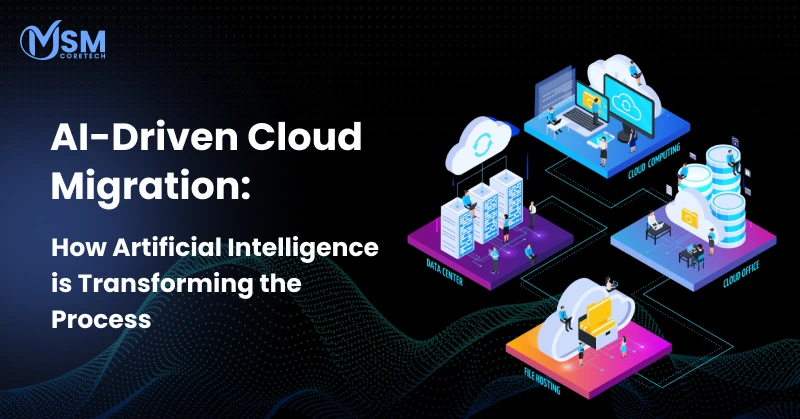
In this digitally evolving world innovation and adaptability are essential requirements of a business. Therefore, the business community is shifting to AI-driven cloud migration and platform modernization to optimize operational expense and scalability. Implementation of artificial intelligence is a necessity to stay agile and future-ready. Businesses leveraging cloud solution means they can accomplish a well-structured and effective transformation to the cloud. Whereas, integrating AI with it means enhanced performance and more innovation.
AI in the cloud not only simplifies the migration process but also provides the framework for an effective integration. Thus, it creates a strong base for businesses looking for sustainability and scalability. This blog will cover the strategic approach to implementing AI in cloud migration and the process of platform migration for a seamless transformation.
The Expansion of AI-Driven Cloud Migration: Market Overview
The global cloud AI market is rising due to the adoption of the technology by enterprises for data migration automation. A research report by Markets and Markets says that the worldwide cloud market is predicted to rise from USD 80.30 billion in 2024 to USD 327.25 billion by 2029 at a compound annual growth rate of 32.4% between 2024 and 2029.
As a result, this expansion shows the rise in the use of artificial intelligence to automate and accelerate cloud migration.
Important Market Highlights:
- AI in cloud migration allows more reliable workload migration with minimum manual work.
- Predictive analytics helps predict performance issues and improve resource distribution.
- AI-based insights reduce operational or infrastructural costs.
- Intelligent algorithms enhance processes like data governance and threat detection during migrations.
- Leads in North America adopt it because of the mature cloud ecosystem, whereas Asia Pacific reflects quick growth along with the digital transformation in countries like India, China and Japan.
AI is becoming important for handling hybrid and multi-cloud setups as businesses update their systems. Artificial intelligence is seen as the primary force behind future-ready cloud strategies. This is because of its ability to enable a self-healing system, live tracking and adaptive architecture.
Significance of AI Cloud Migration Services
AI is now becoming an integral component of the cloud migration process. An AI-powered cloud migration platform is now a necessity for every business. AI is not only automating the processes but also helping add analytical ability and smart data to a complex process. Artificial intelligence helps businesses make informed decisions related to workload migration, cost efficiency and performance by evaluating large chunks of data.
How AI Assists with Cloud Migration Processes
- AI offers predictive analytics to help businesses evaluate the effect of the migration process and data before they move.
- It minimizes related challenges and downtime and makes sure resources are located in the cloud smoothly.
- Cloud migration automation tools simplify daily tasks like app evaluation, dependency tracking and infrastructure management.
- AI-driven cloud migration speeds up the process and reduces human errors.
- It does continuous monitoring during and after the migration process.
- Again, it finds performance-related limitations, predicts future processing needs and suggests improvements.
- AI integrations make sure the cloud environment aligns well with business needs.
- Use of artificial intelligence improves agility and scalability and also results in long-term success.
AI-driven Cloud Migration for Modernization
Enterprise cloud migration with AI helps in platform modernization. Additionally, this helps companies to update outdated systems and automate complicated tasks. This gives them an intelligent and adaptable platform that takes care of future business needs. It also makes sure your company gets an edge in innovation, cost efficiency and long-term profitability.
- Platform Modernization Matters
Platform modernization is important to stay competitive in the evolving digital world.
Therefore, AI plays a major role in making these transformations faster, intelligent and more effective.
- Upgrades and Intelligent Transformation
AI-based cloud migration execution support machine learning and predictive analytics to develop an adaptable platform. This approach provides smooth integration and a robust technology stack.
- Automation to Promote Modernization
Cloud migration assessment services reduced repetitive tasks and automated performance optimization. This minimizes efforts needed to upgrade existing systems, reduce operational costs and boost delivery time.
- Better Analysis and Ongoing Optimization
AI evaluates the existing structure and finds the gaps and improvement areas. These observations help companies to optimize strategies and thus focus on resources where they matter most.
- Flexible and Intelligent Platforms
AI-based platforms use predictive analytics to anticipate business needs and allocate resources accordingly. This helps companies respond promptly to changes in demand and offers cloud migration cost optimization.
- Using AI to Proof the Future
AI-powered modernization offers long-term growth and innovation. It allows companies to stay adaptive, react quickly to new opportunities and maintain an everlasting competitive edge.
AI-Driven Cloud Migration: Successful Cloud and Platform Strategies
A successful cloud migration strategy consulting asks for a structured approach. There should be a clear goal and a phase-wise implementation process. Use AI based tools for process automation and evaluation. The team collaboration should be aligned whereas data security and compliance should also be the priority. Keep tracking and improve for better efficiency and long-term business growth. Follow the approaches mentioned below for better results.
1. Start With A Clear Business Goal
- Find areas where AI can deliver impactful value.
- Concentrate on important goals like
- Data-based decision-making
- Work automation
- Resource allocation
- Adopt AI for overall business goals and KPIs.
- Set a success metric to monitor progress.
2. Do Phase-Wise Implementation
- Do not go for full-scale integration from the very start.
- To get fast results, divide the projects into phases.
- As the time passes, extend AI abilities into the platform and different departments.
- Use data from the early stage to modify the approach and handle risks.
3. Make Use of Different Cloud Migration Automation Tools
- Take advantage of AI bbased automation tools for fast processing.
- Find gaps using predictive analytics and then resolve them.
- Find gaps and resolve it with predictive analytics.
- Use AI based tasking tools to optimize migration performance.
- Check AI based insights for dependency mapping and workload evaluation.
- Automate management-related tasks to reduce manual work and human errors.
4. Focus on Collaboration Between Different Teams
- All the teams (IT, operations, and engineering) should be involved from the beginning.
- Promote shared responsibilities of AI integration processes.
- Collect feedback from different teams to find real challenges.
- Combine technical abilities with business goals for the best results.
- Increase knowledge sharing activities related to artificial intelligence.
5. Focus More on Compliance and Security
- Use a threat dictation or response system based on AI.
- Make sure it complies with industry standards.
- Incorporate security in AI strategies from day one.
- Keep an eye on the AI models to minimize any risks or threats.
- Keep the AI based decision-making process transparent.
6. Keep Monitoring and Optimizing
- Use real-time analytics and track the performance of AI tools.
- Modify models to improve accuracy.
- Use cloud resources and evaluate effectiveness.
- Adjust the strategies as the business grows.
- AI is not a one-time setup, so treat it as an ongoing process.
Benefits of AI-Based Cloud Migration
AI migration or AI cloud migration consulting has a number of benefits. It boosts migration timelines and optimizes operational cost using resource management and increased security. AI tools find possible threats and make sure it complies with industry standards. It automates tasks, reduces human error and allows real-time monitoring. Therefore, using AI leads to a more agile cloud environment. Some of the main benefits are mentioned below.
1. Better Decision Making
AI cloud migration services contain advanced and predictive features that allow a business to make informed decisions based on data. This is done all through the migration and moderation process. It evaluates system performance, identify limitations and determines the possible impact of it on the migration process.
2. Faster Time to Profit
AI boosts the process to upgrade the platform. This is done by automating tasks like coding, platforms evaluation and infrastructure management. Therefore, it minimizes the downtime and decreases the time for AI migration project management.
3. Cloud Migration Cost Optimization
AI-based tools improve resource use at both the migration and after migration phases. AI anticipates future requirements and improves workload allocation, thereby maximizing efficient usage of cloud resources. This leads to a great cost savings initiative in the long term.
4. More Stability and Increased System Performance
Cloud migration risk assessment AI is done to track system performance. It also delivers real-time data and suggests optimization. AI has the ability to find issues and predict the areas of improvement. This helps solve issues and keeps platforms working well. It also minimizes downtime.
5. Future Ready and Flexibility
One of the great benefits of AI is its cloud migration execution support. It optimizes flexibility. AI targets allow platforms to automatically adjust to modifications in workload with similar performance with the process, as company requirements continue to grow.
6. Supports Innovations
AI-based modernization not only enhances old systems but also promotes innovation. Companies can integrate intelligence into their old platforms. This lets them use modern tools like ML, automation, and intelligent data evaluation.
Final Thought
It is very important for companies to implement AI into cloud migration. This offers platform modernization and cloud security and compliance services to shine in the competitive world. Additionally, it will assist with the improvement in speed for the company’s growth. Artificial intelligence in cloud migration helps businesses to enhance operational effectiveness to achieve long term growth.
Taking advantage of cloud computing and migration services based on AI can also allow businesses to explore various aspects. It offers exposure to potential like automation, predictive evaluation, and smarter resource management. Therefore, these factors help create a simplified cloud environment. Ai based innovations help to discover new opportunities for companies to work in a completely migrated cloud environment. So with cloud-based migration services that play a huge role in securing the operations, businesses can achieve greater success.
FAQs
Cloud migration is a method of transferring digital assets like data, apps and other IT resources from existing infrastructure or one cloud environment to another. It allows businesses to grow, innovate and decrease costs with modernized operations.
Cloud migration is also widely known as cloud adoption or digital transformation. It is the process of transferring apps, data or workload from one cloud or existing system to another cloud environment. This shift allows companies to take advantage of flexibility, cost reduction, and improved security features provided by cloud platforms.
Cloud migration provides companies the ability to scale, minimize operational costs, and improve security when compared to transitional and existing infrastructure. Shifting to the cloud allows faster deployments, live collaboration and better disaster recovery.
A cloud migration checklist assures a seamless transformation by defining important works and ideas for migrating to the cloud. It assists companies in staying competitive, reducing risks, and guaranteeing long term success.
There are many examples, but the most reliable ones are AWS, Google Cloud, or Azure. Shifting to AI based cloud allows businesses to reduce costs and increase efficiency.

Related Posts

The Rise of Hybrid and Multi-Cloud Environments: What It Means for Migration
Cloud computing has transformed how businesses manage, store, and process data, providing a flexible and economical cloud computing ecosystem. However,...
Read More
Sustainability and Green Computing in Cloud Migration
Cloud migration strategy is a method of transferring data and applications on other platforms from on-premise infrastructure to cloud environment....
Read More
Understanding Cloud Computing & AWS
Cloud computing is widely used by businesses for storing their data. It also offers great help in data recovery and...
Read More


 Verified Review




 +44 7427829444
 71-75, Shelton Street, Covent Garden, London, United Kingdom, WC2H 9JQ