Share this article


A complete Guide to develop an app like Talabat
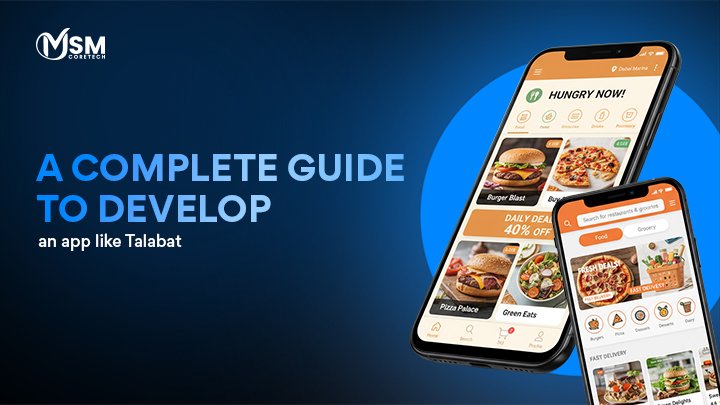
Every Day, 6 Million People Open Talabat Before They Even Think About What to Eat. Here Is How to Build the Next One.
That is not a guess. As of late 2024, Talabat counted more than 6 million active customers monthly, more than 65,000 restaurant partners, and over 119,000 active delivery riders running across the Middle East. One app. One idea. One very well-executed product.
And right now, the window to build the next version of that idea is wide open.
If you are a restaurateur tired of paying commissions, an entrepreneur who sees a gap in your city, or a startup ready to ride the biggest digital wave in the MENA region, this guide is for you. We will walk you through everything you need to know about Talabat clone app development, from features and tech stack to real development costs in 2026.
What Makes Talabat Worth Copying in 2026?
Before jumping into development, it helps to understand why Talabat became the gold standard for food delivery in the Middle East.
Founded in 2004 in Kuwait, Talabat started as a simple online food ordering platform. Over the years, it expanded across the UAE, Saudi Arabia, Qatar, Bahrain, Jordan, Iraq, Oman, and Egypt. Today it is owned by Delivery Hero and operates as one of the most dominant on-demand platforms in the region.
What sets Talabat apart is not just the technology. It is the three-sided marketplace it manages every single day: hungry customers who want food fast, restaurant partners who want more orders, and delivery riders who want steady income. When all three sides work smoothly, the platform prints money.
That three-sided model is exactly what your food delivery app development for a restaurant or marketplace needs to replicate.

The Market Opportunity You Cannot Ignore in 2026
If you need numbers to make the case internally, here they are.
Global Food Delivery Market Stats (2025-2026)
The global online food delivery market is projected to reach USD 505,500.0 million by 2030. The broader online food delivery sector is projected to grow at a steady compound annual growth rate of 9.4% from 2025 to 2030.
The Middle East alone tells a compelling story:
- The Middle East food delivery app industry grew from USD 2.56 billion in 2021 to USD 3.46 billion in 2025, and it is on track to hit USD 6.5 billion by 2033.
- Saudi Arabia leads the region with a 29.97% share, while the UAE holds 11.89%.
- The Saudi Arabia delivery apps market alone was valued at USD 8.33 billion in 2025 and is expected to reach USD 19.45 billion by 2031 at a CAGR of 15.18%.
- In the UAE, the average revenue per user (ARPU) in the online food delivery market is forecast to reach USD 645.26 by 2028, a 45% increase from 2024 levels.
- Over 70% of food delivery orders in the UAE and Saudi Arabia are placed via mobile devices.
These are not soft projections. This is an educated market with high smartphone penetration, a large expat population with diverse food preferences, and a strong “convenience first” mindset that is not going away.
The timing for on demand food delivery app development has never been better.
Who Is Your Target Audience?
Understanding who you are building for is the single most important step before writing a line of code.
For a Marketplace App (like Talabat)
Your target users fall into three groups:
Customers (End Users): Urban professionals aged 22 to 45, smartphone-first, time-poor, and willing to pay a small delivery fee for convenience. In the MENA region, expats make up a large chunk of this group. They want speed, variety, real-time tracking, and reliable payment options.
Restaurant Partners: Ranging from small local eateries to large chain franchises. They want more orders, easy menu management, and fast payouts. Restaurants in tier-2 cities that are not yet on a major platform are an underserved and highly motivated audience.
Delivery Riders: Gig workers looking for flexible income. Their priority is an easy-to-use rider app, clear navigation, and quick payment cycles.
For a Restaurant-Specific App
If you are a restaurant owner building your own food delivery app development for a restaurant, your audience is your existing loyal customers who currently order through Talabat and pay you less margin per order. Owning your app means owning the customer relationship.
Core Features You Must Build for a Talabat-Like App
A strong Talabat clone app development project is built around four separate panels that each serve a different user.
Customer App Features
Discovery and Ordering
- Smart search with filters for cuisine type, dietary preferences (vegan, gluten-free, nut-free), ratings, and delivery time
- Real-time menu with high-quality food images and descriptions
- Group ordering feature for offices and families placing one combined order
Tracking and Payments
- Live GPS order tracking showing the rider’s location on a map
- Multiple payment options: credit/debit cards, digital wallets, cash on delivery
- Order history and one-click reorder
- Promo codes, loyalty points, and referral rewards
Communication
- In-app chat with the restaurant and rider
- Push notifications for order confirmation, preparation updates, and delivery alerts
- Ratings and reviews for both restaurants and riders
Restaurant Partner Dashboard Features
- Menu management with the ability to add, update, or remove items in real time
- Order acceptance and management with status updates
- Sales analytics and performance reports
- Working hours and availability toggle
- Promotional tools to offer discounts during slow hours
Delivery Rider App Features
- Order assignment with route optimization powered by GPS
- Earnings tracker with daily, weekly, and monthly breakdowns
- Availability toggle for riders to go online or offline
- In-app navigation integrated with Google Maps or Waze
- Ratings system and performance history
Admin Panel Features
- Full dashboard to manage customers, restaurants, and riders
- Commission management and payout processing
- Content moderation for reviews and menus
- Analytics on orders, revenue, and user behavior
- Push notification broadcasting
- Dispute resolution tools

Step-by-Step Development Process for an App Like Talabat
Step 1: Market Research and Niche Selection
Before any development starts, map out your target city or region. Identify which cuisines are underserved, what delivery time expectations look like, and which competitor apps have the weakest customer reviews. Those weak spots are your entry points.
Step 2: Define Your Business Model
Talabat runs primarily on a commission model, typically charging restaurants between 15% and 35% per order. Other revenue streams include delivery fees charged to customers, featured listing fees for restaurants, and subscription programs like Talabat Pro.
Decide early whether you want a commission model, a subscription model, or a hybrid. This decision shapes how you build the payment and payout infrastructure.
Step 3: Choose Between Custom Development and a Clone Solution
You have two main paths:
Custom Development gives you full flexibility and a unique product. It costs more and takes longer, but you own every line of code and can scale without limitations.
Clone App Development uses a pre-built framework that is customized to your brand. It is faster and cheaper for MVPs and early-stage startups testing the market.
For most serious entrepreneurs, a custom-built MVP that can scale is the stronger long-term investment.
Step 4: UI/UX Design
The design phase covers wireframes, user flow diagrams, and interactive prototypes. Talabat’s success is partly driven by how fast and frictionless the ordering experience feels. Every tap counts. Aim for a checkout experience that takes under 60 seconds from restaurant selection to order placement.
Step 5: Development and Tech Stack
Here is the recommended technology stack for a scalable on demand food delivery app development project:
Frontend (Mobile App)
- React Native or Flutter for cross-platform iOS and Android development
- Swift (iOS) and Kotlin (Android) for native builds if performance is the top priority
Backend Development
- Node.js or Python (Django/Flask) for server-side logic
- PostgreSQL or MySQL for relational data storage
- MongoDB for unstructured data like user activity logs
Real-Time Features
- Firebase or Socket.io for live order tracking and chat
Maps and Navigation
- Google Maps API or Mapbox for GPS tracking and route optimization
Payments
- Stripe, PayTabs, or HyperPay for secure payment processing
Cloud Infrastructure
- AWS, Google Cloud, or Microsoft Azure for hosting and scalability
Notifications
- Firebase Cloud Messaging (FCM)
- for push notifications
Step 6: Quality Testing
Testing is not optional. A food delivery app that crashes during peak hours or shows wrong delivery times will lose users in minutes. Run unit testing, performance testing, security testing, and UAT (user acceptance testing) before going live.
Step 7: Launch and Post-Launch Maintenance
Deploy on the Google Play Store and Apple App Store. After launch, monitor user behavior with analytics tools, collect feedback, and push regular updates. The most successful apps in this space release updates every two to four weeks.
AI-Powered Features That Set Your App Apart in 2026
Basic features are not enough anymore. Here is what forward-thinking developers are adding to food delivery app development services in 2026:
Personalized Recommendations: AI analyzes a user’s order history and browsing behavior to suggest relevant restaurants and dishes. This drives higher average order values.
Dynamic Delivery Time Estimates: Machine learning models factor in weather, traffic, restaurant prep time, and rider availability to give accurate ETAs rather than flat estimates.
Smart Demand Forecasting: Restaurants can use AI-driven insights to predict peak hours and prepare inventory accordingly, reducing wait times.
Fraud Detection: Real-time fraud monitoring for payment anomalies, fake reviews, and suspicious order patterns.
Chatbot Support: AI-powered in-app support handles common queries like order status, refunds, and account issues without human intervention.
Monetization Strategies for Your Food Delivery App
Your app needs more than one revenue stream to be financially healthy. Here is what works:
Commission on Orders: The primary revenue source. Charge restaurants a percentage of each order value. This aligns your success with theirs.
Delivery Fees: Charge customers based on distance, time of day, or order value. Surge pricing during peak hours can significantly boost revenue.
Premium Restaurant Listings: Charge restaurants for featured placements at the top of category pages.
Subscription Plans: Offer customers a monthly subscription (similar to Talabat Pro) that gives them free delivery, exclusive discounts, and priority support.
In-App Advertising: Allow restaurants and food brands to run targeted ads inside the app.
White-Label Solutions: Once your platform is stable, offer it to other restaurant chains or regional operators as a white-label product.
How Much Does It Cost to Develop an App Like Talabat?
This is the question every entrepreneur asks first. Here is an honest breakdown of Talabat App Development Cost.
Cost by Development Stage
| Development Stage | Estimated Cost |
| UI/UX Design | $3,000 – $8,000 |
| Customer App (iOS + Android) | $10,000 – $25,000 |
| Restaurant Partner App | $5,000 – $12,000 |
| Rider App | $5,000 – $10,000 |
| Admin Panel (Web) | $5,000 – $15,000 |
| Backend and API Development | $10,000 – $20,000 |
| QA and Testing | $3,000 – $7,000 |
| Launch and Deployment | $1,000 – $3,000 |
Total Cost Ranges
- Basic MVP (clone-based): USD 15,000 to USD 30,000
- Custom Mid-Range App: USD 40,000 to USD 100,000
- Full-Scale Platform with AI Features: USD 100,000 to USD 300,000+
Costs vary significantly based on the development team’s location, the number of platforms (iOS, Android, Web), feature complexity, and ongoing maintenance requirements.
For a detailed breakdown of what goes into the Cost to Develop a Mobile App, check our in-depth cost guide on the MSM CoreTech blog.
Why MSM CoreTech Is the Right Partner for Your Food Delivery App
Building an app like Talabat is not just a coding project. It is a business decision that needs the right technical partner from day one.
MSM CoreTech is a leading food delivery app development company with a proven track record in on-demand app development across the Middle East and beyond. Here is what makes us different:
End-to-End Development: From your first idea to the final app store submission, we handle every phase in-house including design, development, QA, and launch.
Custom Solutions, Not Templates: We build from scratch based on your business model, your target audience, and your city. No recycled code. No generic designs.
Scalable Architecture: Our apps are built to handle rapid growth. Whether you are serving one city or scaling across five countries, the infrastructure holds.
Post-Launch Support: App development does not stop at launch. We offer dedicated maintenance, security updates, and feature additions on an ongoing basis.
Transparent Pricing: No hidden costs. You get a detailed quote before a single line of code is written.
AI-Ready Development: We integrate intelligent features like personalized recommendations, smart ETAs, and fraud detection from the ground up.
As a mobile app development company that has worked with restaurant owners, startups, and enterprise clients, we understand that your investment needs to generate returns. That is the conversation we start with before we talk about technology.
Ready to build your Talabat-like app? Contact the MSM CoreTech team today for a free consultation and project estimate.
Challenges to Prepare For
No development journey is without obstacles. Here are the common challenges and how to handle them:
Building the Supply Side First: Without restaurants on your platform, customers have nothing to order. Focus on signing up restaurant partners before you launch to customers. Even 30 quality restaurants in a target neighborhood is enough to start.
Rider Availability During Peak Hours: This is an operational challenge as much as a technical one. Build your rider app with availability management and surge incentives from day one.
Payment Gateway Integration for the Region: Not all global payment gateways support all Middle Eastern currencies or local cards. Choose a payment provider that specializes in the MENA region.
Data Security and Privacy Compliance: With food delivery apps handling payment data and location information, security is non-negotiable. Build with GDPR and local data protection laws in mind.
Retention After the First Order: Acquiring a user is expensive. Retaining them is where profitability comes from. Build loyalty programs, referral systems, and push notification strategies into your MVP.
Talabat vs. Competitor Apps: Where Is the Gap?
Apps like Talabat face competition from Deliveroo, Noon Food, Careem NOW, and Zomato in various markets. Here is where the gap exists for new entrants:
Tier-2 and Tier-3 Cities: Talabat and its main competitors focus on major metros. Smaller cities with growing middle-class populations are underserved.
Niche Cuisines: Apps that specialize in a specific cuisine (healthy food, home-cooked meals, regional specialties) create strong communities and high repeat-order rates.
Restaurant-Owned Apps: Many restaurant chains are tired of paying 20-30% commission to aggregators. A white-label or restaurant-specific app that integrates delivery logistics is a massive opportunity.
Hyperlocal Grocery and Dark Kitchen Models: Expanding beyond food into grocery, pharmacy, and dark kitchens following Talabat’s own trajectory is the next growth vector.
What is missing is your product.
Whether you want to build a full marketplace like Talabat, a restaurant-owned delivery app, or a niche food platform for an underserved community, MSM CoreTech has the team, the technology, and the experience to make it real.
Explore our food delivery app development services or reach out to our mobile app development company team for a personalized consultation.
The next great food delivery app is waiting to be built. Let us build it together.
Conclusion
The food delivery app market in 2026 is not crowded. It is maturing. And maturity means there is room for smarter, more focused, and better-executed products to win.
Talabat did not become the default food app for millions of people overnight. It built the right features, partnered with the right restaurants, and kept improving. The roadmap is already written. The market research is already done. The demand is already there.
FAQs
A basic MVP with core features typically takes 3 to 5 months to develop and launch. A fully custom platform with advanced features and AI integration can take 6 to 12 months depending on the scope.
Not necessarily. Using cross-platform frameworks like Flutter or React Native, a single codebase can power both iOS and Android apps, which reduces development time and cost significantly without sacrificing performance.
Yes, and this is actually a growing trend in 2026. A branded restaurant app lets you own the customer relationship, offer your own loyalty program, and avoid the commission fees paid to aggregator platforms.
Real-time order tracking is consistently cited as the most critical feature for customer satisfaction. When users can see exactly where their food is, anxiety drops and trust builds. Get this right before you focus on any other advanced feature.
The most common revenue streams are restaurant commissions (15 to 35% per order), delivery fees from customers, premium restaurant listings, subscription programs for users, and in-app advertising. Most successful platforms combine at least three of these streams.

Related Posts
How to develop a food delivery app like Postmates
Every 6.7 days, an American orders food online. Are You Ready to Capture That Demand? Think about it. Millions of...
Read More
How Telemedicine App Development Is Revolutionizing Patient Care and Medical Services
Telemedicine software development creates an app for patient check-ups and remote doctor consultations. These apps integrate healthcare professionals with patients...
Read More
20 Key Trends Shaping Food Delivery Apps in 2026 and Beyond
They Said It Was Just a Convenience. Now It’s a $350 Billion Industry Reshaping How the World Eats. Remember when...
Read More