

Share this article


Top Handyman App Features For Every Successful Business Need in 2026
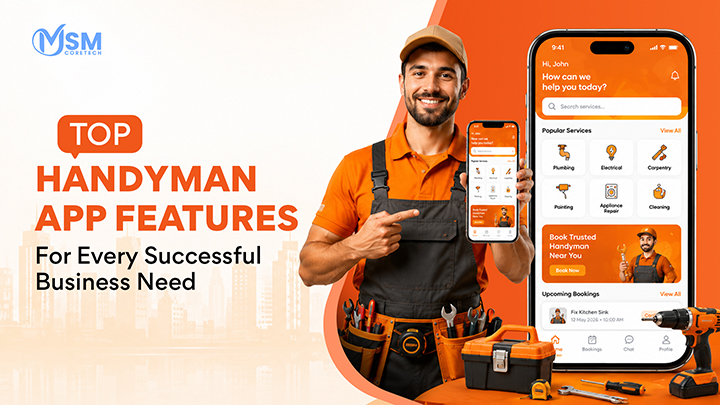
The way people get things repaired in their homes has changed a lot over the years. Today, no one wants to wait for days to hire a plumber or spend hours making calls to find an electrician. People want quick help, and they want to book it with just a few taps on their phone. That is exactly why on-demand handyman services have become so popular, and their demand continues to grow more and more every year.
But the important thing is that simply building a handyman app is not enough. What really makes a handyman app successful are the features it offers. The right features decide whether customers keep using your app or stop using it, whether service providers have a smooth experience, and whether your business grows successfully or finds it difficult to survive in the market.
In 2026, the handyman app industry is growing quickly, with AI, automation, and smart technology becoming a regular part of modern apps. In this guide, you will learn about the must-have handyman app Features, the advanced and AI-powered features changing this industry, important security features, common mistakes businesses often make, and how to choose the right features for your own app. Let’s get started.
Also Read: Handyman App Development Cost
The Growing Market for Handyman Apps
The on-demand home services industry is no longer a small market; it has become a huge industry around the world. Today, more homeowners like to book repair services online instead of looking through phone books or asking their neighbors for recommendations. Because of this change, the on-demand home services market has grown to billions of dollars worldwide, and it continues to grow bigger every year.
Industry reports regularly show that on-demand home service platforms are growing at a strong CAGR, and this growth is often in the double digits. This clearly means the market is not only growing, but it is growing very quickly, and there are no signs that this fast growth will slow down anytime soon.
Consumer adoption trends also show an interesting change. People of all age groups, not just young and tech-savvy users, now feel comfortable booking handyman services through mobile apps. Busy working professionals, parents with packed schedules, elderly homeowners, and even landlords who manage multiple properties are using these apps to find fast and reliable services. This growing use across different types of users is one of the biggest reasons why businesses are quickly investing in handyman app development today.
Why Businesses Are Investing in Handyman Apps
There are many good reasons why businesses, from small local service companies to large service marketplace platforms, are investing in handyman apps.
- Increased customer convenience: Making things easier for customers is one of the biggest benefits. People do not want to spend time waiting on phone calls or discussing prices with someone. They want to view available service providers, compare prices, read customer reviews, and book a service right away. A mobile app makes the entire process quick, easy, and smooth for every customer.
- Higher operational efficiency: Another big reason is better operational efficiency. When bookings, scheduling, payments, and customer communication are all managed in one app, businesses save a lot of time that would otherwise be spent on manual work. This helps reduce missed appointments, avoids unnecessary confusion, and makes daily business operations much smoother and easier to manage.
- Better revenue opportunities: When a business moves its services online, it naturally gets more ways to earn revenue. Mobile apps make it easier to sell extra services, offer subscription plans, run special promotions, and reach many more customers than traditional word-of-mouth marketing alone ever can.
Finally, there is a bigger picture to think about: digital transformation in home services. Just like ride-hailing apps changed the way people travel, and food delivery apps changed the way people order and enjoy food, handyman apps are changing the way people take care of their homes. Businesses that do not keep up with this change may fall behind competitors that are already using these digital solutions.
Also Read: Develop a Handyman App like Angi
Types of Users in a Handyman App Ecosystem
Before we talk about the features, it is important to know who actually uses a handyman app. Most handyman apps are mainly designed for three different types of users, and each user needs a different kind of experience.
Customer Panel
This is the section where homeowners or renters can search for different services, compare service providers, book appointments, make secure payments, and track the progress of their service requests. The customer panel should be simple, easy to use, and stress-free because most customers are not technology experts; they simply want to get their problem fixed quickly and without any confusion.
Service Provider Panel
This panel is made for plumbers, electricians, carpenters, cleaners, and other service professionals who do the actual work. It helps them manage their schedules, accept or decline jobs, track their earnings, and communicate with customers easily without any difficulty.
Admin Panel
The admin panel is the main control center of the entire platform. Business owners or platform managers use this panel to manage bookings, oversee service providers, handle payments, solve customer disputes, and track how well the overall business is performing.
Understanding these three panels is important because the features of a handyman app are designed to match the specific needs of each of these three types of users.
Key Features of a Handyman App
A handyman app works properly only when every part of it is designed for the people who will actually use it. There are three main users of the app: the admin who manages the business, the customer who books the services, and the service provider who completes the work. Every user needs their own set of features and tools to do their tasks easily and without any problems. Now, let’s look at the handyman app features for each panel one by one.
Admin Panel Features
The admin panel is the main control center of the entire app. It allows business owners to manage everything happening on the platform easily without any confusion.
- Dashboard & Analytics: A central dashboard displays live updates on bookings, earnings, active users, and provider performance, helping business owners make fast, smart decisions instead of simply guessing.
- User & Provider Management: Admins can see all registered customers and service providers, review and verify new provider applications, approve or block user accounts, and take action whenever a dispute needs to be resolved.
- Service Category Management: This allows admins to add new service categories (such as plumbing, painting, or appliance repair), update existing categories, or delete the ones that are no longer available.
- Booking & Scheduling Control: You can manage every booking made through the app from this panel, including cancellations and rescheduled appointments, so nothing gets missed or overlooked.
- Payment & Commission Management: Admins can easily track all the payments and transactions made on the platform, set commission rates for every completed job, and manage payments that are sent to service providers.
- Review & Feedback Moderation: To keep the platform reliable and trustworthy, admins can check customer reviews, remove fake or inappropriate feedback, and reply to complaints whenever it is needed.
- Push Notifications & Alerts: This feature allows admins to send updates, special offers, and important reminders directly to users and service providers, helping everyone stay connected and engaged with the platform.
- Marketing & Promotion Tools: Admins can create discount campaigns, set referral rewards, and launch seasonal offers to bring in new users and keep existing users coming back.
- Customer Support Panel: A built-in support system helps admins manage customer complaints, handle refund requests, and solve technical problems reported by both customers and service providers.
User Panel Features
The user panel is where customers spend most of their time, so it should feel simple, quick, and completely stress-free from the very first tap.
- Quick Registration & Login: Customers should be able to create an account in just a few seconds using their email, phone number, or social media account, without going through any difficult steps.
- Service Browsing & Categories: A simple and well-organized list of services helps users quickly find exactly what they need, whether it is a leaking faucet or a broken light switch.
- Smart Search & Filters: Customers can use filters like price, location, ratings, and availability to quickly find the right service provider that matches their needs.
- Instant or Scheduled Booking: Some issues need to be fixed immediately, while others can be planned for later. Letting users choose between instant booking and scheduling for a later time gives them more flexibility.
- Real-Time Tracking: Just like tracking a food delivery, customers can easily see where their service provider is and exactly how much time it will take them to arrive.
- Secure In-App Payments: Customers can pay using cards, digital wallets, or cash on delivery, making the checkout process easy, smooth, and completely hassle-free.
- In-App Chat & Calling: Before or while making a booking, customers should be able to chat or call their service provider directly to discuss and confirm the job details clearly.
- Ratings & Reviews: Once the job is completed, users can rate their experience, helping other customers find trusted service providers with more confidence.
- Booking History & Invoices: Users can easily view all their past bookings and download invoices whenever they need, making it simple to track their spending and booking dates.
- Personalized Alerts: Users receive notifications about upcoming appointments, special offers, or service reminders, helping them stay informed and engaged without feeling overwhelmed by too many messages.
Service Provider Panel Features
The service provider panel should make the work easier for the people doing the actual job, not create more stress during their daily work.
- Profile Setup & Verification: Providers can create a complete profile with their skills, experience, and certifications. The admin checks and verifies the profile before it becomes visible on the platform.
- Service Listings & Pricing: Service providers can add the services they offer, choose their own prices, and update their available time whenever their schedule changes.
- Job Request Handling: Providers can easily accept or decline new job requests based on their current workload, without feeling any pressure.
- GPS Navigation: Built-in maps help service providers reach the customer’s location using the fastest route, making sure they arrive on time.
- Earnings Tracker: Service providers can easily see how much they have earned every day, every week, or every month, and they can request payouts whenever they want.
- Direct Customer Communication: A chat or call feature allows service providers to talk with customers and clearly understand the job details before they begin the work.
- Job History & Performance Insights: Providers can review their completed jobs, read customer reviews, and see where they can improve their services.
- Instant Notifications: Service providers receive a notification as soon as a new job request arrives, so they never miss a chance to earn money.
These three panels work together as the strong foundation of any successful platform. Whether you are creating a simple MVP or a complete solution, getting these Features of a Handyman App right from the beginning makes a big difference in how smoothly the entire business operates. This is exactly the kind of careful, panel-by-panel planning that an experienced handyman app development company provides, making sure no important feature or detail is missed.
Also Read: How to Design a Handyman App
Advanced Features That Give You a Competitive Edge
Simple basic features help an app start working, but advanced features are what make successful businesses stand out from others. Below are some advanced additions you should consider in 2026.
AR for Remote Issue Diagnosis
Augmented Reality (AR) lets customers use their phone camera to show a broken appliance or fixture, and a service provider can see the problem from a distance, guide them step by step, or understand the issue better before coming. This helps save time and also allows the service provider to carry the correct tools and needed parts on the very first visit.
IoT Device Integration
With more and more homes using smart devices, handyman apps can connect with IoT (Internet of Things) systems to automatically find problems, such as a smart water sensor sending an alert to the app about a leak before it turns into a bigger issue.
Subscription-Based Maintenance Plans
Instead of single-time bookings, businesses can provide monthly or yearly maintenance plans. This creates steady recurring income and builds long-term trust with customers needing regular home upkeep services.
Multi-Language Support
When a business wants to operate in different regions or countries, having support for multiple languages is very important. It removes language barriers and makes the app easy to use for a much larger group of people.
Multi-Currency Payments
For businesses working across countries, accepting multiple currencies makes payments easy and builds trust with international customers.
Contactless Payments
Fast, safe, contactless payment methods like digital wallets and tap-to-pay options are now expected by most users, not only an extra benefit.
Carbon Footprint Tracking (Emerging Trend)
This is a new trend in which apps show users how their service choices affect the environment, like offering eco-friendly repair options. It attracts users who care about the environment and also gives the app a more modern and updated feel.
Smart Home Integration
As more homes are becoming smart, handyman apps that can connect with smart home systems like smart locks or thermostats provide extra convenience, especially for tech-savvy homeowners.
Offline Mode for Professionals
Service workers do not always have good internet, especially in basements or far locations. Offline mode helps them see job details and update status without internet, and it syncs when they are back online.
Reports & Business Insights
Detailed reports about bookings, revenue, customer behavior, and provider performance help business owners make better and smarter decisions instead of simply guessing what is working and what is not working.

Also Read: Cost to Develop a Home Service App like TaskRabbit
AI-Powered Features Transforming Handyman Apps
Artificial Intelligence is no longer just a trendy buzzword; it is now actively changing the way handyman apps work. Here are the AI features that are making the biggest impact right now.
AI Chatbots for Customer Support
Instead of waiting for human agents, customers get quick answers to common questions using AI chatbots. This makes support faster and reduces workload on human staff overall.
AI Job Matching
AI can automatically connect customers with the best available service provider based on location, skills, ratings, and past performance, helping save time for everyone involved.
Predictive Scheduling
AI can predict busy hours and suggest the best time slots, helping businesses prevent overbooking and helping customers receive faster service in quieter periods easily.
Dynamic Pricing Engine
Just like ride-hailing apps change prices when demand is high, handyman apps can use AI to change pricing based on demand, urgency, and provider availability, helping increase revenue while keeping customers fair.
Voice-Based Booking
As voice assistants are becoming more common, allowing customers to simply book a service by speaking makes the app much easier to use, especially for elderly users or for people who find typing difficult or inconvenient.
AI Fraud Detection
AI can easily detect and identify suspicious activities such as fake bookings, payment fraud, or fake reviews, and it helps in protecting both the business and real and genuine users from bad people or bad actors who try to misuse the system.
Personalized Service Recommendations
On the basis of earlier bookings, AI can easily suggest useful services to customers, like giving a reminder for AC servicing before the summer season or suggesting a plumbing check after a previous water leakage repair.
These AI-powered handyman app features are fast becoming the normal standard instead of rare, and companies that use them early stand out from competitors still using very old systems.
Security Features Every Handyman App Should Include
With sensitive customer data, home addresses, and payment details involved, security cannot be an afterthought. Here are the essential security features.
End-to-End Data Encryption
All communication and saved data must be fully encrypted so sensitive information remains safe from hackers and unauthorized access.
Secure Payment Gateway
Using trusted PCI-compliant payment gateways makes financial transactions safe for both customers and service providers very secure.
Multi-Factor Authentication
Adding another security step, such as a one-time OTP sent to a mobile phone, makes it harder for unauthorized people to access accounts.
GDPR & Data Privacy Compliance
For international businesses, following data privacy laws like GDPR is not optional; it is legal requirement that also builds customer trust.
Role-Based Access Control
This makes sure that only approved people like admins can access sensitive backend data, while regular users and providers can only see the information that is relevant to them.
Importance of Good Handyman App Features
Why does all of this even matter? Because good features directly impact how well a business performs.
Enhances User Experience
When an app is simple to use and meets customer expectations, they are far more likely to keep using it instead of switching to another app.
Helps People Trust and Feel Safe
Features such as verified profiles, safe and secure payment options, and clear and honest reviews help customers feel more confident when they are inviting someone they do not know into their home.
Improves Service Accuracy
Features such as AR diagnosis, clear and detailed job descriptions, and simple communication tools help service providers clearly understand what work needs to be done, which reduces mistakes and also lowers the chances of repeat visits.
Helps Keep Customers Longer
When an app keeps giving a good experience all the time, customers are more likely to come back again and again instead of using or trying other platforms.
Boosts Revenue Generation
In the end, having better features helps get more bookings, keeps customers coming back, and creates more chances to sell extra services, all of which directly increase business revenue.
Benefits of Adding Advanced Features to Your Handyman App
Putting money into advanced features is not just a “nice to have”; it brings real and measurable business benefits, such as:
- Better customer experience, since users get a smoother, faster, more personalized app.
- Higher booking conversion, as fewer users drop off during the booking process.
- Increased customer retention, since happy users keep coming back.
- Improved service quality, thanks to tools like AI matching and AR diagnosis.
- Higher provider productivity, as providers spend less time on admin work.
- Greater operational efficiency across the entire business.
- Increased revenue opportunities through subscriptions, dynamic pricing, and upselling.
- Stronger competitive advantage over businesses still relying on outdated systems.
Common Mistakes Businesses Make When Choosing App Features
Not every feature is worth adding, and many businesses make expensive mistakes while planning the project in the early stage.
One common mistake is adding extra features just because competitors have them, even if they do not provide real value for your specific users. Another mistake is ignoring user experience and packing too many features into the app until it becomes confusing and cluttered.
Poor planning for scalability is also a major problem, where an app may work properly for 100 users but starts failing or slowing down when it reaches 10,000 users. Poor security setup is also a very serious risk, because even a single data breach can completely damage customer trust forever.
Many businesses also make the mistake of not having proper analytics, which means they are unable to track what is actually working and what is not working. And lastly, ignoring customer feedback during the app development process often results in building features that no one actually asked for or really wants.
How to Choose the Right Features for Your Handyman App?
Picking the right features begins with knowing your target users and the real problems they face, not just copying other apps. First, include basic features that make booking, payments, and communication easy, then slowly add advanced features according to what your users actually ask for or need.
It is also helpful to study your competitors, not to copy them, but to understand what is missing in their apps and what you can make better. Try to talk to real service providers and customers if possible, because they will clearly tell you what problems and frustrations they face with existing solutions.
Lastly, always keep scalability in mind. Choose features and technology that can easily grow with your business, instead of selecting something that would need to be completely rebuilt when you start scaling in the future. Working with an experienced handyman app development company can make this entire process much smoother and easier, because they have already seen what works and what does not work across many different projects.
Future Trends in Handyman Apps Beyond
The handyman app industry will keep changing and growing in the coming time. Looking ahead, we can expect AI-powered automation to handle even more backend tasks for businesses, like scheduling jobs and handling customer support. Hyper-personalization will become normal, with apps adjusting everything from pricing to recommendations based on each user’s behavior patterns.
Voice-based ways of interacting are expected to increase in the future, making it as easy to book any service as simply speaking to a smart speaker. Predictive maintenance will also support homeowners in finding and fixing small issues early before they turn into expensive problems by using data collected from smart home devices.
We will also likely see self-operating scheduling, where AI takes care of the whole booking and coordination process with very little or no human involvement. Blockchain-based payments may also become more common, providing extra clarity and security for transactions.
Wearable devices can let service providers get job notifications straight on their smartwatches, and better smart home system connection will make handyman apps feel like a normal and easy part of the overall smart home experience.
Why Choose MSM CoreTech for Handyman App Development?
If you are planning to create a handyman app that really stands out in 2026, picking the right development partner makes a big difference. MSM CoreTech focuses on custom handyman app development and builds solutions that are designed according to your exact business goals and requirements, instead of using a ready-made or one-size-fits-all template.
The team works on adding AI-based features like smart job matching and predictive scheduling, along with a scalable system design that grows with your business instead of slowing it down. With strong experience in cross-platform development, MSM CoreTech creates apps that run smoothly on iOS, Android, and web platforms.
Security is never treated as something that comes later; secure payment integration and data protection are included in every project right from day one. And the support does not end once the app is launched. MSM CoreTech provides complete end-to-end development support, along with continuous maintenance and regular updates, making sure your app always stays up to date, fully secure, and competitive as the market keeps changing.

Conclusion
Building a successful handyman app in 2026 mainly depends on one key thing: having the right set of features. From basic tools like booking and payment systems to advanced AI-based features and strong security measures, every single feature contributes to how well your app works and how much users trust and rely on it.
The demand for on-demand handyman services is increasing, and businesses that invest in smart and well-planned features will naturally stay ahead compared to those that do not. Whether you are just starting or looking to upgrade an existing platform, understanding these handyman app Features gives you a clear and simple roadmap of what actually matters and what you should focus on.
If you want to build something that really stands out, working with an experienced handyman app development company like MSM CoreTech can help you turn your idea into a reliable, scalable, and future-ready application that customers as well as service providers will genuinely enjoy using.
FAQs
The core must-haves include easy booking, real-time tracking, secure payments, provider profiles, and in-app chat. Without these basics, the app won’t function smoothly for customers or providers.
Costs vary widely depending on features, platforms, and complexity, typically ranging from a basic MVP to a full-featured app. It’s best to get a custom quote from a development company based on your exact requirements.
Yes, most successful platforms use separate apps or panels for customers and providers, since their needs are very different. This keeps each experience simple, focused, and easy to use.
While not mandatory, AI features like job matching and predictive scheduling give a real competitive edge. They improve efficiency and customer experience compared to apps without them.
A basic version can take a few months, while a fully-featured app with advanced tools takes longer. Timelines depend on the features chosen and the development partner’s process.

Related Posts
How to Start an Online Handyman Business? A Complete Guide
Home services have quietly become one of the busiest corners of the on-demand economy. People no longer want to flip...
Read More
Top Music Streaming App Trends To Follow In 2026
Music streaming has changed how people find, share, and listen to their favorite songs. Today, listeners want more than just...
Read More

Top Benefits Of Medicine Delivery Apps In Healthcare 2026
Buying medicine used to mean the same thing everywhere: get in the car, wait in line at the pharmacy counter,...
Read More


 Verified Review




 +44 7427829444
 71-75, Shelton Street, Covent Garden, London, United Kingdom, WC2H 9JQ