

Share this article


How to Design a Handyman App? Components, Process, & More
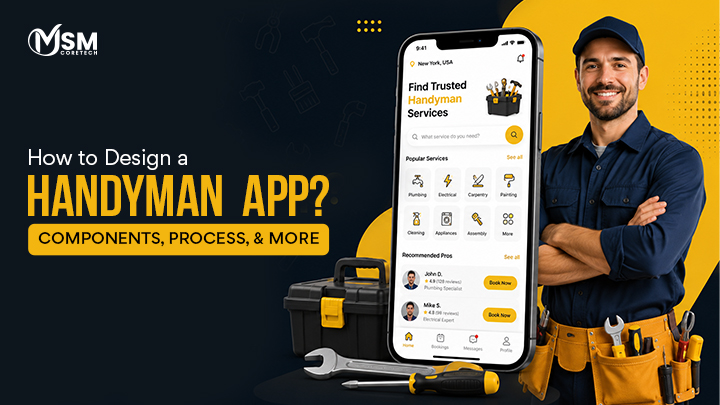
The handyman services market is growing very quickly, and handyman apps are becoming the main part of this growth. Whether you are a user who needs quick repair help or an entrepreneur who is thinking about starting a business in this exciting market, this is the right time to get involved. And if you are ready to build your own platform, MSM Coretech is the handyman app development company that can help you build it in the right way. The future of home services is becoming digital, and it is already here today. All you need to do is take advantage of it and get started.
The market opportunity is also very strong. Home services are a huge industry, but it is still made up of many small businesses. The companies that succeed are the ones that give customers more convenience, build trust, and provide fast service through a well-designed app. Whether you are a startup founder, a home service business owner planning to go digital, or someone who wants to learn how to create a handyman app from the beginning, this guide explains everything you need to know, including the main parts, essential features, app design process, UI/UX best practices, technology stack, common challenges, and what the future of this market looks like in 2026 and beyond.
Also Read: Cost to Develop a Home Service App like Thumbtack
What is a Handyman App?
A handyman app is simply a mobile or web application that helps people find skilled professionals for home repair and maintenance services. It can be used for jobs like plumbing, electrical repairs, furniture assembly, painting, carpentry, appliance repairs, and many other small or large household tasks. Instead of making multiple phone calls or asking friends and family for recommendations, customers can open the app, choose the service they need, select a suitable time, and book the job in just a few steps. A trusted and verified handyman then arrives at the scheduled time to complete the work. At the same time, the app helps handymen receive regular job requests, organize their daily schedule, manage appointments easily, and get paid through a simple and secure payment system.
How Does a Handyman App Work?
The whole process is actually very simple when you understand it step by step. A customer signs up, looks through the app or searches for the service they need, like fixing a leaking tap or repairing a broken cabinet hinge, and then chooses a time that suits their schedule. After that, the app connects the request with a nearby verified handyman, usually based on their location, customer ratings, and the type of service they provide.
The handyman accepts the booking, the customer can track their arrival live on the app, the repair work gets completed, and the payment is made safely through the app itself. Once the service is finished, the customer gives a rating and writes a review, which helps other people book trusted handymen in the future. In the background, the admin panel takes care of everything by verifying service providers, resolving customer issues, managing commissions, and making sure the entire platform runs smoothly.
Types of Handyman Apps
Every handyman app is not designed in the same way. Based on your business model and the audience you want to reach, you can choose from a few different types:
- On-Demand Handyman Apps: These focus on speed. A customer requests a service and gets matched with the nearest available professional almost instantly, similar to how ride-hailing apps work. Great for urgent fixes like a burst pipe or a power outage.
- Home Repair Service Apps: These are slightly more planned. Customers browse categories, compare providers, check availability, and schedule a visit for a specific date and time rather than expecting someone immediately.
- Multi-Service Apps: Instead of sticking to just plumbing or electrical work, these apps offer a wide range of services under one roof: cleaning, moving, painting, pest control, appliance repair, and more, so the customer never has to leave the app for a different need.
- Business-to-Business (B2B) Handyman Platforms: These are built for companies rather than individual homeowners. Think property management firms, real estate companies, or facility maintenance teams that need to book recurring services across multiple properties at scale.
Also Read: Handyman App Development Cost
Why Invest in a Handyman App?
The home services industry has been growing year after year, and on-demand apps are taking a larger share of the market with each passing year. More people now prefer booking home services through mobile apps instead of making phone calls because it is quicker, more convenient, and allows them to check ratings before inviting someone into their home. As more people use smartphones every day and become comfortable booking everything from groceries to doctor appointments online, home repair services are naturally moving in the same direction. This makes 2026 a great time to enter this market, especially since many regions are still developing, and there is plenty of space for new, well-built apps to attract customers and stand out from the competition.
Growing Consumer Demand
Today, people care about saving time more than ever before, and they are happy to pay for services that make their lives easier. Busy professionals, working parents, and older homeowners all face one common problem: finding a reliable person to repair things at home without spending hours making phone calls or waiting all day for an unclear appointment time. A well-designed handyman app solves this problem completely. Customers can instantly see who is coming, how much they charge, and exactly when they will arrive, which is the kind of clear and simple experience that people now expect from every app they use.
Benefits for Businesses
For businesses, a handyman app is not just a useful tool; it is a powerful way to grow your business. It creates a steady source of income through service bookings, commissions, and subscription plans. It also helps you build a loyal customer base because once people find a platform with trusted service providers, they usually come back instead of looking somewhere else. On the business side, a digital platform makes it much easier to manage service providers, monitor their performance, handle payments, and expand into new cities or add more service categories without recreating your whole process every single time.
Future Market Trends
In the coming years, handyman apps will become smarter and offer more personalized experiences for users. You can expect features like AI helping customers find the right service providers, reminders for home maintenance before problems happen, subscription plans for regular home care, and better connection with smart home devices. Apps that start using these new trends early will have a big advantage over apps that continue to offer only a simple booking feature.
Also Read: Top AI Trends
Essential Components of a Successful Handyman App
A successful handyman app needs a strong foundation with all the important parts that help it work smoothly, support easy communication, and provide a great user experience. Along with a good-looking design, the app should have separate sections for customers, service providers, and admins, plus a secure backend system that keeps everything running together.
User Panel
This is the part of the app that customers use to browse services, book appointments, track their handyman, make payments for the job, and leave reviews. It should feel simple and easy to use, because most customers are not tech experts; they just want to get their problem solved without any trouble.
Service Provider Panel
This is the place where handymen handle their daily work. They can choose when they are available, accept or reject job requests, check customer information, get directions to the job location, and monitor their earnings. A well-designed provider panel helps handymen stay organized and encourages them to remain active on the platform.
Admin Panel
The admin panel is the main control center of the whole app. From here, the business owner or management team can manage users, approve new handymen, track bookings, set commission rates, solve customer disputes, and view reports to see how the entire platform is performing overall.
Backend Infrastructure
The backend is the main system that works quietly in the background. It takes care of things like user login, job matching, notifications, storing data, and connecting the user app, provider app, and admin dashboard. A strong backend helps everything run smoothly and quickly, even when more users start using your app.
Cloud Storage & Security
Since the app stores personal information, payment details, and location data, using secure cloud storage and strong security measures is very important. Encrypted data storage, safe login systems, and regular backups help protect both your business and your users from data theft, security breaches, or data loss.
Third-Party Integrations
No handyman app is created completely from scratch on its own. You will need to connect features like payment gateways, maps and GPS, SMS or push notifications, and sometimes background check tools to verify handymen. These integrations help save development time and provide trusted, reliable features instead of building everything from the beginning yourself.
Also Read: How On-Demand App Development Can Drive Business Growth
Must-Have Features of a Handyman App
The success of a handyman app depends on the features it provides for customers, service providers, and administrators. A well-built app should make every step of the service process simple, from finding trusted professionals and booking appointments to handling payments and keeping track of the progress of every job.
Customer Features
The customer side of the app is where users form their first impression, so every feature should be simple, easy to use, and build trust.
- User Registration: A quick sign-up process using phone number, email, or social login so customers do not abandon the app before they even start.
- Profile Management: Customers should be able to update their contact details, saved addresses, and preferences easily.
- Search Services: A simple search bar to quickly find the exact service they are looking for.
- Category Browsing: Organized categories like plumbing, electrical, carpentry, and cleaning so users can browse even if they are not sure exactly what they need.
- Real-Time Availability: Showing which handymen are available right now or for upcoming time slots.
- Booking Scheduling: Letting users pick a convenient date and time for the service.
- GPS Location: Automatically detecting the customer’s location to find nearby handymen and accurate service areas.
- Live Tracking: Letting customers see their handyman’s location in real time, just like tracking a delivery.
- Secure Payments: Multiple payment options with encrypted, safe transactions inside the app.
- Ratings & Reviews: Allowing customers to rate their experience, which builds trust for future users.
- Push Notifications: Keeping users updated on booking confirmations, handyman arrival, and offers.
- In-App Chat & Calling: A built-in way to communicate directly with the assigned handyman without sharing personal phone numbers.
- Booking History: A record of past services for easy rebooking or reference.
- Favorite Service Providers: Letting customers save handymen they trust and want to book again.
Handyman Features
On the provider side, the app should make work easy to manage so handymen can focus on their jobs, not on paperwork.
- Profile Verification: A clear process for handymen to verify their identity, skills, and background, which builds customer confidence.
- Service Management: Letting providers list and update the services they offer along with pricing.
- Calendar Availability: A simple calendar where handymen can mark when they are free or busy.
- Accept/Reject Requests: The ability to review incoming job requests and choose to accept or decline them.
- Earnings Dashboard: A clear breakdown of completed jobs, payments received, and pending payouts.
- Route Navigation: Built-in maps integration to guide handymen to the customer’s location.
- Customer Communication: Chat or call options to clarify job details before arriving.
- Job History: A log of all past jobs completed, useful for tracking performance and resolving disputes.
Admin Features
The admin panel should give the business complete visibility and full control over everything that happens on the platform.
- Dashboard: A snapshot view of bookings, revenue, active users, and overall platform health.
- User Management: Tools to manage, suspend, or support both customers and handymen.
- Provider Verification: A workflow to review and approve handyman applications and documents.
- Booking Management: Oversight of all active, completed, and cancelled bookings.
- Commission Management: Setting and adjusting how much commission the platform earns per job.
- Analytics: Insights into demand patterns, popular services, and provider performance.
- CMS: A content management system to update app content, banners, and service categories without needing a developer every time.
- Reports: Detailed reports for revenue, taxes, and operational performance.
- Coupon Management: Creating and tracking discount codes or promotional offers.

Also Read: 7 Proven UX Design Guidelines for Modern On-Demand Apps
Step-by-Step Process to Design a Handyman App
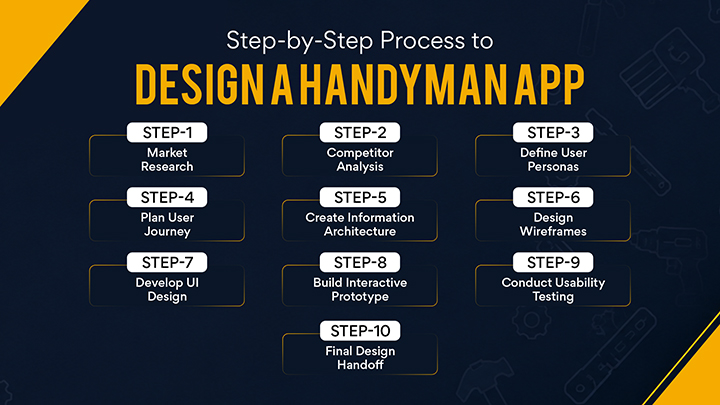
Designing a handyman app is not just about creating a good-looking interface; it also needs a clear and well-planned process that keeps user needs, business goals, and technical requirements in balance. From understanding your target audience and planning user journeys to creating simple UI/UX designs and testing every feature carefully, every step is important for providing a smooth user experience. By following a proper design process, businesses can build a handyman app that is simple to use, easy to grow, and able to meet the needs and expectations of both customers and service professionals.
Step 1- Market Research
Before you start any design work, it is important to understand the market you want to enter. This means researching the demand in your target city or area, finding out which services people use the most, and learning what prices customers expect. Good market research gives you a strong starting point, so you are not simply guessing what you should build.
Step 2- Competitor Analysis
Take a close look at the apps that are already working in this market. See what they are doing really well and check what users complain about in their reviews. Studying your competitors helps you find gaps you can fill and keeps you from making the same mistakes others have already made.
Step 3- Define User Personas
Not every user who uses your app is the same. A busy working parent who needs to book a quick repair has different needs than a property manager who wants to schedule regular maintenance. Creating clear user personas helps the design team think about real users at every step, instead of designing for an imaginary “average user.”
Step 4- Plan User Journey
Once you know who your users are, plan out exactly how they will use the app, from opening it for the first time, to booking a service, to getting support, to making a payment and leaving a review. This user journey helps you find any problem areas early, before even a single screen is designed.
Step 5- Create Information Architecture
This step is about arranging everything in a clear and logical way: which screens are needed, how they are linked together, and what menu layout works the best. Good information architecture helps users easily find what they need without ever feeling confused or lost.
Step 6- Design Wireframes
Wireframes are simple, basic sketches of every screen that show the layout and structure without focusing on colours or fonts at this stage. They help the team understand the features and user flow before spending time on detailed visual designs.
Step 7- Develop UI Design
This is the stage where your app begins to look like a complete product. Designers add colours, fonts, icons, and visual branding that match your business identity while making the interface simple, clean, and easy for users to navigate.
Step 8- Build Interactive Prototype
A clickable prototype allows stakeholders and test users to actually click and move through the app just like they would use a real app, even though no coding has been done yet. This is a great way to find usability problems early and collect valuable feedback before the development process starts.
Step 9- Conduct Usability Testing
Real users test the prototype and share honest feedback about what seems confusing, slow, or difficult to understand. This testing stage is one of the most important steps in the whole process because it helps you find problems that you would never notice by only looking at your own design.
Step 10- Final Design Handoff
After the design is fully tested and improved, it is passed to the development team with all the required specifications, design files, assets, and style guides they need to build the app correctly. A clear handoff helps avoid confusion, reduces miscommunication, and keeps the development process running smoothly.
Also Read: Mobile App Development or Mobile Web Development
UI/UX Design Best Practices for Handyman Apps
A well-designed handyman app should make it easy, quick, and hassle-free for users to book home services whenever they need them. By using proven UI/UX design best practices, businesses can create a simple and user-friendly experience that keeps customers happy, builds trust, and encourages them to book services again. The right design also helps service providers manage their work more smoothly while making the overall app easier and more enjoyable to use.
Keep Navigation Simple
Users should never have to wonder where to tap next. Keep the menu simple, use familiar icons, and follow a clear flow so even first-time users can book a service without any confusion.
Reduce Booking Steps
Every extra step in the booking process gives users one more reason to leave and close the app. Keep the process from choosing a service to confirming the booking as short and simple as possible.
Use Clean Visual Hierarchy
Important buttons like “Book Now” or “Confirm Payment” should be easy to notice, while less important information should stay simple and less visible. A clear layout naturally helps users focus on the right things on the screen.
Mobile-First Design
Since most people will book services using their mobile phones, the mobile-first design should first be made for mobile screens and then adjusted for tablets or desktop screens later, instead of doing it the other way around.
Accessibility Standards
A good app design should be easy for everyone to use, including people with poor eyesight or those who have trouble using their hands. Features like clear font sizes, proper colour contrast, and buttons that are easy to tap help more people use the app without difficulty.
Fast Loading Screens
No one likes waiting while a loading screen keeps spinning, especially during a home emergency. Using optimized images, reducing heavy elements, and adding skeleton loaders helps the app feel fast, smooth, and responsive.
Trust-Building Elements
Since users are inviting unknown people into their homes, trust is very important. Verified badges, honest customer reviews, clear pricing, and easy-to-see safety information all help customers feel confident before they make a booking.
Consistent Branding
The colors, fonts, icons, and tone of voice should stay the same on every screen. This consistency makes the app look professional and trustworthy instead of feeling randomly put together.
Also Read: Steps to Convert iOS App to Android App
Handyman App Design Process (Visual Workflow)
Below is a simple visual overview that shows how the complete design and launch process usually works, starting from the first research stage and continuing all the way to regular improvements after the launch:

Every stage leads to the next one, and even after the app goes live, the process does not really end. Successful handyman apps continue collecting user feedback and keep improving features, fixing problems, and adding new functions as time goes on.
Popular Handyman Apps to Take Inspiration From
Looking at apps that are already doing well in this industry is one of the best ways to understand what actually works in real-world handyman app design. Here are a few that are worth checking out:
TaskRabbit
TaskRabbit connects users with “Taskers” for everything from furniture assembly to small home repairs and errands.
Key Features: Hourly booking, in-app messaging, transparent pricing shown upfront, and a simple task-posting flow.
Design Highlights: A clean, friendly interface with clear photos of Taskers and straightforward category icons that make browsing feel approachable rather than overwhelming.
What You Can Learn: Transparent, upfront pricing builds enormous trust, and keeping the booking flow short encourages more completed bookings.
Thumbtack
Thumbtack focuses on connecting customers with local professionals across a huge range of categories, including home repair.
Key Features: Detailed professional profiles, instant quote requests, and a review system tied to verified completed jobs.
Design Highlights: A strong filtering system that lets users narrow down professionals by price, availability, and ratings without feeling overwhelmed by choice.
What You Can Learn: Giving users control through smart filters makes large marketplaces feel manageable instead of cluttered.
Angi
Angi (formerly Angie’s List) is a well-established platform for finding rated and reviewed home service professionals.
Key Features: Verified reviews, membership-based perks, and detailed service category breakdowns.
Design Highlights: A review-first design approach where ratings and feedback are front and centre on every provider profile.
What You Can Learn: When reviews are the star of the design, users feel more confident making a booking decision quickly.
Handy
Handy specializes in home cleaning and handyman services with a strong focus on quick, on-demand booking.
Key Features: One-tap rebooking, recurring service scheduling, and a satisfaction guarantee built right into the booking flow.
Design Highlights: Minimalist screens with very few distractions, designed to get users from “I need help” to “booking confirmed” in just a few taps.
What You Can Learn: Recurring booking options increase customer lifetime value and reduce the effort needed for repeat business.
Urban Company
Urban Company offers a wide range of home services, from appliance repair to beauty and wellness, all through one unified platform.
Key Features: Live tracking, in-app chat, professional certifications displayed clearly, and bundled service packages.
Design Highlights: A polished, app-store-quality interface with strong use of icons and imagery that make even unfamiliar services easy to understand at a glance.
What You Can Learn: Multi-service platforms benefit hugely from strong visual categorization so users never feel lost among too many options.
Mr. Handyman
Mr. Handyman is a more traditional home repair brand that has expanded into digital booking to modernize its service experience.
Key Features: Detailed service descriptions, easy quote requests, and clear service-area coverage maps.
Design Highlights: A trust-focused design with strong emphasis on credentials, guarantees, and clear contact information throughout.
What You Can Learn: Even well-established offline brands can successfully transition online by prioritizing clarity and trust over flashy design elements.
Also Read: iOS App Development Trends
Technologies Used to Build a Handyman App
Choosing the right technology stack is very important for building a secure, scalable, and high-performing handyman app. From frontend development and backend systems to cloud services, payment gateways, and GPS features, every technology has an important role in creating a smooth user experience, delivering reliable performance, and helping your business grow successfully in the future.
| Technology Layer | Recommended Technologies | Purpose |
|---|---|---|
| Frontend | React Native, Flutter | Build responsive and high-performance mobile apps with a single codebase for both Android and iOS, reducing development time and cost. |
| Backend | Node.js, Laravel, Django | Manage core business logic, user authentication, booking management, job matching, APIs, and data processing. |
| Database | MySQL, PostgreSQL, MongoDB | Securely store user profiles, bookings, service history, payments, and other application data while ensuring fast data retrieval. |
| Payment Gateway | Stripe, PayPal, Razorpay | Enable secure in-app payments, online transactions, refunds, and multiple payment methods for a seamless customer experience. |
| Maps & GPS | Google Maps API | Provide real-time location tracking, route navigation, distance calculation, nearby service provider discovery, and live ETA updates. |
| Notifications | Firebase Cloud Messaging (FCM), Twilio | Send instant push notifications, SMS alerts, booking confirmations, reminders, and real-time service updates to users and handymen. |
| Cloud Services | Amazon Web Services (AWS), Google Cloud Platform (GCP), Microsoft Azure | Offer secure hosting, cloud storage, automatic scaling, backups, and high application availability as the platform grows. |
| Analytics | Google Analytics, Mixpanel | Track user behavior, monitor booking trends, measure app performance, and gain insights for continuous product improvement and business growth. |
Common Challenges in Handyman App Design
Even if you have the best plans, building a handyman app can still come with a few challenges. Knowing about them early helps you prepare better instead of facing unexpected problems later.
- Building User Trust: Getting customers to trust a professional they do not know and allow them into their home requires proper verification and clear communication throughout the app.
- Service Provider Verification: Creating a complete and fair checking process for handymen takes real time and effort but is important for safety and building trust.
- Scheduling Conflicts: Managing appointment times between customers and service providers in real time can become difficult without a properly designed booking system.
- Real-Time Tracking: Building accurate and reliable GPS tracking that works smoothly on different devices and in different locations is a difficult technical task.
- Payment Security: Keeping payments safe, including refunds and payment disputes, needs careful planning and secure payment integrations.
- UI complexity: Keeping a feature-rich app balanced with a simple, clean interface is a constant design challenge
- Scalability: Building the app in a way that it can easily manage growth into new cities or new service categories in the future without needing a full rebuild requires smart and forward-thinking architecture.
- Customer Retention: Keeping users coming back instead of moving to a competitor needs ongoing value, not just a one-time good experience.
Tips to Make Your Handyman App Stand Out
With many home service apps trying to get attention, small and thoughtful details can greatly change how your app is seen and used by users.
- AI-driven service suggestions: Recommend useful services based on user’s previous bookings or seasonal needs.
- Voice search: lets users find services without using hands, which is especially helpful for older users or people who are multitasking.
- Smart scheduling: Use smart systems to automatically suggest the best available time slots.
- AR for home repair visualization: Let users point their camera at a problem area to understand the fix needed before booking.
- Subscription plans: Provide recurring maintenance packages for continuous customer relationships and steady, predictable revenue.
- Loyalty rewards: Give repeat customers points, discounts, or priority booking benefits.
- Flexible pricing: Set prices based on demand, urgency, or time of day, like ride-app systems.
- Multi-language support: Make the app easy to access for a wider, diverse user base.
- Dark mode: A small but popularized feature that improves usability and battery life for many users.
- Eco-friendly service badges: Show or highlight handymen or services that follow eco-friendly and sustainable methods, so it attracts customers who care about the environment and prefer green and responsible services.
Future Trends in Handyman App Design
As technology keeps changing, handyman apps are expected to become smarter and more proactive instead of only reactive booking tools. Here is what is shaping the future of this space:
- AI Chatbots: Answering customer questions right away, at any time of the day or night, without needing to wait for human support.
- Predictive Maintenance: Alerting homeowners about possible issues before they turn into costly problems.
- IoT Integration: Linking with smart home devices to automatically detect maintenance needs.
- AR-Based Repairs: Help customers and handymen see repairs more clearly before starting the work process
- Voice Assistants: Letting users book services using voice commands through smart speakers or in-app voice tools now.
- Hyperlocal Services: Local services connecting customers with nearby handymen for quicker response times and fast service.
- Sustainable Home Services: Rising need for eco-friendly repair and maintenance services.
- Contactless Payments: Quick, safe transactions with less manual input.
- AI Scheduling: Automatically planning handyman routes and time slots for maximum efficiency.
- Personalized User Experience: Customizing the app’s content, offers, and suggestions according to each individual user’s behaviour and activity.
Also Read: Artificial Intelligence in Mobile App Development
Why Choose MSM CoreTech for Handyman App Design & Development?
If you are ready to turn your handyman app idea into reality, picking the right development partner makes a big difference. MSM CoreTech is a trusted handyman app development company that knows both the technical and business sides of building a successful on-demand platform. Here is what makes the team different.
- Experienced UI/UX Designers: A design team that knows how to turn complex booking flows into simple, intuitive experiences users actually enjoy.
- Custom App Development: Solutions built around your specific business model rather than generic, one-size-fits-all templates.
- Cross-Platform Expertise: Strong experience building apps that work seamlessly across both iOS and Android.
- Scalable Architecture: Apps designed from day one to handle growth, new features, and expansion into new markets.
- Agile Development Process: A flexible, transparent workflow that keeps you involved and informed at every stage of the build.
- Ongoing Support & Maintenance: Continued support after launch to fix issues, roll out updates, and keep the app running smoothly.
- Transparent Pricing: Clear, honest pricing with no hidden surprises along the way.
Whether you are trying handyman app design for the first time or want to improve an existing platform, working with an experienced handyman app development company like MSM CoreTech can save your time, avoid costly mistakes, and help you launch a product that your users trust.

Conclusion
Creating a successful handyman app is not just about adding lots of features; it is about building a simple, user-friendly design that makes things easier for both customers and service providers. From an easy-to-use, trust-building user panel to a powerful admin dashboard working smoothly in the background, every part plays an important role in delivering the best overall experience.
In this guide, we explained what a handyman app is, the key parts and important features it should have, a simple step-by-step design process, useful UI/UX best practices, real-life app examples, the technology stack, common challenges, and what the future of this market looks like. If there is one thing to remember, it is this: a great handyman app design is built with simplicity, trust, and smart technology. If you are ready to create a handyman app that truly stands out, this is a great time to begin, and the right team can help turn your idea into a platform that people can trust and use every day.
FAQs
The cost depends on features, platforms, and complexity, ranging from a basic MVP to a full-featured platform. A handyman app development company can give you an accurate estimate after understanding your specific requirements.
A well-planned handyman app design and development project usually takes a few months from research to launch. Timelines vary based on features, integrations, and the number of platforms (iOS, Android, web) you’re targeting.
Real-time tracking, secure payments, provider verification, and in-app chat are must-haves for any handyman app. These features build trust and make the booking experience smooth for both customers and handymen.
Yes, many businesses choose to design a handyman app that covers plumbing, electrical, cleaning, and more on a single platform. This multi-service approach helps increase bookings and customer retention.
A professional team brings design expertise, technical know-how, and experience avoiding common pitfalls. This saves you time, reduces costly mistakes, and helps you launch a more reliable, scalable app.

Related Posts
How to Start an Online Handyman Business? A Complete Guide
Home services have quietly become one of the busiest corners of the on-demand economy. People no longer want to flip...
Read More
Top Music Streaming App Trends To Follow In 2026
Music streaming has changed how people find, share, and listen to their favorite songs. Today, listeners want more than just...
Read More

Top Benefits Of Medicine Delivery Apps In Healthcare 2026
Buying medicine used to mean the same thing everywhere: get in the car, wait in line at the pharmacy counter,...
Read More


 Verified Review




 +44 7427829444
 71-75, Shelton Street, Covent Garden, London, United Kingdom, WC2H 9JQ