

Share this article


How AI Is Transforming Dentistry: Benefits, Applications, and Future Trends
Imagine going to a dentist where dental problems are found early, treatment plans are created quickly, and your visit is easier and more comfortable. Thanks to Artificial Intelligence (AI), this is now becoming a reality. AI is improving healthcare by helping doctors and dentists make faster and more accurate decisions while giving better care to patients.
Today, AI is playing an important role in modern dentistry. It can check dental X-rays, find cavities, detect gum disease, help dentists plan treatments, and even handle everyday office tasks. AI does not replace dentists. Instead, it works like a smart assistant that helps them provide more accurate, faster, and personalized care for every patient.
The adoption of AI in dentistry is growing rapidly. According to Grand View Research, the global AI in healthcare market was valued at USD 36.07 billion in 2025 and is expected to grow at a CAGR of 38.9% from 2026 to 2033, showing how quickly AI technologies are being adopted across healthcare, including dental practices.
Dental clinics are using AI-powered technology because it helps dentists find dental problems more accurately, reduces manual work, saves time, and supports better treatment decisions. AI also makes it easier to manage appointments, answer patient questions with virtual assistants, and keep digital records organized. This helps clinics provide faster and more efficient dental care.
In this guide, you will learn how AI is changing the dental industry, its main benefits, real-life uses, and future trends. You will also understand why more dental clinics are choosing AI to provide faster, safer, and better-quality care for their patients.
What Is AI in Dentistry?
Artificial Intelligence (AI) in dentistry means using smart computer technology to help dentists give better, faster, and more accurate dental care. AI can look at dental X-rays, patient records, and dental images to find problems that might be hard for the human eye to see. It also helps dentists understand large amounts of patient data and make better treatment decisions. Today, many tools created by a healthcare software development company include AI features that help dental clinics provide smarter, faster, and more efficient patient care.
AI is made to help dentists, not replace them. A dentist’s knowledge, experience, and skills are still the most important part of dental treatment. AI works like a smart assistant by studying patient information, suggesting possible dental problems, and reducing routine manual tasks. This helps dentists save time, focus more on their patients, and provide more personalized and effective treatment.
Several AI technologies work together to improve modern dentistry. Machine learning helps AI learn from past patient cases, so it can give better suggestions over time. Computer vision looks at dental X-rays and scans to find cavities, gum disease, broken teeth, and other dental problems more accurately. Predictive analytics studies a patient’s medical history and treatment records to predict possible dental issues in the future. This helps dentists take early steps to prevent serious problems. Together, these AI technologies make dental care smarter, faster, and more efficient while helping patients get better treatment and healthier outcomes.
Read Also: Cost to Develop a Doctor Booking App Like HealthTap
Why AI Is Becoming Essential in Modern Dentistry
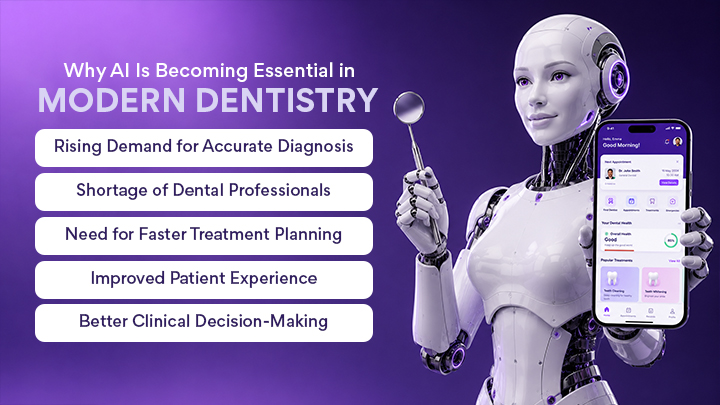
Artificial intelligence (AI) is becoming a valuable part of modern dentistry because it helps dentists work faster, smarter, and more accurately. As more people visit dental clinics, dentists need better tools to provide high-quality treatment while saving time. AI helps by studying dental data, supporting diagnosis, and handling many routine tasks more easily. It does not replace dentists. Instead, it helps them make better decisions and provide better care for their patients.
Rising Demand for Accurate Diagnosis
Today, patients want fast and accurate dental checkups. AI can quickly study dental X-rays, scans, and other images to find problems like cavities, gum disease, infections, and other oral health issues at an early stage. It can also point out small problem areas that may be hard for the human eye to notice. This helps dentists reduce errors, make more accurate diagnoses, and begin the right treatment as early as possible.
Shortage of Dental Professionals
Many areas do not have enough experienced dentists to treat all patients. Because of this, people may have to wait longer for dental care. AI helps by doing routine tasks like checking dental images, managing appointments, and organizing patient records. This gives dentists and their staff more time to focus on treating patients instead of doing paperwork.
Need for Faster Treatment Planning
Making a treatment plan can take a lot of time, especially for difficult dental cases. AI makes this process much faster by quickly reviewing patient records, dental scans, and medical history. It can also suggest the best treatment options, helping dentists make better decisions in less time and provide faster care to their patients.
Improved Patient Experience
AI makes dental visits easier and more comfortable for patients. People can book appointments online, get automatic reminders, and receive their reports more quickly. Many dental clinics also use AI chatbots to answer common questions, making it easier for patients to get help and reducing waiting times.
Better Clinical Decision-Making
AI helps dentists make better decisions by analyzing patient information and past cases. It provides useful suggestions that help dentists create more personalized treatment plans. With AI as a support tool, dentists can improve treatment accuracy, build patient trust, and provide better long-term oral health care.
Read Also: Cost to Develop a Doctor Booking App Like Practo
Key Benefits of AI in Dentistry
Artificial intelligence (AI) is making dental care easier, faster, and more accurate. It helps dentists make better decisions, saves valuable time, and gives patients a better treatment experience. AI does not replace dentists. Instead, it works like a smart assistant that helps them at every stage of diagnosis and treatment.
Improved Diagnostic Accuracy
One of the biggest benefits of AI in dentistry is that it helps dentists find dental problems more accurately. AI can study dental X-rays and scans to detect cavities at an early stage, even before they become serious. It can also identify early signs of gum disease that may be hard to see during a normal dental check-up. Some AI tools even help dentists detect oral cancer early, giving patients a better chance of getting timely treatment. By carefully analyzing dental images, AI reduces the chances of human error and helps dentists make more accurate and reliable diagnoses.
Faster Treatment Planning
AI helps dentists create treatment plans faster and more easily. It studies patient records and dental X-rays to give helpful treatment suggestions. AI can quickly analyze dental images, which saves time for dentists. It also recommends personalized treatment plans based on each patient’s oral health. This allows dentists to spend more time caring for their patients.
Enhanced Patient Experience
AI makes dental visits easier and more comfortable for patients. It reduces waiting times by speeding up appointments and daily clinic tasks. AI-powered chatbots and virtual assistants answer common questions, send appointment reminders, and improve communication. Patients can also use digital consultations to get dental advice without visiting the clinic for every small concern. These features help patients stay informed, involved, and engaged in taking care of their oral health.
Increased Practice Efficiency
AI helps dental clinics handle everyday tasks like booking appointments, managing patient records, and organizing daily work automatically. This makes daily work easier and reduces the workload for the staff, so they can spend more time caring for patients.
Better Predictive Care
AI also helps dentists predict future dental problems by checking a patient’s risk. This allows dentists to provide treatment early before small issues become serious. It also tracks the patient’s treatment progress, making long-term dental care more effective and personalized.
Read Also: How to Develop a Doctor Appointment Booking App Like Zocdoc
Top Applications of AI in Dentistry
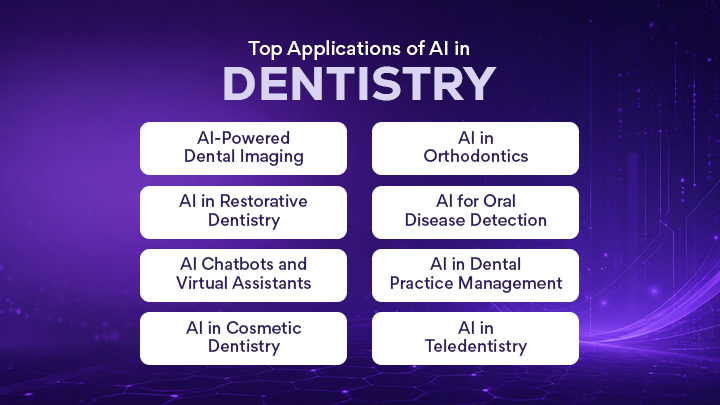
Artificial intelligence (AI) is changing the way dentists find problems, provide treatments, and take care of patients. It helps improve accuracy, saves time, and makes dental care faster and more efficient. AI is not only improving healthcare but is also helping businesses like a doctor booking app development company automate processes, improve patient scheduling, and deliver better healthcare services. Here are some of the most common ways AI is used in modern dentistry.
AI-Powered Dental Imaging
AI can quickly examine dental X-rays and CBCT (Cone Beam Computed Tomography) scans to detect dental problems that may be difficult for the human eye to see. It helps identify cavities, bone loss, infections, and other oral health issues at an early stage. AI can also improve the quality of blurry or low-quality images, making them clearer so dentists can make more accurate diagnoses and provide the right treatment.
AI in Orthodontics
AI helps orthodontists create digital smile previews, so patients can see how their smile may look after the treatment is complete. It can also predict how teeth will move during treatment and helps create more accurate clear aligner plans. This makes orthodontic treatment more precise and personalized for each patient.
AI in Restorative Dentistry
AI helps dentists design crowns, bridges, and other dental restorations that fit better and look more natural. It also helps plan dental implant placement by analyzing the jawbone and finding the best position for the implant. AI-powered digital impressions are faster, more accurate, and more comfortable for patients than traditional dental molds.
AI for Oral Disease Detection
One of the biggest benefits of AI in dentistry is that it helps detect oral diseases at an early stage. AI can find problems like tooth decay, gum disease, and early signs of oral cancer by studying dental images and patient records. Early detection helps dentists start treatment quickly, improve patient health, and reduce the chances of serious dental problems.
AI Chatbots and Virtual Assistants
Many dental clinics are now using AI chatbots to help patients with common questions, book appointments, send treatment reminders, and provide support after dental procedures. These virtual assistants work 24/7, making it easier for patients to communicate and helping reduce the workload of dental clinic staff.
AI in Dental Practice Management
AI is making the daily work of dental clinics easier and more organized. It helps with tasks like billing, checking insurance details, managing supplies, and planning staff schedules. By taking care of these regular tasks, AI allows dentists and their teams to spend more time providing better care to patients.
AI in Cosmetic Dentistry
AI is helping cosmetic dentists create better and more natural-looking smiles. It studies a patient’s facial features and helps design a smile that suits them. AI tools can also show patients a preview of how their smile may look after treatment. This allows patients to understand the results and feel more confident before starting the procedure.
Read Also: Top 7 Healthcare Website Development Companies in Australia
AI in Teledentistry
AI is helping make remote dental care easier and more useful. Patients can talk to dentists online, while AI helps with early diagnosis by checking symptoms and dental images. AI also helps dentists monitor patients digitally by tracking their recovery and treatment progress without needing regular visits to the dental clinic. This makes dental care more convenient, faster, and easier to access for people living in different areas.

Popular AI Technologies Used in Dentistry
Artificial Intelligence (AI) is changing the dental industry by making diagnosis, treatment planning, and patient care easier, faster, and more accurate. Different AI technologies help dentists improve their work and provide better treatment to patients. Some of the most commonly used AI technologies in dentistry are:
Machine Learning (ML)
Machine Learning helps computer systems learn from large amounts of dental data and improve their results over time. In dentistry, ML is used to study patient records, find dental issues, and predict possible oral health problems. It helps dentists make better treatment decisions by using information from past cases and patient details.
Deep Learning
Deep Learning is an advanced type of machine learning that uses neural networks to understand and analyze complex information. In dentistry, it is used to study dental images like X-rays, CT scans, and CBCT scans. Deep learning technology can identify problems such as cavities, bone loss, and other dental conditions with high accuracy. This helps dentists detect dental issues at an early stage and provide better treatment.
Computer Vision
Computer Vision allows AI systems to understand and analyze images and visual information. In dental clinics, it helps dentists examine dental images, find tooth damage, and support orthodontic treatment planning. This technology can highlight problem areas in images, making it easier for dentists to diagnose conditions and explain them clearly to patients.
Natural Language Processing (NLP)
Natural Language Processing helps computers understand and work with human language. In dentistry, NLP is used in AI chatbots and virtual assistants to answer patient questions, book appointments, and send treatment reminders. It helps reduce the workload of dental staff and improves communication between dentists and patients.
Generative AI
Generative AI helps create new content and solutions by using existing information. In dentistry, it can help dentists create personalized treatment plans, prepare patient reports, design dental models, and make educational materials. It saves time and helps provide more personalized care to patients.
Robotics
Robotics combined with AI helps dentists perform treatments with better accuracy and precision. AI-powered robotic systems can support dental implant procedures, surgery planning, and other complex treatments. These technologies improve treatment accuracy and help reduce the chances of mistakes during dental procedures.
Predictive Analytics
Predictive Analytics uses AI to study existing data and predict future results. In dentistry, it helps dentists identify patients who may be at higher risk of oral health problems, predict possible dental diseases, and suggest preventive treatments before serious issues occur.
Cloud Computing
Cloud Computing helps dental clinics store and access patient information securely from anywhere. When combined with AI, cloud technology makes it easier to analyze data quickly, manage digital patient records, and share information smoothly between dental professionals.
Together, these AI technologies are helping dentistry become more accurate, faster, and focused on patient needs. They are also creating new possibilities for the future of digital dental care.
Read Also: Best Healthcare App Development Companies in the USA
Real-World Examples of AI in Dentistry
AI is already changing the way dentists work by helping them diagnose problems, plan treatments, and provide better care to patients. Many dental clinics are now using AI-based tools to offer faster, more accurate, and more comfortable dental services.
AI-powered dental imaging tools help dentists check and understand X-rays, CBCT scans, and other dental images more accurately. These tools can find problems like cavities, infections, gum diseases, and changes in the jawbone at an early stage. This helps dentists start treatment on time and improve patient outcomes.
Smart intraoral scanners are another great example of AI use in dentistry. These scanners create clear 3D images of a patient’s teeth and mouth without the need for traditional dental molds. Dentists use these digital images for treatments like crowns, dental implants, and orthodontic procedures, making the entire process simpler, faster, and more comfortable for patients.
Digital smile design platforms use AI technology to show patients a virtual view of how their smile may look after treatment. This helps patients understand the possible results before starting cosmetic dental procedures. It also helps dentists create more personalized treatment plans based on each patient’s needs.
AI-powered orthodontic solutions help dentists study teeth positions and predict how teeth will move during orthodontic treatment. These tools support clear aligner planning and help improve the accuracy of the treatment process.
AI-based patient communication systems use chatbots and virtual assistants to manage appointment bookings, send reminders, answer common patient questions, and provide better support. These systems reduce the workload for dental staff and help clinics deliver a smoother patient experience.
Future Trends of AI in Dentistry
Artificial Intelligence (AI) is changing the way dental care is provided. In the coming years, AI will help dentists provide faster, more accurate, and personalized treatments for patients. AI-based tools will make dental care smarter and easier by helping with early detection of problems, better treatment planning, and improved communication between dentists and patients.
Predictive and Preventive Dentistry
One of the major future trends of AI in dentistry is predictive and preventive care. AI systems can study a patient’s dental records, medical history, and other health information to find possible oral health risks before they become serious problems.
For example, AI can help predict the chances of tooth decay, gum disease, and other dental issues at an early stage. This allows dentists to take preventive actions and provide timely treatment before the condition gets worse.
AI-Powered Robotic Dental Procedures
AI combined with robotics will make dental procedures more accurate and effective. AI-powered robotic systems can help dentists perform complex treatments like dental implants and surgeries. These systems can analyze patient scans and assist dentists in completing procedures with better precision. This can help reduce treatment time, improve results, and make dental treatments safer for patients.
Personalized Treatment Planning
Every patient has unique dental needs, and AI will help create personalized treatment plans for each person. AI tools can analyze a patient’s dental images, medical history, and treatment goals to recommend the most suitable treatment approach. In orthodontics, AI can predict how teeth will move and help create customized plans for clear aligners and braces.
Voice AI for Dental Clinics
Voice AI technology will help dental clinics work more smoothly. Dentists and staff can use voice assistants to quickly check patient records, add notes, book appointments, and handle daily tasks without doing everything manually. This will save time and help dental professionals spend more time taking care of their patients.
AI-Driven Remote Patient Monitoring
AI will make remote dental care easier and more effective. Dentists can monitor their patients from anywhere using AI-powered apps and digital tools. Patients can share dental images, treatment updates, and health concerns with their dentists. AI can review this information and notify dentists if any problem needs attention. This will make follow-up care simpler and more accessible for patients.
Smart Dental Clinics
In the future, dental clinics will become smarter with the help of AI technology. Smart clinics will use AI systems for managing appointments, communicating with patients, handling billing, tracking inventory, and automating daily tasks. These technologies will reduce manual work and help dental clinics run more smoothly and efficiently.
Generative AI for Patient Communication
Generative AI will make communication between dentists and patients easier. AI-powered tools can explain treatments in simple words, answer common patient questions, and provide personalized dental care instructions. This will help patients understand their dental problems better and make more confident decisions about their treatments.
Integration with IoT Dental Devices
The combination of AI and IoT (Internet of Things) devices will bring new possibilities to dental care. Smart toothbrushes, wearable dental devices, and connected dental equipment will collect real-time health information. AI will analyze this data to monitor oral health habits and suggest better ways to maintain dental care.
Overall, the future of AI in dentistry will focus on prevention, accurate diagnosis, and improving patient experiences. As AI technology continues to develop, dentists will be able to provide smarter treatments and offer better oral healthcare services to patients.
Read Also: Cost to Develop a Mobile Healthcare App
Why Choose MSM CoreTech for AI-Powered Dentistry Solutions?
MSM CoreTech helps dental businesses adopt the power of AI with smart, reliable, and easy-to-use dentistry solutions. As a trusted mobile app development company, we focus on creating AI-powered dental applications that improve diagnosis, treatment planning, and patient care. Our team understands the needs of modern dental clinics and builds solutions that make daily operations faster and more efficient.
With advanced technologies like AI, machine learning, and data analysis, we develop tools that support dental imaging, disease detection, patient management, and personalized treatment recommendations. Our AI solutions help dentists identify dental issues early, reduce manual tasks, and provide better treatment experiences for patients.
At MSM CoreTech, we create scalable and secure AI-powered platforms that easily connect with existing dental systems. From AI-based diagnosis tools and virtual assistants to smart dental management software, we provide complete solutions based on specific business requirements.
Our experienced developers follow a patient-focused approach and ensure every solution is simple, user-friendly, and effective. By choosing MSM CoreTech, dental professionals can improve clinic operations, deliver better care, and stay ahead in the growing digital dentistry market with innovative AI technology.

Conclusion
AI is changing the way dentistry works by making diagnosis, treatment planning, and patient care faster, easier, and more accurate. From analyzing dental images and detecting oral diseases to creating personalized treatment plans, AI helps dentists make better decisions and provide improved care. Technologies like AI-powered imaging, virtual assistants, and digital dentistry tools are helping clinics improve their daily workflow and patient experience.
The major benefits of AI in dentistry include early disease detection, reduced errors, faster treatment processes, better patient communication, and improved practice management. AI applications such as orthodontic planning, implant design, cosmetic dentistry, and remote consultations are making dental services more convenient and effective.
However, dental clinics need to adopt AI responsibly by focusing on patient data security, proper staff training, and using AI as a support tool rather than a complete replacement for dentists. Human expertise and AI technology should work together to deliver the best results.
As AI continues to grow, dental clinics that embrace these advanced solutions can provide better patient care, improve operational efficiency, and stay ahead in the future of digital dentistry. AI will continue to play an important role in creating smarter, faster, and more patient-friendly dental experiences.
FAQs
AI is transforming dentistry by helping dentists improve diagnosis, treatment planning, and patient care. It can analyze dental images, detect oral problems early, create personalized treatment plans, and automate daily clinic tasks.
The main benefits of AI in dentistry include faster diagnosis, improved accuracy, reduced human errors, better patient experiences, efficient workflow management, and more personalized dental treatments.
AI is used in dental imaging, orthodontic treatment planning, implant planning, oral disease detection, cosmetic dentistry, virtual assistants, teledentistry, and dental practice management.
No, AI cannot replace dentists. Instead, it works as a supporting technology that helps dentists make better decisions, improve accuracy, and provide more effective patient care.
Future AI trends in dentistry include smart dental clinics, AI-powered robotic procedures, predictive dental care, personalized treatments, voice assistants, remote patient monitoring, and advanced digital dentistry solutions.

Related Posts

10 Key Applications of AI in the Food Industry (2026)
Walk into any restaurant kitchen, grocery warehouse, or food delivery control room today, and you will find something quietly running...
Read More

How To Develop An App Like YouTube Music: A Complete Guide
Music is now a part of our everyday life. People listen to songs while getting ready in the morning, working,...
Read More

Must-Have Features in Fintech Apps & Digital Financial Platforms
Think about how often you use your phone to pay bills, send money, shop online, or check your bank balance....
Read More


 Verified Review




 +44 7427829444
 71-75, Shelton Street, Covent Garden, London, United Kingdom, WC2H 9JQ