

Share this article


How to Build an eCommerce Store for Selling Auto Parts Online?
Buying auto parts has become much easier than before. Today, customers do not want to spend hours visiting different shops to find the right spare parts for their vehicles. With the growth of online shopping, more people are searching for car and bike parts online, comparing prices, checking reviews, and ordering products from the comfort of their homes. This growing demand has created a great opportunity for businesses to build an online auto parts store.
Many traditional auto parts sellers are moving toward eCommerce platforms because they help businesses reach more customers beyond their local area. A physical store usually depends on nearby buyers, while an online store allows sellers to connect with customers from different cities and regions. Working with an experienced ecommerce development company can help businesses create a user-friendly platform with advanced features, smooth navigation, and secure shopping experiences.
Selling auto parts online gives businesses many benefits. It allows customers to buy products anytime because online stores are available 24/7. Businesses can showcase a large variety of products, such as engine parts, car accessories, tires, batteries, and other vehicle parts. Features like checking vehicle compatibility, product filters, customer reviews, and safe payment options make it easier for customers to find and buy the right parts quickly.
A well-designed eCommerce store improves the shopping experience and helps businesses increase sales while building strong relationships with customers. With proper planning, the right technology, and useful features, an online auto parts store can become a successful and scalable business solution.
Market Overview of Online Auto Parts Industry
The online auto parts industry is growing rapidly because more people now prefer buying vehicle parts and accessories online. Customers are moving from traditional stores to eCommerce websites because they can easily find products, compare prices, get better deals, receive doorstep delivery, and make secure online payments. These convenient features are making online auto parts shopping more popular among vehicle owners. The global automotive aftermarket industry was valued at around USD 489.5 billion in 2025 and is expected to grow to USD 643.8 billion by 2033, with a CAGR of 3.4%.
Many new trends are changing the future of online auto parts businesses. Features like AI-based product suggestions, vehicle compatibility checkers, smart inventory management, mobile shopping apps, and personalized customer experiences are becoming more popular. Businesses are also focusing on electric vehicle (EV) parts, online payment options, and faster delivery services to make customers happier.
Creating an eCommerce store for auto parts helps businesses reach more customers, manage their stock easily, and offer a better shopping experience. As online shopping and automotive technology continue to grow, investing in an auto parts eCommerce platform can bring great business opportunities in the future.
Also Read: B2B eCommerce Website Development Guide
What Is an Online Auto Parts eCommerce Store?
An online auto parts eCommerce store is a website or mobile app where customers can buy different types of vehicle parts, accessories, and automotive products online. It helps businesses sell car, bike, and commercial vehicle parts without depending only on a physical store. Customers can easily purchase products like engine parts, brakes, tires, batteries, lights, and other vehicle accessories from anywhere.
An online auto parts store makes shopping easier and more convenient for customers. They can search for the required parts by entering the product name, vehicle model, brand, or part number. With smart search filters, customers can quickly find the right products based on their budget, vehicle compatibility, ratings, and availability. They can also compare different products, check details, read customer reviews, and choose the best option based on their requirements.
After selecting a product, customers can add it to their cart, pay securely online, and place their order. The store owner can manage stock, handle orders, and deliver products with the help of shipping partners. Customers can also check their order status and get updates until the auto parts reach their doorstep.
Traditional auto parts stores usually require customers to visit the store, ask about product availability, and shop only during working hours. These stores often have limited stock and can only serve customers in a particular area. On the other hand, online auto parts stores offer more product options, allow customers to shop anytime, make price comparisons easier, and help businesses reach customers from different locations.
Creating an online auto parts eCommerce store helps businesses reach more customers, provide a better shopping experience, and increase sales. With the right features and technology, businesses can build a trusted platform that helps customers find and buy quality auto parts easily and quickly.
Benefits of Building an Online Auto Parts Store
An online auto parts store helps businesses expand their reach, improve customer experience, manage operations efficiently, and create new opportunities for growth in the digital marketplace.
Reach More Customers
An online auto parts store helps businesses connect with more customers, not just people living nearby. A physical store can only sell to customers who visit the shop, but an eCommerce website allows businesses to sell products to people in different cities and areas. Customers can easily find vehicle parts, check different options, compare products, and place orders from anywhere. This helps businesses reach more buyers and create more chances to increase sales.
Sell Products 24/7
One of the biggest benefits of an online auto parts store is that it is open all the time. Customers do not need to wait for shop opening hours to buy the parts they need. They can visit the website anytime, view product information, make payments, and order products easily. Being available 24/7 makes shopping more convenient for customers and helps businesses get sales even during non-working hours.
Better Inventory Management
Managing auto parts stock becomes much easier with an online store. Businesses can use digital inventory tools to check available products, track stock levels, and know which items are selling quickly. This helps prevent running out of popular products and avoids keeping extra stock that is not needed. Good inventory management saves time, lowers costs, and helps businesses run their operations smoothly.
Personalized Customer Experience
An eCommerce store helps businesses provide a better shopping experience for customers. Features like smart search, product suggestions, customer reviews, and vehicle compatibility checks help customers quickly find the right auto parts for their needs. A professional shopify e-commerce development company can create an easy-to-use online store with advanced features that make shopping simple and convenient for customers.
Increased Business Growth and Revenue Opportunities
Creating an online auto parts store helps businesses grow and find new ways to earn more revenue. Businesses can use SEO, social media, email marketing, and online ads to reach more customers and promote their products. An eCommerce platform also makes it easier to add new products, sell in different markets, and encourage customers to buy again. With the right planning and technology, an online auto parts store can become a successful, profitable, and scalable business solution.
Also Read: A Complete Guide to Merchant Payment Solution Development
Types of Auto Parts eCommerce Stores
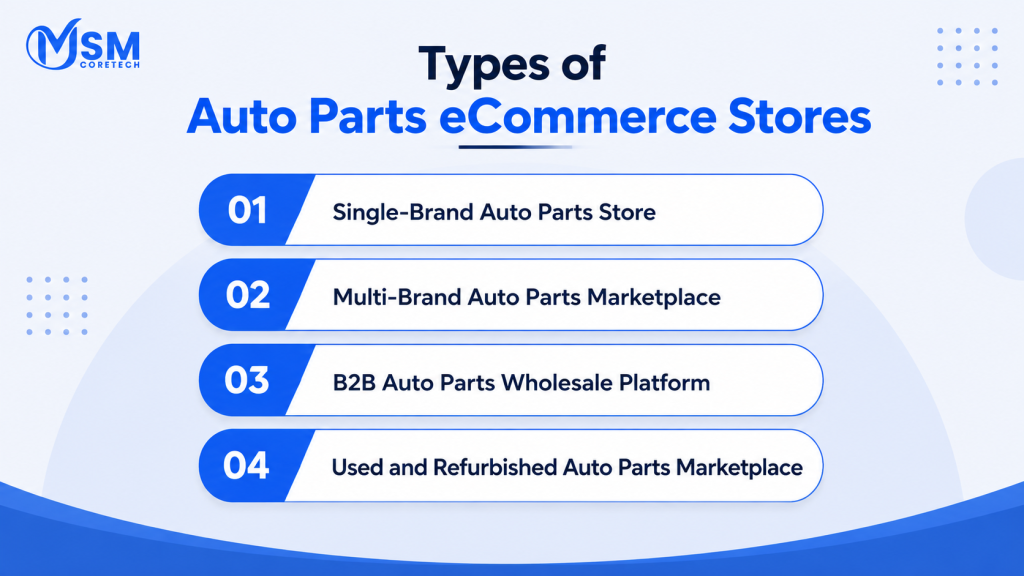
Before starting an online auto parts store, it is important to select the right type of eCommerce business model. The right choice depends on your customers, the types of products you sell, and your business goals. Different auto parts stores are created for different customers, such as individual vehicle owners, dealers, or large automotive companies. Choosing the correct store type helps you add the right features, manage products easily, and provide a better shopping experience.
Single-Brand Auto Parts Store
A single-brand auto parts store sells parts and accessories for only one specific vehicle brand. For example, a store that sells only BMW, Toyota, or Ford spare parts can create an online platform dedicated to that brand.
This type of store helps businesses create a strong brand presence and share complete product details with customers. Buyers can easily find original parts that are specially made for their vehicles. These stores often include features like vehicle-based search, product listings, secure online payments, order tracking, and customer support.
A single-brand auto parts store is a great choice for vehicle manufacturers, authorized dealers, and businesses that focus on selling parts for one particular automotive brand.
Multi-Brand Auto Parts Marketplace
A multi-brand auto parts marketplace is an online platform where customers can buy auto parts from different brands and sellers in one place. It works like a large online shopping marketplace where many sellers can add and sell their products.
This type of platform gives customers more options, better prices, and a wide range of auto parts to choose from. Users can easily find parts by searching for their vehicle type, brand, model, manufacturing year, or specific needs. Sellers can manage their products, prices, and stock through a separate seller dashboard.
Creating a marketplace requires important features like seller management, secure payment options, product comparison, and customer review management. A professional e-commerce app development company can help businesses build a scalable marketplace that provides a smooth experience for both buyers and sellers.
B2B Auto Parts Wholesale Platform
A B2B auto parts wholesale platform is made for businesses that sell auto parts in large quantities to repair shops, dealers, and automotive companies. Unlike normal online stores, these platforms are focused on business-to-business sales.
These platforms offer features like bulk ordering, special prices for businesses, invoice management, user account access, and inventory management. They help wholesalers easily connect with retailers and make the ordering process faster and simpler.
A B2B platform helps businesses improve supply chain management and handle large orders more effectively. It is a suitable option for manufacturers, distributors, and automotive suppliers who want to grow their business online.
Used and Refurbished Auto Parts Marketplace
A used and refurbished auto parts marketplace is an online platform where people can buy second-hand or repaired vehicle parts. This type of marketplace is becoming more popular because customers can get auto parts at lower prices while also helping to reduce waste and support eco-friendly practices.
These platforms allow sellers to upload used parts with clear images, details about the condition, prices, and information about which vehicles the parts are suitable for. Customers can check different options, compare prices, and select the best parts according to their budget and needs.
To build customer trust, these marketplaces should provide features like seller verification, part inspection details, customer reviews, and secure payment options. This business model helps in recycling old automotive parts, reducing waste, and giving customers affordable solutions for vehicle repairs.
Selecting the right type of auto parts eCommerce store depends on your business goals, customer requirements, and future growth plans. A properly planned platform with useful features can help businesses increase sales, attract more customers, and create a strong online presence in the automotive industry.
Also Read: Cost to Build a Car Rental App like Hertz
Essential Features of an Auto Parts eCommerce Store
To build a successful auto parts eCommerce store, it is important to add the right features that make shopping easy for customers, sellers, and admins. A well-built platform helps customers quickly find the correct auto parts, allows sellers to manage products easily, and helps the business grow faster.
Customer Panel Features
The customer panel is an important part of an auto parts eCommerce store. It allows customers to search for auto parts, buy products, and manage their orders easily. The registration and login process should be simple so users can create an account and update their personal details without any difficulty.
A smart search and filter feature helps customers quickly find the right auto parts by selecting details like vehicle type, brand, model, year, price, and product category. Product pages should include clear images, product details, compatibility information, customer reviews, and ratings so buyers can make the right choice before purchasing.
Other useful features include a shopping cart, wishlist, secure payment methods, order tracking, and easy return management. Customers should also get regular order notifications to know the latest updates about their purchases.
Seller/Vendor Panel Features
For a multi-vendor auto parts marketplace, the seller panel helps vendors easily manage their products and sales. Sellers should be able to add, update, or delete product listings with important details like price, product images, available stock, and descriptions.
Inventory management is a key feature that helps sellers keep track of their available products and prevent stock-related problems. The panel should also provide order management tools so sellers can accept, process, and complete customer orders smoothly.
Sales reports and analytics help vendors check their business performance, monitor revenue, and make better selling decisions. Discount and offer management features allow sellers to create special deals and attract more customers.
Admin Panel Features
The admin panel helps manage all activities of an eCommerce store from one place. It allows admins to handle customers, sellers, products, categories, payments, and orders easily.
Important admin features include approving products, verifying vendors, checking inventory, and tracking orders. Payment management allows admins to monitor transactions and process refunds safely.
Advanced reports and analytics help admins understand sales, customer activities, and business growth. A strong admin panel makes store management easier, improves security, and helps the business grow smoothly.

Steps to Build an eCommerce Store for Selling Auto Parts
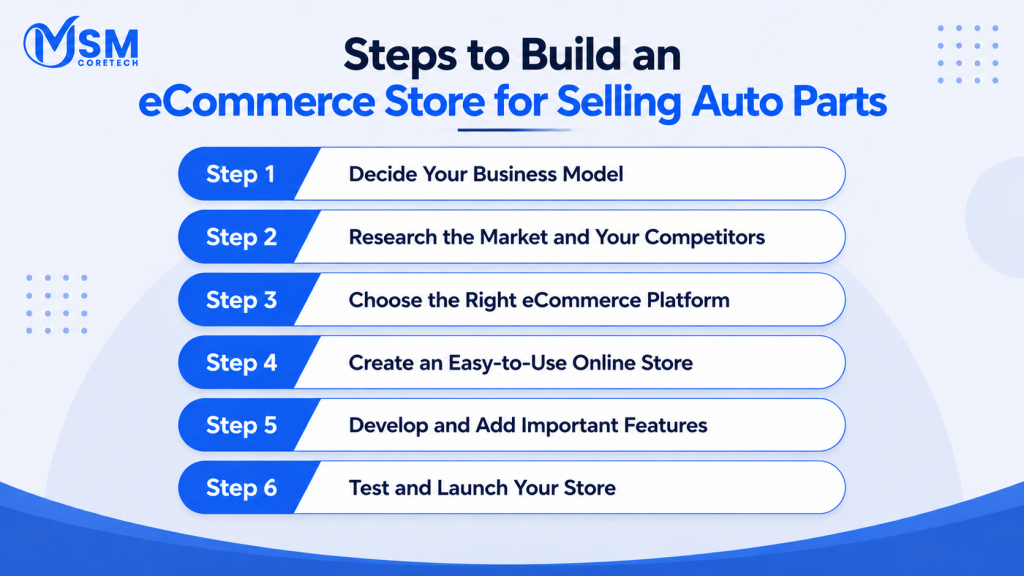
Building an online auto parts store takes proper planning and the right strategy. Below are the main steps to create a successful eCommerce business.
Step 1: Decide Your Business Model
First, decide what kind of auto parts store you want to create. You can sell parts from one brand, many brands, used auto parts, or build a marketplace where different sellers can sell their products. After that, choose your target customers. These can be car owners, auto repair shops, or wholesale buyers. Also, decide which types of products you want to sell, such as engine parts, brake parts, tires, batteries, or car accessories.
Step 2: Research the Market and Your Competitors
Before you start building your online store, spend some time researching the market. Learn what customers are looking for and what problems they face when buying auto parts online. Also, check what your competitors are doing. Look at their prices, product collections, customer support, and website features. This will help you create a better online store and build a strong business plan.
Step 3: Choose the Right eCommerce Platform
Pick an eCommerce platform that fits your business needs and budget. If you are just starting, Shopify is a great option because it is simple to set up and manage. WooCommerce is a good choice if your website is built on WordPress. magento e-commerce development is better for large businesses that need more advanced features. If you want a store with custom features and full control, custom eCommerce development is the best choice.
Step 4: Create an Easy-to-Use Online Store
Make your online store clean, simple, and easy to use. Customers should be able to find the right auto parts without any trouble. Use clear product categories, search filters, and a vehicle compatibility checker to help them quickly find what they need. Also, make sure your website works well on both mobile phones and desktop computers so everyone has a smooth shopping experience.
Step 5: Develop and Add Important Features
Now it’s time to build your online store. The next step is the app development process where developers create both the front-end (what customers see) and the back-end (how the store works). They also add important features like secure payment options, shipping services, inventory management, order tracking, and customer accounts to make shopping simple and safe.
Step 6: Test and Launch Your Store
Before your store goes live, test everything carefully. Check that the website is fast, secure, and that all features, including payments, work properly. Fix any problems, make sure the store is easy to use, and then launch your online auto parts store with confidence.
Also Read: Top 15 Best Cash Advance Apps for Instant Money in 2026
Estimated Cost to Build an Online Auto Parts Store
The table below gives a general idea of the development cost based on the complexity of the project.
| Store Type | Estimated Cost | Suitable For |
|---|---|---|
| Basic Auto Parts Store | $10,000–$20,000 | Small businesses and startups selling a limited range of products with essential shopping features. |
| Medium-Level Store | $20,000–$40,000 | Growing businesses that need advanced search, better inventory management, multiple payment options, and improved customer experience. |
| Advanced Marketplace Platform | $40,000–$75,000+ | Large businesses that require multi-vendor support, AI-based recommendations, vehicle compatibility tools, analytics, and enterprise-level security. |
The final cost depends on your business goals, the features you choose, the design, and the technologies used. Starting with a minimum viable product (MVP) is a smart option if you have a limited budget. You can launch the store with the most important features and add new functions as your business grows. This approach reduces the initial investment while allowing you to test the market and improve the platform based on customer feedback.
Main factors that affect the cost to build an Online Auto Parts Store
The cost to build an online auto parts store depends on many things. Every business has different goals, so there is no fixed price. A small online store with basic features will cost less than a large marketplace with advanced tools. Before starting development, it is important to understand what features you need and how much you are ready to invest.
Below are the main factors that affect the app development cost of an online auto parts store.
Store Complexity
The size and complexity of your online store play the biggest role in deciding the development cost. A simple store with a few product categories and basic shopping features is quick and easier to build. However, if you want a large marketplace with many sellers, thousands of products, vehicle compatibility search, advanced filters, and inventory management, it will take more time and effort to develop. As your store becomes more advanced, the development cost also goes up.
Number of Features
The features you choose also affect the total development cost. Basic features like user registration, product search, shopping cart, secure payment, and order tracking are included in most online stores. If you add advanced features such as AI-based product recommendations, live chat, customer reviews, wishlists, multi-language support, loyalty programs, or real-time inventory updates, the cost will increase because these features need extra development, testing, and integration.
Design Requirements
A simple design using ready-made templates costs less. But if you want a unique design that matches your brand, the price will be higher. A custom design gives your store a different look with attractive product pages, easy navigation, and a mobile-friendly layout. It also helps customers quickly find the auto parts they need, making shopping easier and more enjoyable.
Technology Stack
The technology used to build your online store also affects the total development cost. Developers choose different programming languages, frameworks, databases, and cloud services based on your business needs. If you want a fast, secure, and scalable store, you may need to spend a little more. Using modern technology also helps your store handle more customers and products as your business grows.
Development Team Location
The cost of building your online auto parts store also depends on where your development team is located. Different countries have different hourly development rates, so the total cost can be higher or lower. An experienced development team may charge more, but they usually build a better-quality store, complete the project faster, and reduce the chances of problems after launch. It is always a smart choice to hire a team that has experience in developing eCommerce stores for the automotive industry.
Maintenance Requirements
Launching your online store is only the beginning. After your store goes live, it needs regular maintenance to keep everything working properly. This includes updating the software, improving security, fixing bugs, managing the server, adding new features, and providing technical support. Regular maintenance helps your store run smoothly, protects customer information, improves performance, and gives customers a better shopping experience.
Also Read: How To Build an Online Store for Shoe Selling and Make Money
Tips to Grow Your Online Auto Parts Business
Creating an online auto parts store is just the beginning. To grow your business, you need to bring in new customers and keep your current customers satisfied. Selling high-quality products, providing a smooth shopping experience, and using effective marketing strategies can help your business grow. Here are some simple tips to increase your sales and build a trusted brand.
Optimize Product Pages for SEO
SEO (Search Engine Optimization) helps your product pages appear in search results when people search for auto parts online. Use simple and clear product titles and descriptions with the right keywords. Add good-quality images from different angles so customers can see the product clearly. Also include important details such as the brand name, size, material, and part number. Well-optimized product pages can help more people find your store and bring free traffic without spending extra money on advertisements.
Provide Clear Vehicle Compatibility Information
Customers want to know if the auto part will fit their vehicle before they buy it. Add a vehicle compatibility checker that lets users search by car make, model, year, and engine type. Also, show fitment details on every product page. This helps customers choose the right part, reduces wrong orders and returns, and builds trust in your online store.
Provide Fast Delivery Options
Fast delivery is one of the main reasons people choose an online store. Partner with trusted shipping companies and offer different delivery choices, such as standard and express delivery. Give customers tracking details so they can see where their order is at any time. Quick and safe delivery makes customers happy and encourages them to shop from your store again.
Use Customer Reviews and Ratings
Most people read customer reviews before buying a product. Let your customers give ratings and share their experience after making a purchase. Good reviews help new customers trust your store. Honest reviews also help you understand what you can improve. When you reply politely to customer feedback, it shows that you care about your customers and value their opinions.
Use Digital Marketing to Grow Your Store
Online marketing helps more people find your store. Share your products, special offers, and simple car care tips on social media. Send email newsletters to inform customers about discounts and new products. You can also use paid ads and write helpful blog posts to bring more visitors to your website. Regular online marketing keeps your business active, helps you reach more people, and brings in new customers.
Provide Excellent Customer Support
Good customer support helps turn new customers into regular buyers. Give customers different ways to contact you, such as live chat, email, or phone. Reply to their questions as quickly as possible, solve their problems in a polite way, and make the return and refund process easy. Friendly and helpful support builds trust and makes customers more likely to buy from your store again and recommend it to others.
By following these simple tips, you can grow your online auto parts business, keep your customers happy, and increase your sales over time. A user-friendly website, correct product details, fast delivery, and great customer support will help your online store stand out in the competitive auto parts market.
Also Read: Crowdfunding App Development Guide: From Idea to Launch
Why Choose MSM CoreTech for Auto Parts eCommerce Store Development
Building an online auto parts store requires the right technology partner. MSM CoreTech helps businesses create secure, easy-to-use, and high-performing eCommerce solutions that match their business goals. Whether you want to sell car parts, bike parts, truck accessories, or build a multi-vendor marketplace, our team develops a solution that fits your needs.
We provide custom eCommerce development based on your business requirements. Our experienced developers and designers create websites that are simple to use, fast to load, and work smoothly on all devices. We also focus on creating a better shopping experience so customers can quickly find the right auto parts and place orders without any confusion.
As a trusted mobile app development company, we also build mobile apps that help customers shop anytime and anywhere. This gives your business more ways to reach customers and increase sales.
Security and future growth are always our priority. We use modern technologies, secure payment integration, data protection, and scalable architecture to keep your store safe and ready for business growth. Our team also integrates useful tools like inventory management, payment gateways, shipping services, and analytics.
From planning and design to development, testing, launch, and ongoing support, MSM CoreTech provides complete end-to-end development services to help you build a successful online auto parts eCommerce store.
Conclusion
Building an eCommerce store for selling auto parts online is a great business idea because more people now prefer buying vehicle parts from the comfort of their homes. A successful store is not just about listing products. It should be easy to use, load quickly, offer secure payments, and help customers find the right parts for their vehicles without confusion.
Choosing the right technology, useful features, and a scalable platform is very important for long-term success. Features like smart search, vehicle compatibility checks, order tracking, secure payment options, and inventory management can improve the customer experience and help your business grow faster.
The online automotive market is expected to keep growing as more customers shop online and new technologies make buying easier. AI-powered recommendations, faster delivery services, mobile shopping, and better customer support will create more opportunities for businesses in the coming years.
If you are planning to launch an online auto parts business, now is the right time to start. With proper planning, the right development team, and a customer-focused approach, you can build a reliable eCommerce store that attracts more buyers, increases sales, and grows with your business for many years.
FAQs
The cost depends on the features, design, and platform you choose. A basic online auto parts store may cost between $15,000 and $40,000, while a feature-rich marketplace can cost $80,000 to $200,000 or more.
An auto parts eCommerce store should include product search, vehicle compatibility checks, secure payment options, a shopping cart, order tracking, inventory management, customer reviews, and an easy-to-use admin panel.
Popular platforms include Shopify, WooCommerce, Magento, and custom-built eCommerce solutions. The best choice depends on your business size, budget, and future growth plans.
The development time usually ranges from 2 to 6 months, depending on the project’s complexity, the number of features, and custom requirements.
You can increase sales by offering quality products, accurate vehicle compatibility information, competitive pricing, fast shipping, secure payments, excellent customer support, and using SEO and digital marketing to reach more customers.

Related Posts

E-Commerce vs Retail Business: Features, Benefits, and Trends
If you have thought about starting a business, or you already run one, you have probably asked yourself a simple...
Read More
Online Store Explained: Features, Pricing & Factors
Consider that a customer can buy your products at any time and from anywhere, without coming to your physical store....
Read More

How to Build a Smart eCommerce Store Using AI and IoT?
Online shopping is getting smarter every year. Today, people expect online stores to know what they want, suggest the right...
Read More


 Verified Review




 +44 7427829444
 71-75, Shelton Street, Covent Garden, London, United Kingdom, WC2H 9JQ