

Share this article


Crowdfunding App Development Guide: From Idea to Launch
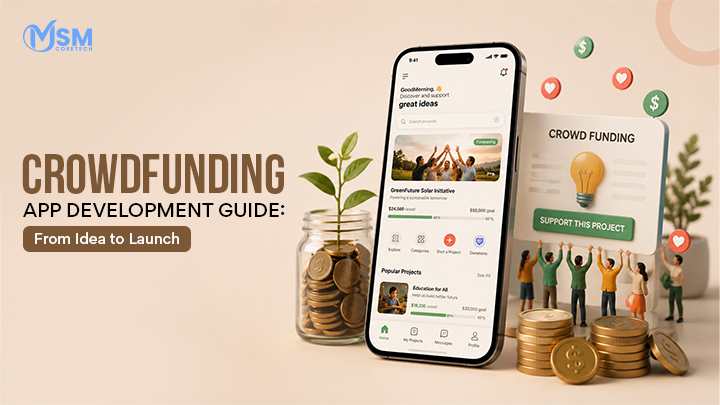
Raising money for a big idea used to mean walking into a bank, filling out endless paperwork, and hoping for a “yes” that rarely came. Today, things look very different. Anyone with a good idea, a cause worth supporting, or a business worth building can go online, share their story, and get funded by hundreds or even thousands of people from around the world. This is the power of crowdfunding, and it is the reason platforms like Kickstarter, GoFundMe, and Indiegogo have become household names.
If you are a startup founder, an entrepreneur, or a business owner thinking about entering this space, you are probably wondering how these platforms work behind the scenes, and more importantly, how you can build one of your own. That is exactly what this crowdfunding app development guide is for.
We will walk you through everything, from understanding what a crowdfunding app really is, to the features it needs, the technology behind it, the cost of building one, and the steps involved in taking your idea from a rough sketch to a fully working platform. Whether you are new to crowdfunding app development or already have a plan in mind, this guide will help you make smarter, more confident decisions at every stage.

What Is a Crowdfunding App?
In simple words, a crowdfunding app is a mobile or web application that lets people raise money for a project, a cause, a business idea, or even a personal need by collecting small (or sometimes large) contributions from a large number of people. Instead of relying on one bank or one investor, the person raising funds, usually called a campaign creator, can reach out to friends, family, and strangers who believe in their idea and are willing to support it financially.
There are three main groups of people involved in any crowdfunding platform, and understanding their needs is the first step in planning your app.
- Campaign creators: The individuals, startups, or organizations who start a fundraising campaign to collect money for their project or cause.
- Backers: The people who browse campaigns and contribute money, sometimes in exchange for a reward, equity, interest, or simply the satisfaction of helping.
- Platform administrators: The team behind the app who review and approve campaigns, manage payments, monitor for fraud, and keep the platform running smoothly.
Depending on what a platform wants to achieve, it can follow different fundraising models, such as offering rewards for donations, giving away equity in a company, charging interest on loans, or simply accepting donations with nothing expected in return. We will look at each of these models in detail in the next section.
Also Read: Top 10 FinTech Startup Ideas
Types of Crowdfunding Apps
Not all crowdfunding platforms work the same way. The type of crowdfunding model you choose will shape almost every decision that follows, from the features you build to the compliance rules you need to follow. Here are the six most common types.
Reward-Based Crowdfunding
This is probably the most well-known model, made popular by platforms like Kickstarter and Indiegogo. Backers contribute money to a project, and in return, they receive a reward, which is usually the product itself, a discount, or some kind of exclusive perk once the project is completed. This model works especially well for creative projects, gadgets, games, and product launches, because it lets creators test demand and raise money before they even manufacture anything.
Donation-Based Crowdfunding
This model, used by platforms like GoFundMe, is built for causes rather than products. People donate money to support medical bills, disaster relief, education, or community projects, and they do not expect anything material in return. The main goal here is to make the donation process as fast, trustworthy, and emotionally compelling as possible, since people are giving purely out of goodwill.
Equity Crowdfunding
Equity crowdfunding allows regular investors, not just venture capitalists, to buy a small stake in a startup or business in exchange for their contribution. Platforms like SeedInvest, Crowdcube, and StartEngine fall into this category. Because real ownership and real money are involved, this model comes with much stricter legal and regulatory requirements, and the app needs strong investor verification and reporting tools.
Debt Crowdfunding (Peer-to-Peer Lending)
Also known as peer-to-peer lending, this model lets individuals or small businesses borrow money directly from a group of lenders instead of a bank. The borrower agrees to pay back the amount with interest over time. This model needs solid credit assessment tools, repayment tracking, and clear risk disclosure so lenders know exactly what they are signing up for.
Real Estate Crowdfunding
Real estate crowdfunding platforms let multiple investors pool their money together to fund property purchases or developments, and then share in the rental income or profits when the property is sold. This model usually involves larger contribution amounts, longer investment timelines, and detailed property documentation, so the app needs strong reporting and document management features.
Charity & Non-Profit Crowdfunding
This model is designed specifically for registered non-profits and charitable organizations to raise funds for social causes, community programs, or emergency relief. It often includes features like recurring donations, tax receipt generation, and transparent fund utilization reports, since donors want to see exactly how their contribution is making a difference.
Also Read: Agentic AI in Financial Services
Market Overview and Industry Statistics
The crowdfunding industry has grown far beyond its early days of small creative projects and personal fundraisers. It has turned into a serious alternative financing channel that startups, small businesses, and even real estate investors now depend on. Understanding where the market stands today can help you see just how much opportunity exists for a well-built crowdfunding platform.
According to Grand View Research, the global crowdfunding market was valued at around USD 2.14 billion in 2024 and is projected to reach USD 5.53 billion by 2030, growing at a CAGR of 17.6 percent, with debt-based crowdfunding leading the market and North America holding the largest regional share.
Fortune Business Insights reports a similar growth story, with the market expected to expand from USD 2.11 billion in 2026 to USD 5.91 billion by 2034, at a CAGR of 13.70 percent, driven largely by the growing use of social media platforms to promote and share campaigns.
What all of this data tells us is fairly simple: crowdfunding is not slowing down, mobile is quickly becoming the default way people discover and support campaigns, and technologies like AI and blockchain are starting to play a bigger role in how platforms detect fraud, personalize recommendations, and build trust with users. For anyone thinking about crowdfunding app development, this is a strong signal that both the timing and the opportunity are real.
Also Read: What Is FinTech?
How Does a Crowdfunding App Work?
Even though crowdfunding platforms can look very different from one another depending on the model they follow, most of them run on a fairly similar workflow behind the scenes. Here is what that journey typically looks like, from the moment a user signs up to the moment a campaign is successfully funded.
1. User Registration
Every journey on a crowdfunding platform starts with sign-up. A campaign creator or a backer registers on the app using their email address, phone number, or a quick social login through Google, Facebook, or Apple. The goal at this stage is to keep the process short and frictionless, since a long or confusing sign-up form is one of the fastest ways to lose a potential user before they even see a single campaign.
2. Profile Verification
Once someone signs up, the platform verifies their identity before granting full access. This step matters for every type of crowdfunding, but it becomes absolutely critical for equity and debt crowdfunding, where financial regulations require proper KYC (Know Your Customer) checks. Verification usually involves confirming an email or phone number, and in regulated models, uploading a government ID or proof of address.
3. Campaign Creation
This is where the campaign creator brings their idea to life on the platform. They fill in the project title, a compelling description or story, the funding goal, a deadline, supporting images or videos, and, for reward-based campaigns, the different reward tiers backers can choose from. A good campaign builder guides creators through this process step by step so nothing important gets left out.
4. Campaign Review
Before a campaign goes live, the platform’s admin team reviews it to make sure it follows community guidelines, contains no misleading claims, and meets any legal requirements tied to the crowdfunding model. This review step protects backers from scams and keeps the overall quality of campaigns on the platform high, which in turn builds trust across the entire community.
5. Campaign Publishing
Once a campaign is approved, it goes live and becomes visible to everyone using the app. From here, it can be discovered through the homepage, category browsing, search results, or personalized recommendations. This is the moment a creator’s idea officially becomes public and open for funding.
6. Sharing the Campaign
Very few campaigns succeed on platform traffic alone, which is why sharing matters so much. Creators promote their campaign link across social media, email lists, and personal networks to drive early momentum. Many platforms make this easier with built-in social sharing buttons, referral links, and shareable progress graphics that creators can post directly.
7. Receiving Donations or Investments
As word spreads, backers start browsing the campaign, reading the story, checking the rewards or terms, and deciding how much they want to contribute. They complete their payment directly within the app, whether that is a donation, a reward-based pledge, an equity investment, or a loan contribution, depending on the platform’s model.
8. Payment Processing
Behind every contribution is a payment gateway working to move that money securely and instantly. The platform processes each transaction, handles currency conversion for international backers, applies any applicable fees, and confirms the payment to both the backer and the creator, all within seconds.
9. Goal Tracking
Throughout the campaign, both creators and backers can watch its progress in real time through a visual funding tracker. Seeing a campaign at 40 percent, 75 percent, or fully funded creates urgency and social proof, encouraging new backers to jump in and support a project that is clearly gaining traction.
10. Fund Withdrawal
Once a campaign ends, or in some models once it hits specific milestones, the creator becomes eligible to withdraw the funds that were raised. The platform processes this payout request, often after a short review period, and transfers the money to the creator’s linked bank account or digital wallet.
11. Campaign Completion
Finally, the campaign is marked as complete. Creators send updates and, where applicable, fulfil rewards to their backers, while the platform archives the campaign as a successful case study that new visitors can browse for inspiration. This closing step is also where creators build long-term trust with their backer community for any future campaigns.
This flow may look simple on paper, but building it in a way that feels smooth, trustworthy, and fast for the user takes careful planning, which is exactly what the rest of this guide will help you with.
Also Read: 10 Mobile Banking Trends
Essential Features of a Crowdfunding App
A crowdfunding platform is really three apps in one: an experience for backers, a workspace for campaign creators, and a control center for admins. Getting the features right for all three groups is what separates a platform people trust from one they abandon after a single visit.
User Features
- Quick sign-up: A fast registration process using email, phone number, or social logins so new backers do not drop off before they even explore a campaign.
- User profiles: A personal space where backers can manage their details, payment methods, and contribution history.
- Campaign discovery: An easy-to-browse homepage that highlights trending, new, and recommended campaigns.
- Advanced search and filters: The ability to search by keyword, category, funding stage, or location to find campaigns that match a backer’s interests.
- Campaign categories: Clear categorization such as technology, art, health, real estate, or social causes, so users can quickly narrow down what they are looking for.
- Secure payment gateway: Encrypted, PCI-compliant payment processing that backers can trust with their card or bank details.
- Multiple payment options: Support for cards, digital wallets, bank transfers, and in some regions, cryptocurrency, to reduce friction at checkout.
- Save campaign: A bookmarking option so users can save campaigns they are interested in and come back to them later.
- Donation history: A record of past contributions, receipts, and campaign updates the backer has supported.
- Social media sharing: One-tap sharing buttons that let backers spread the word about campaigns they care about.
- Push notifications: Timely alerts about campaign milestones, updates from creators, and deadlines approaching.
- Wishlist: A way for users to shortlist campaigns they may want to support in the future.
- Ratings and reviews: Feedback from previous backers that helps new users judge the credibility of a campaign creator.
- Multi-language support: Localized content so the platform can serve backers across different countries and regions.
- Live chat: A direct line of communication for users who have questions before contributing.
- Fund progress tracker: A visual bar or graph showing how close a campaign is to its funding goal, which builds urgency and trust.
Campaign Creator Features
- Campaign dashboard: A central place where creators can track performance, funds raised, and backer activity at a glance.
- Campaign builder: A guided, step-by-step tool for creating a campaign page without needing any technical or design skills.
- Media upload: The ability to add photos, videos, and documents that help tell the campaign’s story.
- Goal management: Tools to set, adjust, and monitor funding targets and deadlines.
- Rewards management: A system for setting up different reward tiers for reward-based campaigns and tracking who qualifies for what.
- Team members: The option to add collaborators who can help manage and update the campaign together.
- Analytics dashboard: Detailed insights into traffic sources, conversion rates, and backer demographics.
- Backer management: A way to view, message, and manage the list of people who have supported the campaign.
- Fund withdrawal: A straightforward process for requesting payouts once funds are eligible for release.
- Comments management: Moderation tools to respond to or manage comments and questions left by backers.
Admin Panel Features
- User management: Tools to view, verify, suspend, or manage all registered users on the platform.
- Campaign approval: A review workflow to approve or reject campaigns before they go live.
- Payment management: Oversight of all transactions, refunds, and payout requests happening on the platform.
- Commission settings: The ability to configure and adjust the platform’s commission or fee structure.
- Category management: Controls to add, edit, or remove campaign categories as the platform grows.
- Reports and analytics: Platform-wide performance data, including total funds raised, active campaigns, and user growth.
- Fraud detection: Tools that flag suspicious campaigns or transactions for manual review.
- CMS management: The ability to update website content, banners, and static pages without touching code.
- Notification management: Control over what alerts and messages are sent to users and creators.
- Tax and compliance settings: Configuration options to keep the platform aligned with regional tax and regulatory requirements.

Also Read: Top 10 Digital Payment Apps
Advanced Features That Make Your Crowdfunding App Stand Out
Once the core features are in place, adding a few advanced capabilities can genuinely set your platform apart from the dozens of crowdfunding apps already out there. These are the features that build trust, improve engagement, and give your app a modern, forward-looking edge.
AI-Powered Campaign Recommendations
Instead of making backers scroll through every category to find something worth supporting, AI can study a user’s browsing behavior, past contributions, and interests, and then surface campaigns they are genuinely likely to care about. This kind of personalization keeps backers engaged for longer and significantly increases the odds that they will actually contribute rather than leave without taking action.
AI Fraud Detection
Fraudulent campaigns and fake accounts are one of the biggest threats to any crowdfunding platform’s credibility. Machine learning models can be trained to flag unusual transaction patterns, mismatched user information, or campaigns that show classic signs of a scam, allowing the admin team to step in and investigate before real damage is done to backers or to the platform’s reputation.
Smart Donation Suggestions
Rather than leaving backers to guess how much to contribute, the app can intelligently suggest amounts based on what similar backers have given, the campaign’s current funding stage, or the user’s own past contribution history. This small nudge often increases both the number of contributions and the average amount given per backer.
Blockchain-Powered Transparency
One of the biggest hesitations people have about crowdfunding, especially donation and charity-based models, is not knowing exactly where their money ends up. Recording transactions on a blockchain ledger gives backers a permanent, tamper-proof record they can check at any time, which can dramatically increase confidence in the platform.
Live Fundraising Analytics
Creators and admins both benefit from dashboards that update in real time rather than on a delay. Live analytics show exactly how a campaign is performing right now, including traffic sources, conversion rates, and contribution trends, so creators can react quickly, for example by sending an urgent update if momentum starts to slow down.
Video Campaign Streaming
Text and images can only tell so much of a story. Letting creators host live video sessions or question-and-answer streams gives backers a chance to interact directly, ask questions in real time, and build a genuine sense of connection with the person or team behind the campaign, which often translates into stronger and faster funding.
QR Code Donations
Not every contribution starts online. A creator sharing their campaign at an event, in a store, or on printed materials can include a QR code that takes a potential backer straight to the payment screen in seconds. This bridges the gap between offline visibility and online donations without any extra typing or searching.
Referral and Affiliate System
Word of mouth is one of the strongest drivers of crowdfunding success, so it makes sense to reward it. A referral or affiliate system can give users a small incentive, whether that is a badge, a discount, or a cash reward, for bringing in new backers or new campaign creators, turning your existing community into an active growth channel.
Digital Wallet Integration
Frequent backers do not want to re-enter their payment details every single time they want to support a new project. A built-in digital wallet lets users load funds once and then contribute to multiple campaigns instantly, which removes friction and makes repeat giving far more likely.
Recurring Donations
For charity and creator-support platforms in particular, giving backers the option to set up automatic monthly or periodic contributions turns a one-time gesture into an ongoing relationship. This creates a far more predictable and stable stream of funding for creators and causes over the long term.
Voice Search
As voice assistants become part of everyday life, adding voice search to your crowdfunding app makes campaign discovery more accessible, especially for users who prefer speaking over typing, or who are browsing on the go and cannot easily use a keyboard.
Predictive Fundraising Insights
By analyzing patterns from thousands of past campaigns, such as funding velocity in the first few days, this feature can estimate how likely a new campaign is to reach its goal, and even suggest specific improvements, like adjusting the funding target or adding more visual content, before it is too late to act.
Community Forums
A dedicated space where backers and creators can discuss ongoing projects, ask questions, and share feedback helps turn a transactional platform into an actual community. Over time, this kind of engagement builds loyalty and keeps users coming back even when they are not actively backing a new campaign.
Investor Matching Engine
For equity and debt crowdfunding platforms specifically, an investor matching engine can connect campaign creators with backers whose investment interests, risk appetite, and industry preferences align with the project, making the fundraising process far more efficient for everyone involved.
Also Read: FinTech App Design
Technology Stack for Crowdfunding App Development
Choosing the right technology stack is one of the most important decisions in crowdfunding app development, because it directly affects how fast your app performs, how secure it is, and how easily it can scale as your user base grows. Here is a breakdown of the technologies most commonly used to build a reliable crowdfunding platform.
| Layer | Common Technologies |
|---|---|
| Frontend | Flutter, React Native |
| Backend | Node.js, Laravel, Django, .NET Core |
| Database | PostgreSQL, MongoDB, MySQL |
| Cloud | AWS, Microsoft Azure, Google Cloud |
| Payment Gateway | Stripe, PayPal, Razorpay, Square |
| APIs | Google Maps API, Firebase, Twilio, SendGrid |
| Security | OAuth, SSL Encryption, JWT Authentication, Biometric Login |
Most crowdfunding apps today are built as cross-platform apps using Flutter or React Native, since this lets you launch on both iOS and Android from a single codebase, saving both time and money. On the backend, Node.js and Laravel are popular choices because they handle high traffic well and integrate easily with payment gateways.
As for the database, the right choice often depends on how structured your data is: PostgreSQL and MySQL work well for transactional data like payments and user records, while MongoDB is a good fit for flexible, fast-changing content like campaign pages and media. A trusted fintech app development company will usually recommend the stack based on your specific fundraising model, expected traffic, and compliance needs, rather than a one-size-fits-all setup.
Also Read: Cost to Develop a Fintech App Like Wise
Step-by-Step Crowdfunding App Development Process
Building a crowdfunding platform is not something you can rush. Every stage, from research to post-launch support, plays a role in how successful and trustworthy your final product turns out to be. Here is a realistic, step-by-step breakdown of what the app development process usually looks like.
Market Research
Before writing a single line of code, it is important to study your competitors, understand your target audience, and identify the gap your platform will fill. This stage helps you avoid building something that already exists without offering anything new.
Choose Your Crowdfunding Model
Decide whether your platform will focus on reward-based, donation-based, equity, debt, real estate, or charity crowdfunding, since this decision shapes almost every feature and compliance requirement that follows.
Define Business Goals
Get clear on what success looks like for your platform, whether that is the number of campaigns launched, total funds raised, active users, or revenue from commissions, so your team can build with a clear target in mind.
Select Core Features
Based on your model and goals, decide which features are must-haves for launch and which ones can be added later. This keeps your first version focused and manageable rather than overloaded.
Wireframing
Create simple, low-detail sketches of each screen to map out how users will move through the app, from browsing campaigns to completing a payment, before any real design work begins.
UI/UX Design
Turn those wireframes into a polished, visually appealing design that reflects your brand and makes the donation or investment process feel simple and trustworthy.
App Development
This is where your development team writes the actual code, building the frontend, backend, and database structure based on the approved designs and feature list.
Third-Party Integrations
Connect your app to essential external services such as payment gateways, SMS and email providers, cloud storage, and analytics tools so the platform can function as a complete product.
Security Implementation
Add encryption, secure authentication, and fraud monitoring tools to protect user data and financial transactions, since trust is the foundation of any crowdfunding platform.
Testing & QA
Run the app through rigorous testing, covering functionality, performance under heavy traffic, security vulnerabilities, and usability, to catch issues before real users ever encounter them.
App Deployment
Once testing is complete, launch the app on the relevant app stores and make the web version live, following each platform’s submission and compliance guidelines.
Marketing & User Acquisition
Promote your platform to attract both campaign creators and backers, using strategies like content marketing, social media, influencer partnerships, and paid advertising.
Maintenance & Updates
After launch, continue monitoring performance, fixing bugs, releasing new features, and updating the app to keep up with changing user needs and security standards.
Also Read: Crypto Wallet App Development Guide
UI/UX Best Practices
A crowdfunding app is, at its heart, a trust-building tool. If the design feels confusing, outdated, or unsafe, even the most compelling campaign will struggle to get funded. These best practices help keep the experience clean and confidence-inspiring.
- Keep the user journey minimal, so backers can go from discovering a campaign to completing a donation in just a few taps.
- Design a trust-building interface with verified badges, secure payment icons, and clear campaign creator information.
- Use clear, action-oriented call-to-action buttons like “Back This Project” or “Donate Now” instead of vague labels.
- Make campaign creation easy, with guided steps and helpful prompts rather than a long, intimidating form.
- Build a fast payment flow with minimal steps between choosing an amount and confirming the transaction.
- Design mobile-first, since the majority of crowdfunding traffic now comes from smartphones.
- Follow accessibility guidelines so the app works well for users with visual, hearing, or motor impairments.
- Use responsive layouts that adjust smoothly across phones, tablets, and desktop screens.
Security Requirements for Crowdfunding Apps
Because crowdfunding apps deal directly with people’s money and personal information, security cannot be an afterthought. A single data breach or payment failure can permanently damage a platform’s reputation. Here are the security measures every crowdfunding app needs.
- SSL encryption: Protects data as it travels between the user’s device and your servers.
- End-to-end encryption: Keeps sensitive information unreadable to anyone except the intended sender and receiver.
- Secure payment processing: Relies on PCI DSS-compliant gateways so card details are never stored insecurely.
- Two-factor authentication: Adds an extra layer of protection when users log in or make large transactions.
- Identity verification (KYC): Confirms that users are who they claim to be, which is essential for equity and debt crowdfunding.
- AML compliance: Puts systems in place to detect and prevent money laundering through the platform.
- GDPR compliance: Ensures user data is collected, stored, and processed in line with data protection regulations.
- PCI DSS compliance: Sets the industry standard for handling and storing card payment information securely.
- Fraud monitoring: Continuously scans for suspicious activity, fake campaigns, or unusual transaction patterns.
- Data backup and disaster recovery: Makes sure user data and transaction records are never permanently lost, even in the event of a system failure.
Also Read: How to Build a Mobile Banking App
Legal and Compliance Considerations
Crowdfunding sits at the intersection of technology and finance, which means legal compliance is not optional. The exact rules will vary depending on your country and the crowdfunding model you choose, but there are a few areas every platform needs to plan for from day one.
- Understanding fundraising regulations specific to your target country or region.
- Following investor protection laws, especially for equity and debt crowdfunding models.
- Securing the proper licensing required to legally operate a crowdfunding or payment platform.
- Staying compliant with tax regulations for both the platform and the funds moving through it.
- Publishing clear Terms and Conditions that outline user rights and responsibilities.
- Maintaining a transparent Privacy Policy that explains how user data is collected and used.
- Respecting copyright protection for content uploaded by campaign creators.
- Implementing Anti-Money Laundering (AML) checks to prevent illegal use of the platform.
- Carrying out Know Your Customer (KYC) verification to confirm user identities before large transactions.
Monetization Strategies
A crowdfunding platform needs a sustainable way to generate revenue, both to cover its own operating costs and to grow over time. Most successful platforms combine a few of the following monetization strategies rather than relying on just one.
- Platform commission: A percentage fee taken from each successfully funded campaign, which is the most common revenue model in crowdfunding.
- Campaign listing fees: A flat or tiered fee charged to creators for listing their campaign on the platform.
- Premium memberships: Paid plans that give creators or backers access to extra tools, insights, or perks.
- Featured campaigns: Paid placement that boosts a campaign’s visibility on the homepage or search results.
- Transaction fees: A small fee added to each payment processed through the platform.
- Advertising: Revenue earned by displaying relevant ads to users browsing the platform.
- Corporate partnerships: Collaborations with brands or organizations that sponsor categories or campaigns.
- Subscription plans: Recurring fees for creators who run multiple campaigns and want ongoing access to premium tools.
- Value-added services: Optional paid services like professional campaign video production or marketing support.
Crowdfunding App Development Cost
One of the first questions every founder asks is: how much does it actually cost to build an app crowdfunding? The honest answer is that it depends on your feature list, platform choice, design complexity, and the development team you work with. That said, here is a general breakdown to help you budget realistically.
The overall cost is usually spread across several stages of development, including UI/UX design, frontend development, backend development, admin panel development, payment gateway integration, testing, deployment, and ongoing maintenance. Each of these stages requires a different amount of time and specialized effort, which is why the total cost can vary so widely between a simple app and a feature-rich platform.
| App Type | Estimated Cost |
|---|---|
| Basic App | $20,000 – $40,000 |
| Medium Complexity App | $40,000 – $80,000 |
| Advanced App | $80,000 – $180,000+ |
Several factors can push this estimate higher or lower, including the specific features you choose to include, whether you are building for Android, iOS, web, or all three, the technology stack you select, the complexity of your UI/UX design, the level of security required, the number of third-party integrations, the location of your development team, and the compliance requirements tied to your crowdfunding model. Working with an experienced fintech app development company can help you get a realistic estimate early on, so there are no surprises later in the project.
Also Read: Cost To Build A Fintech App
Common Challenges in Crowdfunding App Development
Like any fintech-adjacent product, crowdfunding platforms come with their own set of challenges. Knowing about them ahead of time makes it much easier to plan around them rather than be caught off guard mid-project.
- Building user trust, since people need to feel confident before handing over their money.
- Ensuring payment security across every transaction on the platform.
- Preventing fraud from fake campaigns or bad actors trying to exploit the system.
- Verifying campaigns properly without slowing down the creator’s experience too much.
- Acquiring users, since a crowdfunding platform needs both backers and creators to succeed.
- Staying compliant with legal requirements that can differ significantly by region.
- Planning for platform scalability as traffic and transaction volume grow.
- Protecting user data privacy at every stage of the platform.
- Handling payment failures gracefully without frustrating users or losing their trust.
- Standing out in a market that already has several well-established competitors.
Tips for Building a Successful Crowdfunding App
Beyond the technical build, a few strategic decisions can make a real difference in how well your platform performs after launch. Here are some practical tips worth keeping in mind.
- Focus on user trust from day one, since it is the foundation of every crowdfunding platform.
- Simplify campaign creation so creators do not abandon the process halfway through.
- Make sure every transaction feels secure, both technically and visually, to the user.
- Add social sharing options everywhere it makes sense, since word of mouth drives most campaign traffic.
- Provide transparent reporting so backers can always see how funds are being used.
- Optimize the entire experience for mobile users, who make up the majority of traffic today.
- Offer multiple payment methods to reduce friction at checkout.
- Invest in marketing early, since a crowdfunding platform needs momentum to attract both sides of the marketplace.
- Collect user feedback regularly and use it to guide future updates and improvements.
Also Read: Top FinTech Trends
Popular Crowdfunding Apps
Looking at the platforms that already dominate this space can offer useful inspiration for your own crowdfunding app development journey. Here are some of the most well-known names in the industry today, and what makes each of them work.
Kickstarter
Kickstarter is one of the original pioneers of reward-based crowdfunding and remains one of the most recognized names in the space. It is best known for funding creative and tech projects, from indie games and gadgets to films and design products. Kickstarter follows an all-or-nothing funding model, meaning creators only receive the money if their campaign hits its goal, which pushes creators to set realistic targets and build genuine momentum.
Indiegogo
Indiegogo is another major reward-based platform, but it stands out for its flexibility. Unlike Kickstarter’s strict all-or-nothing approach, Indiegogo lets creators choose between a fixed funding goal or a flexible one, where they keep whatever amount they raise even if they fall short of the target. This makes it a popular choice for creators who want a safety net while still testing market demand.
GoFundMe
GoFundMe has become the default platform for personal and charitable donation-based fundraising. People turn to it for medical expenses, tuition costs, disaster relief, and community causes, since it is built around emotional storytelling rather than product rewards. Its simple, fast donation flow is a big reason it has become so widely trusted for urgent, personal fundraising needs.
Patreon
Patreon takes a slightly different approach by focusing on ongoing, membership-style support rather than one-time campaigns. Fans support their favorite creators, whether that is a podcaster, artist, or writer, through recurring monthly contributions in exchange for exclusive content or perks. This model gives creators a far more predictable income stream compared to traditional one-off crowdfunding.
SeedInvest
SeedInvest is an equity crowdfunding platform that connects early-stage startups with everyday investors, not just venture capital firms. It allows regular people to buy a small stake in promising companies, opening up startup investing to a much wider audience while maintaining strict vetting standards for the businesses that are allowed to raise funds on the platform.
Crowdcube
Crowdcube is a UK-based equity crowdfunding platform that has helped thousands of early-stage businesses raise capital directly from the public. It has built a reputation for backing well-known consumer brands in their early days, and it operates under strict regulatory oversight to protect both the investors and the startups raising funds.
Fundable
Fundable offers startups the choice between reward-based and equity crowdfunding, giving founders more flexibility depending on what stage their business is at and how much ownership they are willing to offer investors. This dual approach makes it a versatile option for startups that are not sure which fundraising model fits them best.
StartEngine
StartEngine is one of the most active equity crowdfunding platforms in the United States, helping startups raise capital directly from the public under regulations like Regulation Crowdfunding. It has supported a wide range of companies across different industries and is known for its user-friendly investor experience and transparent campaign reporting.
Future Trends in Crowdfunding App Development
The crowdfunding industry keeps evolving, and staying aware of upcoming trends can help you build a platform that stays relevant for years, not just months. Here is what is shaping the future of this space.
- AI-powered fundraising assistants that guide creators through building stronger, more compelling campaigns.
- Blockchain-based crowdfunding that adds an extra layer of transparency to how funds move.
- Web3 fundraising platforms that give backers more direct ownership and involvement in projects.
- Cryptocurrency payments that open up crowdfunding to a global, borderless audience.
- Embedded finance features that bring banking-like services directly into the crowdfunding experience.
- Predictive analytics that help creators understand their odds of success before they even launch.
- Hyper-personalized campaign recommendations tailored to each backer’s interests and giving history.
- Cross-border fundraising that makes it easier for creators to reach backers in other countries.
- A growing focus on ESG and impact investing, as backers increasingly want their money to support meaningful causes.
- AR/VR campaign experiences that let backers explore a product or project in a more immersive way.
Also Read: Top 10 Decentralized Crypto Wallets
Why Choose MSM CoreTech for Crowdfunding App Development?
Building a crowdfunding platform is not a simple app project; it is a financial technology product that needs to be secure, scalable, and trustworthy from day one. This is where choosing the right development partner makes all the difference, and it is exactly the kind of work MSM CoreTech specializes in.
- Experienced app development team: With hands-on experience building complex, fintech-adjacent platforms across mobile, web, and software development verticals.
- Custom crowdfunding solutions: Tailored to your specific fundraising model, whether that is reward-based, donation-based, equity, debt, or real estate crowdfunding.
- Secure and scalable architecture: Built to handle growing traffic and transaction volume without compromising on data protection.
- Modern UI/UX design: Crafted to build trust and make the donation or investment process feel simple and safe.
- Agile development methodology: That keeps you involved at every stage and allows for flexibility as your requirements evolve.
- End-to-end development services: Covering everything from market research and design to development, testing, and deployment.
- Post-launch maintenance and support: To keep your platform secure, updated, and running smoothly long after launch.
As a fintech app development company with experience across payment apps, digital banking, and crowdfunding platforms, MSM CoreTech brings both the technical depth and the industry understanding needed to turn your crowdfunding app development guide into a real, working product.
Also Read: Top 10 Decentralized Crypto Wallets
Conclusion
Building a crowdfunding app is an exciting journey, but it is also a serious undertaking that touches on technology, finance, security, and law all at once. As we have covered throughout this crowdfunding app development guide, success starts with choosing the right crowdfunding model, understanding your users, and building a feature set that genuinely earns their trust.
From the core and advanced features to the technology stack, development process, cost, and compliance requirements, every piece plays a role in how your platform performs once it goes live. The businesses that succeed in this space are the ones that treat trust, security, and user experience as top priorities rather than afterthoughts.
If there is one key takeaway from this guide, it is that crowdfunding app development is not something to rush or take shortcuts on. Partnering with the right technology team, one that understands both app development and the fintech side of things, can make the difference between a platform that struggles to gain traction and one that grows into a trusted destination for creators and backers alike. With the right plan and the right partner, your crowdfunding platform can go from an idea on paper to a fully launched product that genuinely helps people bring their projects to life.
FAQs
A crowdfunding app lets people raise money from many contributors for a project, cause, or business. Creators list a campaign, and backers browse and fund the ones they support.
Costs typically range from $20,000 for a basic app to $180,000 or more for an advanced platform. The final price depends on features, platforms, and design complexity.
Secure payments, campaign creation tools, progress tracking, user profiles, admin approval workflows, and fraud detection are essential for any crowdfunding platform.
A basic app can take around 3 to 4 months, while a feature-rich, multi-platform app with advanced integrations can take 6 to 9 months or longer.
The main types are reward-based, donation-based, equity, debt (peer-to-peer lending), real estate, and charity or non-profit crowdfunding.

Related Posts
How to Develop a Healthcare Fintech Solution: Features, Process, and Cost
The healthcare industry is rapidly using digital financial solutions to make payments, billing, insurance, and money management simpler for patients...
Read More
Top 10 FinTech Startup Ideas to Build a Successful Finance App
FinTech is one of the most exciting spaces to build a startup in right now. Every year, more people are...
Read More

How to Build a Medicine Delivery App: Features, Cost & Complete Guide
The way people buy medicines is changing quickly. Today, customers want healthcare services that are fast, simple, and available from...
Read More


 Verified Review




 +91 9426029999
 311, 3rd Floor, Space 7, Sector 7, Shipra Path, Mansarovar, Jaipur, Rajasthan 302020