

Share this article


How Do Dating App Algorithms Work?
Dating app algorithms are the tools that decide which profiles you see and which people see yours. They are designed to help you find matches that are more likely to be compatible rather than showing random profiles. These algorithms analyse factors such as your preferences, swiping behaviour, activity level, and interactions on the app. Their goal is to increase the chances of meaningful connections by quietly guiding your online dating experience and influencing who appears in your feed.
| Factor | Insight |
| Algorithm-Based Matches | 70–75% of users meet via algorithm recommendations |
| User Activity | Active users receive up to 3× more profile visibility |
| Profile Quality | Profiles with 3–6 clear photos get ~40% more matches |
| Response Time | Replying within 24 hours increases conversation success by up to 50% |
| AI Adoption | Over 80% of apps use AI/ML today (vs less than 30% a decade ago) |
Statistics clearly show how powerful these algorithms are in shaping dating outcomes. Around 70–75% of users meet their matches through algorithm-based recommendations instead of manual searches. Users who are active on a daily basis receive up to 3 times more profile visibility compared to inactive users. Profile quality also plays a major role; accounts with 3–6 clear photos get about 40% more matches than profiles with fewer or low-quality images. Messaging behaviour matters as well; users who reply within 24 hours are up to 50% more likely to maintain ongoing conversations. Additionally, more than 80% of major dating apps now rely on AI or machine learning to personalise matches, compared to less than 30% a decade ago, highlighting how data-driven modern dating has become.
Knowing how these algorithms work can significantly improve your results on dating apps. When you understand what affects who sees your profile, such as activity levels, photo quality, and interaction patterns, you can make smarter choices to improve visibility and attract matches that genuinely suit you. This awareness also helps reduce common frustrations, saves time, and leads to more meaningful connections instead of mismatched interactions.
Dating apps themselves have evolved rapidly over the years. What began as simple swiping systems with basic filters has transformed into advanced platforms powered by AI that study behaviour patterns and preferences in depth. This evolution reflects how deeply technology now shapes modern relationships, and it also highlights why businesses offering Dating App Development Services must focus on intelligent algorithms to build platforms that truly connect people and help users succeed in the online dating world.
Core Concepts of Dating App Algorithms
Dating app algorithms use a mix of technology and how people behave on the app to suggest matches you might like. They look at lots of information, such as your interests, profile details, and how you interact with others. Many apps give users a kind of “compatibility score” based on shared interests, location, activity, and even how you swipe or respond. Over time, the algorithm learns from your actions and adjusts its suggestions, helping you find matches that are more likely to lead to real connections.
The main difference between swipe-based and algorithm-based matching is how smart they are. Swipe-based systems mostly show profiles randomly or based on simple things like age or location, so most of the choice is left up to the user. Algorithm-based matching is much smarter; it uses AI to suggest people you’re more likely to get along with. It looks at your behaviour, shared interests, and past interactions to show profiles that are more compatible. This makes finding potential partners easier and more personalised, helping you meet people you might have missed if you were just swiping manually.
Dating apps gather a lot of information to suggest the best matches for you. This includes basic profile details like your age, gender, and interests, as well as how you use the app, such as which profiles you swipe on, like, or message, and how much time you spend looking at each one. Some apps even pay attention to smaller details, like how quickly you respond or what times you are most active, to make better recommendations. Knowing this helps you understand why certain profiles show up and how the way you use the app can affect your future matches.
Also Read: Steps to Convert iOS App to Android App
Key Factors That Shape Your Matches
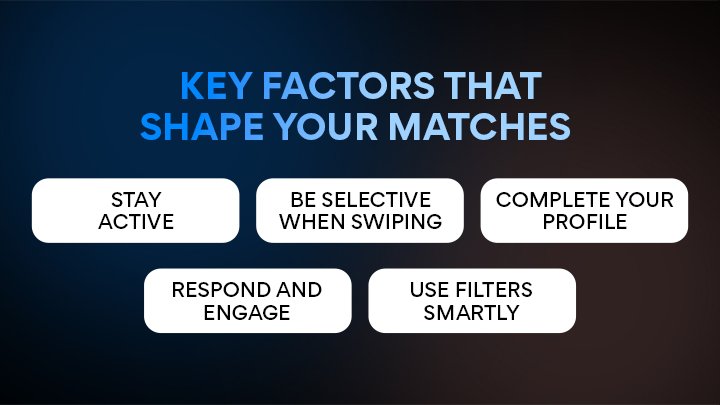
1. Stay Active: Logging in every day, swiping often, and interacting regularly shows the app that you’re active, which can help your profile be seen by more people.
2. Be Selective When Swiping: Choosing carefully whom you like or pass on helps the app understand your preferences, which means it can suggest better matches for you.
3. Complete Your Profile: Adding good photos, writing a clear bio, and sharing details about yourself make your profile more appealing and help the app show it to more people.
4. Respond and Engage: Replying to messages and interacting with others shows the app that you’re engaged, which can boost your visibility.
5. Use Filters Smartly: Age, location, interests, and other preferences guide the app in showing you people who are more likely to match well with you.
Also Read: Top Tech Stack for Dating App Development in 2026
How Specific Dating Apps’ Algorithms Work
Every dating app has its own way of deciding which profiles you see and who sees yours, so each app feels a little different. For example, Tinder uses a system called ELO-style scoring along with engagement data. This means profiles are ranked based on how attractive they seem, how often people swipe, and how active users are. People who are more active and get more positive attention are more likely to show up in other users’ feeds.
Hinge works differently with its “Most Compatible” feature. It uses smart technology to look at your likes, past swipes, and how you use the app. Based on this, it suggests people you are more likely to connect with, giving you better matches instead of random ones.
Bumble’s algorithm focuses on where you are, what you like, and how active you are on the app to decide which profiles you see. It looks at how close people are, the hobbies you share, and how often you respond, so it can show you matches who are more likely to connect with you.Other dating sites like eHarmony, Match.com, and OkCupid use different ways to match people. They often rely on personality tests, detailed questions, and compatibility scores instead of fast swiping. These platforms focus more on helping users find long-term, meaningful connections. By understanding how each site works, you can improve your profile and interactions to get better matches and results.
Also Read: 10 Top-Notch iOS App Development Trends in 2026 Everyone Should Know!
Modern Trends & Advanced Tech
In 2026, artificial intelligence is changing the way we use dating apps, going far beyond the usual swiping. Features like AI-based chemistry analysis, virtual speed dating, and feedback-driven matching help apps figure out who might be a good match for you. By looking at how you behave on the app, how you message, and when you engage, AI can suggest people who are more likely to be compatible with you in the long run, making connections feel more personal and meaningful.
Dating apps now also look at photos and videos to help find better matches. The algorithms can notice things like facial expressions, body language, and activities shown in pictures or videos. This means matches aren’t just based on your basic profile info; they also take into account subtle social and emotional signals.
At the same time, AI-generated profiles are becoming more common, and they come with both good and tricky sides. On the positive side, AI can help make profiles more attractive and get more matches. But it also brings worries about privacy, honesty, and whether people agreed to have their data used. Dating apps need to find the right balance using AI to improve the experience while keeping users’ safety and personal information protected.
New types of dating apps that don’t rely on swiping are becoming popular. These apps focus on starting conversations first or using compatibility quizzes, giving people a more thoughtful and engaging way to meet potential partners. This shows that many users want deeper, more meaningful connections even in a world where dating is becoming more driven by AI.
Also Read: Top 10 Food Delivery Apps in 2026
Algorithm Myths vs. Reality
There are many myths about how dating app algorithms work, which can make online dating confusing. A common misunderstanding is that paying for premium features will automatically get you better matches or make your profile more visible. While paid options let you do things like swipe more or see who likes you, they don’t change how the algorithm actually ranks your profile. The system still focuses mainly on your activity, engagement, and how compatible you are with other users, not on whether you have a subscription.
Many people think that paying for a premium dating app membership automatically makes your profile show up to more people. In truth, premium features mostly give you extra tools or filters—they don’t change how the app’s algorithm works. The system still focuses on showing profiles that are active, engaged, and likely to match with others. The best way to get noticed is by staying active, swiping thoughtfully, and having a complete profile with good photos and a clear, interesting bio.
Knowing these facts helps you have realistic expectations and use dating apps more effectively. Paying for premium features can make things easier and give extra insights, but it won’t automatically make you successful without putting in effort. By clearing up these common myths, users can focus on what really matters: being active on the app, having a complete and appealing profile, and genuinely connecting with others instead of thinking money alone can trick the algorithm.
Also Read: Gaming App Development in 2026 – Key Features & Cost Guide
Optimization: How to Use the Algorithm to Your Advantage
To get noticed more on dating apps, it helps to stay active. Logging in every day, swiping carefully, and replying to messages quickly show the app that you’re engaged, which can make your profile appear to more people. Choosing who to like or pass on thoughtfully also matters; this helps the app understand what you’re looking for and suggest better matches.
Making your profile look its best is very important. Good photos, a clear and interesting bio, and thoughtful prompts help you make a great first impression. A complete and attractive profile also makes the app more likely to show your profile to other users, giving you better chances of getting matches.
You should avoid actions that can lower your profile’s ranking, like swiping a lot without interacting, ignoring messages, or constantly changing your profile. These behaviours make the app think you’re not active or not serious, which can hurt how often your profile is shown to others.
Timing can really help you get more attention. Many apps give new profiles a boost in the first 1–3 days, so it’s a great time to be active, add photos, and interact with others. By logging in regularly and following good habits that the app likes, your profile stays visible, your chances of getting matches go up, and you make the most of the app’s suggestions.
Visit: Dating app development company in USA
Challenges and Limitations
Dating app algorithms try to help people find meaningful matches, but they aren’t perfect. Sometimes they can be unfair or biased, showing more attention to certain groups or reinforcing common stereotypes. Because of this, even a carefully made profile might not get the visibility or matches it deserves.
Even the best algorithms can’t guarantee perfect matches. They work by looking at data and user behaviour, but real human attraction and compatibility are much more complicated. That’s why some people may still have trouble finding meaningful connections, even if they use the app actively and participate regularly.
Dating apps also have problems with fake accounts, bots, and ways people try to trick the system. These issues can make it harder to trust the app and sometimes waste your time on fake or unreliable matches.
Many users get tired or frustrated with dating apps. Constant swiping, seeing the wrong matches, or getting poor suggestions from the algorithm can make people lose interest or even stop using the app. Knowing these limits can help you use dating apps more realistically, set the right expectations, and find ways to enjoy online dating safely and without stress.
FAQ
Many dating apps do not directly access your social media accounts without your permission, but they may use data you provide during signup. For example, apps like Bumble or Hinge may let you link Instagram or Spotify to showcase your photos or music tastes. This data is usually optional and used to enhance your profile or improve match suggestions. Be aware that some apps may use publicly available social media data to refine recommendations, but they rarely access private messages or posts. Always review the app’s privacy policy before linking accounts.
Yes, it can. Dating apps track your swipe behaviour to understand your selectivity. If you swipe right on nearly everyone, the algorithm may downgrade your visibility, thinking you’re less discerning or less engaged.
To maintain a strong algorithmic score:
- Respond promptly to messages to boost activity metrics.
- Be selective and intentional with right swipes.
- Engage genuinely with profiles you like.
Most modern dating algorithms balance explicit preferences (age, location, interests) with behavioural data (who you swipe right or left on, messaging patterns, time spent on profiles).
This means:
- Even if you state you prefer a certain age range, the algorithm may still show you profiles outside it if your swiping behaviour suggests interest.
- Your actual engagement patterns often carry more weight than your stated preferences.
- Regularly reviewing and updating your preferences can help the algorithm better align with your intentions.
Technically, there are ways to optimise your profile to perform better in algorithms (e.g., posting high-quality photos, being active, and completing your bio fully). However, attempting to “hack” the system through bots, fake activity, or excessive swiping can backfire:
- Apps may detect suspicious behaviour and limit or suspend your account.
- Genuine interactions and consistent engagement are more effective than artificial tactics.
- Focus on optimising your profile naturally, being selective, and engaging with matches authentically.

Related Posts
How Much Does It Cost to Develop a Medicine Delivery App Like 1mg?
Getting medicines delivered to your home is now a normal part of daily life. Apps like 1mg make it simple...
Read More

A Complete Guide to Merchant Payment Solution Development
Every time a customer taps a card, scans a QR code, or checks out on a website, a merchant payment...
Read More

How Much Does It Cost to Build a Car Rental App like Hertz?
Think about booking a rental car in just a few minutes using your phone, without standing in long queues. That...
Read More


 Verified Review




 +44 7427829444
 71-75, Shelton Street, Covent Garden, London, United Kingdom, WC2H 9JQ