

Share this article


How Much Does It Cost to Develop a Home Service App like TaskRabbit?
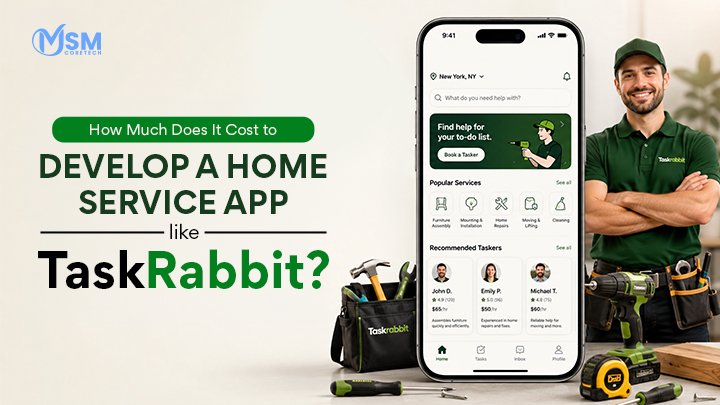
What if booking a plumber, electrician, or cleaner was as easy as ordering food online? This convenience has made home service apps like TaskRabbit very popular with both customers and businesses. The global online on-demand home services market is expected to grow from USD 3.71 billion in 2021 to USD 14.7 billion by 2030, at a 16.7% CAGR, showing the rising demand for digital home service platforms.
Home service apps help people find trusted professionals for services like house cleaning, plumbing, electrical work, furniture assembly, and home repairs. These apps make it easy to book services, pay securely, track the service in real time, and read customer reviews. This makes the whole process simple, fast, and convenient.
The cost to build a home service app like TaskRabbit usually ranges from $25,000 to $150,000 or more. The final cost depends on many factors, such as the features you want, whether you build the app for iOS, Android, or both, the app’s design, the technology used, and the experience and location of the development team.

As more people use on-demand services, many businesses are investing in home service app development. These apps help businesses manage their work more efficiently, reach more customers, get more bookings, and earn regular income. Knowing the main cost factors will help you plan your budget and build a scalable, feature-rich app that meets both customer needs and business goals.
Factors That Affect the Cost of Developing a Home Service App
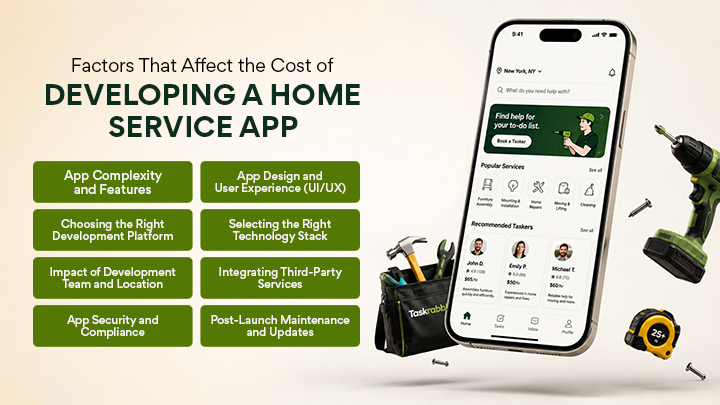
The cost of developing a home service app like TaskRabbit depends on many different factors. The features you add, the app design, and the app development process all affect the total cost. By understanding these factors, businesses can better plan their budgets and avoid unexpected costs during app development.
Read Also: Cost To Create An App In Georgia
App Complexity and Features
The features you add to your handyman app have a big effect on the total development cost. Basic features like user registration, profile management, task management, service booking, and secure payment are necessary for the app to work properly.
If you want to offer a better user experience with advanced features such as real-time tracking, AI-based recommendations, or support for multiple languages, the cost of building a home service app like TaskRabbit will increase.
You can also add features like task scheduling, in-app chat, and push notifications to keep users more engaged. However, these features require extra development time and increase the overall cost.
To keep your budget under control, start with the most important features. You can always add advanced features in future app updates as your business grows.
| App Feature | Description | Average Cost |
|---|---|---|
| Task Bidding System | Allows service providers to bid on tasks, so users can choose the best option based on price, ratings, and skills. | $4,000 – $7,000 |
| Instant Matching | Uses AI to quickly connect users with the right service provider based on location, availability, and skills. | $5,000 – $9,000 |
| Multi-Category Listings | Lets users browse different service categories such as cleaning, plumbing, electrical work, and furniture assembly. | $3,000 – $6,000 |
| Recurring Bookings | Allows users to schedule services on a weekly or monthly basis. | $2,500 – $5,000 |
| Task Scheduling Calendar | Provides an in-app calendar to help users and service providers manage appointments easily. | $2,000 – $4,500 |
| Document Upload for Verification | Allows service providers to upload documents for identity verification and background checks. | $1,500 – $3,500 |
| Custom Pricing Model | Lets service providers set different prices based on the type of task, location, or urgency. | $3,500 – $6,000 |
| In-App Payment Split | Automatically divides payments between the platform and the service provider. | $3,000 – $5,500 |
| Referral and Rewards System | Rewards users for referring friends and encourages customer loyalty with discounts or credits. | $2,000 – $4,500 |
| Emergency Service Booking | Gives users the option to book urgent services whenever they need immediate help. | $3,500 – $6,000 |
Read Also: Top 10 Handyman Apps
App Design and User Experience (UI/UX)
A simple and attractive app design is important to attract users and keep them coming back. A good UI/UX design makes the app easy to use, increases user engagement, and can help grow your business.
For a Taskrabbit-like app, the design should include clear wireframes, prototypes, easy navigation, attractive screens, and interactive features. Advanced animations, custom buttons, and smooth transitions can make the app look better, but they also increase the cost to develop an app like Taskrabbit.
If you are building an MVP (Minimum Viable Product), it is better to choose a simple but attractive design. This helps reduce development costs while still giving users a great experience.
| UI/UX Design Element | Description | Average Cost |
|---|---|---|
| Wireframing & Prototyping | Creates the basic layout and shows how the app will work. | $1,500 – $3,000 |
| Custom Visual Design | Includes unique colors, fonts, branding, and the overall look of the app. | $3,000 – $6,000 |
| Interactive Elements | Adds animations, smooth transitions, and touch effects to improve the user experience. | $2,000 – $4,000 |
| Intuitive Navigation | Makes it easy for users to find and use different app features. | $1,500 – $3,000 |
| Responsive Design | Ensures the app works well on different screen sizes and devices. | $2,500 – $4,500 |
| User Testing & Feedback | Finds design problems and improves the app based on user feedback. | $1,000 – $2,500 |
Read Also: Cost To Create An App In Virginia
Choosing the Right Development Platform
The platform you choose has a big impact on the cost of developing a handyman app like Taskrabbit.
If you build separate native apps for iOS and Android, developers need to write different code for each platform. This increases the development cost, but the app performs better and can fully use each platform’s built-in features.
Another option is cross-platform development. In this method, developers write the code once and use it for both iOS and Android. This saves time and lowers development costs.
However, cross-platform apps may not support some platform-specific features, which can slightly affect the user experience. Before choosing a platform, think about your target audience, business goals, and budget.
| Platform | Description | Average Cost |
|---|---|---|
| Android | Supports a large number of users but needs more testing because there are many different Android devices. | $20,000 – $40,000 |
| iOS | Offers better chances to earn revenue but has stricter App Store approval rules. | $20,000 – $45,000 |
| Both (Native Apps) | Separate apps are built for Android and iOS, giving the best performance on both platforms. | $35,000 – $70,000 |
| Cross-Platform | Uses tools like Flutter or React Native to build one app for both platforms, reducing development time and cost. | $25,000 – $50,000 |
Selecting the Right Technology Stack
The technology stack you choose plays a big role in the Taskrabbit clone app development cost. Using modern technologies can make your app faster, smarter, and more secure, but it can also increase the overall development cost.
It is important to choose a technology stack that matches your app’s features and your budget. Picking the right front-end, back-end, database, and cloud technologies helps keep development costs under control while ensuring the app performs smoothly.
| Technology Stack Component | Description | Average Cost |
|---|---|---|
| Frontend Development | Creates the app’s design and user interface using technologies like React Native or Flutter. | $10,000 – $20,000 |
| Backend Development | Manages the server, database, and APIs to keep the app running smoothly. | $15,000 – $30,000 |
| Database Management | Stores and manages user and app data securely using tools like MongoDB or Firebase. | $5,000 – $10,000 |
| AI Integration | Adds smart features such as task suggestions and personalized recommendations. | $7,000 – $15,000 |
| Cloud Storage Solutions | Stores app data securely and allows the app to grow using services like AWS, Google Cloud, or Azure. | $3,000 – $7,000 |
Read Also: Top 10 Online Restaurant Ordering Apps in USA
Impact of Development Team and Location
The cost of developing an app like Taskrabbit depends on where your development team is located and how experienced they are. Developers in North America and Western Europe usually charge more, but they often provide high-quality work.
On the other hand, hiring developers from countries in Asia or Eastern Europe can help you reduce development costs while still getting good quality. Choosing the best mobile app development company that understands your business needs can help make the development process smooth and ensure your app is delivered on time.
| Region | Average Hourly Rate | Estimated Development Cost |
|---|---|---|
| North America (USA, Canada) | $100 – $150/hour | $60,000 – $100,000+ |
| Western Europe | $70 – $120/hour | $50,000 – $90,000+ |
| Eastern Europe | $30 – $60/hour | $30,000 – $60,000+ |
| Asia (India, Philippines) | $20 – $40/hour | $15,000 – $50,000+ |
| Middle East (UAE, Saudi Arabia) | $40 – $70/hour | $25,000 – $70,000+ |
Integrating Third-Party Services
Adding third-party services can make your app more useful, but it also increases the cost to develop a home service app like TaskRabbit.
Features like secure payment gateways, real-time chat, and social media login make the app easier to use and improve the user experience. Although these integrations increase mobile app development costs, using trusted third-party services helps your app run smoothly and keeps user data secure.
Choosing the right third-party services carefully can help you control development costs while still offering a feature-rich and reliable app.
| Third-Party Service | Description | Average Cost |
|---|---|---|
| Payment Gateways | Allows users to make secure online payments using services like Stripe, PayPal, or Razorpay. | $3,000 – $7,000 |
| Push Notifications | Sends users important updates and alerts through services like Firebase or OneSignal. | $1,000 – $3,000 |
| Map & Navigation Services | Helps users find locations and track services using Google Maps or Mapbox. | $2,000 – $5,000 |
| Chat Support Integration | Lets users and service providers chat easily using tools like Twilio or SendBird. | $2,500 – $6,000 |
| Social Media Logins | Allows users to sign in quickly with Google, Facebook, or Apple ID. | $1,000 – $2,500 |
Read Also: Cost To Create An App In Washington
App Security and Compliance
Keeping your app secure is very important because it protects user data and helps users trust your app.
Adding security features like data encryption, two-factor authentication (2FA), and SSL certificates can increase the cost of developing an app like Taskrabbit. However, these features are necessary to keep user information safe and make your app more reliable.
If you want to launch your app in different countries, you should also follow data protection laws such as GDPR, CCPA, or HIPAA. Meeting these legal requirements helps you avoid legal issues and makes your app ready for global users.
Investing in security from the beginning reduces future risks and ensures your app follows industry standards.
| Security Feature | Description | Average Cost |
|---|---|---|
| Data Encryption | Protects sensitive user data by keeping it secure. | $2,000 – $5,000 |
| SSL Certificate | Secures data shared between the app and the server. | $100 – $500 |
| Two-Factor Authentication (2FA) | Adds an extra security step during user login. | $1,500 – $3,000 |
| Compliance Certifications | Helps your app follow laws like GDPR, HIPAA, and other data protection regulations. | $2,000 – $6,000 |
| Fraud Detection System | Detects and prevents suspicious activities using AI. | $3,000 – $7,000 |

Post-Launch Maintenance and Updates
The cost of building an app like Taskrabbit does not stop after the app is launched. To keep your app working properly and stay ahead of competitors, you need regular updates, bug fixes, testing, and new features.
Post-launch maintenance usually includes:
- Fixing bugs and improving app performance
- Adding new features to make the app better for users
- Updating security to keep user data safe
Setting aside a budget for app maintenance is important. It helps your app continue to meet changing user needs and keeps it running smoothly and efficiently.
| Maintenance Element | Description | Average Cost (Per Year) |
|---|---|---|
| Bug Fixes & Improvements | Fixes technical problems and improves app performance. | $3,000 – $8,000 |
| New Feature Integration | Adds new features based on user feedback and market trends. | $5,000 – $12,000 |
| Security Updates | Improves app security and protects user data from threats. | $2,500 – $6,000 |
| Server & Hosting Costs | Keeps the app running smoothly with reliable hosting services. | $1,000 – $5,000 |
| Customer Support Services | Provides support to users when they have questions or problems. | $2,000 – $5,000 |
Understanding these costs helps businesses better manage the Taskrabbit clone app development cost while building an app that meets customer needs.
By focusing on the most important features, choosing the right technology, and working with experienced developers, businesses can reduce development costs and increase the chances of earning higher profits from their app.
Read Also: 9 Best Free Mental Health Apps In USA
Cost Breakdown by Development Stage
The cost of building a home service app like TaskRabbit is divided into different development stages. Every stage is important for creating an app that is secure, easy to use, and able to grow as your business grows. Planning each stage carefully helps avoid extra expenses later and ensures the app works smoothly and provides a better experience for users.
Market Research and Planning
The first step is to understand your target customers, study your competitors, set your business goals, and decide which features your app needs. This stage includes researching the market, planning how the app will work, choosing the right technology, and creating a clear development plan. Proper planning helps reduce risks, avoid extra costs, and makes the entire app development process easier and more organized.
| Activity | Estimated Cost (USD) |
|---|---|
| Market research | $500–$1,500 |
| Business planning | $500–$1,500 |
| Feature planning & roadmap | $1,000–$3,000 |
| Total Estimated Cost | $2,000–$6,000 |
UI/UX Design
A simple and easy-to-use design helps customers book services without any confusion. Designers create wireframes, prototypes, user flows, and the final design for the customer app, service provider app, and admin panel. A good design makes the app easy to use, which improves customer satisfaction and encourages users to keep coming back.
| Activity | Estimated Cost (USD) |
|---|---|
| Wireframes | $800–$2,000 |
| UI design | $1,200–$3,000 |
| Prototypes & user testing | $1,000–$3,000 |
| Total Estimated Cost | $3,000–$8,000 |
Frontend and Backend Development
This is usually the most expensive part of building the app. Developers create the customer app, service provider app, admin dashboard, and the backend system that makes everything work. They also set up the database, login system, payments, booking management, and real-time notifications. The total cost depends on how many features you want and whether the app is built for one platform or multiple platforms.
| Activity | Estimated Cost (USD) |
|---|---|
| Frontend development | $8,000–$20,000 |
| Backend development | $8,000–$25,000 |
| Admin panel | $4,000–$15,000 |
| Total Estimated Cost | $20,000–$60,000 |
Read Also: Best Online Auction Apps & Websites
API Integration
Third-party APIs help you add useful features to your app without building them from scratch. These features can include payment gateways, maps and GPS, SMS and email notifications, chat, analytics, and cloud storage. The more APIs you add, the higher the app development cost.
| Activity | Estimated Cost (USD) |
|---|---|
| Payment gateway | $1,000–$3,000 |
| Maps & GPS | $500–$2,000 |
| Notifications & SMS | $500–$2,000 |
| Other APIs | $1,000–$3,000 |
| Total Estimated Cost | $3,000–$10,000 |
Testing and Deployment
Before launching the app, it is carefully tested to make sure everything works properly. This includes checking all features, app speed, security, and whether the app runs smoothly on different devices. If any bugs or issues are found, they are fixed before the app is released. Once the testing is complete, the app is published on the App Store and Google Play. Proper testing helps avoid problems after launch and provides a better experience for users.
| Activity | Estimated Cost (USD) |
|---|---|
| Functional testing | $1,500–$3,000 |
| Performance & security testing | $1,500–$4,000 |
| App deployment | $1,000–$3,000 |
| Total Estimated Cost | $4,000–$10,000 |
Post-Launch Maintenance and Updates
Development does not stop after the app is launched. Regular maintenance is important to keep the app running smoothly. This includes fixing bugs, improving app performance, updating security, adding new features, and making sure the app works well with the latest operating systems. Setting aside a yearly maintenance budget helps keep the app reliable, secure, and competitive.
| Activity | Estimated Cost |
|---|---|
| Bug fixes | Included in maintenance |
| Performance improvements | Included in maintenance |
| Security updates | Included in maintenance |
| New feature updates | Based on requirements |
| Annual Maintenance Cost | 15–20% of the total development cost |
Read Also: Handyman App Development Cost: A Comprehensive Guide
Cost Based on App Complexity
The cost of building a home service app like Taskrabbit depends on the app’s features, design, and overall complexity. A simple app costs less because it has only basic features. An advanced app costs more because it takes more time, effort, and resources to develop. Here is a simple comparison of different types of home service apps.
Basic Home Service App
A basic home service app is a good choice for startups and small businesses. It includes important features like user sign-up, service listings, service booking, online payments, and push notifications. This type of app is perfect for launching a Minimum Viable Product (MVP) and testing your business idea before adding more advanced features.
| Features | Estimated Cost |
|---|---|
| Basic booking, login, payments, notifications | $15,000–$30,000 |
Mid-Level Home Service App
A mid-level home service app gives users a better and smoother experience. It includes useful features like real-time service tracking, in-app chat, ratings and reviews, multiple payment options, and a dashboard for service providers. This type of app is a good choice for businesses that are growing and want to offer more features to their customers.
| Features | Estimated Cost |
|---|---|
| Live tracking, chat, reviews, provider panel | $30,000–$60,000 |
Advanced TaskRabbit-Like App
An advanced TaskRabbit-like app is built for large businesses that want to compete with top platforms. It includes smart AI recommendations, powerful admin controls, support for multiple languages, detailed analytics, dynamic pricing, loyalty programs, and a scalable cloud system. These features help the app handle a large number of users, improve the customer experience, and support long-term business growth.
| Features | Estimated Cost |
|---|---|
| AI features, analytics, loyalty programs, advanced admin panel | $60,000–$150,000+ |
Read Also: Top AI Trends
Essential Features of a Home Service App Like Taskrabbit
The features you add to a home service app like Taskrabbit have a big impact on the total development cost. A basic app with simple features costs less to build. If you add more advanced features, the development cost will be higher. Most home service apps have three main panels: the customer panel, the service provider panel, and the admin panel.
Customer Panel
The customer panel is designed to make booking home services quick and easy. Users can sign up, create their profile, search for different services, and book an appointment in just a few steps. They can also track the service provider’s live location in real time. A secure payment system allows customers to pay safely online. Ratings and reviews help users find reliable service providers. Push notifications keep customers updated about booking confirmations, provider arrival times, and special offers.
Service Provider Panel
The service provider panel helps professionals manage their daily work easily. They can create and update their profiles, receive job requests, and accept the jobs they want. They can also manage their work schedule in one place. The earnings dashboard shows completed jobs and payment details, making it easy to track their income. A built-in chat feature lets service providers talk directly with customers, helping them communicate better and coordinate each job smoothly.
Admin Panel
The admin panel helps business owners manage the entire app from one place. Admins can manage customer and service provider accounts, track all bookings, and monitor payment transactions. They can also view reports and analytics to understand app performance, user activity, and earnings. With the content management section, admins can easily update banners, service categories, special offers, and other app information without releasing a new app update.
Adding these important features makes the app easier to use for both customers and service providers. However, every new feature increases the development cost. Businesses should choose only the features that fit their business needs and budget.
Read Also: Best Video Streaming App Development Companies in USA
Tips to Reduce the Cost to Develop a Handyman App Like Taskrabbit
Building a home service app like Taskrabbit can cost a lot, but good planning can help you save money without reducing the app’s quality. Here are some simple ways to keep your development costs under control.
Start with an MVP
An MVP (Minimum Viable Product) is a basic version of your app that includes only the most important features. This helps you launch your app quickly and spend less money in the beginning. After users start using the app and share their feedback, you can add more features based on what they need. This approach helps you avoid unnecessary costs and build a better app over time.
Prioritize Essential Features
You do not need to add every feature in the first version of your app. Start with the most important features, such as user registration, service booking, online payments, real-time tracking, and ratings. These features are enough to launch your app. You can add more features later through updates. This helps you manage your development budget and reduce costs over time.
Choose Cross-Platform Development
Creating one app that works on both Android and iOS is usually more cost-effective than building two separate apps. Cross-platform development lets developers use the same code for both platforms. This saves development time, lowers overall costs, and helps you reach more users with a single app.
Use a Scalable Architecture
Build your app with a scalable architecture so it can handle more users and new features as your business grows. Planning this from the beginning helps you avoid costly changes or rebuilding the app later. It saves both time and money in the long run.
Partner with an Experienced Development Company
Working with an experienced and trusted handyman app development company helps you avoid common mistakes, project delays, and poor-quality work. A skilled team can choose the right technology, build a reliable app, and complete the project within your budget and timeline. They also make it easier to maintain, update, and improve the app in the future.
How Taskrabbit-Like Apps Make Money?
Taskrabbit-like apps earn money in different ways while helping customers connect with service providers. The most common way is by charging a commission on every completed booking. This means the app keeps a small percentage of the payment made for each service. As more people use the app and book services, the platform earns more money.
Many apps also offer subscription plans for service providers. By paying a monthly or yearly fee, service professionals can use extra features, get more job requests, and appear higher in search results. This helps them attract more customers while giving the platform another steady source of income.
Another common way to earn money is through lead generation fees. In this model, service providers pay a small fee to receive customer inquiries or job leads, even if the customer has not booked a service yet.
The app can also make money by showing in-app ads from relevant brands or local businesses. This gives the platform extra income without affecting the booking experience.
Another option is featured listings, where service providers pay to appear at the top of search results. This helps them get more visibility and attract more customers, while the app earns additional revenue.
Using these different earning methods together helps create a profitable and long-lasting home service app business. Partnering with an experienced home service app development company can also help you build the right monetization strategy and maximize your app’s long-term revenue potential.

Why Choose MSM Coretech to Develop an App Like Taskrabbit?
Building a home service app like Taskrabbit requires the right technology partner. MSM Coretech has experience in developing secure, scalable, and user-friendly mobile applications that meet modern business needs. Our team understands the complete development process, from planning and UI/UX design to development, testing, deployment, and post-launch support.
We create custom home service apps with essential features such as user registration, service booking, real-time tracking, secure payments, chat, notifications, and admin management. Our developers use the latest technologies to ensure high performance, strong security, and easy scalability as your business grows.
At MSM Coretech, we focus on delivering quality solutions within your budget and timeline. We maintain clear communication throughout the project and provide regular updates to keep you informed. Even after the app is launched, our support team helps with maintenance, feature upgrades, and performance improvements.
Whether you are building a basic home service app or a feature-rich platform like Taskrabbit, MSM Coretech can turn your idea into a reliable and successful application that supports long-term business growth.
Conclusion
The cost to develop a home service app like Taskrabbit depends on many factors, including the app’s features, design, technology, development team, and maintenance needs. A basic app requires a smaller budget, while an advanced platform with AI features, real-time tracking, and multiple user panels costs more. Careful planning, choosing the right technology stack, and starting with an MVP can help reduce development costs without affecting quality.
It is also important to consider ongoing expenses such as maintenance, security updates, cloud hosting, and feature improvements after launch. These investments help keep the app secure, reliable, and competitive in the market.
Partnering with an experienced home service app development company can simplify the development process and ensure your app is scalable, user-friendly, and built for long-term success. With the right strategy and budget planning, businesses can create a powerful home service app that attracts users, improves customer satisfaction, and generates steady business growth.
FAQs
The cost typically ranges from $20,000 to $150,000+, depending on the app’s features, design, development platform, technology stack, and the location of the development team.
A home service app should include user registration, service booking, real-time tracking, secure payment integration, ratings and reviews, push notifications, provider management, and an admin dashboard.
The development timeline usually ranges from 3 to 9 months. A basic app takes less time, while an advanced app with custom features and third-party integrations requires a longer development period.
You can reduce costs by starting with a Minimum Viable Product (MVP), prioritizing essential features, using cross-platform development, and working with an experienced app development company.
A professional development company provides expert guidance, scalable solutions, quality assurance, ongoing support, and timely delivery, helping you build a secure, high-performing app that meets your business goals.

Related Posts
How to Start an Online Handyman Business? A Complete Guide
Home services have quietly become one of the busiest corners of the on-demand economy. People no longer want to flip...
Read More
Top Music Streaming App Trends To Follow In 2026
Music streaming has changed how people find, share, and listen to their favorite songs. Today, listeners want more than just...
Read More

Top Benefits Of Medicine Delivery Apps In Healthcare 2026
Buying medicine used to mean the same thing everywhere: get in the car, wait in line at the pharmacy counter,...
Read More


 Verified Review




 +44 7427829444
 71-75, Shelton Street, Covent Garden, London, United Kingdom, WC2H 9JQ