

Share this article


Best Online Auction Apps & Websites: Features, Cost & Development Process

Online auction platforms have become a popular way for buyers and sellers to connect in a digital marketplace. Whether you are looking for rare collectibles, vehicles, real estate, electronics, or other valuable items, auction apps and websites offer a convenient way to place bids and secure great deals. With the growing popularity of online bidding, many platforms now provide advanced features that make the auction experience simple, secure, and accessible from anywhere.
In this guide, we will explore the best online auction apps and websites available in 2026. We will review their key features, benefits, and user experience to help you choose the right platform. We will also discuss the development cost, essential features, and step-by-step process of building an online auction app or website for businesses looking to enter this growing market.

Online Auction Industry – Facts
The online auction industry is growing steadily as more people prefer online bidding platforms because they are convenient, transparent, and easy to access from anywhere.
- The global online auction market is expected to exceed $25 billion by 2026, mainly due to the increasing use of the internet and the growth of e-commerce.
- Experts believe the market will continue to grow at a double-digit rate through 2035, supported by new technologies, mobile bidding apps, and AI-powered auction platforms.
- North America remains one of the biggest markets because of its strong digital infrastructure, high consumer spending, and widespread use of online marketplaces.
- Countries such as the United States, China, the United Kingdom, Germany, and Japan are major contributors to online auction revenue and attract millions of active bidders every year.
- The rising popularity of mobile auction apps has increased participation, allowing users to place bids anytime and from almost any location.
- Industries such as automotive, real estate, collectibles, antiques, and industrial equipment are increasingly using online auction platforms to reach more buyers and improve sales opportunities.
- Modern auction platforms are improving user experience and transaction efficiency through the use of artificial intelligence, secure payment systems, and real-time bidding technology.
Read Also: Handyman App Development Cost: A Comprehensive Guide
List of Best Online Auction Apps and Websites
eBay – A Popular Online Auction App for Buying and Selling
eBay is one of the most well-known online auction apps for Android and iPhone users. It allows people to buy, sell, and bid on many types of products, such as electronics, vehicles, collectibles, clothing, and more.
Millions of people around the world use eBay, making it a trusted name in the online auction market. One of its best features is the buyer and seller rating system, which helps users check the reliability of others before making a deal.
The platform also provides secure payment methods, live bidding features, and access to buyers and sellers from different countries. For businesses that want to create an online auction platform, eBay is a great example of a reliable and scalable auction website.
Read Also: Cost To Create An App In Florida
Sotheby’s – Premium Auction Platform for Luxury Items
Sotheby’s is a famous auction platform for buying and selling valuable and rare items. People can join auctions to bid on fine art, luxury jewelry, antiques, watches, and other high-end products. The platform is trusted worldwide because of its strong reputation, expert item evaluations, and professionally managed auctions. Sotheby’s combines traditional auction services with modern technology, allowing users to participate easily through its website and mobile app. Many entrepreneurs who want to build premium auction platforms look at Sotheby’s as a successful example of creating a secure and trusted marketplace for unique and valuable items.
Read Also: Top 7 Web Design Companies in Denver
ShopGoodwill – Online Auction Platform Supporting Social Causes
ShopGoodwill is the official online auction website run by Goodwill, a nonprofit organization. On this platform, people can bid on many types of items, such as artwork, electronics, books, collectibles, and musical instruments. The money earned from these auctions helps fund community programs and create job opportunities for people in need.
The platform works with many Goodwill organizations across the United States and Canada, making it a large online auction marketplace. ShopGoodwill is a good example of how an auction website can combine online selling with charitable work while also helping manage and sell inventory efficiently across different locations.
LiveAuctioneers
LiveAuctioneers is one of the most popular online auction platforms, with more than 100,000 downloads. It allows users to join live auctions and place bids in real time while the auction is happening. The platform offers a wide variety of items, including antiques, collectibles, jewelry, artwork, and rare products from auction houses around the world. Its simple and easy-to-use interface helps buyers quickly find items and participate in auctions from anywhere. LiveAuctioneers is a great example of how modern auction software provides a smooth live bidding experience and connects buyers and sellers globally.
Read Also: Top AI Trends in 2026
AuctionZip
AuctionZip is a popular online auction platform where people can join live bidding events in different categories. It is widely used for buying and selling antiques, collectibles, farm equipment, and items from estate sales. Users can easily find upcoming auctions by searching their location and can place bids online from anywhere. The platform has thousands of active listings and auction events, making it a trusted choice for both buyers and sellers. AuctionZip is a good example of how an online auction platform can help local auction businesses and support large-scale online bidding.
PropertyRoom – Property Bidding Platform App
PropertyRoom is a unique online auction platform where people can bid on seized, surplus, and unclaimed items. It offers a wide range of products, such as electronics, jewelry, watches, vehicles, and collectibles, often at affordable prices. The platform works with thousands of law enforcement agencies and government organizations to legally and safely auction confiscated items. PropertyRoom is a great example of a niche auction marketplace that focuses on specific types of inventory while providing a secure, transparent, and trustworthy bidding experience for users.
Read Also: Cost To Create a Mobile App In Texas
DealDash – Online Bidding Marketplace
DealDash is a popular online auction app available on both Android and iOS devices. Users can bid on a variety of products, including electronics, home items, and gadgets, often at prices lower than regular market rates. The platform uses an exciting bidding system that keeps users interested and involved throughout the auction process. Its real-time bidding feature creates a fun and competitive experience for buyers looking for great deals. For businesses planning to build an auction app, DealDash is a good example of how combining affordable pricing with an engaging user experience can attract and retain users.
IRS Treasury Auctions
IRS Treasury Auctions is a platform that sells assets seized because of unpaid taxes or other legal issues. Users can find properties, vehicles, land, and other valuable items available through a secure auction process. For businesses planning auction website development, this platform is a good example of how to handle high-value transactions while following legal and regulatory requirements. Its well-organized auction system and strong security features help create a transparent and trustworthy experience for all participants.
Catawiki – Trusted Auction Platform for Collectible Items
Catawiki is a well-known online auction platform where people can buy and sell rare, unique, and collectible items. Before an item is listed for auction, it is checked by experts to help make sure it is genuine and of good quality. This review process helps buyers feel more confident when placing bids and makes the platform safer for everyone. Businesses that want to build an auction website can learn from Catawiki’s expert verification system, as it helps build trust, improve credibility, and encourage users to keep using the platform for secure and reliable transactions.
Read Also: Cost To Create a Mobile App In New York
Auction.com – A Popular Property Auction Platform
Auction.com is a popular online platform for buying and selling properties through auctions. It mainly focuses on real estate and offers a wide range of residential and commercial properties. Because of its large number of property listings and active users, it has become a trusted choice for homebuyers, investors, and real estate professionals. The platform is a great example of how a specialized auction website can lead a specific market by providing an easy and smooth bidding experience for its users.
Emirates Auction – A Popular Auction Platform for Different Categories
Emirates Auction is one of the most popular auction apps in the UAE. It allows users to bid on different types of items, including vehicles, properties, luxury products, artwork, and many other assets. The platform offers live bidding updates, secure payment and transaction processes, and an easy-to-use interface. Its success shows how an online auction platform can efficiently handle multiple categories of items while ensuring transparency, security, and a smooth user experience.
Read Also: Web Design Companies in New York City
Auctions by CarDekho – Trusted Vehicle Auction Solution
Auctions by CarDekho is a vehicle auction platform that makes it easy to buy and sell vehicles through online auctions. Users can quickly list vehicles, place bids without hassle, and complete transactions securely. The platform is a great example of a specialized auction solution built for the automotive industry. It provides a simple, reliable, and convenient experience for both buyers and sellers while making the entire auction process smooth and efficient.
FindAuction
FindAuction is an online auction platform where people can easily buy and sell different types of products, such as antiques, collectibles, electronics, and household items. It has a simple and easy-to-use interface, real-time bidding updates, and secure payment support, making the auction process smooth and convenient for users around the world. With its wide range of product categories and user-friendly features, FindAuction helps connect buyers and sellers efficiently across different markets.
Read Also: Cost to Create a Mobile App in California
Invaluable
Invaluable is a popular online auction app available for both Android and iOS users. It allows people to join live and online auctions for fine art, jewelry, furniture, and rare collectibles from trusted auction houses around the world. The app offers useful features such as auction reminders, detailed product listings, secure payment methods, and real-time bidding. Invaluable is a great example of how traditional auction companies can use digital technology to reach more buyers and sellers, making online auctions easier and more accessible for everyone.
IAA Buyer Salvage Auctions
IAA Buyer Salvage Auctions is an auction app specially made for buying salvage and damaged vehicles. Users can easily search vehicle listings, check detailed inspection reports, and join live auctions directly from their mobile phones. The app offers useful features for automotive businesses and individual buyers who want to purchase vehicles at lower costs. It is a good example of how auction platforms can be designed to meet the specific needs of a particular industry.
Read Also: 9+ Best Video Streaming App Development Companies in USA
Why Are Online Auction Apps Becoming More Popular?
Online auction apps have become very popular because many people now prefer buying and selling products using their smartphones. These apps make it easy for sellers to show their products to a large number of buyers without needing a physical store or marketplace.
Sellers can upload their products and set a starting bid price. Interested buyers can then place bids, and other buyers can offer higher prices to compete for the item.
This bidding process makes shopping more exciting because buyers get a chance to purchase valuable products at competitive prices. At the same time, sellers can often earn more money when several buyers bid on the same product.
Easy-to-use features, secure payment methods, and real-time bidding updates have also helped increase the popularity of modern online auction apps.
Online auction platforms allow people to buy and sell many types of products, such as real estate, luxury watches, jewelry, antiques, artwork, collectibles, vehicles, and other valuable or rare items. People can join auctions from anywhere using the internet, making the buying and selling process easier and more convenient.
As online shopping continues to grow, online auction apps are becoming an important marketplace solution for businesses and individuals. They provide a simple, efficient, and transparent way to buy and sell products online. Businesses can further enhance these platforms through AI app development, enabling smarter bidding experiences, personalized recommendations, fraud detection, and improved user engagement.
Read Also: 9+ Best Insurance App Development Companies in USA
How Much Does It Cost to Develop an Auction Website?
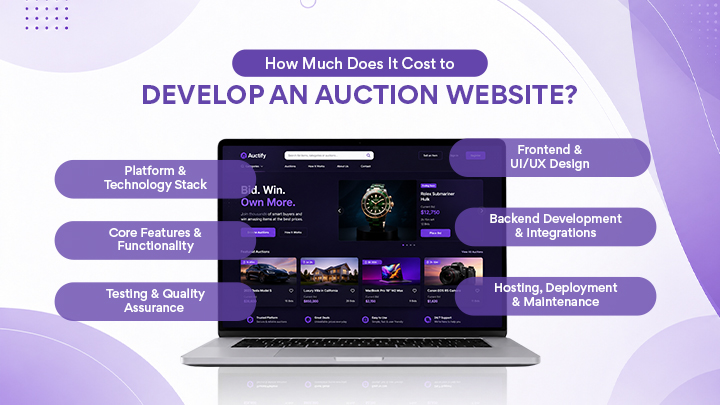
One of the first questions businesses ask before starting an auction website is: How much does it cost to build an auction platform? The app development cost depends on several things, such as the type of website, the features needed, the design, security requirements, and how large the platform needs to grow in the future.
In most cases, auction website development costs can range from $5,000 to $70,000 or more. A simple auction website with basic bidding features usually costs less. On the other hand, a large and advanced platform with real-time bidding, mobile-friendly design, strong security, and high scalability requires a bigger budget.
The final cost of development depends on a number of important factors. Below are the key elements that affect the overall price of building an auction website.
Read Also: Top 10 Decentralized Crypto Wallets
Platform & Technology Stack
The technology used to build the platform has a big impact on the development cost. Ready-made CMS solutions are usually less expensive and can be launched quickly. On the other hand, custom-built platforms cost more but offer better flexibility, performance, and scalability for future growth.
| Platform Type | Description | Estimated Cost (USD) |
|---|---|---|
| CMS-Based Solution | Basic auction functionality | $500 – $3,000 |
| Custom Web Platform | Tailored features and scalability | $5,000 – $20,000 |
| Enterprise-Level System | High-performance architecture | $20,000 – $70,000+ |
Frontend & UI/UX Design
Frontend and UI/UX design are important for creating a smooth and user-friendly auction platform. A well-designed interface makes it easy for users to browse auction listings, place bids quickly, and complete transactions with confidence and ease.
| Design Type | Description | Estimated Cost (USD) |
|---|---|---|
| Ready-Made Theme | Limited customization | $300 – $1,200 |
| Custom Design | Unique branding and responsive layouts | $1,500 – $5,000 |
| Premium UX Design | Advanced user research and prototyping | $5,000 – $10,000 |
Read Also: 9+ Best IoT App Development Companies in USA
Core Features & Functionality
The platform’s features and functions have a direct impact on the development cost. Features like bidding systems, payment options, notifications, and admin management tools need more development work, which increases the time, effort, and overall cost of building the platform.
| Feature | Estimated Cost (USD) |
|---|---|
| User Registration & Login | $500 – $1,000 |
| Auction Listing Management | $1,500 – $5,500 |
| Live Bidding System | $3,500 – $9,000 |
| Payment Integration | $1,000 – $3,000 |
| Admin Panel | $1,500 – $6,000 |
| Security Features | $500 – $2,000 |
Backend Development & Integrations
The backend handles important tasks like storing user information, managing bids, processing transactions, and keeping the platform running smoothly. A strong backend helps the auction platform stay stable and work efficiently, even when many users are active at the same time.
| Backend Component | Estimated Cost (USD) |
|---|---|
| Backend Development | $2,500 – $7,000 |
| Third-Party API Integrations | $1,000 – $4,000 |
| Cloud Infrastructure | $4,000 – $15,000 |
| Database Management | $1,000 – $4,000 |
Read Also: 9+ Best Construction Software Development Companies in USA
Testing & Quality Assurance
Testing and quality assurance help find and fix bugs, security risks, and performance issues before the website goes live. This is very important for auction websites because they handle live bidding and online payments, which need to work smoothly and securely.
| Testing Type | Avg. Cost (USD) |
|---|---|
| Manual Testing | $700 – $2,000 |
| Automated Testing | $1,500 – $4,000 |
| Load & Security Testing | $2,000 – $5,000 |
Hosting, Deployment & Maintenance
Once the website is developed, businesses also need to spend money on hosting, regular updates, monitoring, and ongoing maintenance. These services help keep the platform secure, stable, and running smoothly for users.
| Service | Estimated Cost (USD) |
|---|---|
| Shared Hosting | $100 – $500/year |
| Cloud Hosting | $1,000 – $4,000/year |
| Website Maintenance | $1,500 – $6,000/year |
| Security Monitoring | $500 – $2,500/year |
Read Also: Top 9 B2B Web Design Companies in USA
The total cost of building an auction website depends on how simple or advanced the platform is and what features your business needs. A basic auction website may cost just a few thousand dollars, while a more advanced platform with many features can cost over $70,000. Planning your requirements and focusing on the most important features can help reduce development costs and give you a better return on your investment.

How to Make an Auction Website? Step-by-Step Process?
Building an auction platform needs careful planning, the right technology, and secure payment options. Below is a simple step-by-step guide to help you understand the entire app development process.
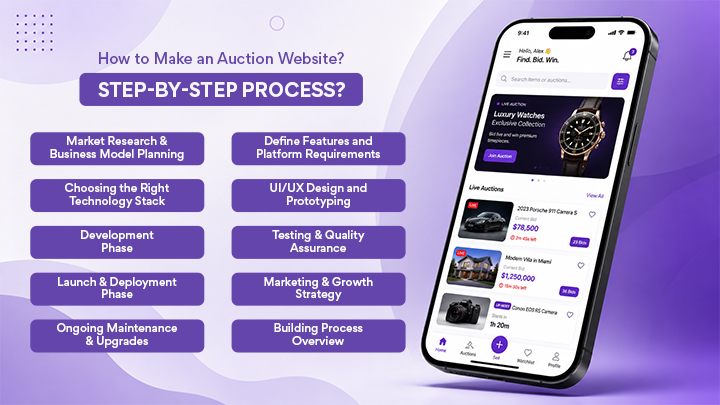
Market Research & Business Model Planning
Before starting the development of an auction website, it is important to plan everything carefully. Businesses should understand who their target users are, choose the right type of auction system, study their competitors, and decide how the website will earn money. Good research helps reduce risks and makes sure the platform matches what users need.
Many people also ask: How does an auction website work? The process is simple. Sellers list their products or services on the website, and buyers place bids within a set time period. When the auction ends, the person with the highest bid wins the item. After that, the platform helps complete the transaction between the seller and the buyer.
Read Also: 9+ Best Travel App Development Companies in USA
Auction websites can make money in different ways, such as charging fees for listing items, taking a commission from sellers, collecting transaction fees, offering featured listings, displaying advertisements, and providing premium membership plans. Choosing the right business model from the beginning helps build a profitable and long-lasting auction platform.
By doing proper market research and creating a clear plan for earning revenue, businesses can develop an auction website that attracts more users, keeps them engaged, and generates steady income over time.
Read Also: Cost To Develop A Travel App Like Booking.com
Define Features and Platform Requirements
After choosing your auction business model, the next step is to decide which features your platform needs. Having a clear list of features helps create a smooth user experience, makes the mobile app development company process easier, and ensures the platform supports your business goals.
| Feature | Purpose |
|---|---|
| User Accounts & Profiles | Registration, account management, bid tracking |
| Seller Dashboard | Manage products, auctions, and sales |
| Auction Listing Management | Create and update auction listings |
| Live Bidding System | Real-time bidding and updates |
| Automatic Bidding | The system places bids automatically within limits |
| Payment Gateway | Secure online transactions |
| Notifications & Alerts | Bid, payment, and auction updates |
| Admin Panel | Complete platform management and monitoring |
User Accounts & Profile Management
This feature allows users to sign up and log in securely, update their account details, track their bidding activities, view past purchases, and build trust with other users through ratings and reviews.
Seller Management Dashboard
A Seller Management Dashboard gives sellers their own space to add products, manage active auctions, check bids, track sales results, and communicate with interested buyers.
Auction Listing Creation & Management
This feature allows sellers to create, edit, schedule, and manage auction listings. Sellers can add product details, prices, images, and set the auction start and end times easily.
Live Bidding Functionality
Allows users to place bids in real time with instant updates, countdown timers, and live bid tracking. This helps create a clear, fair, and exciting auction experience.
Automatic Bidding Feature
Let bidders set their highest bid amount in advance. The system then automatically places small bid increases on their behalf whenever other users place competing bids.
Read Also: Best Subscription App Development Companies in USA
Secure Payment Gateway Integration
Allows users to make payments safely on the platform. It supports online payments, deposits, refunds, and different payment options through trusted payment providers.
Alerts & Notification System
Sends instant notifications to keep users updated about bid activity, auction results, payment confirmations, upcoming auction deadlines, and account-related updates.
Administrative Control Panel
Gives administrators full control over the platform, including managing users, auction listings, transactions, disputes, reports, platform settings, and overall marketplace activities.
A well-planned feature strategy is important for successful auction website development. Defining the requirements early helps avoid unnecessary development costs, reduces project delays, and ensures a smooth and scalable platform launch.
Read Also: Cost to Develop a Hotel Booking App Like Agoda
Choosing the Right Technology Stack
Picking the right technology stack is one of the most important steps in building an auction website. The technologies you choose will affect how fast your website runs, how secure it is, how easily it can grow, and how well it performs in the future. Based on your business needs, you can use ready-made platforms or go for fully custom-built solutions.
Some popular technology options include:
- Content Management Systems (CMS) with auction plugins
- Modern frontend tools like React, Vue.js, or Angular
- Backend technologies such as Node.js, Laravel, Python Django, or ASP.NET
- Cloud services like AWS, Microsoft Azure, and Google Cloud
A simple auction website can be created using a CMS-based solution. But if a business expects high traffic and needs advanced features, then a custom-built system is a better choice. Choosing the right technology from the start helps avoid problems later and supports long-term business growth.
UI/UX Design and Prototyping
A good user interface is very important for a successful auction website. Users should be able to place bids quickly and easily see live auction updates. That’s why the website must be simple, responsive, and easy to use.
The design process usually includes:
- Planning how users will move through the website
- Creating wireframes (basic layout designs)
- Making interactive prototypes
- Designing mobile-friendly pages
- Adding easy-to-use bidding buttons
- Showing real-time countdown timers
- Creating clear product and auction pages
Good UI/UX design makes the website easier to use and more enjoyable. It increases user interest and encourages people to join more auctions. It also builds trust and makes the platform look more reliable, which helps keep both buyers and sellers active on the website.
Read Also: Best Legal Software Development Companies in USA
Development Phase
This stage is when the real product starts being built using coding and system development. In this phase, the planning and design are turned into a fully working auction platform.
The process usually includes:
- Frontend Development – Creating simple and easy-to-use screens where users can see auctions, check product details, and place bids smoothly on any device.
- Backend Development – Building the main system that handles users, auctions, bids, databases, and real-time updates so everything works properly without delays.
- Payment Gateway Integration – Adding safe payment systems so users can securely make payments, deposits, and withdrawals without any risk.
At this stage, many businesses also search for the best ways to build an auction website that is scalable and secure. The technical structure decided here is very important because it affects performance, especially when many users join live bidding events.
Testing & Quality Assurance
Testing is a very important step in building an auction platform. Even a small technical problem can cause bidding mistakes, payment issues, or make users lose trust.
This stage includes different types of testing, such as:
- Functional testing to make sure all features like bidding, user registration, and listing items are working properly.
- Real-time bidding testing to ensure bids update instantly without any delay.
- Security testing to protect payment details and stop unauthorized access or fraud.
- Load and stress testing to check the system can handle many users during live auctions at the same time.
- Bug fixing and performance improvement before the platform is launched.
In multi-vendor marketplace development, this step is even more important because many sellers, buyers, and transactions must work smoothly together. Proper QA helps make the auction platform stable, safe, and ready for real users.
Read Also: Best Pet Care App Development Companies in USA
Launch & Deployment Phase
After the development and testing work is finished, the auction website is launched on a live server. This means the platform becomes available for real users and starts working in a real online environment.
Main steps in the deployment process include:
- Setting up the domain name and connecting it to the hosting server
- Installing SSL certificates to keep user data safe and secure
- Setting up cloud hosting or server systems for smooth and stable performance
- Doing final speed and performance improvements to make the website fast and reliable
If you are building an online auction website for a large or global audience, you should choose a scalable hosting system. This helps the website manage sudden increases in traffic, especially during busy bidding times when many users are active at once.
Marketing & Growth Strategy
Launching the platform is just the first step. The real success of an auction website depends on how well it brings in users and keeps them active. A strong marketing plan is needed to make the platform visible and to attract both buyers and sellers.
Since auction websites need regular user activity, the main focus should be on getting more visitors, building trust, and encouraging people to come back again and again.
Key growth activities include:
- SEO (search engine optimization) to help the website appear higher in search results
- Paid ads to quickly bring in new users
- Social media marketing to increase brand awareness and user engagement
- Email campaigns to keep users active and inform them about new auctions
- Referral programs to motivate users to invite their friends
A good marketing strategy helps the auction platform not only start successfully but also grow slowly and steadily with loyal and active users over time.
Read Also: Best SaaS Development Companies in the USA
Ongoing Maintenance & Upgrades
After an auction website is launched, it needs regular updates to stay safe, fast, and reliable. Maintenance helps the platform keep working smoothly as more users and data are added.
This includes security updates, adding new features, improving speed and performance, checking servers, and using user feedback to make improvements.
It is also important to plan for the long term. A scalable system can handle more users, more listings, and more transactions without slowing down.
Building Process Overview
Making an auction platform includes several steps like planning, choosing technology, designing the interface, development, testing, launching, and continuous improvements. Each step is important for building a strong and secure system.
No matter if the project is small or big, following a proper development process helps improve performance, safety, and future growth.

How to Run an Online Auction for Free
You can run an online auction without spending any money by using free platforms and simple tools. Start by choosing platforms like Facebook Marketplace, Facebook groups, or community pages where you can list items for free. Some auction websites also provide basic free listing options.
After selecting the platform, create a clear listing with a short description of the item, its condition, starting price, and auction end time. Adding good-quality photos helps attract more bidders and increases engagement.
Next, set simple auction rules such as the duration of the auction, minimum bid increase, and accepted payment methods. Also, clearly mention delivery or pickup details to avoid confusion later.
To get more participants, share your listing in relevant groups, social media pages, and online forums. More visibility usually leads to higher bidding activity.
During the auction, keep track of bids, respond quickly to questions, and stay active until it ends. Once finished, contact the highest bidder, confirm payment, and complete the delivery or handover process.
While many platforms allow free auctions, some may offer paid features for better reach. Always check the rules before starting your auction.
Conclusion
The online auction websites and bidding apps listed above are chosen carefully to help people use safe, trusted, and simple bidding platforms. On these platforms, users can bid on many types of items like electronics, cars, old collectibles, and even property, depending on what they need or like.
Most of these auction platforms are made to be easy to use. People can place bids easily from their mobile phones or computers without any difficulty. This makes buying faster, more flexible, and more convenient for users from different places.
Along with buying items, these platforms also allow users to sell their own products to many buyers. This can help them get better prices and sell things more quickly. In this way, both buyers and sellers get equal benefits from the platform.
If you are planning to create a similar scalable auction marketplace or upgrade an existing platform, using modern tools like Salesforce Integration Services can be very helpful. It supports managing customer data, automating tasks, and improving user engagement through better CRM features.
Overall, auction websites are becoming more popular because they are easy to use, transparent, and offer many types of products, making them a strong option for modern online businesses.
FAQs
The cost of developing an auction website typically ranges from $5,000 to $70,000+, depending on factors such as platform complexity, features, design requirements, technology stack, and scalability needs. Enterprise-level auction platforms with advanced bidding systems and mobile apps generally require a higher investment.
Some of the most important features include user registration and login, auction listing management, real-time bidding, secure payment gateways, notifications, user profiles, search and filtering options, and an admin dashboard for managing auctions and users.
The development timeline varies based on project complexity. A basic auction website may take 1–3 months, while a custom auction marketplace with advanced features and integrations can take 4–8 months or longer to complete.
Yes. Modern auction platforms are typically built with responsive web design or dedicated mobile applications for Android and iOS. This allows users to browse listings, place bids, and complete transactions conveniently from their smartphones.
Auction websites can earn revenue through multiple monetization methods, including listing fees, seller commissions, buyer premiums, featured listings, subscription plans, advertising, and transaction processing fees. The best revenue model depends on your business goals and target audience.

Related Posts

How to Start an Online Handyman Business? A Complete Guide
Home services have quietly become one of the busiest corners of the on-demand economy. People no longer want to flip...
Read More

Top Music Streaming App Trends To Follow In 2026
Music streaming has changed how people find, share, and listen to their favorite songs. Today, listeners want more than just...
Read More

Top Benefits Of Medicine Delivery Apps In Healthcare 2026
Buying medicine used to mean the same thing everywhere: get in the car, wait in line at the pharmacy counter,...
Read More


 Verified Review




 +44 7427829444
 71-75, Shelton Street, Covent Garden, London, United Kingdom, WC2H 9JQ