

Share this article


How AR/VR in Music Apps is Transforming the Industry
Imagine watching your favorite singer’s live concert from your home and feeling like you are standing right in the front row. Thanks to Augmented Reality (AR) and Virtual Reality (VR), this is now possible. These technologies are changing the way people listen to and enjoy music by making the experience more interactive and exciting.
The global AR and VR market was worth USD 129 billion in 2025 and is expected to grow at a 27.5% CAGR from 2026 to 2033. This shows that more people and businesses are using AR and VR in many industries, including the entertainment and music industry.
Augmented Reality (AR) adds digital content like animations, song lyrics, and fun visual effects to the real world using a smartphone or AR glasses. Virtual Reality (VR) creates a completely virtual world where users can watch live concerts, visit virtual music venues, and interact with artists using a VR headset.
AR and VR are becoming more popular in music streaming and entertainment because they make listening to music more fun and exciting. Instead of only playing songs, users can enjoy virtual concerts, 360-degree music videos, interactive shows, and unique fan experiences that feel more real and engaging.
For artists and music businesses, AR and VR offer new ways to connect with fans, promote new albums, and earn more money through virtual concerts and premium experiences. As these technologies continue to improve, they are making music apps more interactive, enjoyable, and personalized, helping shape the future of the music industry.
What is AR/VR in Music Apps?
AR (Augmented Reality) and VR (Virtual Reality) are advanced technologies that make music apps more interactive and immersive. They allow users to enjoy virtual concerts, interactive visuals, and engaging music experiences, creating a new way to listen to and connect with music.
Understanding Augmented Reality (AR)
Augmented Reality (AR) adds digital content to the real world using a smartphone, tablet, or AR glasses. In music apps, AR can show song lyrics, artist details, 3D animations, and fun visual effects on your screen while you listen to music. This makes listening to music more fun and interactive by mixing the real world with digital content.
Understanding Virtual Reality (VR)
Virtual Reality (VR) creates a completely digital world that users can explore using a VR headset. In music apps, VR lets people enjoy virtual concerts, watch live performances from different views, and connect with other fans in a virtual space. It gives users the feeling of attending a real music concert without leaving their homes.
How AR and VR Work in Music Applications
AR and VR use technologies like 3D graphics, motion tracking, Artificial Intelligence (AI), and spatial audio to make music more interactive and enjoyable. AR adds digital images and effects to the real world, while VR creates a fully virtual world where users can enjoy concerts and music events as if they were there.
These technologies also make it possible to offer features like virtual meet-and-greets with artists, 360-degree music videos, interactive music learning, and social listening rooms where people can enjoy music together.
As smartphones, VR headsets, and internet speed continue to improve, AR and VR are becoming easier for more people to use. This helps music apps provide a more fun, engaging, and personalized experience for both music listeners and artists.
Read Also: How AI Is Shaping the Future of Music Streaming Apps
Why AR/VR is Important for the Music Industry?
AR (Augmented Reality) and VR (Virtual Reality) are making the music industry more fun and exciting. They let people do more than just listen to songs. Users can enjoy virtual concerts, explore 3D music worlds, and interact with music in new and exciting ways. These technologies help music streaming apps, artists, and businesses give users a better and more enjoyable experience. As a result, they attract more users and keep them interested for a longer time
Enhances User Engagement
AR and VR make music apps more fun and interesting. Users can enjoy virtual concerts, use AR filters, and watch 360-degree music videos. These features let people interact with music in new ways, so they spend more time using the app. This helps increase user engagement and keeps users coming back.
Creates Immersive Music Experiences
AR and VR give users a music experience that feels like a real live concert. By using VR headsets or AR-supported devices, users can explore virtual concert stages, watch performances from different views, and enjoy clear spatial audio. This makes listening to music more exciting and enjoyable than normal music streaming.
Opens New Revenue Opportunities
AR and VR give artists and music businesses new ways to make money. They can sell tickets for virtual concerts, offer paid VR experiences, sell virtual items, and host special events for fans. This helps them earn more money besides regular music subscription plans.
Helps Artists Connect with Fans
AR and VR help artists connect with their fans in a better and more personal way. They can host virtual meet-and-greets, live Q&A sessions, interactive performances, and share exclusive behind-the-scenes content. These experiences make fans feel closer to their favorite artists, build stronger fan loyalty, increase engagement, and help artists reach more people around the world.
Read Also: Cost To Develop a Music Streaming Mobile App like Spotify
Top AR/VR Features in Modern Music Apps
AR (Augmented Reality) and VR (Virtual Reality) are changing how people listen to and enjoy music. Today, users can do much more than just play songs. They can interact with their favorite artists, join virtual concerts, and enjoy exciting music experiences from anywhere. These music app features make music more fun to use and help businesses attract more users and keep them coming back.
Virtual Live Concerts
Virtual live concerts let users watch live music shows from home using VR technology. It feels like they are actually at the concert, standing with the audience and enjoying the performance in real time. This feature also helps artists connect with fans from different parts of the world without needing a physical concert venue.
360-Degree Music Videos
360-degree music videos let users see the performance from every side. Instead of watching a normal video, they can move their phone or wear a VR headset to look around in any direction. This makes watching music videos more fun, interactive, and enjoyable.
AR Music Filters and Effects
AR music filters add fun visual effects while users listen to music or record videos. Users can try face filters, animated backgrounds, and special effects that move with the music. These features are very popular on social media and encourage people to share their music experience with others.
Virtual Meet-and-Greets with Artists
AR and VR allow fans to meet their favorite artists in a virtual world. Users can join online fan events, ask questions, take virtual selfies, and interact with artists from anywhere without traveling. This helps artists and fans feel more connected and build a stronger relationship.
Interactive Music Learning
AR and VR also make learning music easier and more fun. Users can learn to play musical instruments or improve their singing through interactive lessons, virtual teachers, and real-time guidance. These features help beginners learn in a simple and enjoyable way.
Virtual Music Festivals
Virtual music festivals let many artists and thousands of fans join the same online event. Users can visit different virtual stages, watch live music shows, and chat or interact with other music fans. It gives people the feeling of being at a real music festival without having to travel.
AR-Based Album Covers and Posters
AR technology makes album covers and posters more fun and interactive. Users can scan them with their smartphones to watch exclusive videos, listen to special messages from artists, or unlock extra content. This makes music promotions more exciting and gives fans a better experience.
VR Music Rooms and Social Listening
VR music rooms let friends and music lovers listen to songs together in a virtual space. Even if they are in different places, they can enjoy music at the same time, chat with each other, explore virtual rooms, and listen to playlists together. It feels like everyone is in the same room, making music more fun and social.
AR and VR are changing the music industry by making music experiences more exciting, interactive, and personal. These technologies help artists connect with their fans in better ways, keep users more engaged, and create new business opportunities for music streaming platforms. Businesses that want to build modern music apps can work with an experienced music streaming app development company to create advanced AR/VR-powered music applications for the future.
Read Also: Cost to Build a Music Streaming App Like Pandora
Benefits of AR/VR in Music Apps
AR (Augmented Reality) and VR (Virtual Reality) are changing the way people listen to and enjoy music. These technologies make music apps more fun, interactive, and interesting. They also help businesses attract more users and find new ways to grow. Below are some of the main benefits of adding AR and VR to music apps.
Better User Experience
AR and VR make music apps much more exciting than regular music streaming apps. Users can watch 360-degree music videos, attend virtual concerts, and enjoy interactive visual effects while listening to their favorite songs. Instead of only listening to music, they feel like they are part of the experience. This makes listening to music more fun, enjoyable, and memorable.
Higher User Retention
People continue using an app when it offers fun and different experiences. Features like virtual concerts, AR effects, and immersive music events make the app more exciting. Users spend more time enjoying these features and are more likely to come back again. This helps businesses keep users active and reduces the number of people who uninstall the app.
Personalized Music Experiences
AR and VR can also work with Artificial Intelligence (AI) to give users a more personal music experience. The app can suggest virtual concerts, playlists, and interactive content based on what users like to listen to. Some apps can even create virtual backgrounds that match the mood of the music. This makes listening to music more enjoyable and feels more personal for every user.
Increased Fan Engagement
AR and VR help artists connect with their fans in fun and exciting ways. Fans can watch virtual concerts from anywhere, join live Q&A sessions, take virtual backstage tours, and even meet their favorite artists through virtual meet-and-greet events. These experiences make fans feel closer to the artists and help build a strong and loyal fan community.
New Monetization Opportunities
AR and VR give music apps new ways to earn money. They can sell tickets for virtual concerts, offer premium VR experiences, provide exclusive content from artists, sell digital merchandise, and introduce subscription plans with special AR and VR features. These options help music platforms increase their revenue while giving users more value and better experiences.
Stronger Brand Recognition
Music apps that use AR and VR are different from other apps because they offer new and exciting experiences. People are more likely to remember and share apps where they can enjoy virtual concerts, interactive music features, and fun live events. This makes users happier, helps the app get more positive reviews, and builds a stronger brand in the competitive music streaming market.
Read Also: Cost to Build a Music Streaming App Like Shazam
How AR/VR is Transforming Different Areas of the Music Industry
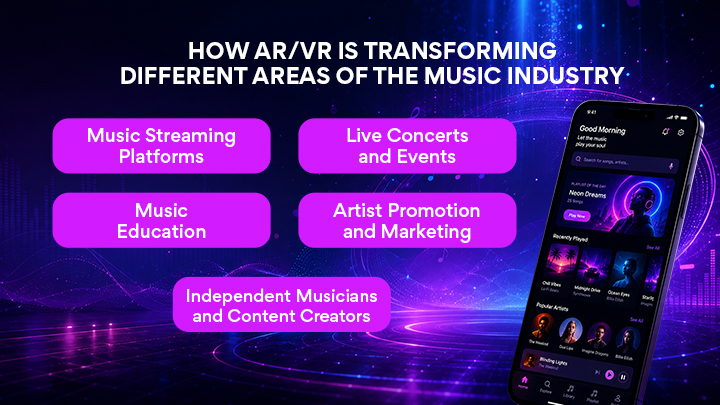
AR (Augmented Reality) and VR (Virtual Reality) are changing the music industry in many new and exciting ways. These technologies make music apps more fun and interactive. People can do much more than just listen to songs. They can enjoy virtual concerts, learn musical instruments, explore 3D music experiences, and connect with artists in new ways. AR and VR also help musicians and businesses offer better experiences to their users.
Music Streaming Platforms
AR and VR are making music streaming apps more interesting and enjoyable. Instead of only listening to songs, users can explore 3D music worlds, watch immersive music videos, and join virtual listening sessions with their friends. These features make listening to music more fun, personal, and interactive. As a result, users enjoy spending more time on the app.
Live Concerts and Events
AR and VR have changed the way people enjoy live concerts. Now, fans can watch concerts from anywhere in the world without traveling. They can enjoy 360-degree views, see amazing stage effects, and even interact with other fans during the event. This helps people who cannot attend concerts in person still enjoy live music, while artists can connect with fans from all over the world.
Music Education
AR and VR have made learning music much easier and more fun. Music apps can offer virtual lessons with simple step-by-step guidance. Learners can practice playing instruments in a 3D environment and get instant feedback on their performance. These interactive lessons keep learners engaged and help beginners learn music skills more quickly.
Artist Promotion and Marketing
Artists are using AR and VR to promote their music in fun and creative ways. They can create interactive album covers, use AR filters on social media, host virtual meet-and-greet sessions, and organize VR music listening events. These features help artists connect better with their fans and make music promotions more exciting, memorable, and engaging.
Independent Musicians and Content Creators
AR and VR also help independent musicians and content creators share their music in new and affordable ways. They do not need to spend a lot of money on physical events. Instead, they can organize virtual live performances, release new songs, and connect with people from around the world. These technologies help new artists reach more people, grow their fan base, and earn money by selling virtual event tickets, digital products, and exclusive experiences.
Overall, AR and VR are changing the music industry in many ways. They make music more interactive, easier to access, and more enjoyable for everyone. As these technologies continue to improve, they will bring even more opportunities for music streaming apps, artists, music teachers, and music businesses.

Technologies Behind AR/VR Music Apps
AR and VR music apps use modern technologies to give users a fun, interactive, and realistic music experience. These technologies help the app run smoothly, show high-quality visuals, and offer features based on each user’s needs. Below are some of the main technologies used in today’s AR/VR music apps.
Artificial Intelligence (AI)
Artificial Intelligence (AI) makes AR/VR music apps more intelligent and easier to use. It learns what kind of music users like by looking at their listening habits. Based on this, it suggests songs, artists, and playlists that match their interests. AI also makes voice search better, helps recognize songs, and creates a more personal virtual music experience. This helps users find new music easily and makes using the app more fun and enjoyable.
5G Connectivity
5G technology offers faster internet speed and less delay, which makes AR/VR music experiences smoother and better. It helps users stream high-quality music, attend virtual concerts, and enjoy live performances without buffering or interruptions. With 5G, users can experience real-time AR and VR features from almost anywhere.
Cloud Computing
Cloud computing helps store music files, user information, playlists, and AR/VR content safely on online servers. It allows users to access their music anytime and from different devices without losing their data. Cloud technology also supports live streaming, regular content updates, and quick data synchronization, providing users with a smooth and seamless music experience.
Spatial Audio
Spatial audio makes music sound more real by creating the feeling that sounds are coming from different directions. It helps users feel like they are surrounded by music instead of just listening through speakers or headphones. This technology is very useful for VR concerts and immersive music experiences because it makes virtual performances feel more natural, realistic, and enjoyable.
ARKit and ARCore
ARKit (for iOS) and ARCore (for Android) are tools that help developers create augmented reality features in apps. They allow apps to add virtual objects to the real world using a smartphone or tablet camera. In music apps, these technologies can be used for features like interactive album covers, AR-based music effects, and virtual artist experiences, making music more engaging and interactive for users.
Unity and Unreal Engine
Unity and Unreal Engine are widely used platforms for creating AR and VR music apps. They help developers make high-quality 3D visuals, animations, and interactive experiences. These tools are used to create virtual concerts, music-based games, and immersive music experiences that work smoothly on different devices.
Together, these technologies are changing the music industry by making AR and VR music apps more engaging, realistic, and interactive. As technology keeps improving, businesses can use these tools to create advanced music streaming solutions, offer unique experiences, and attract more users.
Read Also: Best Music Streaming Apps for Every Music Lover
Future Trends of AR/VR in Music Apps
AR and VR technologies are growing quickly and bringing new possibilities to the music industry. In the future, music apps will not be limited to normal music streaming. They will provide more interactive, engaging, and personalized experiences for users. These technologies will help artists build stronger connections with their fans and allow listeners to enjoy music in a completely new way.
AI-Powered Virtual Concerts
AI-powered virtual concerts will become a major trend in AR/VR music apps. Instead of going to physical concerts, users will be able to watch live performances in virtual spaces. AI will help create realistic digital versions of artists, design virtual concert stages, and customize the concert experience according to user interests. Fans from different parts of the world will be able to join the same virtual concert and feel as if they are attending a real live event.
Mixed Reality (MR) Music Experiences
Mixed Reality (MR) combines Augmented Reality (AR) and Virtual Reality (VR) to create a more interactive music experience where digital content can blend with the real world. In music apps, MR can help users bring virtual artists, instruments, and special effects into their own surroundings. For example, users may watch a virtual singer perform in their living room or explore 3D music content using smart devices. This technology can make music experiences more fun, interactive, and creative.
Haptic Feedback for Live Performances
Haptic feedback technology can make virtual music events feel more realistic and engaging. With smart wearables and advanced devices, users may feel vibrations, movements, and other effects that match the music and live performances. This technology can create a stronger connection between users and virtual concerts by adding a physical feeling to the digital experience.
Metaverse-Based Music Events
The metaverse will bring new possibilities to music apps by allowing users to enjoy concerts and music events in virtual spaces. People will be able to attend digital concerts, meet their favorite artists, and connect with other fans from anywhere in the world. Music platforms can create virtual venues, online music festivals, and social communities where users can enjoy a more interactive music experience. These virtual events will also help artists reach more people globally.
Personalized Virtual Music Worlds
Future AR/VR music apps will focus on creating unique music experiences for each user. With the help of AI, these apps can understand users’ music choices, moods, and interests to create personalized virtual environments. Users may be able to design their own virtual music rooms, explore interactive sound spaces, and enjoy playlists with exciting visual effects. This personal experience will help increase user engagement and build a stronger connection between users and music.
AR/VR will have a big impact on the future of music apps by making music experiences more fun, engaging, and immersive. Businesses that use these technologies can build new and exciting music solutions, attract more users, and stay competitive in the growing entertainment market.
Read Also: How to Start an On-Demand Home Services Business and Develop an App
How Much Does It Cost to Develop an AR/VR Music App?
The cost of building an AR/VR music app depends on different factors, such as the app’s complexity, features, supported platforms, design needs, and the technology used. A simple AR music app with basic features will cost less to develop. However, a fully immersive VR music streaming app with advanced features like virtual concerts, 3D environments, and spatial audio will need a higher investment.
Basic AR Music App
A basic AR music app provides users with simple augmented reality experiences. It can include features like AR-powered album covers, interactive music visuals, camera effects, artist promotions, and basic 3D animations. These apps are easier and more affordable to develop because they do not require complex VR environments or support for advanced hardware.
The development cost of a basic AR music app usually ranges between $8,000 and $50,000. The development process may take around 3 to 6 months, depending on the app’s features, design requirements, and the development team’s experience.
Advanced VR Music Streaming App
An advanced VR music streaming app gives users a highly immersive music experience. It allows them to enjoy virtual concerts, watch 360-degree music videos, connect with artists, and experience realistic sound using VR devices. These apps are built with advanced technologies such as VR engines, spatial audio, 3D design, AI features, and powerful backend systems.
The development cost of an advanced VR music streaming app can be around $20,000 to $80,000+. The final cost depends on factors like the level of customization, the number of VR devices supported, and the complexity of immersive features included in the app.
| Type of AR/VR Music App | Estimated Cost | Development Time |
|---|---|---|
| Basic AR Music App | $8,000 – $10,000 | 3 – 6 Months |
| Medium AR/VR Music App | $10,000 – $25,000 | 6 – 9 Months |
| Advanced VR Music Streaming App | $25,000 – $75,000+ | 9 – 18 Months |
Factors That Affect Development Cost
Many factors can affect the total app development cost of developing an AR/VR music app:
- App Features: Advanced features like virtual concerts, AI-based music recommendations, social sharing, and real-time user interaction require more development time and increase the overall cost.
- Platform Support: Building the app for different platforms like iOS, Android, and VR devices needs extra resources, time, and effort, which can increase the development cost.
- UI/UX Design: Creating realistic 3D visuals, smooth animations, and immersive user interfaces requires skilled designers and more work, which impacts the budget.
- Technology Stack: Using advanced technologies like ARKit, ARCore, Unity, Unreal Engine, AI, and cloud services can influence the overall development cost.
- Development Team: The experience, skills, and location of the development team also play an important role in deciding the total cost of building the app.
Read Also: Cost to Develop an App like Letgo
Why Choose MSM CoreTech for AR/VR Music App Development?
MSM CoreTech helps businesses create advanced AR/VR music apps that give users an immersive and enjoyable experience. With strong knowledge of modern technologies, the company builds innovative solutions that help music platforms grow and stay ahead in the competitive market.
With an experienced AR/VR development team, MSM CoreTech creates interactive features like virtual concerts, 360-degree music experiences, and attractive visual content. The team understands what users need and develops apps that offer a better and more engaging music experience.
MSM CoreTech provides custom music app solutions based on each business’s unique needs. Whether you want to build a music streaming app, virtual event app, or an interactive music platform, the team develops solutions that help you achieve your goals.
With expertise in AI and AR/VR technologies, MSM CoreTech adds smart features like personalized music recommendations, voice search, and intelligent user interactions. These advanced features help increase user engagement and provide a better overall experience.
MSM CoreTech builds scalable and secure applications that can handle more users, bigger music libraries, and future technology updates without affecting performance.
From planning and designing to development, testing, launching, and ongoing maintenance, MSM CoreTech offers complete development and support services to help businesses create successful AR/VR-powered music apps.
Conclusion
AR and VR technologies are changing the music industry by making music experiences more interactive, exciting, and engaging for users. Features like virtual concerts, 360-degree music videos, AR effects, and virtual interactions with fans are changing how people enjoy and connect with music. These technologies help users feel closer to their favorite artists and experience music in new ways beyond traditional streaming.
For artists, AR and VR create new opportunities to perform, promote their songs, and connect with fans around the world. For businesses, these technologies help build innovative music platforms, increase user engagement, improve customer retention, and create new revenue opportunities through virtual events and premium music experiences.
As AR/VR technology is growing quickly, businesses can stay ahead in the competitive market by investing in modern and future-ready music apps. Working with an experienced Music Streaming App Development Company like MSM CoreTech helps businesses build scalable, feature-rich, and immersive AR/VR-powered music apps. These apps provide users with amazing experiences while helping businesses grow and succeed.
FAQs
AR (Augmented Reality) and VR (Virtual Reality) in music apps are technologies that create immersive and interactive music experiences. AR adds digital elements to the real world, while VR creates a fully virtual environment where users can enjoy concerts, music videos, and other experiences.
AR/VR is transforming the music industry by offering virtual concerts, 360-degree music videos, interactive fan experiences, and personalized music environments. These technologies help users enjoy music more engagingly and realistically.
AR/VR music apps help artists connect with global audiences, promote their music creatively, and offer unique fan experiences. For businesses, these apps improve user engagement, increase retention, and create new monetization opportunities.
The cost of developing an AR/VR music app depends on factors such as features, app complexity, platform selection, design requirements, and technology integration. A basic AR/VR music app may cost less, while advanced apps with virtual concerts and AI features require a higher investment.
Businesses should invest in AR/VR-powered music apps because they offer innovative user experiences, help brands stand out in the market, and provide opportunities to build future-ready music platforms with advanced features. Working with an experienced Music Streaming App Development Company like MSM CoreTech can help create scalable and engaging solutions.

Related Posts

10 Key Applications of AI in the Food Industry (2026)
Walk into any restaurant kitchen, grocery warehouse, or food delivery control room today, and you will find something quietly running...
Read More
How To Develop An App Like YouTube Music: A Complete Guide
Music is now a part of our everyday life. People listen to songs while getting ready in the morning, working,...
Read More

Must-Have Features in Fintech Apps & Digital Financial Platforms
Think about how often you use your phone to pay bills, send money, shop online, or check your bank balance....
Read More


 Verified Review




 +44 7427829444
 71-75, Shelton Street, Covent Garden, London, United Kingdom, WC2H 9JQ