

Share this article


How to Build a Smart eCommerce Store Using AI and IoT?
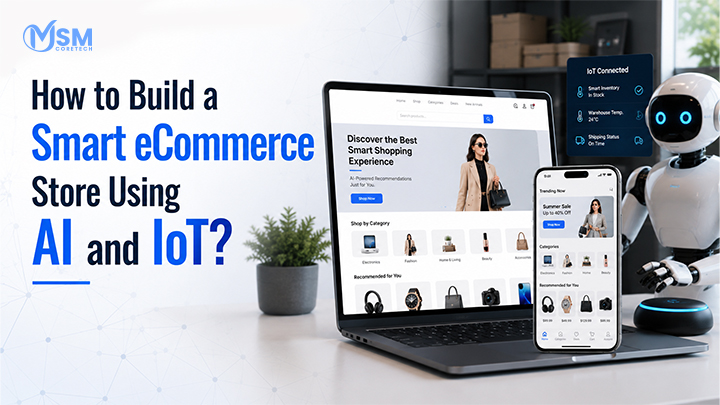
Online shopping is getting smarter every year. Today, people expect online stores to know what they want, suggest the right products, and deliver orders on time. This is where Artificial Intelligence (AI) and the Internet of Things (IoT) help. These technologies make online shopping faster, easier, and more personalized for every customer. For example, AI can recommend products based on customer preferences, while IoT helps businesses track their inventory in real time. Together, AI and IoT are changing the way businesses sell products and the way people shop online.
The need for smart online shopping is increasing very fast. According to the DHL eCommerce Trends Report 2025, 7 out of 10 people around the world want AI-powered shopping features like voice search, virtual try-ons, and personalized product recommendations to help them choose the right products. The report is based on a survey of 24,000 online shoppers from 24 countries, showing that AI is becoming an important part of today’s online shopping experience.
At the same time, IoT helps businesses manage their warehouses, check stock levels, and track deliveries in real time. Smart sensors and connected devices reduce manual work and make everything more accurate. Businesses can quickly see which products are running low, avoid delivery delays, and give customers a better shopping experience.
AI studies customer behavior and shopping habits, while IoT collects live information from connected devices. When AI and IoT work together, they help online stores run more smoothly, increase sales, lower business costs, and build better relationships with customers.
In this guide, you will learn how to build a smart eCommerce store using AI and IoT, the technologies you need, and the simple steps to create a modern online business that is ready for the future.

Why Traditional eCommerce Stores Are No Longer Enough
Online shopping has changed a lot in recent years. Today, customers want shopping to be fast, easy, and personalized every time they visit an online store. Many traditional eCommerce websites still use old systems and manual work, which makes it hard to meet these customer expectations. Because of this, many businesses are using AI and IoT to build smarter online stores. These technologies help improve the shopping experience, increase customer satisfaction, and make business operations more efficient.
Challenges Faced by Conventional Online Stores
Traditional online stores face many common problems that can affect both customers and business owners. One of the biggest issues is the lack of personalized shopping. Most customers see the same product recommendations, even though everyone has different interests and buying habits.
Managing inventory is another major challenge. When stock is updated manually, product availability may not be accurate. This can lead to out-of-stock items, delayed deliveries, and unhappy customers.
Customer support can also become slow, especially during busy times, because support teams have to answer every question themselves. Many businesses also find it difficult to understand what customers will buy in the future, set the right product prices, and detect fake or fraudulent transactions before they cause financial losses.
All of these problems reduce business efficiency, affect the shopping experience, and can lower customer trust.
Changing Customer Expectations
Today, people expect more than just a basic online shopping website. They want stores to show products they may like, help them find items quickly, and provide fast customer support whenever they need it. They also expect to track their orders in real time, make secure online payments, and receive their orders quickly.
Customers also like online stores that remember what they have searched for or bought before. This helps the store suggest useful products and offer special discounts that match their interests. If an online store does not provide these simple and helpful experiences, many customers will choose another store that offers easier and smarter online shopping.
How AI and IoT Solve These Problems
Artificial Intelligence (AI) and the Internet of Things (IoT) help online businesses solve many common problems. AI studies what customers search for, what they buy, and what they like. Using this information, it suggests products that match their interests and makes product searches more accurate. AI also powers chatbots that answer customer questions quickly and helps businesses predict which products customers will need in the future.
IoT makes daily business operations easier by connecting smart devices like RFID tags, smart shelves, and warehouse sensors. These devices give real-time updates about stock, help avoid inventory mistakes, and make order management more accurate. They also track products during shipping, helping businesses deliver orders faster and more safely.
When AI and IoT work together, they automate many everyday tasks, reduce business costs, improve the shopping experience, and increase sales. Partnering with an experienced e-commerce development company helps businesses add these technologies easily and build a smart eCommerce store that is ready for future growth.
Also Read: How to Build an eCommerce Store for Selling Auto Parts Online
How AI and IoT Work Together in Smart eCommerce
Artificial Intelligence (AI) and the Internet of Things (IoT) are making online shopping smarter and easier. AI helps online stores understand what customers like, predict their needs, and make better business decisions. At the same time, IoT collects real-time data from connected devices such as smart shelves, RFID tags, sensors, and delivery tracking systems.
When AI and IoT work together, they help online stores provide a better shopping experience. They also make daily business tasks easier, improve inventory management, speed up deliveries, and support faster business growth. To build a smart and future-ready eCommerce platform, many businesses choose to work with an ai development company. They can add advanced AI features and create a more intelligent and personalized shopping experience for customers.
The Role of AI in Customer Intelligence
AI helps online stores understand what their customers like and how they shop. It looks at things like browsing history, past orders, search activity, and shopping habits. Using this information, AI learns what each customer prefers and recommends products that match their interests. This makes shopping easier and helps customers find the right products more quickly.
AI also makes customer support better by using chatbots that can answer questions instantly, even when the store is closed. It can also predict what customers may want to buy in the future, suggest the best time to offer discounts or promotions, and identify the products that are most likely to sell. This helps businesses increase sales while giving customers a more personal, smooth, and enjoyable shopping experience.
The Role of IoT in Connected Commerce
IoT (Internet of Things) connects smart devices so they can share information with each other in real time. In a smart eCommerce store, devices like sensors and RFID tags automatically keep track of product stock. This helps businesses know how many products are available in the warehouse at any time. As a result, they can avoid running out of stock or keeping too many products.
IoT also makes order management easier. It tracks packages while they are being delivered, so customers can see live updates about their orders. If there is any delay, businesses can quickly find the problem and take action. Smart devices can also check warehouse conditions like temperature and humidity. This helps keep products that need special care safe and in good condition.
Combining Automation with Real-Time Data
The biggest advantage of a smart eCommerce store comes from using AI and IoT together. IoT devices collect live data all the time, and AI studies that data to give useful business insights. For example, if IoT sensors show that a product is almost out of stock, AI can predict future demand and suggest refilling the stock before it runs out.
This smart combination also helps businesses automate daily tasks, reduce manual work, improve delivery accuracy, and make faster decisions. As a result, customers get faster service, more personalized shopping experiences, and on-time deliveries. At the same time, businesses save time, reduce operating costs, and run their online stores more efficiently.
Also Read: B2B eCommerce Website Development Guide
Essential Capabilities Every Smart eCommerce Store Should Have
A smart eCommerce store should do more than just sell products online. Today, customers want a shopping experience that is fast, easy, and personalized. They expect quick deliveries, helpful support, and product suggestions that match their interests. AI helps businesses understand what customers like and how they shop. IoT connects products and devices to provide real-time updates and useful information. When AI and IoT work together, they make shopping better, reduce manual work, and help businesses make smarter decisions. By using these smart features, businesses can improve customer satisfaction, work more efficiently, and increase their online sales.
Intelligent Shopping Experience
AI makes online shopping simple, fast, and more enjoyable. It shows products that match what customers like and what they have bought before. This helps people find the right products without spending too much time searching.AI also makes product search smarter. Even if a customer types the wrong words or an incomplete search, it can still understand what they are looking for and show relevant products. Voice shopping lets customers search for products and place orders by speaking instead of typing. This makes shopping quicker and more convenient, especially when using a mobile phone or smart device. Virtual shopping assistants are available to help customers at any time. They answer questions, suggest the right products, and guide shoppers during the buying process. This makes the shopping experience smooth, simple, and more satisfying.
Smart Inventory and Warehouse Management
AI and IoT make inventory and warehouse management much easier and more accurate. Smart devices check stock levels in real time, so businesses know exactly how many products are available. This helps prevent selling items that are out of stock and avoids running out of popular products. The system can also automatically reorder products when the stock gets low, so there is always enough inventory. RFID tags and IoT sensors track products as they move through the warehouse, making it easier to find and manage items. AI also studies customer buying habits to predict future demand. This helps businesses keep the right amount of stock ready before busy shopping seasons, reducing delays and improving customer satisfaction.
Intelligent Order and Delivery Management
Today, customers want their orders to arrive quickly and be easy to track. AI helps businesses find the best delivery route by checking traffic, weather, and distance. This helps deliver orders faster and reduces shipping costs.
IoT makes it possible to track orders in real time. Customers can see where their package is from the time it leaves the warehouse until it reaches their doorstep. They also receive automatic updates about their order, shipping progress, and expected delivery time.
AI also makes order management faster. It can automatically confirm payments, update stock levels, and prepare orders for shipping. This helps businesses process orders quickly, avoid delays, and deliver a better shopping experience.
Customer Engagement and Retention
Keeping your existing customers happy is just as important as getting new ones. AI helps businesses create personalized loyalty programs based on what each customer likes and buys. Instead of sending the same offers to everyone, businesses can provide special discounts and product recommendations that match each person’s interests. AI-powered customer support can quickly answer common questions, solve simple problems, and even detect issues before they become bigger. AI also helps automate email marketing by sending the right messages, reminders, and special offers at the right time. This keeps customers engaged, builds stronger relationships, and encourages them to shop again.
Planning Your Smart eCommerce Store
Good planning is the first step to building a successful smart eCommerce store. First, decide what type of online store you want to create. It can be a single-brand store, an online marketplace, or a B2B store for businesses. Next, set clear business goals so you know what you want to achieve and can measure your success later.
It is also important to understand what your customers need. This helps you add useful features that make shopping easier and more enjoyable. After that, choose the AI and IoT technologies that best fit your business and your customers’ needs.
Finally, create a simple development plan that includes planning, designing, development, testing, and launching the store. A well-planned process keeps the project on track and helps you build a smart eCommerce store that delivers long-term success.
Choosing the Right Technology for Development
Choosing the right technology is an important step in building a secure and scalable smart eCommerce store. It helps your online store run smoothly today and grow easily in the future. Select an eCommerce platform that supports AI and IoT features and can handle future business needs. Many businesses also work with a shopify e-commerce development company to build an online store with advanced and flexible features. Using modern frontend and backend technologies, AI tools, IoT devices, cloud services, and third-party APIs helps create a fast, secure, and connected shopping experience. A strong technology setup also makes it easier to add new features, improve website performance, and support your business as it grows.
Also Read: A Complete Guide to Merchant Payment Solution Development
Development Process: From Idea to Launch
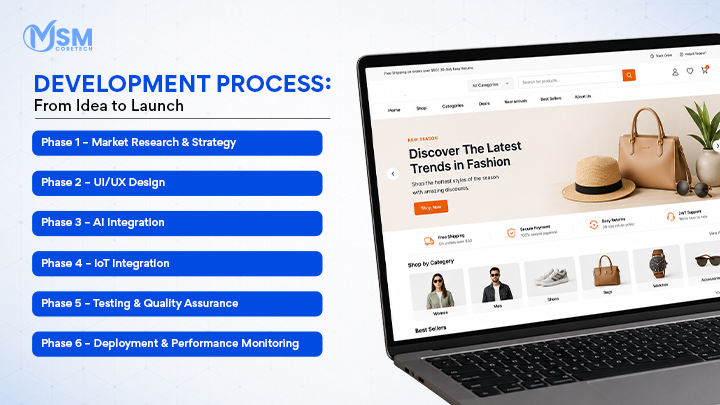
Building a smart eCommerce store with AI and IoT needs good planning and the right technology. It is always better to add smart features from the beginning instead of adding them later. A clear app development process helps you build an online store that is fast, secure, simple to use, and ready to grow in the future. Below are the main steps to build a smart eCommerce store.
Phase 1 – Market Research & Strategy
Every successful online store starts with proper research. First, understand who your customers are, how they shop, and what problems they face. Then, study your competitors to see what features they offer and what they are missing. Decide if you want to sell products directly, build a marketplace where multiple sellers can sell products, or support both B2B and B2C customers. At this stage, you should also plan how AI and IoT will improve your store. For example, AI can show personalized product recommendations, while IoT can help track inventory automatically and support smart order management. You can also use AI-powered chat support to help customers quickly. A good strategy at the beginning saves time, reduces mistakes, and makes the development process much smoother.
Phase 2 – UI/UX Design
The next step is to create a simple and attractive design for your online store. Customers should be able to find products, search for items, and buy them easily without getting confused. Keep the layout clean, use clear and easy-to-read text, and make buttons easy to understand. Your store should also work well on desktops, tablets, and mobile phones. At this stage, developers create wireframes, design mockups, and clickable prototypes to check and improve the shopping experience before starting the actual development.
Phase 3 – AI Integration
AI helps make an eCommerce store smarter and easier to use. It can suggest products based on what customers have searched for or viewed before. AI can also show personalized offers and make product searches more accurate. AI-powered chatbots can answer customer questions anytime, even outside business hours. Store owners can also use AI to predict customer demand, understand shopping behavior, and set better prices. These smart features improve the shopping experience and help businesses make better decisions.
Phase 4 – IoT Integration
IoT helps connect real products and devices with your online store. It lets you track products and inventory in real time. Devices like smart shelves, RFID tags, barcode scanners, and warehouse sensors automatically update stock whenever items are added or sold. Delivery tracking devices also show the live location of orders, so customers can easily know where their package is. IoT reduces manual work, lowers stock mistakes, and makes inventory and delivery management faster and more efficient.
Phase 5 – Testing & Quality Assurance
Before your online store goes live, test every feature carefully. Make sure AI gives the right product recommendations, IoT devices send correct information, payment methods work safely, and all pages load quickly. Check the website on different browsers, mobiles, tablets, and computers to ensure it works properly for every user. Also, test the security to keep customer data and online payments safe. Finding and fixing problems before launch helps your store run smoothly and builds customer trust.
Also Read: Cost to Build a Car Rental App like Hertz
Phase 6 – Deployment & Performance Monitoring
Once everything is tested and working properly, your smart eCommerce store is ready to launch. But the work does not stop after going live. It is important to check your website regularly to make sure it runs fast, AI features work correctly, and connected IoT devices perform smoothly. You should also watch customer activity, listen to customer feedback, fix any problems, and update the store whenever needed. As your business grows, you can add more AI features, connect new IoT devices, and increase your store’s capabilities without slowing it down. Regular updates and improvements help your smart eCommerce store stay competitive and provide a better shopping experience for your customers.
Common Mistakes to Avoid During Development
Building a smart eCommerce store with AI and IoT can help your business grow, give customers a better shopping experience, and make many daily tasks easier. But during development, many businesses make simple mistakes that become costly later. If you avoid these common mistakes, you can build an online store that is safe, easy to use, and ready to grow with your business.
Ignoring Data Security
A smart eCommerce store stores a lot of customer data, such as personal details, payment information, shopping history, and data collected through IoT devices. If this information is not kept safe, hackers may steal it. This can cause money loss, damage your business reputation, and reduce customer trust.
To keep your store secure, use SSL certificates, encrypted databases, trusted payment gateways, multi-factor authentication, and update your system regularly. If you use AI, make sure it handles customer data safely and follows privacy rules. A secure eCommerce store helps customers shop without worry and protects your business from online threats.
Choosing Unnecessary AI Features
Many businesses think adding every AI feature will make their online store better. But this is not true. Too many AI features can increase development costs, make your website slower, and make it harder to manage.
It is better to choose only the AI features that your business really needs. For example, if you have a fashion store, AI product recommendations and a virtual shopping assistant can be more helpful than advanced demand forecasting. Start with the most useful AI features first, and add more later as your business grows.
Poor IoT Integration
IoT devices like RFID tags, smart shelves, warehouse sensors, and delivery tracking systems should work properly with your eCommerce store. If they are not connected correctly, you may face problems like wrong inventory updates, delayed deliveries, and system errors.
Before launching your online store, test all IoT devices carefully to make sure they work well with your software and share data in real time. Using trusted APIs and compatible hardware helps your store run smoothly and efficiently.
Lack of Scalability
Many online stores are built only for the business needs of today. But as your business grows, you may get more visitors, add more products, and receive more orders. If your website is not built to grow, it can become slow, crash, or stop working properly.
To avoid this, build your eCommerce store on a scalable platform. Use cloud hosting, flexible databases, and a modular development approach. This makes it easy to add new AI features, connect more IoT devices, and support more users in the future without slowing down your website.
Not Optimizing for Mobile Users
Today, most people shop using their smartphones and tablets. If your online store is slow or difficult to use on mobile devices, many customers may leave before buying anything.
Make sure your website has a responsive design that works well on all screen sizes. Keep the pages fast, the navigation simple, the checkout process easy, and the payment options mobile-friendly. AI features like voice search and personalized product recommendations should also work smoothly on mobile devices. A fast and easy mobile shopping experience keeps customers happy, increases sales, and helps your smart eCommerce store grow successfully.
Also Read: Top 15 Best Cash Advance Apps for Instant Money
Industries That Can Benefit from Smart eCommerce
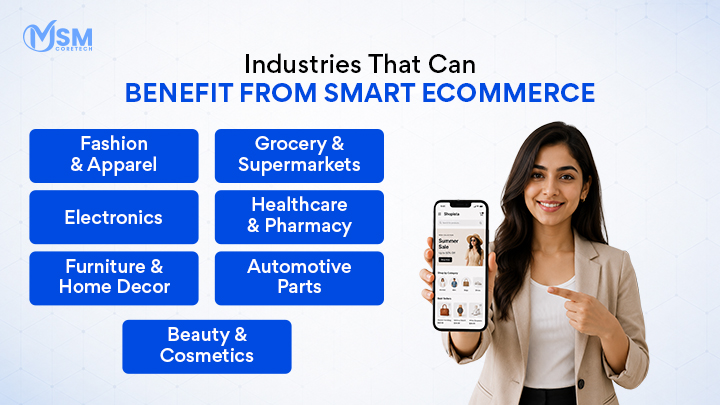
Smart eCommerce is changing how businesses sell products and serve customers. With the help of Artificial Intelligence (AI) and the Internet of Things (IoT), businesses can provide faster service, better product suggestions, and an easier shopping experience. These technologies also help companies manage stock, understand what customers like, and lower business costs. Here are some industries that can benefit the most from a smart eCommerce store.
Fashion & Apparel
The fashion industry gets many benefits from AI and IoT. AI looks at what customers like, what they have bought before, and their shopping habits to recommend the right clothes. IoT-based smart warehouses keep track of products in real time, so popular items stay in stock. This helps businesses avoid losing sales and gives customers a better shopping experience.
Grocery & Supermarkets
Online grocery stores use AI to suggest everyday items based on what customers usually buy. It also helps understand shopping habits to recommend useful products. IoT devices check the freshness of items like milk, fruits, vegetables, and frozen food by monitoring storage conditions. Smart inventory systems make sure products are always available and help reduce food waste. This makes grocery shopping simple, smooth, and reliable.
Electronics
Electronics stores sell many products with different features and specifications. AI helps customers compare products and choose the right one based on their needs and budget. IoT helps track products in the warehouse and keeps an eye on stock levels to avoid running out of items. This makes the shopping process faster, easier, and more organized.
Healthcare & Pharmacy
Healthcare and pharmacy businesses can use AI to suggest wellness products based on customer needs. AI can also answer customer questions and make order management faster and easier. IoT helps keep medicines at the right temperature so they stay safe and effective. Businesses that offer medicine delivery app development services can also use AI and IoT for live order tracking, automatic prescription handling, and timely delivery updates.
Furniture & Home Decor
AI makes it easier for customers to find the right furniture by suggesting products based on their room size, style, and personal choices. IoT helps businesses track inventory and monitor shipments in real time. This helps deliver orders on time, builds customer trust, and provides a better shopping experience.
Automotive Parts
Auto parts stores sell thousands of parts for many different vehicle models. AI helps customers find the right part for their vehicle quickly and easily. IoT keeps track of stock in the warehouse and updates inventory in real time. This helps reduce mistakes, deliver orders faster, and improve the overall shopping experience.
Beauty & Cosmetics
Beauty and cosmetics brands can use AI to suggest skincare and makeup products based on what customers like and what they have bought before. IoT helps businesses monitor product stock and manage the supply chain, so popular products stay available. These smart technologies help increase sales, build customer trust, and provide a more personal and enjoyable shopping experience from start to finish.
Also Read: Crowdfunding App Development Guide
Estimated Development Cost
The cost of building a smart eCommerce store depends on the features you want, the technologies you use, and your business needs. A store with basic AI features will cost less than a store with advanced AI, IoT devices, and automated functions. The total app development cost can also change based on the development team you choose, the project timeline, and any third-party tools or integrations you need.
Starter Smart Store
| Factor | Details |
|---|---|
| Estimated Cost | $10,000 – $15,000 |
| Development Time | 2–4 Months |
| Best For | Startups & Small Businesses |
A basic smart eCommerce store is a good choice for businesses starting their first online store. It comes with important features like user registration, a product catalog, a shopping cart, secure online payments, basic AI product suggestions, and simple inventory management. This gives your business a strong start while keeping the development cost budget-friendly.
Growth-Stage Smart Store
| Factor | Details |
|---|---|
| Estimated Cost | $15,000 – $25,000 |
| Development Time | 4–7 Months |
| Best For | Growing Businesses & Mid-Sized Brands |
A growth-stage smart store includes advanced AI features like personalized product recommendations, AI chatbots, customer insights, marketing automation, and IoT-based inventory tracking. These features help businesses give customers a better shopping experience, increase sales, and manage daily work more easily and efficiently.
Enterprise AI & IoT Commerce Platform
| Factor | Details |
|---|---|
| Estimated Cost | $80,000 – $200,000+ |
| Development Time | 7–12+ Months |
| Best For | Large Enterprises & Global Brands |
Enterprise platforms are designed for large businesses that handle a lot of customers, data, and complex operations. These platforms use features like predictive analytics, demand forecasting, and dynamic pricing to help businesses make better decisions. They also support smart warehouses, real-time supply chain tracking, voice search, strong security systems, and scalable cloud technology to manage business growth easily.
Key Factors That Affect the Budget
Many things can affect the total cost of developing a smart eCommerce platform, such as:
- The number of AI and IoT features you want to add
- Custom website or app design requirements
- Integration with third-party tools and services
- Cloud hosting and server needs
- Security and legal compliance requirements
- Testing to ensure the platform works smoothly
- Regular maintenance and adding new features in the future
Planning the required features carefully from the start helps manage the budget and build a flexible eCommerce platform that can easily grow as your business expands.
Also Read: Agentic AI in Financial Services: A Complete Guide
Partnering with the Right AI and IoT Development Company
Creating a smart eCommerce store with AI and IoT needs the support of the right technology partner. A skilled development company can help you build a secure, scalable, and advanced online store that improves customer experience and makes business operations easier.
Choosing an experienced company is important because AI and IoT development includes advanced technologies like machine learning, data analysis, cloud services, and connected devices. A professional team understands how to use these technologies properly and add smart features like product recommendations, automatic inventory updates, and real-time data tracking.
The right development partner can create a simple and powerful system that meets your business needs while keeping the platform easy to manage and ready for future growth.
Industry experience is very important for successful eCommerce development. A company with good knowledge of online shopping can understand the challenges businesses face and suggest the right features and solutions. They consider customer needs, market trends, and business goals to build an online store that works well for both customers and business owners.
A custom development approach helps create an eCommerce platform based on your specific business needs. Instead of using a common solution for every business, experts study your requirements and build personalized features that fit your goals. MSM Coretech helps businesses create smart eCommerce solutions by using AI, IoT, and modern development methods to provide better and more engaging shopping experiences.
After launching your platform, regular support and updates are important to keep your store safe and working smoothly. Regular maintenance, improving performance, adding security updates, and introducing new features help your business stay ahead in the changing digital market.
Choosing the right AI and IoT development company helps businesses create a smart eCommerce store that can grow with customer needs. With the right technical support and continuous improvements, your smart eCommerce platform can improve efficiency, increase sales, and achieve long-term business success.

Conclusion
Building a smart eCommerce store with AI and IoT helps businesses offer a faster, smarter, and more personalized shopping experience to customers. AI helps online stores understand what customers need, recommend the right products, provide quick support, and help businesses make better decisions. IoT helps businesses manage inventory, track products, improve delivery processes, and connect different devices to run the store smoothly.
Businesses should start using AI and IoT because customer needs are changing quickly. Customers now expect fast services, personalized product suggestions, simple payment options, and real-time updates about their orders. These technologies help businesses save time, reduce manual tasks, improve customer satisfaction, and create more opportunities to increase sales.
A future-ready eCommerce business is not just about selling products online; it is about building a smart and connected shopping experience. With the help of AI-based insights and IoT solutions, businesses can improve their daily operations, understand customers better, and stay ahead of competitors. By selecting the right technology, making proper plans, and focusing on customer needs, businesses can create a successful smart eCommerce platform that can grow and meet future market needs.
FAQs
A smart eCommerce store is an online shopping platform that uses advanced technologies like Artificial Intelligence (AI) and the Internet of Things (IoT) to improve customer experience, automate operations, and provide smarter business solutions.
AI improves eCommerce stores by offering personalized product recommendations, AI chatbots, smart search features, customer behavior analysis, demand prediction, and automated marketing solutions.
IoT helps eCommerce businesses connect devices and collect real-time data. It supports smart inventory management, warehouse monitoring, product tracking, and efficient delivery management.
The cost depends on factors like store complexity, features, AI solutions, IoT devices, technology stack, and customization needs. A basic smart eCommerce store costs less, while an advanced platform with AI and IoT integrations requires a higher investment.
Businesses should invest in AI and IoT to provide better customer experiences, automate daily tasks, reduce operational costs, improve decision-making, and build a future-ready eCommerce platform.

Related Posts
E-Commerce vs Retail Business: Features, Benefits, and Trends
If you have thought about starting a business, or you already run one, you have probably asked yourself a simple...
Read More
Online Store Explained: Features, Pricing & Factors
Consider that a customer can buy your products at any time and from anywhere, without coming to your physical store....
Read More
How to Build an eCommerce Store for Selling Auto Parts Online?
Buying auto parts has become much easier than before. Today, customers do not want to spend hours visiting different shops...
Read More


 Verified Review




 +44 7427829444
 71-75, Shelton Street, Covent Garden, London, United Kingdom, WC2H 9JQ