

Share this article


How Much Does It Cost To Build A Fintech App?
What if your next fintech app becomes the next big digital banking success? Today, more people use mobile apps to pay bills, send money, invest, and manage their finances. Because of this, the demand for fintech apps is growing faster than ever. The global fintech market is estimated at USD 320.81 billion in 2025 and is expected to reach USD 655.70 billion by 2030, growing at a CAGR of 15.39%.
Today, many startups, banks, and financial companies are investing in fintech app development to provide faster, safer, and more convenient financial services. A well-built fintech app helps businesses give a better customer experience, build trust, automate financial tasks, and stay ahead in the competitive digital market.
There is no fixed cost to build a fintech app because the total cost depends on many factors. These include the app’s features, design, development platform (Android, iOS, or both), technology stack, third-party integrations, security needs, and financial compliance requirements such as KYC and PCI DSS.
In this guide, you will learn how much it costs to build a fintech app, what factors affect the development cost, the must-have features, the estimated development timeline, and simple ways to reduce costs while creating a secure, scalable, and high-quality fintech app for your business.

Fintech App Market Overview
The fintech industry is growing very quickly because more people now use digital financial services every day. Instead of going to a bank, people use mobile apps to send money, pay bills, apply for loans, invest, and manage their savings. Businesses are also using digital payment solutions to offer faster, safer, and more convenient services to their customers.
The demand for fintech apps is increasing because smartphones, internet access, and digital payment methods are becoming more popular. Features like instant money transfers, mobile wallets, contactless payments, and AI-powered financial tools have made fintech apps an important part of modern banking and finance. People also want secure apps, simple to use, save time and make managing money easier.
Now is a great time to invest in a fintech app because the fintech market is growing every year. More people want simple and secure digital financial services, and businesses want to give better customer experiences and stay ahead of the competition. By building a fintech app now, companies can attract more users, earn more revenue, build customer trust, and get ready for the future of digital finance.
Read Also: Top FinTech Trends: Transforming the Future of Financial Services
What Is a Fintech App?
A fintech app is a mobile or web application that helps people and businesses use financial services through technology. The word fintech means financial technology. These apps make it easy to manage money without going to a bank or financial office. With a fintech app, users can send money, pay bills, check their account balance, apply for loans, invest money, or buy insurance using their smartphones. Fintech apps make financial services faster, easier, and available anytime, from anywhere.
Fintech apps also make everyday financial tasks simple by reducing paperwork and saving time. Most activities can be completed in just a few taps. They include useful features like secure login, instant payments, real-time notifications, and AI-powered customer support to give users a smooth experience. Many fintech apps also use strong security methods, such as data encryption and multi-factor authentication, to protect user information and transactions. This helps users feel safe and confident while managing their finances.
There are many types of fintech apps that people use every day. Some popular examples are digital wallet apps like PayPal and Google Pay, banking apps, investment apps like Robinhood, budgeting apps like Mint, and money transfer apps like Wise. Businesses that want to build safe and easy-to-use financial apps often work with a fintech app development company to create custom solutions that follow industry standards. These apps make it easier for people to save money, spend, invest, send money, and manage their finances in daily life.
Types of Fintech Apps
Fintech apps have made it much easier for people to manage their money. Today, people can pay bills, send and receive money, invest, apply for loans, and buy insurance using their smartphones. Businesses also use fintech apps to provide faster, safer, and more convenient financial services. Below are some of the most popular types of fintech apps and how they help users.
Digital Wallet Apps
Digital wallet apps let users keep their money digitally instead of carrying cash or cards. With these apps, people can pay at shops, buy things online, send money to family and friends, and pay utility bills. Many digital wallet apps also offer QR code payments, reward points, and a record of all transactions. These apps make payments quick, easy, and secure while reducing the need to carry a physical wallet.
Mobile Banking Apps
Mobile banking apps let people use their bank accounts anytime and from anywhere. They do not need to visit a bank branch for everyday banking. With these apps, users can check their account balance, transfer money, pay bills, download bank statements, and manage their money easily. Many mobile banking apps also offer fingerprint or face login, instant notifications, and card controls to keep accounts safe and make banking more convenient.
Read Also: Top 7 Fintech Web Design Companies in Australia
Payment & Money Transfer Apps
Payment and money transfer apps allow users to send and receive money quickly. People use these apps for personal payments, online shopping, business payments, and sending money to other countries. Most apps support different payment options, such as bank accounts, debit cards, credit cards, and digital wallets. Fast payments, secure transactions, and easy payment tracking make these apps popular and simple to use.
Investment & Trading Apps
Investment and trading apps help people invest their money in stocks, mutual funds, ETFs, cryptocurrencies, and other financial products. With these apps, users can check market updates, buy or sell investments, and track their portfolio anytime. Many apps also offer investment tips, market news, and simple learning resources to help beginners understand investing and make better financial decisions.
Personal Finance & Budgeting Apps
Personal finance and budgeting apps help users manage their money more easily. They track income and expenses automatically, organize spending into different categories, and create monthly budgets. Users can also set savings goals, get reminders for bill payments, and view easy-to-understand financial reports. These features help people understand their spending habits, save more money, and make better financial decisions.
Lending & Loan Apps
Lending and loan apps make it easy and fast to borrow money without visiting a bank. Users can apply for personal loans, business loans, or short-term loans directly from the app. Many apps use automatic credit checks and digital document verification to approve loans quickly. Users can also see their repayment schedule, interest rate, and loan status in one place. This makes the loan process simple, clear, and easy to understand.
Insurance (InsurTech) Apps
Insurance apps make buying and managing insurance simple and convenient. Users can compare different insurance plans, buy a policy, renew it, file a claim, and track the claim status from the app. Some apps also use Artificial Intelligence (AI) to suggest the best insurance plans based on the user’s needs. This gives users a better experience and reduces the need for paperwork.
Cryptocurrency & Blockchain Apps
Cryptocurrency and blockchain apps help people buy, sell, store, and exchange digital currencies like Bitcoin and Ethereum. These apps usually include secure digital wallets, live crypto prices, transaction history, and portfolio tracking. Blockchain technology keeps every transaction safe, secure, and transparent, which makes these apps popular among crypto users and businesses that want to use digital assets.
Buy Now, Pay Later (BNPL) Apps
Buy Now, Pay Later (BNPL) apps let customers buy products now and pay for them later in small installments. These apps are widely used in online shopping because customers do not have to pay the full amount at once. Most BNPL apps also offer quick approval, payment reminders, and easy repayment plans, making shopping more affordable, simple, and convenient for users.
Read Also: 9+ Best FinTech App Development Companies in the USA
Cost to Build a Fintech App?
The cost of building a fintech app depends on the features you want, the app design, security, third-party integrations, and how complex the app is. A simple fintech app with basic financial features costs less. On the other hand, a large app with advanced features like AI, blockchain, and data analytics costs more. The table below gives you a general idea of the development cost to help you plan your budget.
Basic Fintech App
| Factor | Estimate |
|---|---|
| Estimated Cost | $20,000–$50,000 |
| Development Timeline | 3–5 months |
| Best For | Startups and small businesses |
A basic fintech app is a great option for businesses that want to launch their app quickly with the most important features. It usually includes user sign-up, secure login, profile management, bank account connection, money transfers, transaction history, and push notifications. It also comes with basic security features like data encryption and two-factor authentication to keep user information safe.
This type of app is perfect for building a Minimum Viable Product (MVP). It helps businesses launch their app faster, test their idea in the market, collect customer feedback, and make improvements over time without spending a large amount of money.
Medium-Complexity Fintech App
| Factor | Estimate |
|---|---|
| Estimated Cost | $50,000–$120,000 |
| Development Timeline | 5–8 months |
| Best For | Growing businesses |
A medium-level fintech app includes more useful features to give customers a better experience. Along with all the basic features, it can offer a digital wallet, bill payments, budgeting tools, spending reports, investment tracking, in-app chat support, biometric login (fingerprint or face unlock), and real-time notifications.
These apps also connect with third-party banking APIs, payment gateways, and identity verification services. Because of these advanced features, they need stronger security, faster performance, and a clean, user-friendly design. This type of app is a good choice for businesses that want to provide more value to customers and compete successfully in the growing fintech market.
Enterprise-Level Fintech App
| Factor | Estimate |
|---|---|
| Estimated Cost | $120,000–$300,000+ |
| Development Timeline | 8–15+ months |
| Best For | Large enterprises and financial institutions |
Enterprise fintech apps are built for large businesses that serve thousands or even millions of users. These apps use advanced technologies like AI to detect fraud, give personalized financial suggestions, support blockchain-based transactions, predict future trends, use cloud technology, and connect with other business systems.
They also provide strong security, follow financial rules and regulations, process data in real time, and are built to handle business growth. Although these apps cost more to develop, they offer better performance, stronger security, and the flexibility to support your business as it grows over time.
Read Also: How Fintech Apps Make Money: 15 Proven Revenue Models
Key Factors That Affect Fintech App Development Cost
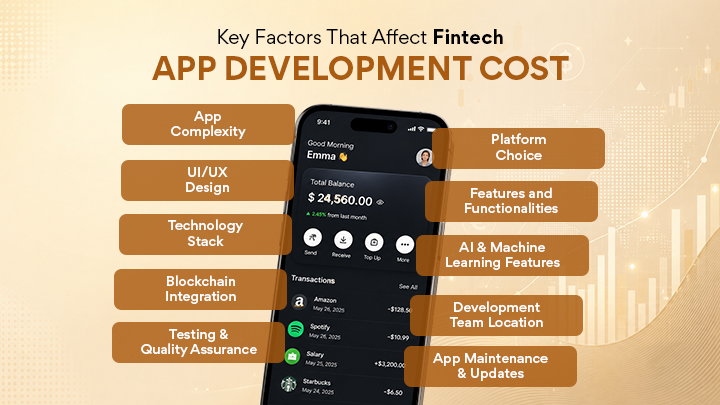
The cost of developing a fintech app depends on many things. A simple app with basic features costs less, while an app with advanced features like AI, blockchain, and banking integrations costs more. Every feature, design, and technology you choose can increase the overall app development cost. Knowing these factors in advance helps you plan your budget better and avoid unexpected costs later.
App Complexity
The complexity of your fintech app is one of the main factors that affects the development cost. A simple app with basic features like user registration, account management, and easy payment options takes less time and costs less to build. On the other hand, an advanced app with features like real-time transactions, investment management, AI, and blockchain needs more development time, thorough testing, and stronger security. Because of this, the overall development cost becomes higher.
| Complexity Level | Estimated Cost | Cost Impact |
|---|---|---|
| Basic App | $10,000–$15,000 | Low |
| Medium App | $15,000–$25,000 | Medium |
| Advanced App | $25,000–$75,000+ | High |
Platform Choice
The platform you choose also affects the app development cost. If you build separate apps for Android and iOS, it takes more time and usually needs separate development teams, which increases the cost. A cross-platform app uses a single codebase for both Android and iOS. This helps reduce development costs and allows the app to be built faster.
| Platform | Estimated Cost | Cost Impact |
|---|---|---|
| Android | $10,000–$25,000 | Medium |
| iOS | $15,000–$25,000 | Medium |
| Cross-platform | $30,000–$75,000 | Medium |
UI/UX Design
A simple and easy-to-use design is very important for a fintech app. It helps users complete their financial tasks quickly and safely. A basic design costs less to build. But if the app includes custom screens, animations, interactive dashboards, and high-quality graphics, the development cost becomes higher.
| Design Type | Estimated Cost | Cost Impact |
|---|---|---|
| Standard UI/UX | $5,000–$10,000 | Low |
| Custom UI/UX | $10,000–$30,000+ | High |
Features and Functionalities
The features you add to your fintech app have a big impact on the development cost. Simple features like online payments, digital wallets, push notifications, and account management cost less because they are easier to build. Advanced features such as spending insights, live chat support, budgeting tools, and real-time financial reports take more time to develop and test, so they increase the overall cost.
Common features include:
- Secure payments
- Digital wallet
- Transaction history
- Spending analytics
- Chat support
- Push notifications
| Feature Level | Estimated Cost | Cost Impact |
|---|---|---|
| Basic Features | $10,000–$25,000 | Medium |
| Advanced Features | $30,000–$80,000+ | High |
Read Also: The Impact of Digital Twin in Transportation and Logistics
Technology Stack
The technology stack is the collection of tools and technologies used to build a fintech app. It includes programming languages, frameworks, databases, and cloud platforms. Using modern technologies helps the app run faster, stay secure, and grow as the business expands. However, these technologies often require skilled developers, which can increase the app development cost.
A fintech app usually uses frontend technologies to create the user interface, backend frameworks to manage app functions, secure databases to store information safely, and cloud services to store and process financial data.
| Technology Level | Estimated Cost | Cost Impact |
|---|---|---|
| Standard Stack | $15,000–$40,000 | Medium |
| Advanced Cloud-Based Stack | $40,000–$80,000+ | High |
AI & Machine Learning Features
Artificial Intelligence (AI) is making fintech apps smarter and more helpful. It can detect fraud, give users personalized financial advice, power chatbots, and check credit risk. These smart features improve the user experience, but they also need more data, AI model training, and expert developers to build and manage them.
A fintech app usually uses a combination of frontend technologies, backend frameworks, secure databases, and cloud services. These technologies help store, manage, and process financial data safely and efficiently.
| AI Features | Estimated Cost | Cost Impact |
|---|---|---|
| Basic AI Features | $15,000–$40,000 | Medium |
| Advanced AI Solutions | $40,000–$100,000+ | High |
Blockchain Integration
If your fintech app allows users to use cryptocurrency, manage digital assets, or make secure decentralized transactions, you may need blockchain technology. Features like crypto wallets, smart contracts, and secure blockchain-based transactions make the app more advanced. Building these features also requires experienced developers with special blockchain skills.
| Blockchain Level | Estimated Cost | Cost Impact |
|---|---|---|
| Basic Blockchain Features | $20,000–$50,000 | High |
| Advanced Blockchain Solutions | $50,000–$150,000+ | Very High |
Development Team Location
The location of your development team also affects the total cost of the project. Developer rates are different in different countries and regions. By hiring skilled developers from places where hourly rates are lower, you can reduce your development costs while still getting high-quality work.
| Region | Average Hourly Rate | Cost Impact |
|---|---|---|
| North America | $100–$250/hour | Very High |
| Europe | $60–$150/hour | High |
| Asia | $25–$80/hour | Low |
Testing & Quality Assurance
Testing makes sure the fintech app works properly and is safe to use before it is launched. Developers test all the app features to make sure everything works correctly. They also check the app’s security to keep user data safe and test its performance to ensure it runs smoothly even when many people use it at the same time. Good testing helps find and fix problems early, which reduces future maintenance costs.
| Testing Level | Estimated Cost | Cost Impact |
|---|---|---|
| Basic Testing | $5,000–$15,000 | Medium |
| Comprehensive QA | $15,000–$40,000+ | High |
Read Also: Car Rental App Development Guide
App Maintenance & Updates
Launching your app is just the first step. Regular maintenance helps keep the app safe and running smoothly. It fixes bugs, improves performance, and adds new features over time. Fintech apps also need regular security updates to follow the latest rules and regulations and keep users’ personal and financial data secure.
| Maintenance Type | Estimated Annual Cost | Cost Impact |
|---|---|---|
| Basic Maintenance | $5,000–$15,000 | Low |
| Ongoing Maintenance & Feature Updates | $15,000–$50,000+ | Medium |
Businesses can better plan their budget by understanding these cost factors and focusing on the features that are most important. Proper planning helps create a secure, scalable, and easy-to-use fintech app while keeping development costs under control.
Essential Features of a Fintech App
A good fintech app should be easy to use, safe, and reliable. Whether it is a digital wallet, banking app, investment app, or payment app, the right features help users manage their money safely and with confidence. Here are the most important features every fintech app should have.
Essential Fintech App Features with Development Cost & Business Impact
| Feature | Estimated Cost (USD) | Business & User Impact |
|---|---|---|
| User Registration & Login | $2,000 – $5,000 | Provides secure and quick account access, improves user onboarding, and increases user retention. |
| User Profile Management | $1,500 – $4,000 | Allows users to manage personal information easily, improving convenience and customer satisfaction. |
| KYC Verification | $4,000 – $10,000 | Prevents fraud, ensures regulatory compliance, and builds trust with users. |
| Secure Payment Gateway | $5,000 – $12,000 | Enables fast and secure payments, increases transaction success rates, and improves customer confidence. |
| Digital Wallet | $8,000 – $20,000 | Makes storing and transferring money simple, leading to higher user engagement and more transactions. |
| Bank Account Integration | $6,000 – $15,000 | Gives users easy access to banking services, creating a seamless financial experience. |
| Money Transfers | $6,000 – $15,000 | Enables instant domestic and international transfers, improving customer convenience and platform usage. |
| Transaction History | $2,500 – $6,000 | Helps users track their financial activities, improving transparency and financial management. |
| Push Notifications | $1,500 – $4,000 | Keeps users informed about payments, account activity, and security alerts, increasing engagement. |
| In-App Chat Support | $3,000 – $8,000 | Provides quick customer assistance, resolves issues faster, and improves user satisfaction. |
| Spending Analytics | $5,000 – $12,000 | Gives users insights into spending habits, encouraging smarter financial decisions and better app engagement. |
| Budget Tracking | $3,000 – $8,000 | Helps users control expenses, improve savings, and build long-term loyalty to the app. |
| Investment Dashboard | $8,000 – $20,000 | Allows users to monitor investments in real time, increasing engagement and investment activity. |
| AI Financial Assistant | $10,000 – $30,000 | Offers personalized financial advice, automates support, reduces operational costs, and improves user experience. |
| Admin Dashboard | $6,000 – $18,000 | Helps administrators manage users, monitor transactions, detect fraud, and improve overall platform efficiency. |
User Registration & Login
The registration process should be simple, fast, and secure. Users should be able to create an account using their email address, phone number, or social media account. The login process should also be quick and safe. Features like strong passwords, OTP verification, fingerprint login, or Face ID help protect user accounts. A smooth and secure login makes it easy for users to access their accounts while keeping their personal and financial information safe.
User Profile Management
Every user should have their own profile where they can see and update their personal information. This includes their name, phone number, email address, profile photo, linked bank accounts, and account settings. Users should also be able to change their password, edit their personal details, and manage notification settings whenever they want. A simple and organized profile makes the app easier and more convenient to use.
KYC Verification
KYC (Know Your Customer) verification is one of the most important features of a fintech app. It checks a user’s identity before they can use financial services. Users can upload documents like a passport, driver’s license, or national ID for verification. This process helps stop fraud, follows financial rules, and builds trust between users and the platform.
Read Also: Top 10 Handyman App Development Companies in USA
Secure Payment Gateway
A secure payment gateway lets users send and receive money safely. It protects every transaction by using data encryption and strong security measures. Users can pay bills, shop online, or transfer money without worrying about their financial information. Fast and secure payments make the app safer and improve the overall user experience.
Digital Wallet
A digital wallet lets users keep money safely inside the app. They can add money, make payments, receive money, and check their wallet balance anytime. It removes the need to carry cash and makes daily payments simple and easy. It also provides a fast and convenient way to pay.
Bank Account Integration
Bank account integration allows users to connect their bank accounts to the fintech app. They can transfer money, check their account balance, and see their banking activities without opening different apps. This saves time and makes managing money much easier.
Money Transfers
Money transfer is one of the most important features of a fintech app. Users can send money to family, friends, or businesses in just a few seconds. The app should support both local and international transfers with fast and secure transactions. It should also show a confirmation message after every successful payment so users know their money has been sent safely.
Transaction History
A transaction history helps users see all their financial activities in one place. It shows every payment, money transfer, deposit, and withdrawal. The app displays the date, amount, payment status, and other transaction details in a simple and easy-to-read format. Users can also search, filter, or download their transaction history whenever they need it for personal records or financial reports.
Push Notifications
Push notifications keep users updated about important account activities. They receive alerts for successful payments, account logins, balance changes, low wallet balance, bill payment reminders, and security warnings. These notifications help users stay informed and quickly notice any unusual activity in their account.
In-App Chat Support
Users may need help while using the app. An in-app chat support feature lets them contact customer support without leaving the app. AI chatbots can quickly answer common questions, while support agents can help with more complex problems. Fast and easy support improves the user experience and helps build customer trust.
Spending Analytics
Spending analytics help users understand how they spend their money. The app automatically sorts expenses into simple categories like food, shopping, travel, bills, and entertainment. It also shows easy-to-read charts and reports, so users can clearly see where their money goes. This helps them manage their spending better and make smarter financial decisions.
Read Also: Cost To Develop A Restaurant App Like OpenTable
Budget Tracking
Budget tracking helps users set a monthly spending limit and keep track of their expenses. The app sends alerts when users are getting close to their budget limit. This helps them control their spending, avoid unnecessary expenses, and develop better money-saving habits.
Investment Dashboard
For investment fintech apps, an investment dashboard is an important feature. It gives users a simple view of their investment portfolio, performance, returns, and the latest market trends. Users can easily track stocks, mutual funds, cryptocurrencies, and other investments in one place. This makes it easier for them to understand their investments and make better financial decisions.
AI Financial Assistant
An AI financial assistant makes the fintech app smarter and more useful. It gives users personalized saving tips, spending advice, investment suggestions, and bill payment reminders based on their financial habits. Users can also ask financial questions through an AI chatbot and get instant answers. This helps people manage their money more easily and improves their overall experience with the app.
Admin Dashboard
The admin dashboard is the main control panel of the fintech app. It helps administrators manage users, track transactions, approve KYC requests, identify suspicious activities, create reports, and monitor the overall performance of the app. A well-designed admin dashboard improves security, makes daily operations easier, and helps businesses provide better customer support.
Best Technology Stack for Fintech App Development
Choosing the right technology stack is an important part of fintech app development. It helps your app work smoothly, stay secure, and grow as your business grows. A good technology stack also improves app speed, gives users a better experience, and keeps their data safe. Below are the main technologies used to build a modern fintech app, along with their estimated implementation costs.
Frontend
The frontend is the part of the app that users see and use every day. It should be simple, fast, and easy to understand. Developers often use technologies like Flutter, React Native, Swift (for iOS), and Kotlin (for Android) to build the app. A clean and user-friendly design helps people make payments, check their account balance, and manage their accounts easily without any confusion. Choosing the right frontend technology is an important part of the app development process because it improves the user experience and helps the app run smoothly.
| Aspect | Details |
|---|---|
| Estimated Cost | $5,000–$20,000 |
| Business Impact | Faster app performance, better user experience, and lower development time with cross-platform frameworks. |
Backend
The backend handles all the important work that happens behind the app. It manages user accounts, payments, transactions, and the app’s main functions. It helps the app run smoothly in the background. Technologies like Node.js, Python, Java, and .NET are commonly used because they are reliable and can support a large number of users.
| Aspect | Details |
|---|---|
| Estimated Cost | $10,000–$35,000 |
| Business Impact | Supports secure transactions, high performance, and smooth app scalability as users grow. |
Read Also: How to Build a Restaurant App Guide
Database
A database safely stores customer information, account details, and transaction records in one place. It helps keep all financial data organized and makes it easy to access quickly. Popular databases include PostgreSQL, MySQL, MongoDB, and Firebase. A well-designed database improves app speed, performance, and data management.
| Aspect | Details |
|---|---|
| Estimated Cost | $3,000–$10,000 |
| Business Impact | Improves data security, faster access to information, and efficient data management. |
Cloud Platform
Cloud platforms help fintech apps store data safely and securely. They also make it easy to handle more users and grow the business over time. Popular cloud services like AWS, Microsoft Azure, and Google Cloud offer secure hosting, data backup, and system monitoring.
| Aspect | Details |
|---|---|
| Estimated Cost | $2,000–$15,000 |
| Business Impact | Provides reliable hosting, automatic scaling, secure backups, and better uptime. |
APIs
APIs help connect your fintech app with banks, payment gateways, identity verification services, and other financial systems. These connections allow users to make secure payments, verify their identity, and access financial information directly within the app without switching to other platforms.
| Aspect | Details |
|---|---|
| Estimated Cost | $5,000–$20,000 |
| Business Impact | Enables secure integrations, faster transactions, and expanded app functionality. |
AI & Machine Learning
AI and Machine Learning help make fintech apps smarter and more useful. They can quickly detect fraud, show users simple spending insights, answer customer questions through chatbots, and give personalized financial suggestions. These features make the app more secure, easier to use, and improve the overall user experience.
| Aspect | Details |
|---|---|
| Estimated Cost | $10,000–$50,000+ |
| Business Impact | Reduces fraud, improves customer support, and delivers personalized financial experiences. |
Blockchain
Blockchain technology helps make transactions safe, secure, and easy to track. It is commonly used in cryptocurrency apps, digital wallets, smart contracts, and payment apps where security and trust are very important.
| Aspect | Details |
|---|---|
| Estimated Cost | $15,000–$70,000+ |
| Business Impact | Increases transaction security, transparency, and trust while reducing fraud risks. |
Security Tools
Security is one of the most important parts of a fintech app. It keeps users’ financial data safe from hackers and online threats. Tools like data encryption, multi-factor authentication (MFA), biometric login, firewalls, and fraud detection systems help protect sensitive information and lower security risks.
| Aspect | Details |
|---|---|
| Estimated Cost | $8,000–$30,000 |
| Business Impact | Protects user data, ensures regulatory compliance, and builds customer trust. |
Using the right security tools helps you build a fintech app that is safe, reliable, fast, and easy to grow. A modern technology stack also helps reduce future maintenance costs and gives users a smooth and secure experience.
Read Also: Cost to Develop a Doctor Booking App Like HealthTap
How to Reduce Fintech App Development Cost
Building a fintech app does not always mean spending a lot of money. By following the right app development process, businesses can reduce development costs while still creating a secure and high-quality app. The best way is to build the most important features first and add more features as the app grows.
Build an MVP First
Start by building a Minimum Viable Product (MVP). An MVP includes only the basic features that users really need. This helps you launch the app quickly, get feedback from real users, and avoid spending money on features that people may not use. Once you understand what users want, you can slowly add new features and improve the app over time.
Prioritize Important Features
You do not need to add every feature at the beginning. First, include the features that solve the main problem. Start with basic features like user registration, secure payments, account management, and transaction history. You can always add more advanced features in future updates as your app grows.
Choose Cross-Platform Development
If you want to save time and money, build one app that works on both Android and iOS. Cross-platform development lets developers use the same code for both platforms. This reduces development time, lowers costs, and makes future updates much easier.
Use Trusted Third-Party APIs
Building every feature from the beginning takes a lot of time and money. Using trusted third-party APIs for payments, identity verification, notifications, and banking services helps reduce development time. These APIs are already tested, secure, and reliable, so your app is easier to build, manage, and maintain.
Automate Testing
Testing is an important part of app development. Automated testing checks the app for common bugs and issues quickly. It saves developers time, improves the app’s quality, and lowers the cost of fixing problems later.
Plan for Future Scalability
When building your app, always think about future growth. A scalable app is easier to update with new features, supports more users, and handles higher traffic without rebuilding the whole application. This saves time, money, and effort as your business grows.
Partner with an Experienced Fintech App Development Company
Choosing an experienced fintech app development company helps you avoid expensive mistakes. Skilled developers use proven methods to build secure and reliable apps. They also complete the project more efficiently, helping you save money in the long run while making the app development process smooth and successful.
Read Also: Taxi Booking App Development Guide
Monetization Strategies for Fintech Apps
A good monetization strategy helps a fintech app earn regular income while giving useful services to users. The best way to make money depends on your target users, business goals, and the financial services your app offers. Many successful fintech apps use more than one earning method to increase revenue and support long-term business growth.
Subscription Plans
Subscription plans let users pay a monthly or yearly fee to use premium features. Free users can use the basic features, while paid users get extra benefits such as advanced budgeting tools, investment insights, detailed spending reports, priority customer support, and higher transaction limits. This pricing model helps businesses earn a steady and predictable income.
Transaction Fees
Many fintech apps earn money by charging a small fee every time users send money, make payments, exchange currencies, or complete other financial transactions. The fee is usually very low, so users do not feel it is expensive. When many people use the app every day, these small fees add up and provide a steady source of income for the business.
Premium Features
Another easy way for fintech apps to make money is by offering premium features. Users can choose to pay for extra tools such as AI-powered financial advice, detailed expense tracking, credit score monitoring, smart savings plans, or personalized investment suggestions. This allows users to pay only for the features they need and find useful.
Referral Programs
Referral programs help your app get more users and increase your earnings. Existing users can invite their friends and family to join the app. In return, they receive rewards like cashback, discounts, or bonus points. This benefits both the users and the business because new people join the app through trusted recommendations.
In-App Advertising
If your fintech app has a large number of users, you can earn money by showing relevant ads inside the app. The ads should be helpful and should not disturb the user experience. You can also work with trusted financial brands to promote products and services that match your users’ needs and interests.
Investment Commissions
Investment apps earn money when users buy or sell stocks, mutual funds, ETFs, or cryptocurrencies. They charge a small fee for each transaction. Even though the fee is small, many transactions over time help the app generate a steady income.
Loan Processing Fees
Lending apps may charge a one-time processing fee when they approve a personal, business, or education loan. This fee helps cover the cost of checking documents, verifying information, and managing the loan. It also provides a reliable source of income for the business.
Read Also: Top 7 Home Services App Development Companies
Why Choose MSM CoreTech for a Fintech App Development?
MSM CoreTech is a trusted mobile app development company that builds secure, scalable, and user-friendly financial applications for startups, enterprises, and growing businesses. Our experienced developers understand the latest fintech trends and create customized solutions that match your business goals and customer needs.
We focus on strong security by using data encryption, multi-factor authentication, secure payment gateways, and industry-standard compliance such as PCI DSS and GDPR. This helps protect sensitive financial information and builds trust with your users.
Our team works with modern technologies, including AI, machine learning, blockchain, cloud computing, and advanced APIs, to build high-performance fintech applications. Whether you need a digital wallet, payment app, banking platform, lending solution, or investment app, we deliver reliable and future-ready products.
At MSM CoreTech, we follow a transparent app development process with clear communication, regular project updates, and on-time delivery. We also provide complete support after launch, including maintenance, security updates, bug fixes, and feature enhancements to keep your app running smoothly.
From idea validation to deployment and long-term support, MSM CoreTech is committed to helping businesses launch innovative fintech apps that improve customer experience, increase business growth, and stay competitive in the fast-changing financial industry.

Conclusion
The cost of building a fintech app depends on many factors. The biggest ones include the type of app, the number of features, the design, the development platform, third-party integrations, security requirements, and the experience of the development team. Adding advanced technologies like AI, blockchain, or real-time analytics can also increase the overall cost. Understanding these factors helps businesses plan their budget and avoid unexpected expenses.
While it is important to keep development costs under control, businesses should never compromise on quality. A successful fintech app should offer useful features, strong security, and the ability to grow as your business expands. Investing in data protection, regulatory compliance, and a smooth user experience helps build customer trust and keeps users coming back. Choosing the right balance between features, security, and scalability will provide better long-term value.
Before starting your fintech app project, create a clear plan with your business goals, target audience, and must-have features. Working with an experienced fintech app development company can make the entire process easier. The right team can build a secure, scalable, and user-friendly solution that fits your budget and business needs. If you are planning to build a fintech app, now is the perfect time to turn your idea into a successful digital financial solution.
FAQ
The cost of building a fintech app typically ranges from $15,000 to 75,000+, depending on the app’s complexity, features, security requirements, platform, and development team.
The main cost factors include app complexity, UI/UX design, platform (iOS, Android, or cross-platform), security features, regulatory compliance, third-party integrations, AI or blockchain functionality, and ongoing maintenance.
A basic fintech app may take 3–5 months, a medium-complexity app 5–8 months, and an advanced fintech app 8–12 months or more, depending on the project scope.
A fintech app should include secure user authentication, data encryption, multi-factor authentication (MFA), KYC verification, fraud detection, secure payment processing, and compliance with financial regulations to protect user data.
An experienced fintech app development company can build a secure, scalable, and compliant application. They also help with custom feature development, industry regulations, testing, deployment, and ongoing support to ensure long-term success.

Related Posts

10 Key Applications of AI in the Food Industry (2026)
Walk into any restaurant kitchen, grocery warehouse, or food delivery control room today, and you will find something quietly running...
Read More

How To Develop An App Like YouTube Music: A Complete Guide
Music is now a part of our everyday life. People listen to songs while getting ready in the morning, working,...
Read More
Must-Have Features in Fintech Apps & Digital Financial Platforms
Think about how often you use your phone to pay bills, send money, shop online, or check your bank balance....
Read More


 Verified Review




 +44 7427829444
 71-75, Shelton Street, Covent Garden, London, United Kingdom, WC2H 9JQ