

Share this article


How Much Does It Cost To Develop a Restaurant App Like TheFork?
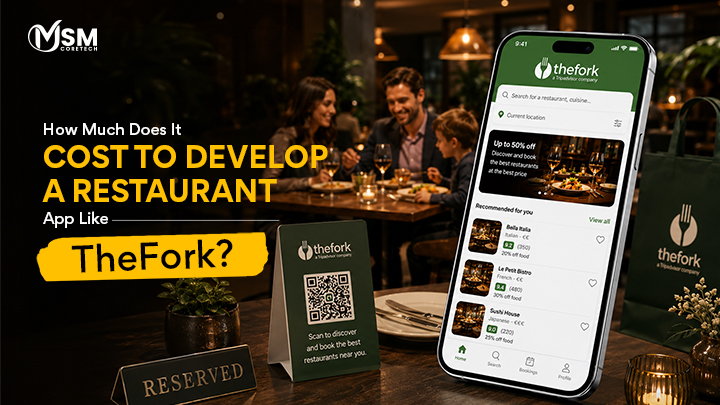
Imagine booking your favorite restaurant table in just a few taps no waiting, no phone calls, and no hassle. That’s why restaurant reservation apps like TheFork have become so popular among diners and restaurant owners alike.
A restaurant reservation app like TheFork helps people easily find restaurants, view menus, check available tables in real time, book a table, read customer reviews, and even pay through the app. It also helps restaurant owners manage bookings, reduce no-shows, attract more customers, and run their business more smoothly.
Today, more people use their smartphones to search for restaurants and book tables before going out to eat. Because of this, the demand for restaurant booking and restaurant discovery apps is growing quickly.
Many restaurants, startups, and food businesses are investing in apps like TheFork to give customers a better dining experience, get more table reservations, and stay ahead of the competition. These apps also help businesses earn more money through premium restaurant listings, subscription plans, and special promotional offers.
The cost of building a restaurant app like TheFork depends on many factors. The final price is based on the features you want, the app design, whether you build it for Android, iPhone, or both, the technology used, third-party integrations, security features, and the experience of the development team. A simple app with basic features costs less, while adding advanced features like AI-based recommendations, real-time table booking, and loyalty programs will increase the overall development cost.

What Is TheFork?
TheFork is a popular restaurant reservation app that helps people find restaurants, book tables, and enjoy special dining offers. It connects diners with thousands of restaurants through an easy-to-use mobile app and website.
The app works by allowing users to search for restaurants based on location, cuisine, price, ratings, or availability. After choosing a restaurant, users can view menus, read reviews, and reserve a table in just a few taps.
For diners, TheFork makes booking quick and convenient while offering discounts and personalized recommendations. For restaurant owners, it helps attract more customers, manage reservations, and increase table occupancy.
TheFork has become a successful restaurant booking platform because of its simple user experience, real-time booking system, trusted reviews, and valuable features for both customers and restaurants.
Read Also: Top 5 Hotel and Restaurant Website Design Companies in Australia
Market Overview of Restaurant Booking Apps
The restaurant booking app market is growing very fast because more people now prefer booking a table online instead of calling a restaurant. Apps like TheFork make the booking process simple. Users can easily find restaurants, check menus, read customer reviews, compare different options, and book a table in just a few minutes.
These apps are also very helpful for restaurants. They make it easier to manage table reservations, reduce missed bookings, and provide better customer service. This helps restaurants save time and improve the overall dining experience for their customers. To build a reliable and user-friendly solution, many businesses choose to work with an experienced restaurant app development company.
Today, digital restaurant solutions are becoming more popular around the world. Many restaurants use mobile apps to manage reservations, accept online payments, offer special deals and discounts, send booking updates and notifications, and build customer loyalty. These features make daily restaurant operations easier while giving customers a smooth and convenient booking experience.
Because of these benefits, the demand for restaurant booking apps is increasing every year. According to market reports, the global restaurant management software market was worth USD 6.6 billion in 2025 and is expected to grow to USD 24.1 billion by 2033, with a compound annual growth rate (CAGR) of 18%.
Today, more people use mobile apps to find restaurants and book tables. Customers want to check available tables, explore restaurants, and make reservations quickly using their smartphones. This gives a great opportunity for startups, restaurant chains, and hospitality businesses to grow. By investing in a restaurant booking app like TheFork, businesses can attract more customers, get more table bookings, improve customer satisfaction, and stay ahead in the fast-growing digital restaurant industry.
Read Also: Top 10 Online Restaurant Ordering Apps in USA
Key Features of a Restaurant App Like TheFork
A restaurant app like TheFork includes different features for users, restaurants, and admins to make the platform simple, smooth, and easy to use. The development cost depends on the complexity of these features, app design needs, and the technology used to build the app. Below is an estimated cost breakdown of features for each panel.
User Panel Features
The user panel helps customers find restaurants, book tables, make payments, and manage their dining experiences easily. A simple and easy-to-use design allows users to quickly search for restaurants and reserve their favorite tables without any difficulty.
| User Panel Feature | Estimated Cost |
|---|---|
| User Registration & Login | $500 – $1,000 |
| Restaurant Search & Filters | $1,000 – $3,000 |
| Table Booking & Real-Time Availability | $3,000 – $7,000 |
| Payment, Reviews & Notifications | $2,000 – $7,000 |
Key user features include searching for restaurants, using advanced filters, viewing restaurant details, booking tables, checking real-time availability, using interactive maps, reading reviews and ratings, saving favorite restaurants, making secure payments, checking booking history, receiving push notifications, and getting support through in-app chat. These features make it easier for customers to find restaurants, reserve tables, and complete their bookings without any hassle.
Restaurant Panel Features
The restaurant panel helps restaurant owners manage their profiles, reservations, menus, and customer interactions. It allows businesses to control their availability and track performance from one place.
| Restaurant Panel Feature | Estimated Cost |
|---|---|
| Restaurant Profile & Menu Management | $1,000 – $5,000 |
| Table & Reservation Management | $1,000 – $7,000 |
| Offers, Discounts & Customer Management | $1,000 – $5,000 |
| Analytics Dashboard | $2,000 – $8,000 |
Key restaurant features include profile management, menu updates, table management, booking confirmation, availability calendars, offers and discount management, customer management, and analytics dashboards. These tools help restaurants increase bookings and improve customer service.
Admin Panel Features
The admin panel works as the control center of the restaurant booking platform. It helps administrators manage users, restaurants, payments, bookings, and overall app operations.
| Admin Panel Feature | Estimated Cost |
|---|---|
| User & Restaurant Management | $1,000 – $7,000 |
| Booking & Payment Management | $2,000 – $7,000 |
| Offers, Coupons & Content Management | $1,000 – $3,000 |
| Reports, Analytics & Notifications | $2,000 – $5,000 |
Admin features include user management, restaurant management, booking management, payment management, offer and coupon management, reports and analytics, content management, and notification management. These features ensure better control, security, and smooth platform operations.
Overall, developing all these features for a restaurant app like TheFork can cost around $10,000 to $75,000+, depending on the app complexity, design, technology stack, and development team.
Read Also: Top 7 Home Services App Development Companies
Advanced Features That Increase Development Cost
When building a restaurant app like TheFork, adding advanced features can increase the total app development cost. These features need more development time, advanced technology, and extra testing to make sure the app works smoothly and provides a good user experience. However, these features can also help attract more users, increase restaurant bookings, and help businesses stay ahead in the competitive restaurant market.
AI-Based Restaurant Recommendations
AI-based recommendations help users find restaurants based on their interests, past bookings, location, food choices, and app activity. The app can recommend restaurants, cuisines, and special deals that match each user’s preferences. Building this feature requires AI technology and data analysis, which can increase the overall development cost.
Personalized Dining Suggestions
Personalized dining suggestions help users get restaurant recommendations based on their previous activities and choices. For example, the app can suggest a romantic restaurant for a date night or a family-friendly restaurant based on what users have selected before. This feature improves the overall user experience, but it requires advanced data processing and machine learning technology.
Loyalty & Rewards Programs
A loyalty and rewards program helps restaurants attract more customers and encourage them to return. Users can earn points, get discounts, access special offers, and receive rewards for making frequent bookings. Creating a complete rewards system requires extra backend development to manage points, transactions, and customer benefits effectively.
Waitlist Management
Waitlist management helps users join a waiting list when a restaurant has no available tables. Restaurants can check table availability and send notifications to customers when a table becomes free. This feature needs real-time updates and notification systems, which can make the app development process more complex.
Read Also: How AR/VR in Music Apps is Transforming the Industry
Contactless Ordering
Contactless ordering allows customers to check menus, order food, and complete payments through the app without any physical contact. This feature makes the experience easier and more convenient for users. However, connecting ordering systems, payment gateways, and restaurant management tools can increase development costs.
QR Code Menu
QR code menus allow customers to scan a code with their phone and quickly view a restaurant’s digital menu. This helps reduce the use of printed menus and makes the ordering process easier and faster. Developers need to build features for QR code creation, scanning, and menu management, which can increase the overall app development cost.
Multi-Language Support
Multi-language support allows restaurant apps to serve customers from different regions and countries. It requires adding translated content, managing multiple languages, and creating a design that works well with different text styles and formats. Adding more languages can increase the overall development cost.
Multi-Currency Payments
Multi-currency payment support is helpful for apps that work in different countries. It allows users to make payments in their preferred currency. Adding multiple payment options and making sure international payments are secure requires extra development work and can increase the overall cost.
Live Chat Support
Live chat support allows users to quickly solve booking problems, ask questions, and communicate with restaurants directly. Adding real-time chat features requires backend systems, messaging tools, and security measures, which can increase app development costs.
AI Chatbot
An AI chatbot helps customers by answering their questions, helping them find restaurants, supporting bookings, and providing quick assistance. Creating a smart chatbot requires AI technology, natural language processing, and regular improvements, which makes it a more advanced and expensive feature.
Social Media Login
Social media login allows users to quickly create an account or log in using platforms like Google, Facebook, or Apple. While it makes the login process easier for users, adding and securing multiple login options needs extra development effort.
Voice Search
Voice search allows users to find restaurants by simply speaking instead of typing. Users can search for restaurants by giving voice commands like “Find Italian restaurants near me.” Adding voice recognition technology makes the app easier to use and more accessible, but it requires integration with advanced APIs.
Overall, these advanced features can greatly improve the performance and user experience of a restaurant app like TheFork. However, these features also increase development costs because they require additional technologies, more development time, and extra testing. Businesses should choose features based on their target audience, budget, and long-term business goals.
Read Also: How AI Is Shaping the Future of Music Streaming Apps
Cost to Develop a Restaurant App Like TheFork
The cost of developing a restaurant app like TheFork depends on the features you want, the app’s complexity, the design, the technology used, and the development team you choose. A basic restaurant booking app with simple features costs less. However, an app with advanced features like AI recommendations, real-time table booking, and loyalty rewards costs more to build. On average, developing a restaurant app like TheFork can cost between $8,000 and $75,000+. Below is a detailed breakdown of the different app development levels.
Basic MVP Restaurant App
A Minimum Viable Product (MVP) is a great option for startups and small businesses that want to launch their restaurant app quickly. It includes only the most important features needed to get started. This helps businesses test their app in the market, understand what users like, collect feedback, and make improvements later. An MVP also helps save money because businesses don’t need to invest a large amount at the beginning.
| Factor | Estimate |
|---|---|
| Development Time | 2–4 Months |
| Estimated Cost | $8,000–$10,000 |
Features Included
- User Registration and Login: Users can sign up using their email, phone number, or social media account. After logging in, they can easily manage their bookings and use the app safely.
- Restaurant Search and Listings: Users can search for restaurants by name or food type. They can also see useful details like the restaurant’s location, ratings, and opening hours before booking a table.
- Table Reservation: Users can book a table by choosing the date, time, and number of people. This makes the table booking process quick and easy.
- Reviews, Notifications, and Admin Panel: After visiting a restaurant, users can give ratings and write reviews. The app also sends notifications for booking confirmations and important updates. The admin panel helps manage restaurants, users, and reservations in one place.
Read Also: Cost To Develop A Hotel Booking App Like Hostelworld
Mid-Level Restaurant App
A mid-level restaurant app includes more advanced features that improve the user experience and simplify restaurant operations. It is ideal for growing businesses that want to offer greater convenience and increase customer engagement.
| Factor | Estimate |
|---|---|
| Development Time | 4–7 Months |
| Estimated Cost | $10,000–$30,000 |
Features Included
- Real-Time Table Availability: Customers can see which tables are available in real time and book them instantly. They do not have to wait for the restaurant to confirm the booking. This helps avoid double bookings and gives customers a better booking experience.
- Secure Online Payments: The app lets users pay booking fees or restaurant bills safely online. They can use credit cards, debit cards, digital wallets, or other secure payment methods. This makes payments quick, easy, and safe.
- Advanced Search and Maps: Users can easily search for restaurants based on their favorite food, location, ratings, price, and other preferences. The app also includes maps that help users find restaurants and get directions without any hassle.
- Offers, Booking History, and Analytics: Restaurants can create special offers and discounts to attract more customers. Users can view their previous bookings anytime. Restaurant owners also get useful reports and insights that help them understand customer preferences and improve their services.
Advanced Restaurant App
An advanced restaurant app is built for large restaurant chains and businesses that want to compete with platforms like TheFork. It includes premium technologies that deliver a personalized and seamless dining experience.
| Factor | Estimate |
|---|---|
| Development Time | 8–12+ Months |
| Estimated Cost | $30,000–$75,000+ |
Features Included
- AI-Powered Recommendations: The app uses AI to understand what users like, where they have eaten before, and their food choices. Based on this, it suggests restaurants that match their taste, giving them a more personal dining experience.
- Loyalty Programs and Contactless Services: Users can collect reward points, use discounts, scan QR code menus, and place contactless orders. These features make dining easier, faster, and safer.
- Multi-Language, AI Chatbot, and Voice Search: The app supports different languages and currencies, making it useful for people from different countries. An AI chatbot quickly answers customer questions, and voice search lets users find restaurants by simply speaking.
- Advanced Analytics and Cloud Scalability: Restaurant owners can view detailed reports to understand their business better. The app also runs on cloud technology, so it works smoothly even when many people use it at the same time.
The final development cost depends on your feature requirements, design complexity, supported platforms, third-party integrations, and the experience of your development team. Starting with an MVP and upgrading the app as your business grows is often the most cost-effective approach for building a successful restaurant app like TheFork.
Read Also: Best Music Streaming App Features To Boost User Engagement
Factors That Affect Restaurant App Development Cost
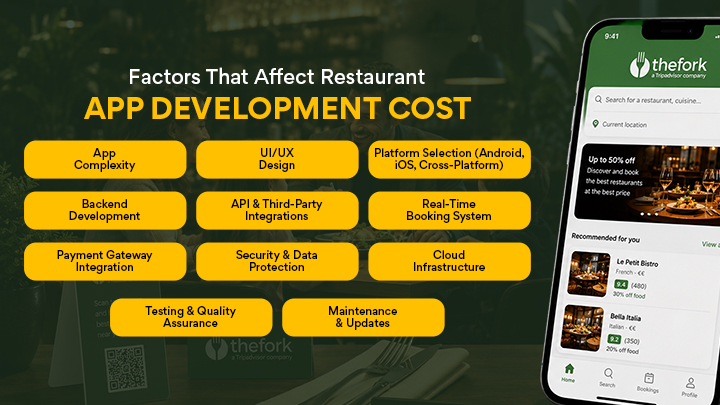
The cost to develop a restaurant app like TheFork depends on many factors. A simple app with basic table booking features costs much less than a feature-rich app with AI recommendations, real-time reservations, and online payments. Below are the main factors that influence the overall development cost.
App Complexity
The more complex your app is, the more it will cost to develop. A simple restaurant app with features like restaurant listings and table booking costs less because it is easier to build. On the other hand, an advanced app with features like AI-based recommendations, loyalty programs, and real-time table management needs more development time, effort, and technology, which increases the overall cost.
| App Complexity | Estimated Cost |
|---|---|
| Basic App | $15,000 – $30,000 |
| Medium App | $30,000 – $70,000 |
| Advanced App | $70,000 – $150,000+ |
UI/UX Design
A simple and attractive design helps users easily find restaurants, book tables, and make payments without any confusion. Adding custom animations, interactive screens, and premium designs makes the app look better, but it also takes more time to design and increases the overall development cost.
| UI/UX Design Level | Estimated Cost |
|---|---|
| Basic Design | $3,000 – $6,000 |
| Custom Design | $6,000 – $12,000 |
| Premium Design | $12,000 – $20,000+ |
Platform Selection (Android, iOS, Cross-Platform)
The platform you choose for your app affects the total development cost. If you build separate apps for Android and iOS, it will cost more because each app needs to be developed separately. A cross-platform app, built with technologies like Flutter or React Native, works on both Android and iOS using one codebase, which helps reduce development time and cost.
| Platform | Estimated Cost |
|---|---|
| Android Only | $15,000 – $50,000 |
| iOS Only | $15,000 – $50,000 |
| Cross-Platform | $20,000 – $60,000 |
Read Also: AI in Taxi App Development
Backend Development
The backend is the main system that runs the app in the background. It handles user accounts, restaurant details, table reservations, payments, notifications, and other important features. Building a secure and scalable backend needs experienced developers and takes more time to develop.
| Backend Complexity | Estimated Cost |
|---|---|
| Basic Backend | $5,000 – $12,000 |
| Medium Backend | $12,000 – $25,000 |
| Advanced Backend | $25,000 – $50,000+ |
API & Third-Party Integrations
Restaurant apps often connect with third-party services like Google Maps, payment gateways, SMS services, email platforms, and analytics tools. The more services you add, the more time and effort it takes to build the app, which also increases the overall development and service costs.
| Integration Level | Estimated Cost |
|---|---|
| Basic APIs | $500 – $1,000 |
| Standard Integrations | $3,000 – $8,000 |
| Advanced Integrations | $8,000 – $10,000+ |
Real-Time Booking System
A real-time booking system lets users see which tables are available right away and book them instantly. Users also get booking confirmation immediately. This feature needs real-time data updates, so it costs more to build than a basic booking system.
| Booking System | Estimated Cost |
|---|---|
| Basic Reservation | $3,000 – $7,000 |
| Real-Time Booking | $7,000 – $15,000 |
| Advanced Reservation Management | $15,000 – $30,000+ |
Payment Gateway Integration
If your app supports online payments, deposits, or subscription plans, you need secure payment gateway integration. Multiple payment methods and currencies require additional development work.
| Payment Features | Estimated Cost |
|---|---|
| Single Payment Gateway | $2,000 – $5,000 |
| Multiple Payment Methods | $5,000 – $10,000 |
| Multi-Currency Payments | $10,000 – $18,000+ |
Read Also: Cost to Build a Music Streaming App Like Pandora
Security & Data Protection
Restaurant apps store users’ personal details, table booking information, and payment data. To keep this information safe, the app needs strong security features like data encryption, secure login, and privacy rule compliance. These features protect user data, but they also increase the app development cost.
| Security Level | Estimated Cost |
|---|---|
| Basic Security | $2,000 – $5,000 |
| Advanced Security | $5,000 – $12,000 |
| Enterprise-Level Security | $12,000 – $25,000+ |
Cloud Infrastructure
Cloud services are used to store data, manage traffic, and ensure the app performs well during peak usage. Choosing scalable cloud infrastructure supports future business growth but adds to operational costs.
| Cloud Setup | Estimated Cost |
|---|---|
| Basic Cloud Services | $1,000 – $3,000 |
| Scalable Cloud Infrastructure | $3,000 – $8,000 |
| Enterprise Cloud Setup | $8,000 – $15,000+ |
Testing & Quality Assurance
Before launching the app, developers must test every feature to ensure it works correctly on different devices and operating systems. Proper testing helps eliminate bugs and provides a smooth user experience.
| Testing Level | Estimated Cost |
|---|---|
| Basic Testing | $2,000 – $5,000 |
| Comprehensive QA | $5,000 – $10,000 |
| Advanced Automation Testing | $10,000 – $18,000+ |
Maintenance & Updates
App development does not end after launch. Regular maintenance is needed to fix bugs, improve security, add new features, and keep the app compatible with the latest operating systems.
| Maintenance Plan | Estimated Annual Cost |
|---|---|
| Basic Maintenance | $3,000 – $8,000 |
| Standard Maintenance | $8,000 – $15,000 |
| Full Support & Updates | $15,000 – $30,000+ |
Choosing the right app development partner helps you get good quality at the right cost and ensures your restaurant booking app is built successfully. By selecting the right features, technology, and experienced team, you can create a scalable app like TheFork that fits your budget and meets your users’ needs.
Read Also: Cost to Develop an App like Letgo
Technology Stack for Building an App Like TheFork
Choosing the right technology is one of the most important steps when building a restaurant app like TheFork. The technology you use affects how fast, secure, and reliable the app is. It also impacts the total development cost. Using a modern and trusted technology stack helps your app run smoothly, gives users a better experience, and makes it easier to update and improve the app in the future.
Frontend
The frontend is what users interact with when using the app. It should be fast, responsive, and easy to navigate.
| Technology | Estimated Development Cost |
|---|---|
| Flutter | $8,000 – $20,000 |
| React Native | $8,000 – $20,000 |
| Swift (iOS) | $10,000 – $25,000 |
| Kotlin (Android) | $10,000 – $25,000 |
Flutter and React Native are popular choices because they allow developers to build Android and iOS apps from a single codebase, reducing both development time and cost. Swift and Kotlin are native technologies that deliver excellent performance but require separate development for each platform, making them more expensive.
Backend
The backend manages user accounts, restaurant listings, table reservations, payments, and notifications.
| Technology | Estimated Development Cost |
|---|---|
| Node.js | $10,000 – $30,000 |
| Laravel | $8,000 – $25,000 |
| Django | $10,000 – $30,000 |
Node.js is ideal for handling real-time bookings and large numbers of users. Laravel offers faster development for many business applications, while Django is known for strong security and scalability.
Database
A database stores user profiles, booking history, restaurant details, menus, and payment records.
| Technology | Estimated Development Cost |
|---|---|
| PostgreSQL | $3,000 – $8,000 |
| MongoDB | $3,000 – $8,000 |
| MySQL | $2,500 – $7,000 |
PostgreSQL is suitable for complex booking systems, MongoDB works well with flexible data structures, and MySQL is a cost-effective and reliable choice for many restaurant apps.
Cloud
Cloud platforms keep the app secure, scalable, and available to users at all times.
| Technology | Estimated Setup Cost |
|---|---|
| AWS | $2,000 – $8,000 |
| Google Cloud | $2,000 – $8,000 |
| Microsoft Azure | $2,000 – $8,000 |
These cloud services provide secure hosting, data storage, backups, and automatic scaling as your app grows.
Read Also: Cost to Build a Music Streaming App Like Shazam
Payment Integration
Secure payment options improve the booking experience.
| Technology | Integration Cost |
|---|---|
| Stripe | $1,000 – $3,000 |
| PayPal | $1,000 – $3,000 |
Both Stripe and PayPal support secure online transactions, making it easy for users to pay for reservations or special dining experiences.
Maps & Location
Location services help users find nearby restaurants and navigate easily.
| Technology | Integration Cost |
|---|---|
| Google Maps API | $1,000 – $3,000 |
Google Maps API enables restaurant discovery, route guidance, and location-based search, enhancing the overall user experience.
These tools track app usage, user engagement, booking trends, and customer preferences. The collected insights help restaurant owners make better business decisions and improve the overall user experience.
How to Reduce Restaurant App Development Costs
Creating a restaurant app like TheFork does not have to cost a lot of money. By making the right choices during development, you can lower the overall cost while still building a high-quality app. Here are some simple and effective ways to reduce your restaurant app development costs without affecting the app’s quality.
Reduce Costs by Starting with an MVP
Start by building a Minimum Viable Product (MVP) with only the most important features, such as user registration, restaurant search, table booking, and online payments. This helps reduce the initial development cost. After people start using your app, you can add more features based on their feedback and needs.
Save Development Costs with Cross-Platform Development
Use cross-platform technologies like Flutter or React Native to build one app that works on both Android and iOS. This saves development time, reduces maintenance work, and helps lower the overall cost of building the app.
Read Also: 10+ Best Music Streaming Apps for Every Music Lover
Lower Costs by Focusing on Important Features First
You do not need to build every feature in the first version of your app. Start with the most important features that users need. Advanced features like AI recommendations, loyalty programs, and voice search can be added later. This helps reduce development costs and keeps your budget under control.
Reduce Infrastructure Costs with Scalable Cloud Services
Use cloud platforms like AWS, Google Cloud, or Microsoft Azure to save money. You only pay for the resources your app uses. As your app gets more users, you can easily increase your cloud resources without spending a lot of money at the beginning.
Cut Development Costs with Trusted Third-Party APIs
Using ready-made APIs for payments, maps, notifications, and user login helps reduce development time and cost. These APIs are already tested, provide reliable performance, and help launch your app faster.
Control Project Costs with Agile Development
Agile development divides the project into small and manageable stages. This makes it easier to track progress, manage the budget, find problems early, and avoid costly changes later in the development process.
Read Also: Steps to Develop a Profitable Home Service App
Why Choose MSM CoreTech for Restaurant App Development?
Creating a successful restaurant app like TheFork needs the right technology, experience, and skilled developers. MSM CoreTech is a trusted mobile app development company that builds custom restaurant booking apps based on your business needs. Whether you own a startup, a restaurant chain, or a food delivery business, our team creates secure, scalable, and easy-to-use apps that help you reach more customers and make your restaurant operations simple and smooth.
Our experienced developers create restaurant apps with all the important features your business needs. These include online table booking, real-time reservation management, secure payment options, restaurant search, GPS navigation, customer reviews, loyalty programs, and AI-based recommendations. We use the latest technologies to build apps that are fast, secure, and easy to use on Android, iOS, and cross-platform devices.
At MSM CoreTech, we follow a simple and clear development process. We start by understanding your business needs, then create the UI/UX design, develop the app, test everything carefully, launch the app, and provide support after launch. This helps keep your project on time, within your budget, and ensures you get a high-quality restaurant app.
We also build future-ready restaurant apps that can easily grow as your business grows. Our team provides ongoing support, regular updates, and dedicated technical help to keep your app running smoothly and stay competitive in the changing restaurant industry. Partner with MSM CoreTech to create a reliable and feature-rich restaurant app that helps your business grow and keeps your customers happy for the long term.

Conclusion
The cost to develop a restaurant app like TheFork depends on many factors, including the app’s features, design, technology stack, platform, third-party integrations, and overall complexity. A basic app with essential booking features costs less, while an advanced app with AI recommendations, real-time table management, loyalty programs, and secure payment options requires a higher investment. Understanding these cost factors helps businesses plan their budget more effectively.
Choosing the right features and a reliable technology stack is essential for building a high-performing and scalable restaurant booking app. Using modern technologies, secure payment systems, cloud services, and an intuitive user interface ensures a smooth experience for both customers and restaurant owners. A well-planned development approach also helps reduce future maintenance costs and makes it easier to add new features as your business grows.
Investing in a scalable and user-friendly restaurant reservation app is a smart decision for businesses looking to improve customer satisfaction, increase bookings, and stay competitive in the digital dining industry. A feature-rich app can streamline restaurant operations while providing customers with a convenient booking experience.
If you’re planning to build a restaurant app like TheFork, MSM CoreTech, an experienced Restaurant App Development Company, can help you create a secure, scalable, and future-ready solution tailored to your business needs.
FAQs
The cost typically ranges from $15,000 to $150,000+, depending on the app’s features, design, platform, technology stack, and overall complexity.
A basic restaurant app may take 3–5 months, while a feature-rich app with advanced functionality can take 6–12 months or more to develop.
Essential features include user registration, restaurant search, table reservations, real-time availability, secure payments, reviews and ratings, push notifications, and an admin dashboard.
Popular technologies include Flutter or React Native for the frontend, Node.js, Laravel, or Django for the backend, PostgreSQL or MongoDB for the database, and AWS or Google Cloud for cloud hosting.
MSM CoreTech is an experienced Restaurant App Development Company that builds secure, scalable, and feature-rich restaurant booking apps tailored to your business goals, with complete development and post-launch support.

Related Posts
10 Key Applications of AI in the Food Industry (2026)
Walk into any restaurant kitchen, grocery warehouse, or food delivery control room today, and you will find something quietly running...
Read More
How To Develop An App Like YouTube Music: A Complete Guide
Music is now a part of our everyday life. People listen to songs while getting ready in the morning, working,...
Read More
Must-Have Features in Fintech Apps & Digital Financial Platforms
Think about how often you use your phone to pay bills, send money, shop online, or check your bank balance....
Read More


 Verified Review




 +44 7427829444
 71-75, Shelton Street, Covent Garden, London, United Kingdom, WC2H 9JQ