

Share this article


Steps to Develop a Profitable Home Service App
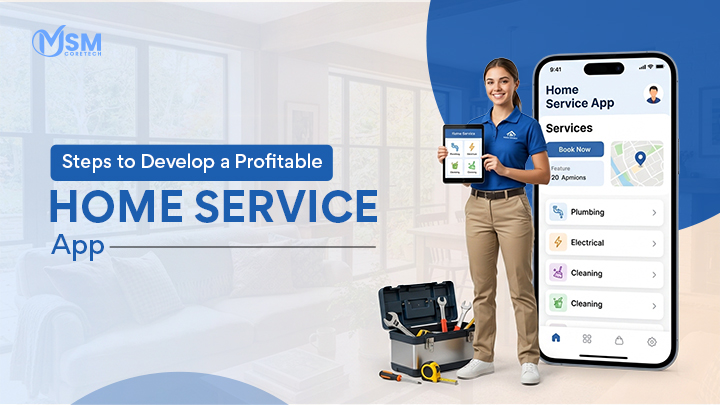
On-demand apps have completely changed the way people book home services. Whether someone needs a plumber at 8 PM or wants a home cleaner before guests arrive, they simply open an app, book the service they need, and get professional help within an hour. Because of this change in customer behavior, many entrepreneurs and businesses now want to build a profitable home service app of their own.
Handyman and home service apps are getting a lot of investment because the demand for these services keeps growing every year, and there is still plenty of room to grow in most cities. Homeowners want easy and quick services, service providers want regular work, and businesses want to be part of this fast-growing market. A well-designed app connects all these needs in one place, and when it is built the right way, it can become a long-term and steady source of income instead of just a one-time project. That is exactly why more startups and established companies are seeing this industry as a strong, long-term business opportunity instead of just another short-term trend to follow.
But creating an app that really earns money takes more than just hiring a developer and adding a few features. It needs proper planning, the right business model, the right technology, and a clear understanding of how home service apps actually generate revenue. This guide will take you through every step, from research and development to launch and growth, so you can clearly understand what it takes to build an app that lasts for the long term.
Also Read: Cost to Develop a Home Service App like TaskRabbit
What Is a Home Service App?
A home service app is a mobile or web application that helps homeowners connect with skilled professionals for their daily home service needs, such as cleaning, plumbing, electrical repairs, pest control, and many other services. Instead of spending time searching through local directories or asking friends and neighbors for recommendations, users can easily book a trusted and verified service professional with just a few taps, track when they will arrive, make secure online payments, and leave a review after the service is completed.
In many ways, it works just like ride-hailing or food delivery apps, but instead of a driver or food arriving at your doorstep, a trained professional comes to your home to repair, clean, or take care of different household tasks.
Types of Home Service Apps
Home service apps usually fall into a handful of popular categories, and many successful platforms actually combine several of these under one roof:
- Handyman Services – general repairs, furniture assembly, small fixes around the house
- Plumbing – leak repairs, pipe installation, drain cleaning, water heater services
- Electrical Services – wiring, appliance installation, safety inspections, emergency repairs
- Cleaning Services – regular home cleaning, deep cleaning, move-in and move-out cleaning
- HVAC Repair – air conditioning, heating, and ventilation installation and maintenance
- Pest Control – termite treatment, rodent control, seasonal pest prevention
- Beauty & Salon at Home – haircuts, manicures, massages, and grooming at the customer’s doorstep
- Home Painting – interior and exterior painting, touch-ups, and full renovations
- Appliance Repair – fixing refrigerators, washing machines, microwaves, and other home appliances
- Gardening & Landscaping – lawn care, garden design, tree trimming, and outdoor maintenance
Some apps focus on only one of these categories and become experts in that specific service, while other apps offer all of them together under one brand to give users everything in one place. Both options can work really well, and the best choice usually depends on how much competition is already there in your target city and how much budget you have to add service providers with different types of skills.
Why Invest in a Home Service App?
In the past, the home services industry mostly depended on word-of-mouth recommendations and local classified ads to get customers. But things have changed very fast, and the numbers clearly show why so many businesses and investors are choosing to enter this market today.
Instead of depending on one service call center or a small team of technicians that can only cover a few areas, businesses can now provide services across hundreds of neighborhoods using just one app, and reaching this level of growth was simply not possible with the old phone-and-paper way of managing a service business.
Include Statistics
- Global market size: The global on-demand home services market is valued in the tens of billions of dollars, and it continues to expand as more households adopt app-based booking over traditional phone calls.
- CAGR: Industry reports consistently place the compound annual growth rate for on-demand home services somewhere between 15% and 20%, which is a strong pace for any service-based industry.
- Smartphone adoption: With smartphone penetration crossing well over 80% in most urban markets, the barrier to entry for using an app-based service has almost disappeared..
- AI adoption in service businesses: More service platforms are integrating AI for scheduling, pricing, and support, and this is quickly becoming a standard expectation rather than a bonus feature.
These numbers are important because they clearly show that this opportunity is not just a short-term trend. It is a long-lasting change in the way people prefer to book and use home services. This is exactly the type of market where a well-built and properly planned app can create a strong place for itself and continue growing over time.
Another important thing to understand is that this growth is no longer limited to only large metro cities. Tier 2 and Tier 3 cities are also growing quickly because more people are using smartphones and making digital payments, which means the potential market for a new home service app continues to grow instead of remaining the same. For anyone who is planning to build a profitable home service app, this expanding market is one of the biggest reasons to start now instead of waiting until the competition becomes much stronger.
Also Read: Cost to Develop a Home Service App like Thumbtack
Business Benefits of Developing a Home Service App
Apart from the market growth, there are many practical business reasons why companies decide to build these platforms instead of depending on traditional service methods. An app is not just a tool for booking services; it becomes the main system that helps run the entire business, from marketing and scheduling to customer support, and this strong foundation often brings benefits that go far beyond the initial investment.
Key Benefits
- Higher Revenue Opportunities – Digital booking opens the door to commissions, subscriptions, and add-on services that traditional service businesses can’t easily offer.
- Wider Customer Reach – An app lets you serve multiple neighborhoods, cities, or even regions from one central platform, without needing a physical storefront everywhere.
- Improved Customer Experience – Instant booking, live tracking, and transparent pricing all lead to happier customers who come back again.
- Better Workforce Management – Admins can assign jobs, monitor performance, and manage schedules for hundreds of service providers from one dashboard.
- Brand Visibility – A polished app builds trust and recognition in a way that a phone number or a flyer never could.
- Data-Driven Decision Making – Every booking, cancellation, and review generates data you can use to improve pricing, staffing, and marketing.
- Multiple Revenue Streams – Commissions, subscriptions, ads, and premium listings can all run side by side.
- Competitive Advantage – Businesses that move early into app-based service booking tend to build customer loyalty before competitors catch up.
All these benefits together explain why many traditional service businesses are now moving to digital platforms instead of depending on phone bookings and paper schedules. An app does not just make the business appear more modern; it also improves how smoothly the business works every single day, from assigning jobs more efficiently to keeping customers connected and coming back for the long term.
Different Business Models for Home Service Apps
Before you start the development work, it is important to decide how your platform will actually work. The business model affects almost every part of the platform, from the features you need to the different ways you will earn money in the future. Two founders may have the same app idea, but they can still build completely different products because one chooses a marketplace model while the other chooses a dedicated service provider model. That is why this decision should be made carefully instead of treating it as just a small or unimportant part of the planning process.
Popular Business Models
- Single Service Provider – The app represents one company offering one type of service, such as a cleaning company with its own staff.
- Multi-Service Marketplace – The platform lists multiple categories of home services and connects customers with independent providers, similar to a one-stop shop for everything home-related.
- Aggregator Model – The app pulls together listings from several existing service providers or agencies and takes a cut for every booking made through the platform.
- Franchise Model – Local operators run service delivery in their own city or region under one shared brand and app.
- Subscription-Based Model – Customers pay a recurring fee for regular services, like monthly home cleaning or seasonal pest control visits.
- Hybrid Model – A mix of commission-based bookings, subscriptions, and premium features combined to diversify income.
Today, most successful platforms choose the hybrid model because it does not depend on only one way of making money. This gives the business more flexibility as it grows over time. It becomes even more helpful when you look at how home service app businesses increase their revenue in the long run, because if one income source, like fewer bookings during a slow season, goes down, it can often be balanced by regular subscription income or service provider membership fees. Choosing a business model too fast, without carefully thinking about these advantages and disadvantages, is one of the most common mistakes that many new founders make in this industry.

Also Read: AI in Handyman Apps
Step-by-Step Process to Develop a Profitable Home Service App
Now that the basics are clear, let’s move on to the actual process. Missing any of these steps can easily waste your budget, so it’s better to follow each one in the right order.
Step 1: Conduct Market Research
- Identify target audience: Know exactly who you’re building for: busy professionals, families, elderly homeowners, or a mix of all three.
- Analyze competitors: Study existing apps in your target city or region to understand their pricing, features, and gaps you could fill.
- Understand customer pain points: Talk to potential users about what frustrates them with current booking methods, whether it’s unreliable timing, unclear pricing, or lack of trust.
- Define business goals: Decide what success looks like for you in the first year, whether that’s a certain number of bookings, cities covered, or revenue targets.
Many people rush through this first step because they are excited to move directly into the design and app development process, but skipping it often ends up taking more time later. Spending just two or three weeks speaking with potential customers, asking local service providers for their feedback, and studying competitor pricing helps you clearly understand what really needs to be built instead of making decisions based on assumptions.
Step 2: Choose Your Business Model
- Marketplace: Best if you want to onboard many independent providers quickly without hiring staff directly.
- Dedicated Service Provider: Best if you already run a service business and want more control over quality.
- Subscription: Best for recurring services like regular cleaning or lawn care.
- Commission-based: Best if your main goal is to scale fast and earn a percentage from every transaction.
There is no one right answer for this, and many successful apps started with one business model and slowly added features from another model as they continued to grow. The most important thing is to choose a starting point that fits your available budget, your connections with local service providers, and how fast you want to grow and expand your business.
Step 4: Design the UI/UX
After the features are finalized, the next step is to work on the app design. For a home service app, the main focus of the design should not be fancy animations but a clear and fast user experience. A person trying to book an emergency plumber does not want to spend time understanding a difficult interface. Wireframes and prototypes should always be tested with real users before the development begins because finding usability problems early is much easier and less expensive than fixing them after coding starts.
Step 5: Choose the Right Technology Stack
Based on the features you want and the size of the platform you expect to build, you or your development partner will choose the right frontend, backend, database, cloud, and API technologies. A small app made for one city needs very different technology than a platform that plans to grow across multiple states within the next two years. Choosing the wrong technology in the beginning can make it much more expensive to scale the platform later.
Step 6: Develop the App (MVP First)
Instead of building every feature from the beginning, most successful apps first launch with a Minimum Viable Product (MVP) that includes only the most important features like booking, payment, and service provider matching. After getting real user feedback and usage data, they gradually add advanced features such as AI recommendations or dynamic pricing. This helps the app launch faster and allows real customer behavior to decide what features should be built next, instead of making assumptions.
Step 7: Test Thoroughly
Testing is not only about checking if the app crashes or not. It also includes functional testing (does the booking process work properly from start to finish), payment testing with different payment methods, load testing (can the app manage a large number of bookings during busy weekends), and security testing (is customer and payment information really safe and protected). Home service apps store sensitive information like customer details, home addresses, and payment data, so this step needs proper time and attention, not just a quick check.
Step 8: Launch and Market the App
Launching your app in one city or one local area first is usually a smarter choice than launching it across the whole country. It gives you enough time to find and fix operational problems, such as not having enough service providers or issues with appointment scheduling, while everything is still easier to manage. At this stage, your marketing should mainly focus on local SEO, app store optimization, and referral rewards for service providers to build a strong provider network before bringing in more customer demand.
Step 9: Monitor, Optimize, and Scale
Launching your app is just the start, not the end of the journey. Use the analytics dashboard to track booking trends, where users leave during the sign-up process, and how quickly service providers respond. Solve these problem areas as soon as possible, then grow one city at a time instead of expanding everywhere at once, using what you learned in each new city to make the next launch even better.
Also Read: Handyman App Features
AI Features That Make Your Home Service App More Profitable
Artificial intelligence is no longer just an extra feature for these platforms; it is quickly becoming one of the main reasons why some apps stay ahead of their competitors. AI helps automate daily operations, create a more personalized user experience, and reduce the amount of manual work needed to manage and run the business.
AI Capabilities
- AI Chatbot Support – Handles common questions and booking requests instantly, day or night
- Smart Service Recommendations – Suggests relevant services based on booking history and location trends
- Dynamic Pricing – Adjusts prices automatically based on demand, time, and provider availability
- Predictive Scheduling – Forecasts busy periods so providers can be allocated in advance
- Route Optimization – Finds the fastest path for providers, saving time and fuel
- Fraud Detection – Flags suspicious bookings, fake reviews, or payment issues automatically
- Voice Search – Lets users book services by speaking instead of typing
- AI-Based Review Analysis – Summarizes customer feedback to highlight recurring issues or strengths
- Personalized Offers – Sends relevant discounts based on individual user behavior
- Customer Behavior Analytics – Studies usage patterns to improve retention and marketing
You do not need to build all of these features right from the beginning. Many successful apps start with only an AI chatbot and simple recommendations, then slowly add features like dynamic pricing and route optimization after they collect enough booking data to make those features truly useful. Trying to launch your app with every AI feature at the same time can often delay your launch without giving much real benefit in the early stage, because AI models usually work better after they have enough real user data to learn and improve from.
Also Read: Cost to Develop a Handyman App like Angi
Technologies Used to Build a Home Service App
The technology stack you choose plays a big role in your app’s performance, future growth, and how easily you can add new features later. Here is what most modern home service apps are built with.
Frontend
- Flutter: Great for building one codebase that works on both Android and iOS
- React Native: Popular for fast development and a large developer community
Backend
- Node.js – Handles real-time features like live tracking and chat efficiently
- Laravel – A solid choice for structured, secure backend systems
- Django – Good for apps that need strong data handling and quick scaling
Database
- PostgreSQL – Reliable for structured data and complex queries
- MongoDB – Flexible for apps with rapidly changing data structures
- MySQL – A tried and tested option for straightforward relational data
Cloud
- AWS – Widely used for its scalability and wide range of services
- Google Cloud – Strong choice for apps that rely heavily on AI and data tools
- Microsoft Azure – Good for enterprise-level integrations and security
APIs
- Google Maps – For live tracking, navigation, and location search
- Stripe – For secure international payment processing
- Razorpay – Popular for payment processing in markets like India
- Twilio – For SMS notifications and call masking between users and providers
- Firebase – For push notifications, analytics, and real-time database needs
AI Technologies
- OpenAI APIs – For chatbots, content generation, and natural language understanding
- Gemini APIs – For multimodal AI features and advanced recommendations
- TensorFlow – For building and training custom machine learning models
- ML Models – Custom-built models for pricing, fraud detection, and demand forecasting
The best mix of these technologies depends completely on what your app needs. A small local app that works in just one city does not need the same setup as a platform that plans to grow across several states during its first two years. This is exactly where a good home service app development company can help you make the right decisions, because choosing the wrong technology stack in the beginning can make it much more costly to grow your app later.
Also Read: How to Design a Handyman App?
How Does a Home Service App Make Money?
This is the question that every business owner asks at some point, and understanding the answer early helps you build the app with a clear monetization plan from the very beginning instead of adding it later. Trying to decide how to make money after the app has already been built usually means adding features that would have been much easier to include from the start, so it is important to spend enough time on this part before any coding work begins.
Revenue Models
- Commission on Every Booking: The most common model, where the platform takes a percentage of each completed job
- Subscription Plans: Customers or providers pay a recurring fee for ongoing benefits or access
- Featured Listings: Providers pay extra to appear at the top of search results
- Service Provider Membership: Providers pay a monthly or annual fee to stay active on the platform
- In-App Advertisements: Third-party brands pay to advertise relevant products or services
- Cancellation Charges: Small fees applied when a customer cancels a booking last minute
- Surge Pricing: Higher rates during peak demand hours, similar to ride-hailing apps
- Value-Added Services: Add-ons like express booking, insurance, or premium support
- Lead Generation Fees: Charging providers for every new customer lead sent their way
Using three or four of these business models together usually helps home service apps earn much better revenue than depending only on commission fees. This is one of the biggest lessons learned from platforms that have grown successfully over the past few years.
It is also a smart idea to test these revenue options step by step instead of introducing all of them at the same time, because adding too many charges in the beginning can discourage new users before they even get the chance to try your main service. A gradual rollout, starting with commission fees and later adding subscriptions or featured listings after you have built a stable user base, usually helps earn users’ trust while also increasing your income steadily over time.
Home Service App Development Cost
App development cost is one of the first things that almost everyone wants to know. The simple answer is that it mainly depends on the features you need, the design complexity, and the development team you choose to build your app. A simple app with basic booking and payment features will naturally cost much less than a platform that includes AI recommendations, live tracking, and support for multiple cities. Here is a general cost breakdown to help you plan your budget in a practical way, but keep in mind that the final cost can change based on your specific requirements and your location.
Cost Breakdown Table
| Development Stage | Estimated Cost |
|---|---|
| UI/UX Design | $2,000 – $6,000 |
| Frontend Development | $6,000 – $15,000 |
| Backend Development | $6,000 – $18,000 |
| API Integration | $1,500 – $5,000 |
| AI Integration | $3,000 – $10,000 |
| Testing | $1,500 – $4,000 |
| Deployment | $500 – $2,000 |
| Maintenance (yearly) | $3,000 – $8,000 |
Factors Affecting Cost
- Features: More advanced features like live tracking or AI recommendations naturally increase cost
- Platform: Building for both iOS and Android costs more than a single platform
- Design Complexity: Custom animations and unique UI elements take more design hours
- Tech Stack: Some frameworks and tools cost more to license or maintain than others
- AI Integration: Custom AI models cost more than using pre-built APIs
- Third-party APIs: Payment gateways, maps, and messaging services often come with usage-based fees
- Development Team Location: Rates vary significantly between regions, with some offering strong quality at a lower cost
A common mistake people make is choosing a development partner only because they offer the lowest price. A cheaper app that keeps needing fixes and updates after launch usually costs much more over time than paying a little extra at the beginning for a team that builds it properly the first time. It is usually much better to ask for a detailed list of everything included in the price instead of simply comparing one total quote with another.
Also Read: Top 10 Handyman Apps
Common Challenges in Home Service App Development
Building an app is never completely smooth, and you will likely face a few challenges along the way. Knowing about these common challenges in advance helps you prepare for them instead of being surprised later. Some of these challenges are related to technology, some are connected to daily operations, and some are about building trust because customers are inviting unknown service providers into their homes, which is very different from using a regular e-commerce app.
Challenges
- Finding Verified Service Providers: Building a trustworthy network takes time and thorough screening
- Real-Time Scheduling: Coordinating availability across many providers and customers simultaneously is technically demanding
- Secure Payments: Handling online transactions safely requires strong encryption and compliance
- Managing Peak Demand: Sudden spikes in bookings can strain both technology and provider availability
- User Retention: Keeping customers coming back requires consistent quality and smart engagement
- Location Accuracy: Inaccurate GPS data can lead to delays and frustrated customers
- Customer Trust: Convincing users to let strangers into their homes takes strong verification and transparency
- Data Security: Protecting personal and payment information is non-negotiable
- Regulatory Compliance: Different regions have different rules around service licensing and worker classification
None of these challenges are new or surprising for someone building a platform for the first time, and almost every successful platform has gone through many of these same challenges. The businesses that become successful are usually the ones that see these challenges as a regular part of running their platform instead of thinking they are one-time problems to fix before launch. Provider verification, for example, is not something you do once and then forget about; it needs to remain an active part of how the platform works every single day.
Best Practices for Building a Successful Home Service App
Avoiding challenges is only one part of the job; the other part is following the practices that have helped many successful platforms grow over time. These are not difficult ideas to understand, but they do need consistent effort to follow, especially after the app goes live and the everyday work of managing the business replaces the excitement of the first launch.
Tips
- Focus on User Experience: Keep booking flows simple and intuitive from the very first screen
- Prioritize Security: Use encryption, secure logins, and regular security audits
- Use AI for Automation: Let AI handle repetitive tasks like scheduling and support
- Offer Multiple Payment Methods: Give users the flexibility to pay however they prefer
- Ensure Fast Performance: Optimize load times so users don’t abandon the app out of frustration
- Collect User Feedback: Regularly ask for reviews and act on the patterns you see
- Optimize for SEO & ASO: Make sure your app and website are easy to find through search
- Provide Excellent Customer Support: Fast, helpful support builds long-term trust
- Regularly Update the App: Keep improving based on new trends and user needs
These practices may look simple on paper, but you need to follow them regularly for them to give real results. One fast, well-designed update cannot fix months of ignoring user feedback or allowing bugs to keep building up. If you treat your app like a living product that keeps improving with real user feedback, it is usually what separates apps that stop growing after launch from the ones that continue to grow successfully year after year.

Future Trends in Home Service Apps
The industry is changing very fast, and knowing what is coming next helps you build an app that does not become outdated after just a year or two. Technology in this industry keeps moving quickly, and what seems like a useful extra feature today can soon become something that customers expect as a basic standard tomorrow.
Emerging Trends
- Generative AI Assistants – Helping users describe problems and get instant service suggestions
- Predictive Maintenance – Alerting homeowners before an appliance or system actually breaks down
- IoT Integration – Connecting smart home devices directly with service scheduling
- Voice-Based Booking – Letting users book services through voice assistants
- AR for Remote Assistance – Using augmented reality to diagnose issues before a technician even arrives
- Hyperlocal Services – Focusing on very specific neighborhoods for faster response times
- Sustainable Home Services – Growing demand for eco-friendly cleaning and repair options
- AI Workforce Management – Automatically assigning the best-suited provider for each job
- Blockchain for Secure Transactions – Adding an extra layer of transparency and security to payments
Not every trend in this list will become popular at the same speed, and some of them may take a few more years before they become truly important. Even so, it is a good idea to keep an eye on all of them, because building your app’s architecture with enough flexibility from the beginning makes it much easier to add these features later without needing to rebuild large sections of the platform from the ground up.
Also Read: Handyman App Development Cost
Why Choose MSM Coretech For Home Service App Development Company?
Choosing the right company can make a big difference between an app that finds it hard to grow and one that keeps growing successfully year after year. MSM Coretech has earned a strong reputation as a trusted home service app development company, and here are the reasons that make the team different from others.
- Industry Expertise – Years of hands-on experience building apps across handyman, cleaning, healthcare, and other on-demand categories
- Custom Development – Every app is built around your specific business model instead of using a generic template
- Scalable Architecture – Apps are designed to handle growth, from a single city launch to multi-region expansion
- AI Integration – Practical AI features that genuinely improve efficiency and user experience, not just added for the sake of it
- Ongoing Support – Continued maintenance, updates, and improvements long after the app goes live
- Faster Time-to-Market – A streamlined development process that gets your app launched without unnecessary delays
- Cost Efficiency – Transparent pricing that avoids hidden costs while still delivering strong quality
If you want to build a profitable home service app with a team that understands both the technology and the business side, MSM Coretech is ready to support you through the complete journey, from your first idea to the app launch and even after that. Instead of simply delivering the final app and leaving, the team continues to help with regular updates, app scaling, and adding new features, which becomes very important once the app goes live and real users begin using it every single day.
Conclusion
Building a home service app is no longer just a smart idea; it has become a real business opportunity because more people are using these apps every year and the market keeps growing. From selecting the right business model to adding AI features and planning how your app will make money, every step explained in this guide helps make your app successful in the long run.
The businesses that succeed in this market are the ones that see their app as a product that always needs to grow, not just something they launch one time. They keep making the app better, keep listening to what their users say, and keep trying new ways to earn money to increase the revenue of home service app operations over time. They also choose the right partners, whether it is a trusted technology team, verified service providers, or smart marketing, because all of these parts work best when they support each other.
Whether you’re starting a new platform from the beginning or planning to improve an existing one, success depends on good planning, choosing the right technology partner, and focusing on solving real problems for both customers and service providers. With the right strategy, a home service app can become one of the most dependable, scalable businesses you can build, one that continues to bring regular bookings, loyal customers, and long-term revenue even long after the initial launch.
FAQs
Costs typically range from $20,000 to $60,000+ depending on features, platforms, and AI integration. A basic MVP costs less, while advanced apps with live tracking and AI cost more.
Most home service apps take three to six months to build, depending on complexity. Adding AI features or multi-city support can extend the timeline further.
The commission-based marketplace model is the most popular starting point since it’s simple to run. Many apps later add subscriptions or memberships to diversify revenue.
Revenue mainly comes from commissions on bookings, subscription plans, and featured listings. Surge pricing and value-added services add extra income streams over time.
A specialized company brings tested workflows, ready technology stacks, and faster launch timelines. This reduces costly mistakes and gets your app to market sooner.

Related Posts

10 Key Applications of AI in the Food Industry (2026)
Walk into any restaurant kitchen, grocery warehouse, or food delivery control room today, and you will find something quietly running...
Read More
How To Develop An App Like YouTube Music: A Complete Guide
Music is now a part of our everyday life. People listen to songs while getting ready in the morning, working,...
Read More
Must-Have Features in Fintech Apps & Digital Financial Platforms
Think about how often you use your phone to pay bills, send money, shop online, or check your bank balance....
Read More


 Verified Review




 +44 7427829444
 71-75, Shelton Street, Covent Garden, London, United Kingdom, WC2H 9JQ