

Share this article


Geolocation in Dating Apps Development: Privacy & UX
Geolocation is one of the most important features in modern dating apps. Most popular dating apps use location data to help users find people nearby. This makes it easier for users to connect with potential matches who are within a reasonable distance. According to recent industry reports, there are more than 366 million dating app users worldwide, and location-based matching is one of the main features that keeps users engaged. In addition, around 40% of couples who met in recent years first connected through a dating app, showing how important online dating has become.
Location-based matching improves the user experience by showing profiles of people who live nearby. It reduces travel difficulties and increases the chances of meeting in person. Studies show that users of location-based dating apps often meet face-to-face more quickly than users of traditional matching platforms. This creates a more convenient and natural dating experience and helps people build meaningful relationships within their local area.
However, geolocation features also create some privacy and security concerns. Sharing location information can expose users to risks such as tracking, stalking, unauthorized data collection, and location-related attacks. Research on dating app privacy has found that even sharing distance information can sometimes help others estimate a user’s location if proper protection measures are not used.
Because of these risks, a dating app development company must carefully balance convenience, privacy, and security when building location-based features. A good geolocation system should help users find suitable matches while also giving them control over their location data. In this guide, we will discuss the main privacy concerns, user experience (UX) factors, and best practices for creating safe and effective geolocation features in dating apps.
Read also: Push Notifications Drive Growth for Your Dating PWA
Understanding Geolocation in Dating Apps
Geolocation is one of the most important technologies used in modern dating apps. It helps people find and connect with other users based on where they are located. By using location information, dating apps can show more relevant matches, keep users engaged, and make it easier for people to meet in real life. Understanding geolocation is important when creating a dating app that is useful, safe, and user-friendly.
What Is Geolocation Technology?
Geolocation technology helps identify a user’s current location. It works using GPS, Wi-Fi networks, mobile towers, or IP addresses. Smartphones and other devices can detect where a user is and share that information with apps when the user gives permission. In dating apps, this technology helps show nearby users and provide location-based match suggestions.
How Dating Apps Use Location Data
Imagine opening a dating app and instantly seeing people nearby. This is possible because of location data. When a user shares their location, the app compares it with the locations of other users and finds potential matches nearby. Users can also choose how far away they want their matches to be. Location data supports features like nearby match discovery, travel mode, local events, and personalized recommendations. By connecting people who are in the same area, dating apps make it easier to start conversations and meet in person.
Types of Location-Based Features in Dating Apps
Many dating apps offer location-based features to improve the user experience. Popular features include finding nearby matches, setting a preferred distance range, filtering users by location, and using travel mode to connect with people in other cities. Some apps also suggest local events and community activities based on location. These features help users find suitable matches more easily and enjoy a more personalized dating experience
Read also: 10 UI/UX Design Tips for Dating Apps
Why Geolocation Matters in Dating Apps
Geolocation is one of the most important features in modern dating apps. It helps users find potential matches based on their location, making the dating experience easier, more relevant, and more enjoyable. By connecting people who live near each other, geolocation increases the chances of meaningful conversations and real-life meetings. That is why location-based matching has become a common feature in most dating platforms today.
Improving Match Relevance
Imagine finding someone you really like, only to discover they live hundreds of miles away. Geolocation helps avoid this problem. It allows dating apps to show people who are nearby instead of matches from far-away locations. This makes it easier for users to find people they can actually meet in real life. When location data is combined with interests, preferences, and user behavior, the app can provide more accurate and meaningful match suggestions.
Enhancing Local Connections
Many people use dating apps to meet someone in their local area. Geolocation helps users find matches within their city, neighborhood, or chosen distance range. Meeting people nearby is often more convenient because it reduces travel time and makes planning dates much easier. This creates a better experience for users who are looking for genuine and practical relationships.
Supporting Real-Time User Discovery
Geolocation helps users find people who are nearby and currently active on the dating app. This makes it easier to start conversations and build connections quickly. Many dating apps also update match suggestions when users travel to different locations, allowing them to meet new people wherever they go. By showing fresh and relevant matches based on location, geolocation keeps the dating experience interesting, active, and enjoyable.
Increasing User Engagement and Retention
Location-based features give users new opportunities to connect every time they open the app. Nearby matches, updated recommendations, and real-time discoveries keep the experience interesting. When users regularly find relevant matches and enjoyable conversations, they are more likely to stay active on the platform. This helps improve engagement, increase retention, and support the overall growth of the dating app.
Read also: 7 Principles to Create a Dating App That Rocks
Common Geolocation Features in Dating Apps
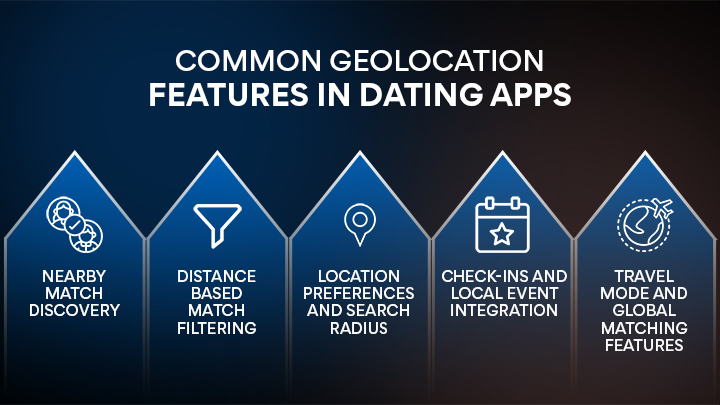
Geolocation technology helps dating apps offer useful features that make finding and connecting with people much easier. These features help users discover suitable matches nearby, meet people in their area, and enjoy a more personalized dating experience. By using location data smartly, dating apps can improve user satisfaction and make the platform more engaging.
Nearby Match Discovery
Nearby match discovery is one of the most common features in dating apps. It shows users profiles of people who are located close to them. The app uses GPS or other location tools to find nearby users and suggest them as potential matches. This feature makes it easier for users to meet in real life and connect with people in their local area.
Distance-Based Match Filtering
Distance-based match filtering gives users more control over their matching experience. Users can choose a distance range, such as 10, 25, or 50 kilometers, and the app will only show profiles within that range. This helps users find matches that are easier and more practical to meet. It also makes match recommendations more relevant by reducing long-distance suggestions.
Location Preferences and Search Radius
Many dating apps let users customize their location settings and search radius. Some people prefer matches only within their city, while others are open to meeting people from nearby towns or regions. These flexible settings allow users to adjust their experience based on their personal preferences and dating goals, leading to better match results.
Check-Ins and Local Event Integration
Some dating apps include check-in features and information about local events. Users can share events they are attending, such as social gatherings or community activities. This helps people connect with others who have similar interests and may be attending the same events. It creates more natural opportunities for meaningful conversations and connections.
Travel Mode and Global Matching Features
Travel mode allows users to search for matches in other cities or countries before they travel there. This feature is useful for frequent travelers, remote workers, and people interested in meeting individuals from different locations. Global matching helps users expand their dating opportunities and build connections beyond their current area.
Visit: Hire Dating App Developer
Privacy Concerns Related to Geolocation
Geolocation features make dating apps more useful by helping users find people nearby. However, they also bring some important privacy and safety concerns. Dating apps collect location information to suggest matches and improve the user experience. If this data is not protected properly, it can create risks for users. That is why developers need to handle location data carefully and put strong privacy measures in place.
Risks of Sharing Exact Locations
Sharing an exact location can be risky. If other users can see a person’s precise location, they may be able to figure out where that person lives, works, or regularly spends time. This can affect personal privacy and even create safety concerns. To avoid this, many dating apps show only an approximate distance instead of the exact location. This helps users discover nearby matches while keeping their private information safe.
User Tracking and Data Misuse
Location data can reveal a lot about a person’s daily life. If a dating app collects too much location information or stores it without proper protection, it could be misused by advertisers, third parties, or unauthorized users. Many people may feel uncomfortable knowing that their movements and travel habits could be tracked. To build trust, dating apps should collect only the location data they truly need and clearly explain how it will be used.
Stalking and Safety Concerns
Stalking is one of the biggest risks linked to geolocation features. Some users may try to use location details to identify, follow, or find someone in real life. Even simple distance information can sometimes help people estimate a user’s location when combined with other details. To improve safety, dating apps should provide privacy settings, blocking options, and tools that allow users to hide or limit their location visibility.
Location Data Breaches and Cybersecurity Risks
Location information is valuable, which makes it attractive to cybercriminals. If a dating app suffers a data breach, sensitive location records could be exposed. This may lead to privacy issues, identity theft, or other security problems. To protect users, dating apps should use strong encryption, secure storage systems, regular security checks, and strict access controls. These measures help keep location data safe and maintain user trust.

Best Practices for Protecting User Privacy
Protecting user privacy is one of the most important parts of dating app development. Since geolocation features use location data, users need to feel safe and secure while using the app. Good privacy practices help prevent security problems, build trust, and create a better user experience.
Using Approximate Instead of Exact Locations
A simple way to improve privacy is by showing an approximate location instead of an exact one. Rather than sharing a user’s precise location, the app can display a general area or distance range. For example, it can show that a match is within 5 kilometers instead of revealing their exact address. This allows users to find nearby matches while reducing the risk of being tracked or identified.
Giving Users Control Over Location Sharing
Users should always be able to decide how their location information is shared. Dating apps should offer easy-to-use settings where users can turn location access on or off whenever they want. Some people may only want to share their location while using the app, while others may prefer to keep it hidden. Giving users these choices helps them feel more comfortable and secure.
Transparent Privacy Policies
Users should clearly understand how their location data is collected and used. A transparent privacy policy explains what information is gathered, why it is needed, and who can access it. Using simple and easy-to-read language helps users make informed decisions about sharing their data.
Secure Storage and Encryption of Location Data
Location data should always be protected with strong security measures. Encryption helps keep information safe while it is being sent and stored. Developers should also use secure servers, access controls, and regular security updates to prevent unauthorized access to sensitive user data.
Compliance with Privacy Regulations
Dating apps must follow privacy laws such as GDPR, CCPA, and other regional regulations. Following these rules ensures that user data is handled safely and legally. It also helps build trust and strengthens the app’s reputation among users.
Read also: The Technology Behind Popular Dating Applications
UX Considerations for Geolocation Features
A great user experience (UX) plays an important role in the success of geolocation features in dating apps. Location-based matching helps users find people nearby, but the way these features are designed can affect how comfortable and satisfied users feel. To create a positive experience, developers should make geolocation features simple, clear, and respectful of user privacy. When users feel safe and informed, they are more willing to share their location and enjoy better match suggestions.
Simple and Clear Permission Requests
Asking for location access should be done in a clear and user-friendly way. Instead of requesting permission as soon as the app opens, the app should first explain why location information is needed and how it will help users find better matches. When users understand the benefits, they are more likely to allow location access and feel comfortable using the feature.
User-Friendly Location Settings
Users should have full control over their location preferences. Dating apps should offer simple settings where users can easily change their search radius, turn location sharing on or off, and decide who can view location-related details. Easy controls make users feel safer and improve the overall experience.
Personalized Matching Experiences
Location data helps dating apps recommend more suitable matches. When location information is combined with user interests, preferences, and activity, the app can suggest profiles that are more relevant. This creates a more personal experience and increases the chances of meaningful connections.
Building Trust Through Transparency
Trust is very important in dating apps. Users should clearly understand how their location data is collected, stored, and used. Clear privacy policies, permission explanations, and visible privacy settings help users feel confident about using location-based features.
Balancing Accuracy and Privacy
Developers need to find the right balance between accurate matching and user privacy. Accurate location data can improve match recommendations, but sharing too much information may create safety concerns. Showing approximate distances, limiting location visibility, and offering privacy controls can help protect users while still providing the benefits of geolocation features.

Designing Safe Location Experiences
Keeping users safe while using location features is very important in dating apps. One simple way to improve safety is by limiting the location details that are shown. Instead of displaying an exact distance or location, the app can show an approximate range. This helps protect users from being easily identified or tracked.
Blocking and reporting tools are also important for user safety. If someone behaves suspiciously, sends unwanted messages, or creates a fake profile, users can quickly report them. They can also block people they do not want to interact with.
Another helpful feature is safety education. Dating apps can share simple tips about staying safe online, managing privacy settings, and meeting new people in public places. This gives users the knowledge they need to make safer choices.
Anonymous browsing is another great privacy feature. It allows users to look through profiles without revealing who they are or what profiles they have viewed. Together, these features help create a dating experience that feels safer, more private, and more trustworthy.
Read also: Cost to Develop an App Like Hinge
Geolocation Challenges in Dating App Development
Geolocation is one of the most useful features in dating apps, but it also comes with a few challenges. To provide accurate matches, smooth performance, and a good user experience, developers need to handle these issues carefully.
GPS Accuracy Issues
GPS is helpful, but it is not always 100% accurate. Things like tall buildings, weak network signals, bad weather, or being indoors can affect location accuracy. Because of this, users may sometimes see incorrect distances or receive match suggestions from slightly different locations. To improve accuracy, developers often combine different location technologies and use optimization methods.
Battery Consumption and Performance
Location tracking can use a lot of battery power, especially when it runs continuously in the background. Frequent location updates may also affect a device’s performance. To prevent this, developers should use smart tracking techniques and reduce unnecessary background location updates whenever possible.
Fake Location and Spoofing Problems
Some users use fake GPS apps to change their location and appear in places where they are not actually present. This is called location spoofing. It can create poor-quality matches, reduce trust, and sometimes be used for scams or misleading activities. To address this issue, dating apps should use detection tools and verification systems to identify suspicious location behavior.
Managing User Expectations
Users want location-based features to be fast, accurate, and secure. However, technical limitations can sometimes cause small delays or location errors. Developers should clearly explain how these features work and set realistic expectations about accuracy. Clear communication helps users understand the technology better and creates a more satisfying experience.
By solving these challenges, dating apps can offer a safer, more reliable, and more user-friendly geolocation experience.
Read also: Cost to Develop an App Like Grindr
Technologies Used for Geolocation in Dating Apps
Geolocation features in dating apps use different technologies that work together to find a user’s location and suggest nearby matches. These technologies help users connect with people around them, improve match recommendations, and make the overall dating experience more convenient. Understanding these technologies is important when building a reliable and effective dating app. Businesses looking to implement advanced location-based features often choose to hire dating app developer professionals with expertise in geolocation technologies and mobile app development.
GPS-Based Tracking
GPS (Global Positioning System) is one of the most widely used location technologies in dating apps. It uses satellites to find the exact location of a user’s device. This makes it very useful for features like finding nearby matches and setting distance preferences. However, GPS may not work as accurately inside buildings or in places where satellite signals are weak.
Wi-Fi and Network-Based Location Services
When GPS signals are not strong enough, dating apps can use nearby Wi-Fi networks and mobile towers to estimate a user’s location. This method is usually faster and uses less battery power than GPS. While it may not be as precise, it helps apps continue providing location-based features, especially indoors or in busy city areas where GPS can struggle.
Geofencing Technology
Geofencing creates virtual boundaries around specific locations. When a user enters or leaves one of these areas, the app can automatically trigger notifications or actions. In dating apps, geofencing can be used to recommend local events, send nearby activity alerts, or offer location-based promotions. This helps create a more interactive and personalized experience.
Mapping and Location APIs
Mapping and location APIs give developers the tools needed to display maps, calculate distances, and manage location data. Instead of building these features from scratch, developers can use APIs to add map services, location searches, route calculations, and real-time updates. This makes it easier to provide accurate and user-friendly location features within dating apps.

Future Trends in Geolocation for Dating Apps
Geolocation technology is getting better every year, and it is creating new possibilities for dating apps. In the future, dating apps will be able to offer more personalized, safe, and enjoyable experiences. As users expect better features, developers are using new technologies to improve matchmaking while also protecting user privacy. Some exciting trends are expected to shape the future of location-based dating apps.
AI-Powered Location-Based Recommendations
Artificial Intelligence (AI) is making location-based matching smarter. Instead of matching people only based on distance, AI can also look at user interests, preferences, behavior, and app activity. This helps the app suggest more compatible people. It also reduces the number of irrelevant match suggestions. Over time, AI can learn from user actions and adjust recommendations as preferences change.
Context-Aware Matching
Future dating apps may go beyond location and consider the user’s current situation as well. Along with location, the app could use information such as the time of day, nearby events, favorite places, or shared activities. For example, people attending the same event or visiting similar places may be matched because they have common interests. This can make matches feel more natural and relevant.
Enhanced Privacy Technologies
Privacy is becoming more important for dating app users. To keep user information safe, future dating apps may use stronger security methods such as advanced encryption, anonymous location sharing, and privacy-focused data processing. These technologies can help users find matches without revealing their exact location, giving them more control over their personal information.
Integration with AR and Real-World Experiences
Augmented Reality (AR) could bring exciting new features to dating apps. Users may be able to join AR-guided events, interactive meetups, or virtual experiences connected to real-world locations. These features can make dating more fun and engaging while helping people connect in new ways. As AR and geolocation technology continue to improve, dating apps may offer more immersive and meaningful experiences.
Get a Free Quote: Dating app development company in USA
Conclusion
Geolocation has become an important feature in modern dating apps. It helps users find people nearby, making it easier to connect and build meaningful relationships. By using location information, dating apps can suggest more relevant matches, support real-life meetups, and create a more personalized experience for users.
At the same time, privacy and security are just as important. While users want accurate location-based match suggestions, they also want their personal information to stay safe. This is why developers must handle location data carefully and responsibly to earn users’ trust.
There are several ways to make geolocation features safe and user-friendly. Dating apps can use approximate locations instead of exact ones, allow users to control their privacy settings, protect data with strong encryption, provide blocking and reporting options, and follow data protection laws.
In the future, new technologies like artificial intelligence, context-aware matching, advanced privacy tools, and augmented reality will make location-based dating even better. These technologies can help create more accurate, engaging, and secure matchmaking experiences.
In the end, the most successful dating apps are those that offer personalized matching while keeping user privacy a top priority. By focusing on safety, transparency, and trust, developers can build platforms that encourage meaningful connections and long-term user engagement.
FAQs
Geolocation in dating apps uses technologies such as GPS, Wi-Fi, mobile networks, and location APIs to determine a user’s approximate location. This information helps the app suggest nearby matches and provide location-based features like distance filtering and local match discovery.
Yes, it can be safe when the app follows proper privacy and security practices. Most modern dating apps display approximate distances instead of exact locations and offer privacy controls that allow users to manage how their location information is shared.
Geolocation improves match relevance by connecting users with people nearby. It increases the chances of real-life meetings, enhances local connections, and creates a more personalized and engaging dating experience.
Some common risks include user tracking, stalking, unauthorized access to location data, and data breaches. Dating apps can reduce these risks through encryption, privacy settings, location obfuscation, and secure data storage practices.
Yes. Most dating apps allow users to adjust their search radius, hide their location, disable location sharing, or choose who can see location-related information. These controls help users balance privacy and matchmaking preferences.

Related Posts

10 Key Applications of AI in the Food Industry (2026)
Walk into any restaurant kitchen, grocery warehouse, or food delivery control room today, and you will find something quietly running...
Read More

How To Develop An App Like YouTube Music: A Complete Guide
Music is now a part of our everyday life. People listen to songs while getting ready in the morning, working,...
Read More

Must-Have Features in Fintech Apps & Digital Financial Platforms
Think about how often you use your phone to pay bills, send money, shop online, or check your bank balance....
Read More


 Verified Review




 +44 7427829444
 71-75, Shelton Street, Covent Garden, London, United Kingdom, WC2H 9JQ