

Share this article


How To Develop An App Like YouTube Music: A Complete Guide
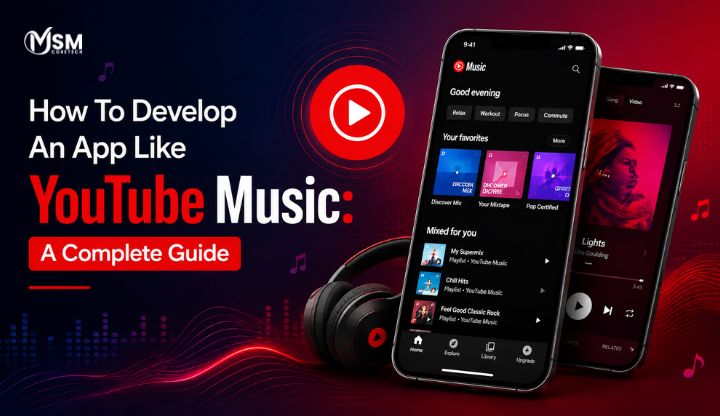
Music is now a part of our everyday life. People listen to songs while getting ready in the morning, working, traveling, or exercising. Music streaming apps have made it easy for users to enjoy their favorite songs anytime and anywhere.
The growth of music streaming also creates a big business opportunity. According to the IFPI Global Music Report 2026, the global recorded music market generated $31.7 billion in revenue in 2025, which was a 6.4% increase from the previous year. Streaming made up 69.6% of global recorded music revenue, while the number of paid streaming subscribers reached 837 million worldwide.
These numbers show that music streaming is growing quickly and has strong potential for businesses looking to build their own music streaming app.
This growth makes apps like YouTube Music a good example for businesses that want to build their own music streaming app. YouTube Music brings music discovery, personalized recommendations, playlists, search, and different listening options together in one app.
For businesses, YouTube Music also gives some useful ideas. A good music app needs more than just a big music library. It should be easy to use, offer fast search, give smart music recommendations, provide smooth and reliable streaming, and have features that make users want to keep using the app.
In this guide, we will explain the main steps, important features, technology, development costs, and business ideas you need to consider when building an app like YouTube Music.
Why Build an App Like YouTube Music?
Music is no longer something people listen to only in their free time. It has become part of everyday life. People listen to songs while working, traveling, exercising, studying, or relaxing. Because of this growing habit, music streaming apps have a strong business market.
For businesses, building an app like YouTube Music can create new ways to connect with music listeners. A good music streaming platform can bring users, artists, music labels, and advertisers together in one place. Artists can use the app to reach new listeners, share their songs, grow their fan base, and learn more about what their audience likes.
There are also many ways to make money from a music streaming app. Businesses can earn through paid subscriptions, ads, premium features, artist promotions, and special user plans. A free plan can help attract more users, while paid plans can offer benefits such as an ad-free experience, better sound quality, and offline music listening.
Another important reason to build a music app is personalization. Users do not want to spend a lot of time looking for songs. They want the app to understand what they like and suggest songs they may enjoy. Features like smart playlists, personal music suggestions, favorite artists, and listening history can make the app more fun and easy to use.
With the right features, smooth music streaming, helpful recommendations, and a clear business plan, a music streaming app can become more than just an app for playing songs. It can become a part of users’ daily lives and a companion they enjoy using every day.
Also read: How to Develop an App Like eSound Music
Key Features of a Music Streaming App
A good music streaming app should do more than just play songs. It should make listening to music easy, smooth, and enjoyable. If you want to develop an app like YouTube Music, choosing the right features can make your app more useful and engaging.
User Features
The user side of the app should be simple and easy to use. Users should be able to create an account, log in, and set up their music profile. A quick search feature can help users easily find songs, artists, albums, and playlists.
Users should also be able to create their own playlists, save favorite songs, follow artists, and get music suggestions based on what they listen to.
Other useful features can include offline music, background playback, lyrics, audio quality settings, and personalized music recommendations. Push notifications can tell users about new songs, albums, and updates from their favorite artists. Social sharing can also let users share songs and playlists with friends.
Admin Features
The admin panel helps manage the whole platform from one place. Admins can manage users, artists, songs, albums, playlists, and uploaded content. They can also check subscriptions, payments, and user activity.
Analytics and reports help admins see popular songs, active users, listening habits, and revenue. This information helps them improve the platform and make better business decisions. Admins can also manage content and user accounts to keep the platform safe, clean, and well-organized.
Advanced Features to Add
A music app should do more than just play songs. The best part is when the app understands what users like and suggests what they may want to hear next. Adding smart and useful features can make the app more enjoyable and encourage users to keep coming back.
AI-Powered Music Recommendations
AI can learn from a user’s listening habits, favorite artists, music genres, skipped songs, liked songs, and saved tracks. Using this information, the app can suggest songs that match the user’s taste. For example, if a user often listens to relaxing music at night, the app can suggest similar relaxing songs around the same time.
Voice Search
Voice search makes finding music fast and easy. Users can simply say an artist’s name, song name, album, or something like “play some relaxing songs.” This is helpful when users are driving, cooking, working out, or cannot type on their phone.
AI-Generated Playlists
Making playlists by hand can take a lot of time. AI makes this easier by creating playlists based on a user’s mood, activity, or music taste. For example, users can ask for a “morning workout playlist” or “songs for a road trip,” and the app can create one in just a few seconds.
Smart Discovery
Smart discovery helps users find new music easily. The app can recommend new artists, popular songs, albums, and music genres based on what users listen to. This makes music discovery more personal instead of random. It also helps new and smaller artists reach more listeners and keeps the app interesting.
Social Listening
Music is more enjoyable when users can share it with friends. Social listening allows users to create shared playlists, follow friends, share songs, and listen to music together. You can also add features like comments, reactions, and activity feeds to make the app more social and engaging.
Live Streaming
Live streaming helps artists connect with their listeners in real time. Artists can host live concerts, music launches, interviews, Q&A sessions, or behind-the-scenes events. Users can watch these events live, share comments, and support their favorite artists.
Podcasts and Audiobooks
Adding podcasts and audiobooks can make a music app more useful as an all-in-one audio platform. Users can listen to interviews, stories, educational shows, and other spoken content in the same app. It also gives businesses more content to offer and new ways to attract more users.
Also Read: Challenges of Building a Music Streaming Mobile App
Personalized Notifications
Nobody likes getting too many notifications. Personalized notifications make alerts more useful and relevant. For example, the app can tell users when their favorite artist releases a new song, when a new playlist is available, or when a live event is coming up. It can also send music suggestions based on what users usually listen to.
A reliable music streaming app development company can help you plan and add these features based on your audience and business goals. Together, these features can make your music app feel more personal, active, and enjoyable. With the right planning, they can also increase user engagement and help your app stand out in the competitive music streaming market.
How to Develop an App Like YouTube Music
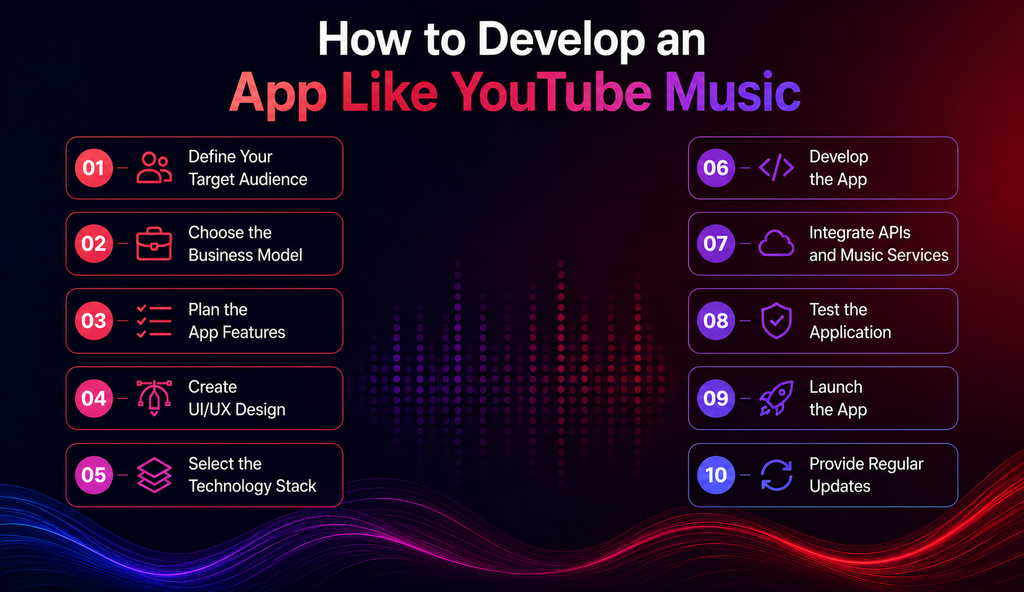
Building a music streaming app is not just about adding songs to one place. The main goal is to create an app that people enjoy using and want to come back to every day. If you want to build an app like YouTube Music, you need the right features, simple design, suitable technology, and a clear business plan.
1. Define Your Target Audience
First, decide who will use your app. Your users could be music lovers, casual listeners, artists, podcast fans, or people who like finding new songs. Understanding your target users will help you choose the right features, content, and pricing plans for your app.
2. Choose the Business Model
First, decide how your app will make money. You can offer a free plan with ads and a paid plan without ads. You can also use monthly subscriptions, family plans, artist promotions, or premium content. Choose a model that is good for your users and your business.
3. Plan the App Features
Make a list of the features your users need. Basic features can include sign-up, music search, playlists, favorites, music recommendations, lyrics, downloads, and background playback. Later, you can add advanced features like AI recommendations, voice search, social listening, and personalized playlists.
4. Create UI/UX Design
A music app should be easy to use from the very first tap. Keep the design clean and simple so users can easily search for songs, play music, make playlists, and find artists. Keep important buttons easy to see and make sure the app works well on different screen sizes.
5. Select the Technology Stack
Choose the right technologies based on what your app needs. Flutter or React Native can be used to build the app for different platforms. For the backend, you can use Node.js, Python, or Java. You will also need a good database, cloud storage, streaming tools, APIs, and security tools to make the app work properly and safely.
6. Develop the App
Once the design and technology are ready, you can start developing the app. Developers build the user app, backend, admin panel, and other important parts. A clear app development process helps keep the project organized and makes it easier to manage time, features, and costs. It is usually better to start with an MVP that includes the most important features instead of building everything at once.
Also Read: How AR/VR in Music Apps is Transforming the Industry
7. Integrate APIs and Music Services
APIs help connect your app with third-party services. You may need APIs for payments, notifications, login, analytics, search, and other features. Most importantly, make sure you have the right music licenses and permissions before making songs available to users.
8. Test the Application
Testing helps find and fix problems before users face them. Check important features like music playback, search, login, payments, downloads, notifications, and the app on different devices. Also, test the app with a slow internet connection to make sure songs play smoothly without stopping or taking too long to load.
9. Launch the App
Once testing is complete, get the app ready for launch on platforms like Google Play and the App Store. Create a good app listing with clear screenshots and explain the main benefits of the app. You can also use social media and other marketing channels to attract your first users.
10. Provide Regular Updates
Launching the app is just the beginning. Keep checking user feedback and how well the app is working. Fix bugs, improve speed, add new features, and update security regularly. You can also study user listening habits to make music recommendations better.
A successful music streaming app grows over time. By knowing your audience, adding useful features, providing smooth streaming, and making regular improvements, you can build a platform that keeps users coming back to listen again and again.
Technology Stack for a Music Streaming App
A good music streaming app is not just about songs and playlists. What users see on the screen is only one part of the app. Many technologies work behind the scenes to keep the music playing smoothly. Choosing the right technology stack can make your app fast, secure, and ready to handle more users.
Here is a quick look at the main technologies you may need:
| Technology | Common Options | Main Purpose |
|---|---|---|
| Frontend | Flutter, React Native, Swift, Kotlin | Build the app interface |
| Backend | Node.js, Python, Java | Handle app logic and users |
| Database | PostgreSQL, MySQL, MongoDB | Store app data |
| Cloud Storage | AWS S3, Google Cloud | Store music and media files |
| Streaming | HLS, MPEG-DASH, CDN | Deliver music smoothly |
| APIs | Spotify API, YouTube APIs, custom APIs | Connect external services |
| Payments | Stripe, PayPal, Razorpay | Manage subscriptions |
| Notifications | Firebase FCM, APNs | Send alerts and updates |
| AI/ML | Python, TensorFlow, recommendation models | Personalize music suggestions |
Frontend Technologies
The frontend is the part of the app that users see and use. It includes screens like the home page, music player, search section, artist profiles, and playlists.
For apps that work on both Android and iOS, developers often use Flutter or React Native. These tools allow developers to use one codebase for both platforms. For native apps, developers can use Swift for iOS and Kotlin for Android.
Backend Technologies
The backend works in the background of the app. It handles user accounts, playlists, subscriptions, music data, recommendations, and other important app functions.
Node.js, Python, Java, and .NET are commonly used to build the backend. The best choice depends on the app’s size, features, and the number of users it is expected to support.
Database
A music streaming app stores a lot of information, such as user profiles, playlists, song details, listening history, subscriptions, and artist information.
PostgreSQL and MySQL are good for managing this structured data. MongoDB can be used when the data needs more flexibility. Redis can also store frequently used data to help the app respond faster.
Cloud Storage
Music files can take up a lot of space, especially when an app provides high-quality audio. Cloud services like Amazon Web Services (AWS) and Google Cloud help store and manage these large music files.
Cloud storage also makes it easy to add more storage as the number of songs and users increases.
Streaming Technology
Smooth playback is very important for a music app. Technologies like HTTP Live Streaming (HLS) and MPEG-DASH send audio in small parts instead of loading the whole file at once. This helps music play smoothly.
A Content Delivery Network (CDN) can also make playback better. It delivers music from servers that are closer to users, which can reduce buffering and provide a smoother listening experience.
Also Read: How AI Is Shaping the Future of Music Streaming Apps
APIs
APIs help different systems work and communicate with each other. A music streaming app can use APIs for music catalogs, artist details, search, analytics, maps, login, and other third-party services.
Developers can also create custom APIs to connect the app with its own backend.
Payment Gateways
If your app offers paid subscriptions, you need a secure payment system. Stripe, PayPal, and Razorpay are some payment options businesses can use.
The payment system should support subscription plans, automatic renewals, payment history, and secure transactions.
Push Notifications
Push notifications help bring users back to the app. Firebase Cloud Messaging (FCM) can be used to send notifications on Android and across different platforms, while Apple Push Notification service (APNs) is used for iOS.
You can send notifications about new songs, playlist updates, subscription renewals, or personalized music recommendations.
AI and Machine Learning Tools
AI can make a music app more personal for each user. It can learn from listening habits, favorite artists, skipped songs, and playlists to suggest songs users may like.
Tools like Python and TensorFlow, along with machine learning recommendation models, can help build these smart features. As users continue using the app, the system can learn from their behavior and give better music suggestions.
Choosing the right technology stack from the beginning can make your music streaming app easier to manage, faster to grow, and ready for new features in the future.
Music Licensing and Copyright
Building a music streaming app is exciting, but you cannot just add songs and start streaming them. Music has legal rights, so getting the proper permission is an important part of launching an app like YouTube Music.
Why Music Licensing Is Important
Music licensing gives you legal permission to stream songs on your platform. Without the right licenses, your app could face copyright claims, fines, song removal, or other legal problems. Before adding any music, make sure you know who owns the rights and what you are allowed to do with each song.
Types of Music Rights
A song can have different types of rights. These can include recording rights, publishing rights, performance rights, and synchronization rights. For a music streaming app, recording and publishing rights are especially important. The licenses you need will depend on your location and how you plan to use the music on your platform.
Working With Artists and Record Labels
You can work directly with independent artists or make agreements with record labels and music distributors. These agreements should clearly cover music streaming permissions, payment terms, who owns the content, and the countries where the music can be available.
Copyright Protection
Your app should have strong security to stop licensed music from being copied or shared illegally. Secure storage, access controls, encryption, and Digital Rights Management (DRM) can help protect the music.
Legal Considerations
Keep all your music licenses and records properly organized. Follow copyright laws in every market where your app is available, and have a clear process for handling copyright complaints. Working with a legal expert can also help you avoid expensive legal problems as your music library grows.
Also Read: Best Music Streaming App Features To Boost User Engagement
How Does a Music Streaming App Earn Money?
A music streaming app can make money from every song played, subscription, and user activity. The main goal is to give users a great listening experience while using the right ways to earn revenue.
Here are some common ways a music streaming app like YouTube Music can make money:
Premium Subscriptions
Premium subscriptions are one of the main ways music streaming apps earn money. Users can pay every month or year to get extra features and a better listening experience.
These features can include ad-free music, offline downloads, better audio quality, unlimited skips, and background playback. Apps can also offer different subscription plans so users can choose the one that best fits their needs.
Advertisements
A free music plan can bring in many users. The app can show audio, video, banner, or display ads to these users. Businesses pay the app to show their ads and reach more people. This way, users can listen to music for free, while the app still makes money.
Freemium Plans
The freemium model lets users use the basic version of the app for free. However, there may be some limits, such as ads or fewer song skips. Users who want more features and fewer limits can upgrade to a paid plan. This model works well because users can try the app for free before deciding to pay.
Family Plans
Family subscriptions let more people use one paid account. A family plan may let several users create their own profiles and use premium features. The cost per person is usually lower, but the platform can earn more from the full family subscription.
Artist Promotions
Artists and music labels can pay to promote their new songs, albums, or music videos. A streaming platform can show these promoted tracks in playlists, recommendations, or discovery sections. This gives the platform another way to earn money while helping artists reach more listeners.
In-App Purchases
An app can let users buy extra things directly inside the platform. These may include special content, exclusive music releases, premium features, digital items, or access to special music events. Users only pay for the extras they want to use.
Brand Partnerships
Music apps can work with brands to create special campaigns and experiences. For example, a headphone brand can sponsor a playlist, or a company can support an online music event. These partnerships can help the app earn extra money without relying only on subscriptions.
Also Read: Cost to Build a Music Streaming App Like Pandora
How Much Does It Cost to Build an App Like YouTube Music?
Want to create a smooth music streaming experience? The first thing you need to plan is your budget. The cost to build an app like YouTube Music depends on the features, design, technology, and level of customization you choose. Knowing the app development cost early can help you plan your project better and avoid unexpected expenses.
A simple music streaming app may cost less to build. However, an advanced app with AI recommendations, offline listening, smart playlists, and real-time features can need a much bigger budget.
| App Type | Estimated Cost | Best For |
|---|---|---|
| Basic | $10,000–$15,000 | Simple music streaming |
| Mid-Level | $15,000–$25,000 | Growing music platforms |
| Advanced AI-Powered | $25,000–$75,000+ | Feature-rich streaming apps |
Basic Music Streaming App
A basic music streaming app is a good choice for businesses that want to test their idea. It can include features like user registration, music search, audio streaming, artist profiles, playlists, favorites, and a simple admin panel.
The development cost can range from $10,000 to $15,000, depending on the design and technology used.
Mid-Level Music Streaming App
A mid-level music streaming app comes with more features and gives users a better listening experience. It can include personalized playlists, music downloads, lyrics, subscriptions, push notifications, different audio quality options, and payment integration.
The development cost for this type of app is usually around $15,000 to $25,000. The final cost depends on the number of features you need and the platforms you want to support.
Advanced AI-Powered Platform
If you want to build a more powerful app like YouTube Music, you can add advanced features such as AI-based music recommendations, smart search, voice commands, AI-generated playlists, social listening, analytics, and advanced content management.
An advanced app can cost around $25,000 to $75,000+ or more. The total cost can increase because of AI development, cloud services, music streaming technology, and third-party integrations.
Main Factors Affecting Development Cost
Many things can affect the final cost of app development. These include the app’s features, UI/UX design, number of platforms, technology used, backend complexity, AI features, music licensing, third-party APIs, security, cloud storage, and the location of the development team.
You should also plan for ongoing costs after the app is launched. Server costs, maintenance, updates, licenses, and customer support can increase your expenses over time.
Before starting development, it is a good idea to list the features you really need and decide on a clear budget. This will help you build the right version of your app without spending extra money on features you may not need at the start.
Also Read: Cost to Build a Music Streaming App Like Shazam
Challenges in Building a Music Streaming App
Building a music streaming app may sound exciting, but there is a lot of work happening behind the scenes. You need to deal with several challenges, such as getting music rights and making sure songs play smoothly without problems.
Music Licensing
Music licensing is one of the biggest challenges when building a music streaming app. You cannot simply add popular songs to your app without getting permission. You may need to make agreements with artists, music labels, publishers, and other music rights holders.
These agreements can also increase your costs and decide which songs you can offer in different countries. Handling music licensing early can help you avoid copyright issues and other legal problems later.
Content Storage
A music streaming app can have thousands or even millions of songs. Storing all this content needs reliable cloud storage and a strong backend system. You also need to store album covers, artist details, playlists, lyrics, and other content. A good storage system helps users access songs quickly without delays.
Streaming Performance
No one likes it when a song stops or buffers every few seconds. Smooth streaming is important for a good user experience. Your app should play music quickly, even when many users are listening at the same time. Using CDNs, adaptive streaming, caching, and scalable servers can reduce buffering and make music playback smoother.
Competition
The music streaming market is already full of popular apps. So, competing only by offering more songs may not be enough. Your app needs something special that makes it stand out. This could be better music recommendations, unique social features, support for independent artists, exclusive content, or a better experience for a specific group of users.
If you plan for these challenges from the beginning, you can build a music streaming app that is easy to use, reliable, secure, and enjoyable for users.
Tips to Make Your Music Streaming App Successful
Building a music streaming app is just the beginning. The real challenge is getting people to use your app every day, spend more time on it, and come back again. If you want your app to compete with popular platforms like YouTube Music, focus on what users really need instead of adding too many features at once.
Focus on User Experience
Make your app simple, clean, and easy to use. Users should be able to quickly search for a song, play music, create a playlist, or discover a new artist without any confusion. Also, make sure the app works smoothly on different devices and screen sizes. A simple and easy design can make the music listening experience much better.
Offer Personalized Recommendations
People like listening to music that fits their mood and taste. Use their listening history, favorite artists, saved songs, and playlists to suggest songs they may enjoy. Smart recommendations can also help users find new music without spending a lot of time searching. As users listen more, the app should learn their preferences and make better suggestions over time.
Keep Streaming Fast and Reliable
No one likes music that stops or buffers again and again. Make fast and stable streaming a top priority. Use reliable servers, cloud services, and the right streaming technology to reduce buffering. You can also let users change the audio quality based on their internet speed. This can make the app easier and more comfortable to use.
Add Useful Features Step by Step
You do not need to add every feature when you first launch your app. Start with basic features like search, playlists, favorites, music streaming, and recommendations. As more people use the app, you can add features like lyrics, offline listening, voice search, social sharing, and AI-powered playlists based on what users need.
Use Data to Understand Your Users
Users show you what they like through the way they use your app. See which songs they play, where they stop listening, which playlists they save, and which features they use the most. This data can help you understand what is working and what needs improvement. You can then make the app better based on real user behavior instead of guessing what users want.
Keep Content Fresh
Fresh content gives users a reason to come back. Add new songs, albums, playlists, podcasts, and other audio content regularly. You can also feature trending songs, new artists, seasonal playlists, and music based on current events or popular moods. A fresh and active content library makes the app more interesting and gives users a reason to open it every day.
The simple rule is: make listening easy, make discovering new music fun, and give users a reason to return. When all these small things work well together, your music streaming app can build loyal users and grow over time.
Also Read: 10+ Best Music Streaming Apps in 2026 for Every Music Lover
Why Choose MSM CoreTech to Develop an App Like YouTube Music?
A good music app is more than just a place to play songs. It should make listening easy, help users find new music, and make every tap simple. This is where MSM CoreTech can help turn your music app idea into a real and useful product.
Our team handles the complete app development process, from planning and UI design to development, testing, and launch. As an experienced mobile app development company, we build music streaming apps with useful features like user profiles, music search, playlists, favorites, subscriptions, audio streaming, music recommendations, and admin controls.
We also focus on making the app simple and easy to use. Users can quickly find songs, artists, albums, and playlists without any confusion. If you need smarter features, we can also add AI recommendations, personalized playlists, voice search, and other useful tools.
Security and smooth performance are also important to us. We use the right technologies and trusted APIs to help your app manage users, music, payments, and streaming without problems.
Every business has different needs and goals. That’s why we build the app based on your target users, required features, budget, and future growth plans. Whether you want to start with a simple music app or create a large platform like YouTube Music, MSM CoreTech can help you build, improve, and grow your idea.
Conclusion
Building an app like YouTube Music is not just about creating a music player. It is about building a smooth, enjoyable, and reliable place where people can discover and enjoy their favorite songs. A good plan is the first step. You need to understand your audience, choose the right features, prepare a clear budget, and decide how your app will make money.
The technology you choose also plays a big role. A strong backend, secure database, fast streaming system, cloud storage, and smart recommendation tools can help your app handle more users without slowing down. Simple and clean design is equally important because users should be able to find songs, create playlists, and enjoy music without confusion.
Music licensing should never be ignored. Before launching, make sure you have the proper rights and agreements to stream music legally. This can help you avoid copyright problems later.
With the right planning, technology, design, and legal support, a music streaming app can become more than just another app in the market. It can build a loyal user base, create different income sources, support artists, and generate long-term business value. The key is to start with a clear idea and keep improving the experience as your audience grows.
FAQs
The cost depends on features, design, technology, music licensing, and app complexity.
A music streaming app may take a few months, depending on its features, design, and development needs.
Key features include music search, playlists, recommendations, offline mode, lyrics, subscriptions, and secure music streaming.
Apps can earn through subscriptions, ads, premium plans, in-app purchases, artist promotions, and brand partnerships.

Related Posts

10 Key Applications of AI in the Food Industry (2026)
Walk into any restaurant kitchen, grocery warehouse, or food delivery control room today, and you will find something quietly running...
Read More
Must-Have Features in Fintech Apps & Digital Financial Platforms
Think about how often you use your phone to pay bills, send money, shop online, or check your bank balance....
Read More
15+ Top Video Live Streaming App Ideas for Business in 2026
Live streaming has become an easy way for businesses to connect with people in real time. Whether users are watching...
Read More


 Verified Review




 +44 7427829444
 71-75, Shelton Street, Covent Garden, London, United Kingdom, WC2H 9JQ