

Share this article


How to Develop an App Like eSound Music: A Complete Guide
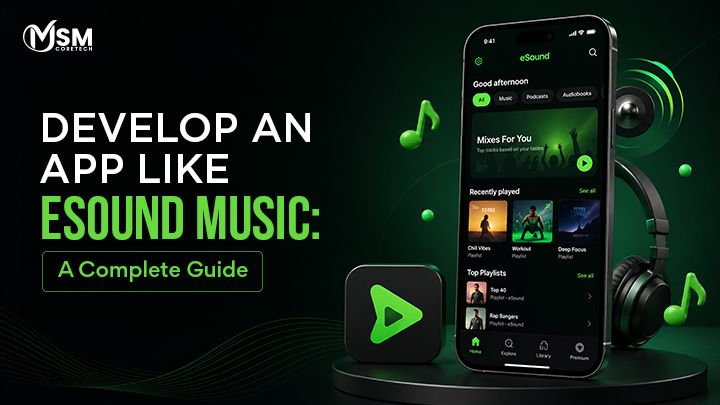
Imagine having millions of songs that you can listen to anytime and anywhere with just a few taps. That is why music streaming apps like eSound Music are becoming more popular every day. Instead of downloading songs, users can play their favorite music instantly, create their own playlists, and discover new songs and artists all in one app.
eSound Music is a popular music streaming app that lets users listen to a huge collection of songs for free. It offers useful features like personalized playlists, smart music recommendations, offline listening, and a simple, easy-to-use interface. These features make listening to music more enjoyable and convenient while also helping artists share their music with more people.
Because of this fast growth, many startups and businesses are investing in music streaming app development company. These apps help businesses earn money through subscriptions, ads, premium plans, and in-app purchases. They also help companies connect with users, keep them engaged, and build long-term brand value. By developing a music streaming app with useful features and an easy-to-use design, businesses can enter a fast-growing digital market, reach millions of music lovers around the world, and build a successful and scalable business.
What Is eSound Music?
eSound Music is a popular music streaming app that allows users to listen to millions of songs for free. It is a good choice for people who want to enjoy music without paying for every song. The app has music from many genres, artists, and languages, so users can easily find songs they like. They can also create their own playlists, discover new music, and enjoy a smooth listening experience on both Android and iOS devices.
eSound Music streams songs using an internet connection. Users only need to sign up, search for their favorite songs or artists, and start listening right away. The app also suggests new songs based on what users listen to, making it easier to discover music they may enjoy. With the premium version, users can download songs and listen to them offline, so they can enjoy their favorite music even without an internet connection.
One of the main reasons eSound Music is so popular is its simple and useful features. The app gives smart music recommendations based on what you like to listen to. You can create your own playlists, search for songs quickly, and play music in the background while using other apps. It also lets you save your favorite songs, explore trending playlists, and get personalized music suggestions. With its clean design, smooth performance, and huge collection of songs, eSound Music is a great choice for anyone who wants an easy and enjoyable music streaming experience.
Read Also: Challenges of Building a Music Streaming Mobile App
Market Overview of the Music Streaming Industry
The demand for music streaming apps continues to grow as more people use smartphones, high-speed internet, and smart devices. According to Grand View Research, the global music streaming market was valued at USD 54.01 billion in 2025 and is expected to grow at a CAGR of 14.2% from 2026 to 2033, showing strong growth opportunities for businesses.
The music streaming industry is growing very quickly because more people now prefer listening to music online instead of downloading songs. Smartphones, fast internet, and low-cost subscription plans have made music streaming a part of everyday life. People can listen to millions of songs, podcasts, and playlists anytime and from anywhere. Because of this growing demand, many businesses are investing in music streaming app development.
The music streaming market is expected to grow even more in the coming years as more people around the world start using digital music platforms. New technologies like Artificial Intelligence (AI), machine learning, and cloud streaming are making music apps smarter and easier to use. AI helps users discover songs based on what they like to listen to, while cloud streaming provides smooth and high-quality music playback. These new technologies are creating great opportunities for startups and businesses to build new and innovative music streaming apps.
Now is the perfect time to invest because more people want personalized music experiences. Users prefer apps that offer smart song recommendations, offline listening, podcasts, social sharing, and high-quality sound. Businesses that develop easy-to-use and feature-rich music streaming apps today can attract more users, earn money in different ways, and build a strong presence in the fast-growing digital entertainment market.
Why Build an App Like eSound Music?
The music streaming industry is growing very quickly because more people now listen to music on their smartphones, tablets, smart TVs, and other smart devices. Users want easy access to millions of songs, personalized playlists, offline listening, and high-quality sound. This growing demand gives businesses a great chance to invest in a music streaming app like eSound Music and attract a large number of users.
A music streaming app also offers many ways to earn money. Businesses can generate income through premium subscriptions, in-app ads, paid downloads, brand partnerships, sponsored content, and exclusive music releases. As more people continue to use digital music platforms, businesses can build a loyal customer base and earn steady long-term revenue.
For startups, building a music streaming app is a great way to enter a fast-growing market with new ideas and unique features. For established businesses, it helps expand their digital services, improve customer engagement, and increase brand value. With the right plan, an easy-to-use design, and useful features, a music streaming app can become a successful product that keeps users engaged and supports long-term business growth.
Essential Features of an App Like eSound Music
User Panel
The user panel is the part of the app that people use every day. It should be simple, smooth, and easy to use from the moment they sign up. Users should be able to create an account using their email, phone number, or social media account. They should also be able to edit their profile, create and manage playlists, and save their favorite songs so they can find them quickly.
A smart search feature helps users easily find songs, albums, artists, podcasts, and playlists in just a few seconds. AI-powered recommendations suggest music based on what users listen to, their favorite genres, and their interests. Users should also be able to download songs and listen to them offline without an internet connection, which is useful while traveling.
The music player should include simple controls like play, pause, skip, shuffle, repeat, volume control, and playback speed. Features like song lyrics, a sleep timer, dark mode, and an equalizer make listening more enjoyable. Push notifications can inform users about new songs, playlist updates, and special offers. A secure subscription system should also let users easily upgrade, renew, or cancel their premium plans.
Read Also: How AR/VR in Music Apps is Transforming the Industry
Artist Panel
The Artist Panel helps musicians, singers, and content creators upload and manage their music easily. Artists can create their own profiles, upload songs, albums, and cover images, and update or edit their content anytime they want.
The panel also has a real-time dashboard where artists can see how their music is performing. They can check the number of streams, downloads, followers, likes, and where their listeners are from. This helps them understand their audience better and create better music.
Artists can also track their earnings from subscriptions, advertisements, and royalties in one place. They receive notifications when they get new followers, comments, playlist adds, or performance updates. With easy content management, artists can save time and keep their music library updated without any difficulty.
Admin Panel
The admin panel is the main control center of the music streaming app. It helps administrators manage users, artists, songs, subscriptions, and the overall performance of the app from one place.
Admins can approve or remove artist accounts, manage user profiles, review uploaded songs, and stop copyright issues. The content moderation system helps keep the platform clean, safe, and follows legal rules.
The admin dashboard also shows important reports, such as the number of active users, most popular songs, revenue, subscriptions, user activity, and app performance. It also helps manage advertisements, track payments, and run promotional campaigns.
Customer support tools allow admins to quickly solve user problems, fix technical issues, and reply to user feedback. Security features like user verification, fraud detection, data backup, and access control help keep the platform safe for both users and artists.
All these features help the music streaming app run smoothly, grow faster, and provide a better experience for everyone.
Advanced Features to Make Your Music App Stand Out
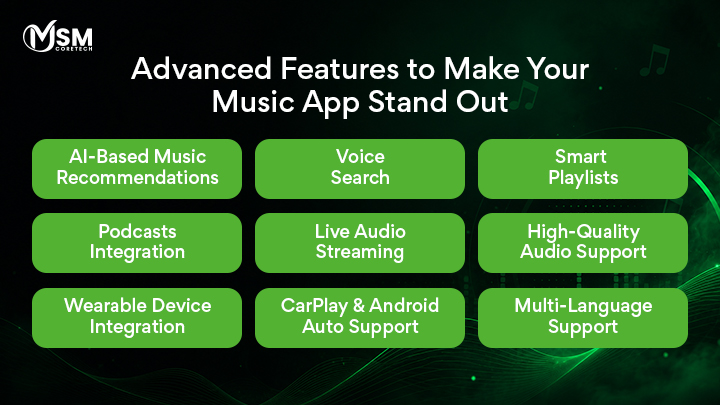
Today, people want more than just a basic music player. They expect a smart app that understands what they like, gives them a smooth music experience, and works well on different devices. Adding advanced features can make users happier, keep them using your app for longer, and help your app stand out from other music apps. Here are some important advanced features you should consider.
AI-Based Music Recommendations
Artificial Intelligence (AI) helps users find songs they will enjoy. It looks at their listening history, favorite artists, skipped songs, and playlists to suggest music based on their interests. The more users listen, the better the AI understands their taste and the more accurate the recommendations become. This personalized experience keeps users interested and encourages them to spend more time using the app.
Read Also: How AI Is Shaping the Future of Music Streaming Apps
Voice Search
Voice search helps users find songs, albums, artists, or playlists by speaking instead of typing. They can simply say what they want to listen to, and the app will find it quickly. This feature is very helpful when driving, exercising, or doing other tasks where typing is difficult. It also makes the app easier to use for people with different accessibility needs.
Smart Playlists
Smart playlists are created automatically based on what users like to listen to. The app can suggest playlists based on their favorite music, mood, or daily activities. For example, it can create playlists for workouts, relaxing, traveling, or studying. This saves time and lets users enjoy music without creating playlists by themselves.
Podcasts Integration
Many people like listening to podcasts as well as music. By adding podcasts to the app, users can enjoy both in one place. They can browse different podcast categories, follow their favorite shows, download episodes to listen offline, and get notified when new episodes are released. This feature keeps users interested and encourages them to spend more time using the app.
Live Audio Streaming
Live audio streaming allows users to listen to live concerts, music events, interviews, and radio stations directly in the app. It gives users a chance to enjoy events as they happen and feel more connected to their favorite artists. This feature also increases user engagement and attracts more active listeners.
High-Quality Audio Support
Many people enjoy listening to music with clear and rich sound. Supporting HD, Hi-Fi, or lossless audio gives users a better listening experience. The app can also offer different sound quality options, so users can choose the best balance between audio quality and internet data usage.
Wearable Device Integration
Connecting the app with smartwatches and fitness bands makes it easier for users to control their music without taking out their phones. They can play, pause, skip songs, or change the volume directly from their wearable devices. This is very useful during workouts, walking, or everyday activities.
CarPlay & Android Auto Support
Many people enjoy listening to music while driving. By adding Apple CarPlay and Android Auto support, users can safely control the app through their car’s screen or by using voice commands. This makes it easier to use the app, helps reduce distractions, and gives a better music experience while driving.
Multi-Language Support
Adding multiple language support helps your app reach people from different countries and regions. Users can choose the language they are most comfortable with for menus, settings, and notifications. This makes the app easier to use and understand. It also helps businesses grow in global markets and attract more users.
Read Also: Best Music Streaming App Features To Boost User Engagement
Step-by-Step Process to Develop an App Like eSound Music
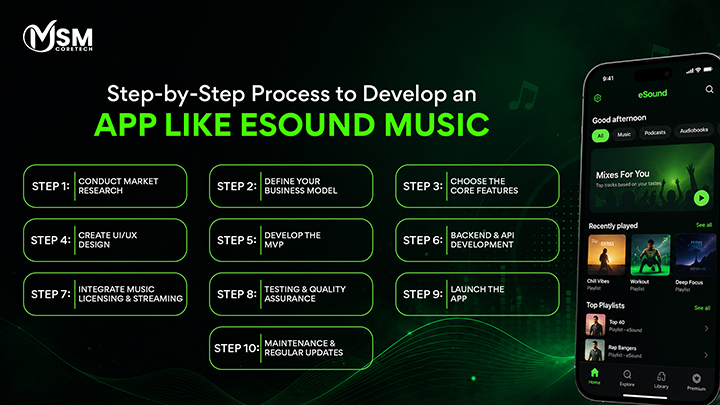
Building an app like eSound Music takes proper planning, the right technology, and a clear understanding of what users want. A simple and user-friendly app with smooth performance can help you attract more users and grow your business. Following the right app development process ensures your project stays organized and delivers a high-quality music streaming experience. Below are the key steps to develop a successful music streaming app.
Step 1: Conduct Market Research
First, research the music streaming market carefully. Study popular apps like eSound Music, Spotify, Apple Music, and YouTube Music. Find out what users like about these apps, which features they use the most, and what improvements they want. Also, identify your target audience, understand your competitors, and learn about the latest market trends. Good research helps you build an app that matches real user needs.
Step 2: Define Your Business Model
Before you start development, decide how your app will earn money. You can offer a free version with ads, monthly or yearly subscription plans, premium memberships, in-app purchases, or a mix of these options. Having a clear business model helps you choose the right features and plan the future growth of your app.
Step 3: Choose the Core Features
Decide which features you want to include in the first version of your app. Start with the most important features, such as user sign-up, music search, playlists, favorite songs, offline listening, personalized music recommendations, song lyrics, and push notifications. Keep the first version simple and focus on features that give users the best experience.
Step 4: Create UI/UX Design
Make your app simple, clean, and easy to use. Design attractive screens, smooth navigation, and clear buttons so users can quickly find and play their favorite music. A good UI/UX design makes the app more enjoyable to use and encourages users to come back again.
Step 5: Develop the MVP
Start by building a Minimum Viable Product (MVP) with only the most important features. This helps you launch the app quickly, get feedback from users, and improve the app based on their suggestions. It also helps you save development costs and reduce project risks before adding advanced features.
Read Also: Cost to Build a Music Streaming App Like Pandora
Step 6: Backend & API Development
The backend handles important tasks like managing user accounts, playlists, subscriptions, and music streaming data. APIs connect your app with payment gateways, music libraries, push notifications, and other third-party services. A strong backend keeps the app fast, secure, and running smoothly, even when more users join.
Step 7: Integrate Music Licensing & Streaming
Music licensing is one of the most important parts of a music streaming app. You must get the legal rights to stream songs. Also, use a reliable streaming system so users can enjoy high-quality music with fast playback and very little buffering. This creates a better listening experience.
Step 8: Testing & Quality Assurance
Before launching the app, test everything carefully. Check that the app works well, loads quickly, is secure, and runs smoothly on different devices and operating systems. Find and fix any bugs or issues so users can enjoy a smooth and reliable experience.
Step 9: Launch the App
After completing the testing, publish your app on the Google Play Store and Apple App Store. Promote it through social media, digital marketing, influencer partnerships, and App Store Optimization (ASO) to reach more people and increase app downloads.
Step 10: Maintenance & Regular Updates
The work does not stop after the app is launched. Keep updating the app regularly by fixing bugs, improving security, and adding new features. Also, make changes based on user needs and market trends. Regular maintenance helps your app stay competitive, keeps users happy, and supports long-term business growth.
Cost to Develop an App Like eSound Music?
The cost to develop an app like eSound Music depends on the app’s features, design, technology, and the size of the development team. A simple music streaming app costs much less than a feature-rich platform with AI recommendations, offline listening, and premium subscriptions. Planning your budget early helps you avoid unexpected expenses and build a better product.
Cost by App Complexity
The total cost mainly depends on how advanced your app will be.
| App Complexity | Estimated Cost | Development Time |
|---|---|---|
| Basic App | $15,000 – $35,000 | 2–4 Months |
| Medium App | $35,000 – $80,000 | 4–7 Months |
| Advanced App | $75,000+ | 8–12+ Months |
A basic app includes features such as user registration, music search, playlists, a simple music player, and basic streaming.
A medium-level app offers offline downloads, personalized recommendations, social sharing, push notifications, and subscription management.
An advanced app includes AI-powered music suggestions, smart playlists, live streaming, podcasts, multi-device syncing, voice search, high-quality audio, and powerful admin tools. It also supports a larger number of users and provides better security and performance.
Read Also: Cost to Build a Music Streaming App Like Shazam
Factors Affecting Development Cost
Many factors can increase or reduce the overall development cost.
- App Features: More features require more development time and a higher budget.
- Platform Selection: Building for Android, iOS, or both platforms affects the cost.
- UI/UX Design: A modern and user-friendly design takes additional design effort.
- Backend Development: Strong servers, databases, and cloud storage are needed for smooth music streaming.
- Music Licensing: Legal music licenses and royalty agreements add to the project cost.
- Third-Party Integrations: Payment gateways, analytics, social login, and notification services require integration.
- AI Features: AI-powered recommendations and personalized playlists need advanced development.
- Development Team: The experience and location of the development team also influence pricing.
- Testing and Maintenance: Regular updates, bug fixes, and security improvements are ongoing expenses.
Estimated Development Timeline
The time required depends on the app’s complexity and the number of features.
- Planning and Research: 2–3 weeks
- UI/UX Design: 3–5 weeks
- Frontend and Backend Development: 10–20 weeks
- API and Music Streaming Integration: 3–6 weeks
- Testing and Quality Assurance: 2–4 weeks
- Launch and App Store Approval: 1–2 weeks
In total, developing an app like eSound Music usually takes 2 to 12 months, depending on the project scope. Working with an experienced music streaming app development company can help reduce delays, control costs, and build a secure, scalable, and high-quality music streaming app.
Factors That Affect the App Development Cost
The app development cost of developing an app like eSound Music depends on many factors. Every business has different needs and goals, so the final cost can be different. It mainly depends on the app’s features, design, technology, and development process. Knowing these factors helps you plan your budget better and avoid extra costs later.
App Features
The features you add to your app have the biggest effect on the development cost. A simple music streaming app with basic features like user sign-up, music search, playlists, and music streaming costs less to build. However, adding advanced features such as AI music recommendations, offline listening, live streaming, podcasts, song lyrics, social sharing, and personalized playlists takes more time and effort. Because of this, the overall development cost becomes higher.
Platform (Android, iOS, or Cross-Platform)
The platform you choose has a big impact on the app development cost. If you build separate apps for Android and iOS, the cost is higher because developers need to create each app separately. A cross-platform app works on both Android and iOS using one codebase. This saves development time, lowers the cost, and still gives users a smooth experience.
UI/UX Complexity
A simple and attractive design helps users enjoy using the app. Basic screens and easy navigation take less time to design and develop, so they cost less. But if your app includes custom animations, interactive features, unique layouts, and a personalized user experience, it will take more time to build and test, which increases the overall development cost.
Read Also: 10+ Best Music Streaming Apps for Every Music Lover
Backend Infrastructure
The backend is the main system that runs a music streaming app. It manages user accounts, playlists, music collections, search, subscriptions, and music streaming. It should also handle many users at the same time without becoming slow. Building a secure and scalable backend needs skilled developers and modern cloud services, which increases the app development cost.
AI Integration
AI makes a music streaming app smarter and more enjoyable to use. It recommends songs, creates playlists, understands what users like to listen to, and gives personalized music suggestions. These AI features improve the user experience, but they also need extra development, data processing, and machine learning, which increases the overall project cost.
Music Licensing Costs
Music licensing is one of the biggest costs when building a music streaming app. If you want to stream copyrighted songs legally, you need to get permission from record labels, music publishers, or music rights organizations. The total cost depends on how many songs you want to offer, the countries where your app will be available, and the licensing agreements you make with music providers.
Third-Party APIs
Many music streaming apps use third-party APIs to add features like payment processing, cloud storage, music data, social login, analytics, notifications, and streaming services. These APIs make app development faster and easier. However, some API providers charge monthly fees or fees based on how much you use their services, so these costs should be included in your overall app development budget.
Development Team Location
The cost of building your app depends on where your development team is based. Developers in countries like the USA, Canada, and Western Europe usually charge more than teams in Asia or Eastern Europe. Choosing an experienced team that offers good quality work at a fair price can help you get the best value for your budget.
Maintenance & Updates
Launching your app is just the first step. You need regular maintenance to fix bugs, improve app performance, add new features, increase security, and make sure the app works well with the latest Android and iOS versions. Regular updates help keep your music streaming app safe, smooth, and enjoyable for users over time.
Challenges in Developing a Music Streaming App
Building a music streaming app like eSound Music is exciting, but it also has many challenges. To make a successful app, developers need to handle technical, legal, and business problems while giving users a smooth and enjoyable music experience. Below are some of the biggest challenges.
Music Licensing & Copyright
Getting permission to stream music is one of the biggest challenges. Every song is protected by copyright, so you cannot add or stream music without legal permission. You must get licenses from record labels, music publishers, artists, and music licensing organizations. These licenses can be costly, and the rules may be different in each country. Following copyright laws helps you avoid legal problems and builds trust with both artists and users.
Read Also: Cost To Develop a Music Streaming Mobile App like Spotify
Managing Large Audio Libraries
A music streaming app stores thousands or even millions of songs. Managing such a large music collection can be difficult. Developers need a strong database that can quickly store and organize songs, artist information, albums, playlists, and search results. The system should also make it easy to add new songs, remove old ones, and update music details without affecting the user experience.
Scalability
When your app becomes more popular, many people will use it at the same time. If the app is not built to handle more users, it may become slow or even stop working during busy times. A scalable app can easily handle more users, songs, and data while keeping its performance fast and smooth. Using cloud services, load balancing, and reliable servers helps the app run properly as the business continues to grow.
Data Security
People trust music apps with their personal details, payment information, and listening history. That is why keeping user data safe is very important. Developers should use secure login systems, data encryption, strong user verification, and trusted payment gateways. They should also update the app regularly and monitor it for security issues to protect users from cyberattacks and keep their information private.
Delivering High-Quality Streaming
Users want music to start playing quickly without buffering or stopping. Giving a smooth and high-quality listening experience can be difficult, especially when users have a slow internet connection. To solve this, developers use audio compression, content delivery networks (CDNs), adaptive bitrate streaming, and well-optimized servers. These technologies help music load faster and play smoothly on different devices and internet speeds.
User Retention
Getting people to download your app is just the beginning. The real challenge is keeping them coming back. If users cannot find the songs they like or if the app is slow or difficult to use, they may start using another music app. Features like personalized music recommendations, smart playlists, offline listening, regular content updates, podcasts, social sharing, and a simple, easy-to-use design help keep users interested. Push notifications, reward programs, and premium features also encourage users to open the app more often.
To handle these challenges, you need proper planning, the right technology, and regular updates. Working with an experienced app development company can help you build a secure, scalable, and easy-to-use music streaming app that provides a great user experience and supports long-term business growth.
Read Also: Music Streaming App Development Cost: A Complete Guide
Why Choose MSM CoreTech for Music Streaming App Development?
Building a music streaming app like eSound requires the right technology, industry knowledge, and a skilled development team. MSM CoreTech helps businesses create modern, secure, and user-friendly music streaming apps that deliver an excellent listening experience.
Our experienced developers understand every stage of music app development, from planning and UI/UX design to development, testing, and deployment. We build custom music streaming solutions based on your business goals, whether you want a simple music app or a feature-rich platform with AI-powered recommendations, offline listening, playlists, and podcast support.
At MSM CoreTech, we focus on creating scalable architecture that can handle thousands or even millions of users without affecting performance. As your business grows, your app can easily expand with new features and increased traffic.
Security is another top priority. We develop secure and feature-rich applications with user authentication, encrypted data storage, secure payment integration, and copyright protection to keep user information and digital content safe.
Our team also provides complete end-to-end development support. We assist with market research, feature planning, UI/UX design, app development, API integration, music licensing support, testing, app launch, and ongoing maintenance. As a trusted music streaming app development company, MSM CoreTech is committed to delivering high-quality, scalable, and future-ready music streaming solutions that help businesses succeed in the competitive digital entertainment market.
Conclusion
Building an app like eSound Music requires proper planning, the right features, and a clear development process. From researching the market and defining your business model to designing the app, developing core features, testing, launching, and maintaining it, every step plays an important role in creating a successful music streaming platform. Taking the time to build a strong foundation helps deliver a better experience for users.
Choosing the right technology stack is equally important. Modern tools and technologies help your app run faster, stream music smoothly, protect user data, and support future growth. A scalable and secure backend also makes it easier to add new features as your user base grows.
Working with an experienced music streaming app development company can make the entire development journey easier. A skilled team understands industry trends, music licensing requirements, user expectations, and the latest technologies. They can build a custom solution that matches your business goals while reducing development risks and delays.
As the demand for music streaming continues to grow, now is a great time to invest in your own platform. By focusing on user-friendly features, reliable performance, and regular updates, you can build a scalable, feature-rich music streaming app that attracts users, keeps them engaged, and supports your long-term business success.
FAQs
The cost depends on the app’s features, design, platform, and complexity. A basic music streaming app may cost less, while an advanced app with AI recommendations, offline listening, and premium features requires a higher budget.
The development timeline usually ranges from 3 to 9 months or more. The exact time depends on the number of features, app complexity, testing, and customization requirements.
Some essential features include user registration, music search, playlists, personalized recommendations, offline downloads, a music player, lyrics, push notifications, subscription management, and an admin dashboard.
Music streaming apps generate revenue through premium subscriptions, in-app advertisements, freemium plans, in-app purchases, sponsored content, and affiliate partnerships.
An experienced music streaming app development company can build a secure, scalable, and feature-rich app. They also help with UI/UX design, technology selection, music licensing integration, testing, deployment, and ongoing maintenance to ensure long-term success.

Related Posts
10 Mobile Banking Trends That Will Redefine Finance in 2026
Banking looks nothing like it did even five years ago, and 2026 is shaping up to be the year mobile...
Read More
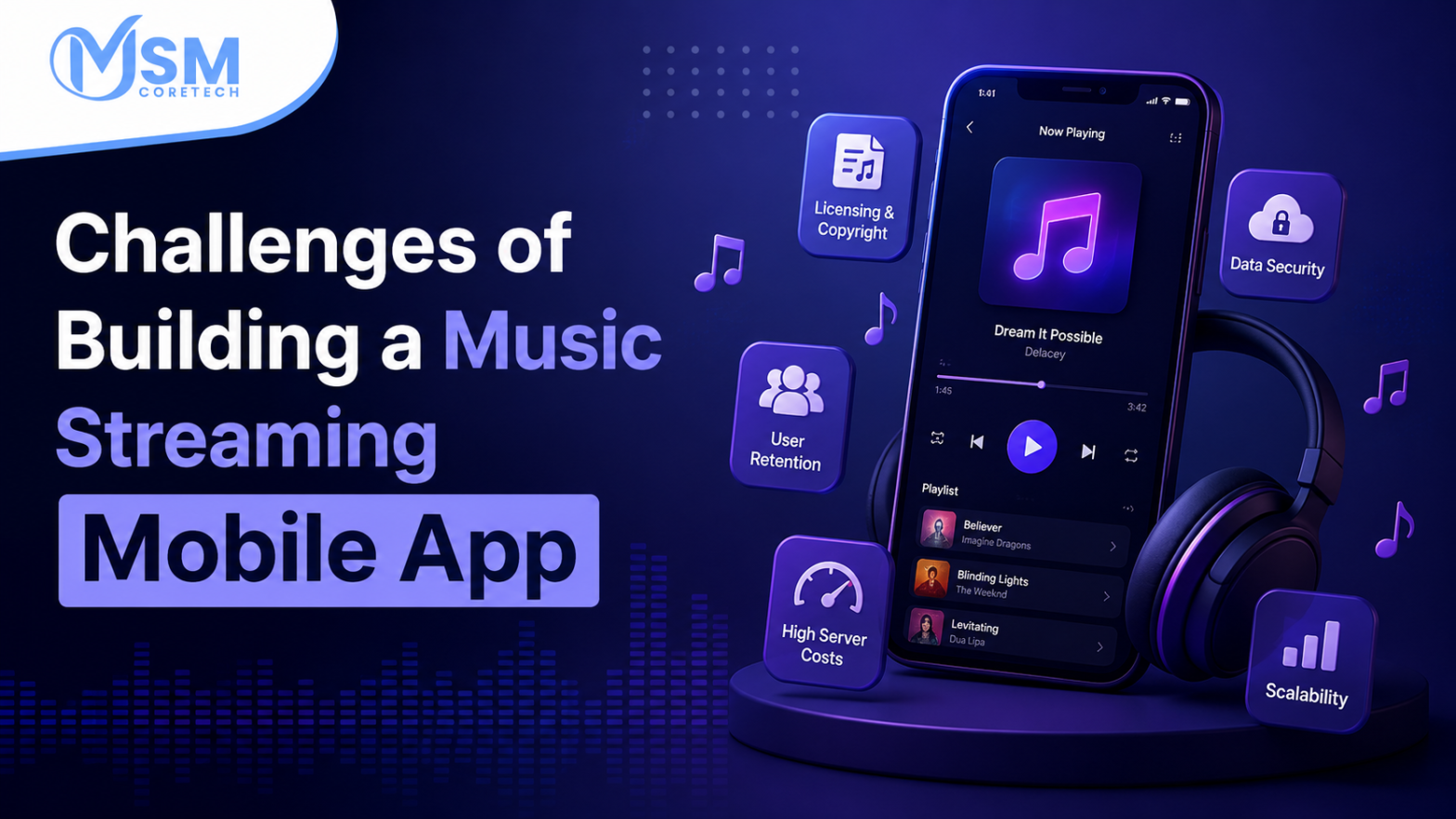
Challenges of Building a Music Streaming Mobile App
What makes people keep using a music streaming app? It’s not just having millions of songs. The real reason is...
Read More

10 Profitable Restaurant Business Ideas You Can’t Afford to Miss
The restaurant industry is growing rapidly and creating new opportunities for entrepreneurs who want to start a profitable business. With...
Read More


 Verified Review




 +91 9426029999
 311, 3rd Floor, Space 7, Sector 7, Shipra Path, Mansarovar, Jaipur, Rajasthan 302020