

Share this article


Fantasy Sports App Development Cost in 2026: Breakdown, Features, Hidden Costs & ROI
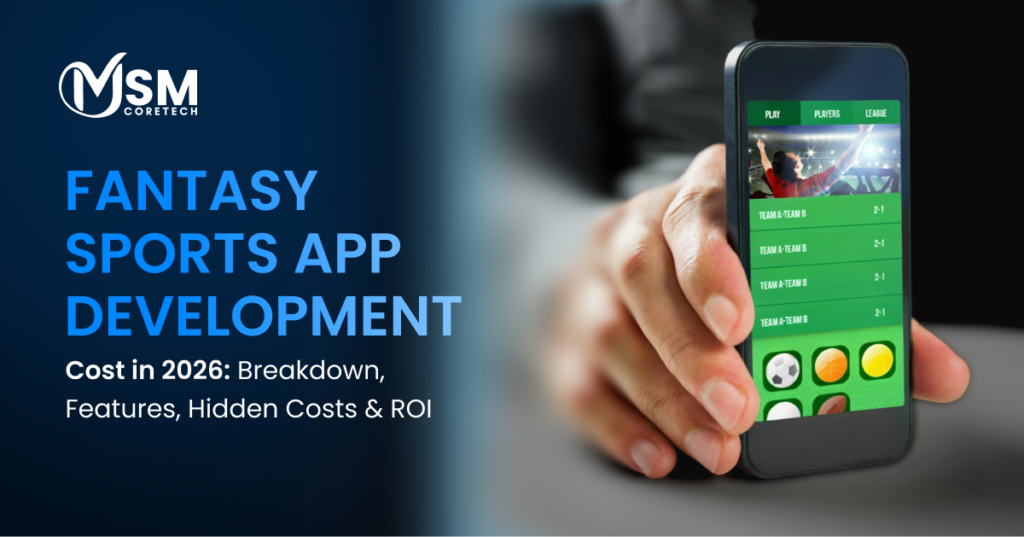
Fantasy sports have moved well beyond weekend hobby territory. With millions of active players across cricket, football, basketball, and baseball, fantasy sports apps have become a serious business vertical. Whether you are an entrepreneur exploring your first mobile product or a sports tech company looking to expand its portfolio, understanding fantasy sports app development cost is the critical first step before committing a budget.
A fantasy sports app allows users to build virtual teams from real professional athletes, earn points based on those players’ real-world performance, and compete against other users in public or private contests. The mechanics are straightforward, but building the technology behind them is anything but.
This guide breaks down everything you need to know about fantasy sports app development costs in 2026:
- What drives the price up?
- Where can you save?
- How long does it take?
- What kind of return can you realistically expect?
Fantasy Sports Market Overview
India’s fantasy sports market is set for explosive growth, driven by mobile adoption, cricket fandom, and a young digital audience. Regulatory changes and tech innovation are reshaping how platforms engage and monetize users.
- Market to grow from US$27.02 billion (2025) to US$557.05 billion by 2034 at 36.6% CAGR
- Cricket dominates with 87.4% share, powered by IPL engagement
- Mobile apps lead usage with 76.2% share across users
- Shift to free-to-play, AI-driven, and esports-based models after 2025 regulation
Also Read: Elements of Online Gaming Website Development
Why Invest in Fantasy Sports App Development in 2026?
Before getting into numbers, it helps to understand why the timing makes sense for investors and product builders.
Market Size and Growth
The fantasy sports industry continues to grow despite increased competition. The entry of new sports categories, including kabaddi, esports, and fantasy cricket for regional tournaments, has opened entirely new user segments. North America remains the largest market, but South Asia and Southeast Asia are growing faster in terms of new user acquisition.
User Engagement Trends
Fantasy sports apps record some of the highest engagement metrics in mobile gaming. Average session lengths are 12 to 18 minutes, and daily active users tend to spike significantly during major sporting events. Users who participate in paid contests engage far more frequently than those using free-to-play platforms, creating a self-reinforcing monetization loop.
Revenue Potential
Fantasy sports platforms earn through contest entry fees, premium subscriptions, in-app advertising, and affiliate partnerships with sports broadcasters and betting platforms. Dream11 reportedly crossed USD 1 billion in gross revenue in a single financial year. While not every app will scale to those numbers, a well-built mid-tier platform targeting a regional sport or league can generate strong margins with the right positioning.

Types of Fantasy Sports Apps
Not all fantasy sports apps follow the same model. The type you build directly affects development cost, legal requirements, and monetization strategy.
Daily Fantasy Sports (DFS)
DFS platforms allow users to create new teams for each game or matchday. DraftKings and FanDuel popularized this format in the US. DFS apps require real-time data integration, dynamic contest creation, and robust payment processing since users are depositing and withdrawing money frequently. This is typically the most expensive type to build.
Season-Based Apps
Season-long fantasy sports follow the traditional model where users draft players at the start of a season and manage their team over weeks or months. These apps require league management features, trade systems, waiver wire logic, and standing tracking. Development complexity is moderate, but backend logic for scoring and trade rules can be intricate.
Niche Sports Apps
Apps focused on specific sports like fantasy kabaddi, fantasy hockey, or fantasy Formula 1 target highly engaged audiences in specific geographies. These can be built at lower cost by reusing a proven technology foundation while customizing data feeds and scoring logic for the sport.
Social Fantasy Apps
Social fantasy platforms prioritize community features over real-money competition. They include private leagues, fan communities, prediction games, and leaderboards without cash payouts. These are simpler to build and avoid the regulatory requirements tied to real-money gaming.
How Much Does It Cost to Develop a Fantasy Sports App?
Fantasy sports app development cost depends on three primary variables: the complexity of features, the technology platform chosen, and the location of your development team. Here is a broad breakdown to set expectations.
Cost Breakdown by App Complexity
| App Type | Estimated Cost | Best For |
|---|---|---|
| Basic MVP | $5,000 to $20,000 | Single sport, limited features, testing the market |
| Mid-Level App | $20,000 to $80,000 | Multi-sport support, payment gateway, live scores |
| Advanced Platform | $80,000 to $150,000+ | Full DFS features, AI tools, admin panel, scalability |
A basic MVP is suitable for founders who want to validate demand before committing to a full build. A mid-level app covers the essential features users expect from any credible fantasy platform. An advanced platform approaches the feature depth of Dream11 or FanDuel and requires enterprise-level planning.
Cost to Build Apps Like Top Fantasy Platforms
Dream11 Development Cost
Dream11 started as a simple fantasy cricket app and evolved into a multi-sport platform supporting cricket, football, kabaddi, basketball, and more. Replicating its current feature set from scratch would cost between $150,000 and $300,000. The complexity comes from real-time scoring across multiple leagues, a large-scale contest engine, a secure digital wallet, multi-language support, and a sophisticated recommendation engine.
FanDuel Cost Breakdown
FanDuel is a US-focused DFS platform with real-money gaming at its core. Replicating its core architecture would cost upward of $200,000, primarily because of the compliance infrastructure required for real-money gaming across multiple US states, the depth of the player statistics engine, and the live contest management system. Payment processing alone, including Know Your Customer verification and withdrawal handling, adds significant cost.
DraftKings Development Insights
DraftKings has evolved from a fantasy sports platform into a full sportsbook. Building a DraftKings-equivalent product in 2026 would be a multi-million dollar undertaking. However, building a DFS platform inspired by its early architecture, focused on two or three sports, is achievable in the $100,000 to $180,000 range with the right development partner.
Also Read: Develop a Fantasy Cricket App like Dream11
Fantasy Sports App Development Cost Breakdown (Feature-Wise)
Understanding what drives cost at the feature level helps you make smarter decisions about your MVP and phased rollout.
| Feature | Estimated Development Cost |
|---|---|
| User Registration and Login (email, social, OTP) | $1,000 to $3,000 |
| Player Selection and Team Creation Interface | $3,000 to $8,000 |
| Live Score and Stats API Integration | $5,000 to $15,000 |
| Contest Creation and Management Engine | $8,000 to $20,000 |
| Payment Gateway and Digital Wallet | $3,000 to $10,000 |
| Admin Panel and Dashboard | $5,000 to $12,000 |
| Push Notifications and Alerts | $2,000 to $5,000 |
| Leaderboards and Ranking System | $3,000 to $7,000 |
| KYC and Document Verification | $4,000 to $10,000 |
| Referral and Loyalty Program | $2,000 to $6,000 |
These estimates assume a single-platform build (Android or iOS). Developing for both platforms natively roughly doubles frontend costs. Using cross-platform frameworks like Flutter or React Native can reduce that increase to around 40 percent.
Hidden Costs in Fantasy Sports App Development
The development quote you receive from any agency covers the build phase. What many first-time founders underestimate are the ongoing operational costs that begin the day you launch.
API Subscription Costs
Live sports data is not free. Providers like Sportradar, Stats Perform, and CricAPI charge subscription fees ranging from $500 to $10,000 per month depending on the sport, coverage depth, and update frequency. Real-time data, as opposed to delayed data, commands a premium. Budget for API costs as a recurring monthly line item from day one.
Server and Cloud Infrastructure
A fantasy sports app during a major sporting event can experience traffic spikes of 10x to 50x baseline. Your infrastructure must be able to scale on demand. AWS, Google Cloud, or Azure hosting for a mid-level fantasy app typically costs $500 to $3,000 per month under normal load, with burst costs during peak events.
Payment Gateway Charges
Payment processors charge between 1.5 and 3 percent per transaction. For a platform processing significant real-money entry fees, this becomes a meaningful operational expense. Factor in refund handling costs and the infrastructure required for bank-grade security compliance.
Annual Maintenance and Updates
Industry standard for mobile app maintenance is 15 to 25 percent of the original development cost per year. For a $60,000 app, that is $9,000 to $15,000 annually in bug fixes, OS updates, security patches, and minor feature enhancements.
Marketing and User Acquisition
A fantasy sports app without users is just software sitting on a server. Budget for digital advertising, influencer campaigns, and referral incentives. User acquisition costs in the fantasy sports category range from $2 to $15 per install depending on geography and campaign quality.
Fantasy Sports App Development Cost by Region
Where your development team is located is one of the largest factors in total project cost. Here is a comparison of average hourly rates by region in 2026.
| Region | Average Hourly Rate | Typical Quality Level |
|---|---|---|
| USA and Canada | $100 to $250/hr | High, strong communication, premium pricing |
| India | $20 to $60/hr | High value, large talent pool, best cost-to-quality ratio |
| Eastern Europe | $50 to $120/hr | Strong technical skills, moderate pricing |
| Southeast Asia | $25 to $70/hr | Variable quality, good for mid-tier projects |
| UK and Australia | $100 to $200/hr | High quality, timezone considerations for Asian clients |
For most startups and mid-sized businesses, outsourcing to an experienced Indian development company offers the best combination of technical skill, communication quality, and cost efficiency. India produces over 1.5 million engineering graduates annually and has a mature mobile app development ecosystem with deep experience in fantasy sports specifically.
Must-Have Features in a Fantasy Sports App
User Panel
The user-facing side of the app determines retention. A clunky interface will drive users to competitors regardless of how strong the backend is.
- Signup and Login: Support for email, phone number, and social login (Google, Apple) with OTP verification
- Team Creation Interface: Intuitive player selection with real-time budget tracking, position filters, and player stats previews
- Live Scores and Match Updates: Real-time point tallying during matches with visual feedback
- Wallet System: Secure deposit, withdrawal, and bonus wallet management with transaction history
- Contest Discovery: Browse and join public contests or create private leagues with friends
Admin Panel
The admin dashboard is the control center that keeps the platform running smoothly.
- User Management: Account verification, flagging, and suspension tools
- Contest Management: Create, edit, cancel, and settle contests across sports and leagues
- Analytics Dashboard: Real-time traffic, revenue, contest participation, and player behavior metrics
- Financial Reporting: Automated generation of payout reports, tax documentation, and transaction summaries
Advanced Features That Increase Cost
Once your MVP is live and generating traction, these features can significantly improve engagement and revenue while also adding to development costs.
| Advanced Feature | Additional Cost Estimate | Business Impact |
|---|---|---|
| AI-Powered Team Recommendations | $15,000 to $40,000 | Increases user confidence and engagement |
| Blockchain-Based Transparency | $20,000 to $50,000 | Builds trust in contest fairness |
| Live Streaming Integration | $25,000 to $60,000 | Keeps users in-app during matches |
| Multi-Language Support | $5,000 to $15,000 | Expands addressable market |
| Voice Assistant Integration | $10,000 to $25,000 | Accessibility and novelty factor |
| Augmented Reality Features | $30,000 to $80,000 | High engagement, premium experience |
Fantasy Sports App Development Process
A structured app development process reduces cost overruns and improves final product quality. Here is how a professional team approaches a fantasy sports app build.
Market Research and Scoping
Before any code is written, the project needs a clear definition. This phase covers competitive analysis, target audience research, sport and league selection, and monetization model planning. A thorough scoping session also prevents costly feature creep later.
MVP Planning
Define the smallest set of features that delivers real value to users and allows you to test core assumptions. For most fantasy apps, this means team creation, one sport, basic contest entry, live scoring, and a simple payment flow.
UI/UX Design
Fantasy sports users make fast decisions under time pressure, especially before match deadlines. UI must be fast, intuitive, and visually engaging. Wireframing, prototyping, and user testing before development saves significant rework cost.
Development Phase
Frontend and backend development happen in parallel sprints. API integrations are set up early in the cycle so the live data layer can be tested throughout development rather than only at the end.
Testing and QA
Load testing is especially critical for fantasy sports apps. The system must handle sudden concurrent user spikes when a match lineup is announced. Security testing for payment flows and user data protection is non-negotiable.
Launch and Post-Launch Monitoring
A phased launch strategy, starting with a soft launch in one market, allows you to identify issues before full public release. Post-launch monitoring tools should be in place from day one.
Also Read: Build a Taxi Booking App Like Uber
Tech Stack for Fantasy Sports App Development
The right technology choices reduce long-term maintenance costs and support scalability.
| Layer | Recommended Technologies |
|---|---|
| Frontend (Mobile) | Flutter (cross-platform), React Native, Swift (iOS), Kotlin (Android) |
| Backend | Node.js, Python (Django/FastAPI), Ruby on Rails |
| Database | PostgreSQL, MongoDB, Redis (for real-time caching) |
| Real-Time Engine | WebSockets, Firebase Realtime Database, Pusher |
| Sports Data APIs | Sportradar, Stats Perform, CricAPI, RapidAPI Sports |
| Cloud Infrastructure | AWS, Google Cloud Platform, Microsoft Azure |
| Payment Gateway | Stripe, Razorpay, PayU, Cashfree |
Native vs Cross-Platform vs Hybrid Apps
| Approach | Development Cost | Performance | Best For |
|---|---|---|---|
| Native (iOS + Android) | Highest (two codebases) | Best | Enterprise platforms targeting premium UX |
| Cross-Platform (Flutter/RN) | 30 to 40% lower than native | Very Good | Startups and mid-market apps |
| Hybrid (Ionic/Cordova) | Lowest | Moderate | Prototypes and very basic MVPs |
For most fantasy sports apps in 2026, Flutter or React Native is the recommended starting point. The performance gap between cross-platform and native has narrowed significantly, and the cost savings allow the budget to be redirected toward features and marketing.
Time Required to Build a Fantasy Sports App
Development timelines are as important as costs for planning your go-to-market strategy.
- MVP (basic features, single sport, one platform): 2 to 3 months
- Mid-level app (multi-sport, payment integration, admin panel): 4 to 6 months
- Full-scale platform (advanced features, multiple platforms, live streaming): 8 to 12 months
Timelines can be compressed by increasing team size, but this introduces coordination overhead that can actually slow progress. A focused team of 6 to 8 people working in tight sprints typically outperforms a large team on a project of this size.
Also Read: Web Design Cost in Australia
Monetization Models of Fantasy Sports Apps
Revenue strategy should be planned during design, not bolted on after launch.
Entry Fees
The most direct revenue model. The platform takes a percentage of each contest prize pool, typically 10 to 20 percent. This scales directly with user activity and is the primary revenue driver for most major platforms.
Advertising and Sponsorships
Banner ads, video interstitials, and branded contests are common monetization layers. Sports brands, fantasy equipment companies, and streaming services are natural advertising partners. Sponsorship deals for major contest series can be particularly lucrative.
Premium Features and Subscriptions
Power users will pay for advanced analytics, expert team suggestions, exclusive contests, and an ad-free experience. A subscription tier priced at $5 to $15 per month can generate meaningful recurring revenue from your most engaged users.
Affiliate Revenue
Fantasy apps with large engaged audiences can earn affiliate income by referring users to sports streaming services, merchandise stores, or partner brands. This revenue requires no additional infrastructure once relationships are established.
ROI: How Much Can a Fantasy Sports App Earn?
Return on investment depends heavily on your sport selection, geography, marketing execution, and product quality. Here are realistic scenarios.
| Platform Scale | Monthly Active Users | Estimated Monthly Revenue | Timeline to Profitability |
|---|---|---|---|
| Small Regional App | 10,000 to 50,000 | $15,000 to $75,000 | 12 to 18 months |
| Mid-Size Platform | 100,000 to 500,000 | $150,000 to $750,000 | 18 to 30 months |
| Large National App | 1M+ | $1M+ | 24 to 48 months |
These projections assume active marketing investment. A fantasy sports app that launches without a user acquisition strategy will not reach these numbers regardless of how good the product is. Plan for marketing spend equal to at least 30 to 40 percent of your total first-year budget.
Post-Launch Costs and Maintenance
Launching the app is the beginning, not the end, of your investment.
App Updates and OS Compatibility
Apple and Google release major OS updates annually. Each update can break existing functionality if not proactively addressed. Budget for two to three update cycles per year.
Bug Fixes
No app launches without bugs. A dedicated QA and bug-fix cycle in the first three months post-launch is essential. User feedback channels should be monitored daily during this period.
Server Scaling
As your user base grows, so does your infrastructure. Auto-scaling configurations help manage costs, but they need to be properly set up and monitored to avoid over-provisioning or under-provisioning during major events.
Customer Support
Fantasy sports users are highly vocal when something goes wrong with their points or payouts. A responsive customer support function, even a lean team with a good ticketing system, is critical for retention and brand reputation.
Also Read: AI Tools Every Android Developer
Challenges in Fantasy Sports App Development
Real-Time Data Accuracy
A single incorrect score or delayed update during a match can cost your platform real money and credibility. Data pipeline reliability must be treated as a core system requirement, not an afterthought.
Scalability Under Load
The simultaneous team submission window before a match deadline can generate tens of thousands of concurrent requests in minutes. Poorly architected backends fail under this load. Proper caching, load balancing, and database optimization must be built in from the start.
Security and Fraud Prevention
Real-money platforms are targets for account takeover, bonus abuse, and payment fraud. Multi-factor authentication, transaction monitoring, and device fingerprinting are baseline requirements for any serious platform.
Why Fantasy Sports Apps Fail
Here are some of the factors you should avoid to make your fantasy app work.
- Poor UX: Users have zero patience for slow load times, confusing team creation flows, or unreliable score updates. Invest in UX research and testing before launch.
- Weak Monetization Design: Platforms that set contest fees too high or offer poor value in prize pools lose users quickly. Study competitor pricing carefully before launch.
- Lack of Scalability: An app that crashes during the IPL or NFL playoffs cannot recover its reputation easily. Scalability is not optional.
- Insufficient Marketing Budget: A great app with no users is a failed product. Allocate real budget to acquisition campaigns before launch, not after.
- Regulatory Non-Compliance: Operating without the required licenses in your target market exposes you to platform removal and legal risk. Legal review is a development phase requirement, not an afterthought.
Case Study: Cost Breakdown of a Fantasy Cricket App
To make the cost discussion concrete, here is how costs typically stack up for a mid-level fantasy cricket app targeting the Indian market.
| Development Phase | Cost Estimate |
|---|---|
| UI/UX Design (wireframes, prototypes, final screens) | $4,000 to $8,000 |
| Frontend Development (Flutter, both platforms) | $12,000 to $20,000 |
| Backend Development (API, contest engine, wallet) | $18,000 to $30,000 |
| Live Cricket Data API Setup | $5,000 to $10,000 |
| Payment Gateway Integration (Razorpay/Cashfree) | $3,000 to $6,000 |
| Admin Panel Development | $5,000 to $10,000 |
| QA and Testing | $4,000 to $8,000 |
| Total MVP Build | $51,000 to $92,000 |
Post-launch, the same product would require roughly $12,000 to $20,000 per year in maintenance, plus ongoing API subscription costs of $1,000 to $3,000 per month during active cricket seasons.
How to Reduce Fantasy Sports App Development Cost?
Building a fantasy sports app on a budget is possible without compromising on core quality. Here are proven strategies.
Build an MVP First
Launch with the minimum feature set that delivers real value. Validate user engagement and revenue assumptions before investing in advanced features. This approach reduces initial risk significantly.
Use Cross-Platform Technology
Flutter or React Native lets you ship to both iOS and Android from a single codebase. The performance difference for a fantasy sports app is negligible for most users, and the cost saving is 30 to 40 percent versus native development.
Outsource Development Strategically
Partnering with an experienced offshore development company in India gives you access to a deep talent pool at a fraction of the cost of US or European teams. The key is choosing a company with specific fantasy sports development experience, not just a generic mobile agency.
Use Open-Source and Third-Party Tools
Do not build everything from scratch. Use proven payment gateways, authentication libraries, push notification services, and analytics SDKs. Your custom development effort should focus on what makes your app unique, which is the contest engine, scoring logic, and user experience.
Also Read: Develop an App like Talabat
Why Choose MSM Coretech for Fantasy Sports App Development?
Building a fantasy sports platform is a technically demanding project that requires experience, not just capability. MSM Coretech has established itself as a trusted fantasy sports app development company with a track record of delivering high-performance, scalable, and compliant platforms for clients across India, the US, and the Middle East.
Deep Domain Experience
MSM Coretech has built fantasy sports applications across cricket, football, kabaddi, basketball, and esports. This means the team understands the nuances of real-time scoring logic, contest management at scale, and the compliance landscape for real-money gaming in multiple jurisdictions. You are not their learning curve.
Full-Stack Development Capability
From UI/UX design through backend architecture, API integration, admin panel development, and post-launch maintenance, MSM Coretech handles the complete product lifecycle. This reduces the coordination overhead that comes with working across multiple vendors.
Transparent Pricing and Milestone-Based Delivery
MSM Coretech works on clearly defined project milestones with transparent cost breakdowns. Clients always know what is being built, what it costs, and when it will be delivered. There are no surprise invoices at the end of a sprint.
Scalable Architecture by Default
Every fantasy sports app MSM Coretech builds is designed for scale from the ground up. Whether you are launching to 10,000 users or planning for 10 million, the underlying architecture is built to handle traffic spikes, concurrent contest submissions, and high-frequency data updates without degradation.
Dedicated Support and Maintenance
Post-launch support is not an afterthought at MSM Coretech. Clients receive dedicated account management, regular performance reviews, and a responsive support team that understands the operational urgency of a live fantasy platform during a major sporting event.
If you are ready to get a detailed cost estimate for your fantasy sports app, MSM Coretech offers a free consultation and project scoping session with no obligation.

Conclusion
Fantasy sports app development in 2026 is a genuine business opportunity with a well-defined technology path and proven monetization models. The costs are real, ranging from $20,000 for a focused MVP to $150,000 or more for a full-scale platform, but so is the revenue potential.
The most successful fantasy sports apps are not necessarily the ones with the most features. They are the ones that identified a specific sport and user segment, built a product that works flawlessly under pressure, and invested consistently in user acquisition. Get those three things right and the technology will pay for itself.
If you are evaluating your options and want a concrete development roadmap and cost estimate for your specific vision, reach out to MSM Coretech for a free project consultation. The fantasy sports market is still growing, and the window for new entrants remains open for those who move with intention.
FAQs
A basic fantasy sports app developed in India costs between $5,000 and $20,000. A mid-level platform with live scoring, payment integration, and an admin panel ranges from $20,000 to $80,000. An advanced platform comparable to Dream11 in feature depth can cost $100,000 or more.
An MVP typically takes 2 to 3 months. A full-featured platform with multi-sport support, real-time data, and advanced features takes 6 to 12 months depending on team size and scope.
Legality varies by country and region. In India, the Supreme Court has recognized fantasy sports as a game of skill, and most states allow real-money fantasy sports. In the US, legality is determined at the state level. Always consult a legal advisor in your target market before building a real-money platform.
Common sports data APIs include Sportradar, Stats Perform, CricAPI, and various RapidAPI-hosted sports data providers. The choice of API depends on the sports covered, the geographic focus, and the required data freshness.
The primary revenue model is a platform fee, typically 10 to 20 percent, deducted from contest prize pools. Additional revenue comes from in-app advertising, premium subscriptions, affiliate partnerships, and sponsored contests.

Related Posts

How to Build A Veterinary Medicine Online Shopping App?
Pet owners today don’t want to drive across town every time their dog needs a flea tablet, or their cat...
Read More

5 Ways Restaurant Technology Is Transforming the Industry
The restaurant industry is changing fast, and technology is now an important part of this change. Restaurants are using technology...
Read More
Top 10 FinTech APIs for Every Startup
If you’re building a startup today, chances are money needs to move somewhere inside your product payments, payouts, identity checks,...
Read More


 Verified Review




 +44 7427829444
 71-75, Shelton Street, Covent Garden, London, United Kingdom, WC2H 9JQ