

Share this article


A Complete Guide on Fintech Development Outsourcing
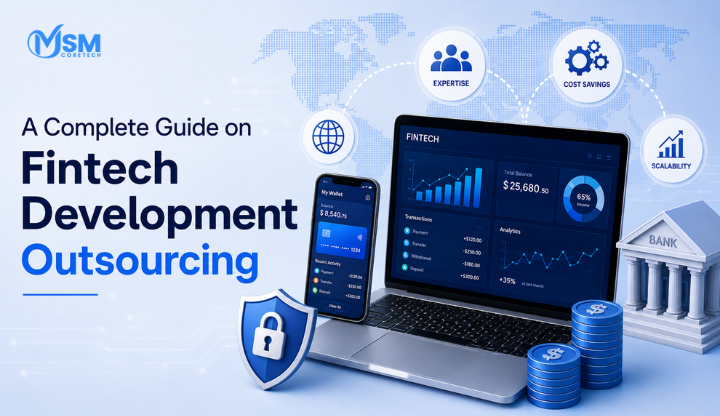
Fintech development outsourcing means hiring an outside development team to build, improve, or manage financial technology solutions. Instead of creating and managing a full team in-house, businesses can work with skilled developers, designers, testers, and fintech experts from another company.
This can be helpful for startups, banks, financial companies, and other businesses that want to launch digital financial products faster and more easily.
The need for fintech solutions is growing as more people use digital financial services. According to the World Bank’s Global Findex 2025, almost 80% of adults around the world now have a financial account, compared with 50% in 2011. The report also says that 42% of adults in low- and middle-income countries made a digital payment at a store in 2024.
Businesses often outsource fintech development because it lets them work with skilled professionals without spending a lot of time and money building a large in-house team. Outsourcing also gives businesses access to experts in mobile app development, cloud technology, APIs, AI, cybersecurity, and financial systems.
Saving money is another important reason. The World Bank says that financial service providers use outsourcing to reduce costs, become more flexible, and improve efficiency. However, businesses must carefully check security, legal requirements, third-party risks, and service quality when choosing an outsourcing partner.
With the right development partner, fintech outsourcing can help businesses build financial products faster, manage costs better, and create secure and scalable solutions.
What Is Fintech Development Outsourcing?
Fintech development outsourcing means hiring an outside team to design, build, test, and maintain a financial technology product instead of doing all the work with your own team. Businesses can outsource projects like banking apps, digital wallets, payment platforms, investment apps, and other financial solutions. This helps companies get skilled experts without hiring and building a large technical team from the beginning.
In-house development means hiring your own developers, designers, testers, and project managers to manage the whole project. It gives you more direct control over the team and daily work. However, it can take more time and money because you need to handle hiring, salaries, tools, training, and other costs.
With outsourcing, you work with an experienced team that already has the right skills and technology. A trusted fintech app development company can handle different parts of the development process while you focus on your business goals.
Outsourcing can be a good option when you want to launch your fintech product quickly, do not have a large in-house team, or need expert technical skills. It can also help startups build an MVP first before spending a lot of money on the complete product.
When choosing an outsourcing team, businesses should look at their experience, security knowledge, communication, pricing, and previous fintech projects.
With the right partner, outsourcing can make fintech development easier and more flexible. It can also reduce the workload on your team and help you launch your financial product faster.
Also Read: Cost to Build A FinTech App Like Revolut
Why Outsource Fintech App Development?
Building a fintech app requires skilled developers, strong security, and the right technology. For many businesses, doing everything with an in-house team can take more time and cost more money. That is why many businesses choose fintech development outsourcing. By working with an experienced outsourcing team, businesses can build secure and useful fintech apps without hiring a large team of their own.
Lower Development Costs
Outsourcing can help businesses save money on development. You do not have to spend a lot on hiring full-time developers, office space, equipment, training, and employee benefits. Instead, you can choose a development team based on your project needs and budget.
Access to Skilled Developers
Fintech projects need developers who know about payments, banking systems, APIs, security, and financial technology. An outsourcing company can give you access to developers who already have experience in these areas. This helps you get the right skills without spending months looking for and hiring individual employees.
Faster Time to Market
An experienced development team already has the tools, skills, and work process needed to begin quickly. This can make design, development, testing, and app launch faster. Launching your fintech app sooner can also help you enter the market before your competitors.
Access to Modern Technologies
Fintech is changing very fast with technologies like AI, blockchain, cloud computing, automation, and advanced analytics. Outsourcing companies often have experience with these modern technologies. They can also help you choose the right technology for your project.
Easy Scalability
Your development needs can change as your business grows. With outsourcing, you can easily increase or reduce the team when needed. This helps you add new features, support more users, connect new tools, and enter new markets more easily.
Less Hiring and Management Work
Managing an in-house team takes time and effort. You need to hire people, train them, manage payroll, and supervise their daily work. With an outsourcing partner, they can handle much of this work for you. This lets your business team spend more time on customers, planning, and business growth.
Also Read: Top 10 FinTech APIs for Every Startup
What Fintech Development Services Can Be Outsourced?
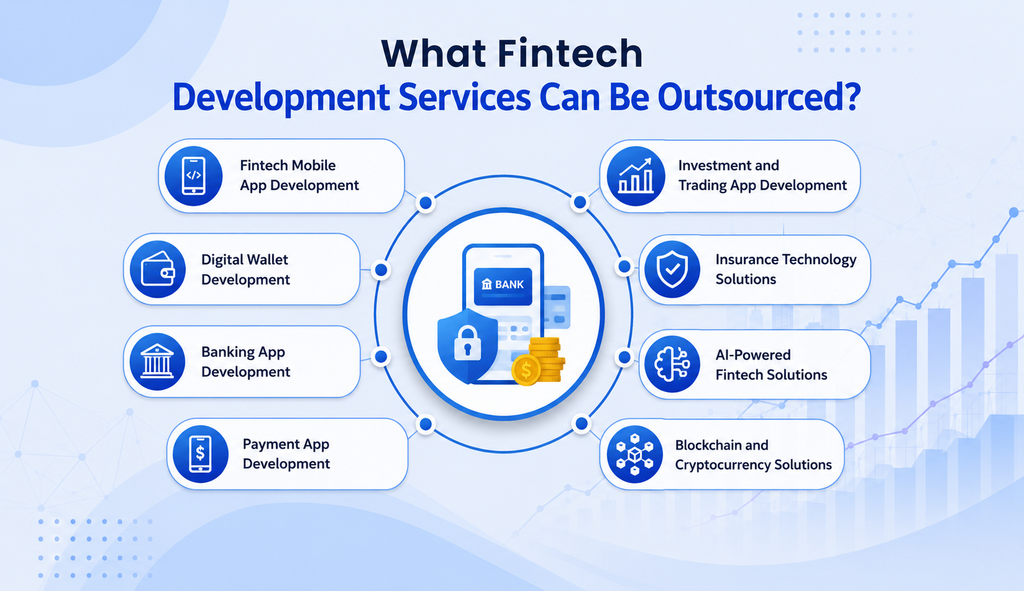
Fintech outsourcing lets businesses work with an experienced development team without hiring a large in-house team. Companies can outsource different parts of fintech product development, such as mobile apps, digital wallets, AI solutions, and blockchain solutions. This can help businesses save time and lower development costs. It also helps them launch their financial products faster.
Fintech Mobile App Development
Businesses can outsource the development of mobile apps for financial services. A fintech app can have features like user registration, secure login, money transfers, account management, transaction history, notifications, and payment options. Developers can create apps for both Android and iOS based on the business needs.
Digital Wallet Development
Digital wallets allow users to keep money digitally and make fast payments. Outsourced developers can create wallets with features like adding money, sending and receiving funds, paying bills, checking transaction history, making QR payments, and connecting payment gateways. Security features can also be added to keep users’ financial information safe.
Banking App Development
Banks and financial businesses can outsource the development of mobile and web banking apps. A banking app development company can build apps that let users check their account balance, transfer money, pay bills, manage cards, view transactions, and get alerts. The development team can also create secure banking APIs and connect the app with third-party services.
Payment App Development
Payment apps make it easy for users to send and receive money quickly. An outsourced fintech team can build apps for online payments, peer-to-peer money transfers, merchant payments, regular payments, and international transactions. The app can also include payment gateways, fraud detection tools, and different payment options to make payments safer and easier.
Investment and Trading App Development
Investment and trading apps can also be built by outsourcing the development work. These apps can help users buy and sell stocks, check market prices, manage their investment portfolios, and track their performance. Developers can also add real-time market data, price alerts, charts, and personalized dashboards to give users a simple and useful investment experience.
Insurance Technology Solutions
Fintech outsourcing is not only about banking and payments. Businesses can also outsource insurance technology, also known as insurtech. These platforms can help manage insurance policies, provide quotes, handle online claims, process premium payments, manage customer accounts, and store documents. Automation can make insurance tasks faster and easier for both businesses and customers.
AI-Powered Fintech Solutions
Artificial intelligence (AI) can make financial apps smarter and more helpful. Businesses can outsource AI features such as personalized financial advice, automated customer support, fraud detection, spending analysis, and risk assessment. AI can also understand user behavior and provide useful insights while reducing the need for manual work.
Blockchain and Cryptocurrency Solutions
Businesses can outsource blockchain-based fintech solutions when they need secure and clear digital transactions. Development teams can build cryptocurrency wallets, smart contracts, token-based platforms, blockchain payment systems, and other decentralized financial solutions. The features needed will depend on the business model and legal requirements.
Overall, fintech development outsourcing helps businesses get skilled developers and modern technology without building a full team in-house. The right outsourcing partner can help with design, development, integrations, security, testing, deployment, and ongoing maintenance.
Key Features of a Fintech App
A fintech app should make money-related tasks easy, quick, and safe. Users may want to send money, check their balance, or keep track of their spending. The app should have helpful features that make these daily financial tasks simple.
User Registration and KYC
The app should let users create an account easily by entering their basic details. KYC (Know Your Customer) is used to check and confirm a user’s identity. It also helps make the app more secure. Users may need to provide documents such as an ID or other required details for verification.
Digital Wallet
A digital wallet lets users keep and manage their money in the app. They can add money, check their balance, and use the wallet to make payments or send money without going to a bank.
Secure Payments
Safe payment options are an important part of a fintech app. Users should be able to pay bills, shop online, and make other payments safely. Strong login checks and data encryption help keep their payment information safe.
Bank Account Integration
Bank integration lets users connect their bank accounts to the app. They can easily check their bank balance, view transactions, and transfer money between accounts.
Money Transfers
Users can easily send and receive money through the app. It can support transfers between users, bank accounts, and other supported payment methods.
Transaction History
A clear transaction history helps users see all their financial activity in one place. They can check past payments, transfers, deposits, and withdrawals whenever they need to.
Notifications
Notifications keep users informed about important account activities. The app can send alerts about payments, transfers, login attempts, low account balances, and other important events.
AI-Powered Financial Insights
AI can understand how users spend their money. It can show users where they spend the most and give simple tips to help them manage their budget better.
Fraud Detection
Fraud detection helps find unusual or suspicious transactions. The system checks account activity and alerts users if something does not look normal. This helps reduce financial risks.
Admin Dashboard
An admin dashboard helps the business manage the whole platform from one place. Admins can manage users, transactions, payments, reports, security settings, and other important app activities easily.
Also Read: Top 10 FinTech Startup Ideas to Build a Successful Finance App
How Does Fintech Development Outsourcing Work?
Fintech development outsourcing means hiring an outside development team to build your financial app or platform. Instead of hiring and managing your own full-time developers, you work with skilled professionals who take care of the technical work. The app development process usually follows a few simple steps.
Step 1: Define Your Fintech App Idea
First, be clear about what you want to build. Decide if you need a digital wallet, payment app, banking app, investment platform, or another type of fintech product.
Then, define your target users, important features, business goals, and budget. Having a clear idea makes it easier for the development team to understand your requirements and create the right development plan.
Step 2: Choose an Outsourcing Partner
Next, look for a fintech development company that has experience building financial apps. Check its past work, technical skills, client reviews, security methods, and fintech projects. Choose a company that understands financial rules and can also provide support after your app is launched.
Step 3: Discuss Requirements and Project Scope
After choosing a development partner, discuss all your project needs with the team. Talk about the features, platforms, design, integrations, security requirements, timeline, and budget. Based on these details, the team can prepare a clear project scope. This helps prevent confusion and unexpected changes during development.
Step 4: Select the Technology Stack
Choosing the right technology is important for your app. It can affect the app’s speed, security, ability to handle more users, and future growth. Your development team may suggest technologies like Flutter or React Native for mobile apps, Node.js or Python for the backend, and PostgreSQL or MongoDB for the database. APIs and cloud services can also be added based on your app’s needs.
Step 5: UI/UX Design
The design team works on how your fintech app will look and work. They keep the design simple, clean, and easy to use. Key screens like login, dashboard, wallet, payments, transactions, and profile are designed before the development work starts.
Step 6: App Development
Once the design is approved, developers start building the app. They work on the frontend and backend and connect APIs, payment gateways, banking services, and other required tools. The team builds each feature step by step and checks it along the way.
Step 7: Testing and Security Checks
Fintech apps deal with sensitive financial information, so proper testing is very important. The team checks the app for bugs, performance problems, payment issues, and security risks. They also test login and authentication, data protection, and third-party integrations to help keep user information safe.
Step 8: Launch the Fintech App
Once testing is finished, the app is ready to launch. The team can help submit the app to app stores, set up the server, configure the database, and move the app to the live environment. Before the app goes live, one final check is done to make sure everything is working properly.
Step 9: Maintenance and Updates
The work does not stop after the app is launched. Regular maintenance helps fix bugs, improve security, add new features, and make sure the app works well on new devices and operating systems. Your outsourcing partner can also add new features and make improvements as your business grows.
How to Choose the Right Fintech Development Outsourcing Company
Choosing the right fintech development outsourcing company is important because financial apps deal with sensitive user and payment information. A good development partner should have fintech experience, strong technical skills, good security practices, and clear communication.
Check Fintech Development Experience
First, check the company’s experience in fintech development. A team that has already built digital wallets, payment apps, banking platforms, or investment apps will have a better understanding of the financial industry. They will also know the common challenges and requirements of building secure financial apps.
Review Previous Projects and Portfolio
Look at the company’s portfolio and past fintech projects. Check what features they have built, what types of businesses they have worked with, and how good their apps are. A strong portfolio can help you understand their real skills and experience.
Check Technical Skills
Make sure the development team has the right technical skills for your project. Check their experience with mobile app development, backend systems, APIs, cloud services, databases, AI, and other technologies you may need.
Understand Security Practices
Security should be very important for every fintech project. Ask the company how it keeps financial and personal information safe. Check if they use data encryption, secure login methods, protected APIs, regular security checks, and other safety measures.
Compare Pricing Models
Do not choose a company just because it has the lowest price. Compare different pricing options, such as fixed pricing, hourly rates, and dedicated team models. Before choosing a company, make sure you understand what services and features are included in the total app development cost.
Check Communication and Support
Good communication helps keep the project on track. Ask how often the company will give you updates and which tools they use to stay in touch. Make sure you can easily contact the team when you have questions or want to make changes.
Read Client Reviews
Client reviews can help you learn about a company’s work quality, reliability, and professionalism. Check reviews on trusted platforms. Also, look for feedback about how well the company communicates and delivers projects.
Discuss Post-Launch Support
Your fintech app will need regular updates, bug fixes, security updates, and technical help after it goes live. Talk about post-launch support with your development team before signing the contract. This will help you clearly understand what support you will get after the app is launched.
Also Read: What Is FinTech? A Complete Guide
Technology Stack for Fintech Development
| Area | Common Technologies |
|---|---|
| Frontend | Flutter, React Native, Swift, Kotlin |
| Backend | Node.js, Python, Java, .NET |
| Database | PostgreSQL, MySQL, MongoDB, Redis |
| Cloud | AWS, Azure, Google Cloud |
| AI/ML | Python, TensorFlow, ML tools |
| Security | Encryption, MFA, OAuth, JWT |
| Blockchain | Ethereum, Hyperledger |
Choosing the right technology is important when building a fintech app. The right technology helps the app work fast, stay secure, run smoothly, and handle more users as the business grows.
Frontend Technologies
The frontend is the part of the app that users see and use. Flutter and React Native can be used to build apps for both Android and iOS. If you want to build separate native apps, you can use Swift for iOS and Kotlin for Android. For web-based fintech platforms, React and Angular are also good options.
Backend Technologies
The backend handles the app’s main work, such as business rules, user accounts, transactions, and data processing. Common backend technologies include Node.js, Python, Java, and .NET. The best choice depends on the app’s features, speed, and future growth needs.
Databases
Fintech apps manage a lot of sensitive data. PostgreSQL, MySQL, MongoDB, and Redis are commonly used to store and manage user information, transaction details, and session data.
Cloud Services
Cloud platforms like AWS, Microsoft Azure, and Google Cloud help fintech apps manage more users and traffic as the app grows. They also provide storage, backups, monitoring, and flexible computing resources.
APIs and Third-Party Integrations
APIs help connect the app with payment gateways, banks, KYC providers, identity verification services, and other financial systems. This allows developers to add important services without building everything from the beginning.
AI and Machine Learning
AI can help fintech apps find fraud, understand spending, support customers, check risks, and give users personalized financial advice.
Blockchain
Blockchain can be used for safe transactions, digital assets, smart contracts, and financial services that need clear and transparent records.
Security Technologies
Security is a very important part of fintech development. Tools like encryption, secure APIs, multi-factor authentication, biometric login, tokenization, and access controls help keep financial and personal data safe.
Fintech Development Outsourcing Pricing Models
Choosing the right pricing model is important when you outsource fintech app development. The best model depends on your project size, budget, features, and how much flexibility you need.
Fixed-Price Model
With a fixed-price model, you decide the project cost and features before development begins. This model is a good choice for small projects with clear and fixed requirements. It also makes budgeting easier because you know the total cost in advance.
Time and Materials Model
In this model, you pay for the actual time and resources the development team uses. It is a good option if your fintech app may change during development or if you may want to add more features later.
Dedicated Development Team
With this model, you get a team that works only on your project. You have more control over the team, tasks, and development work. It is a good choice for large fintech projects or projects that will continue for a long time.
How to Choose the Right Model
Choose fixed pricing when your app has clear plans and requirements. Choose time and materials when your project may change during development. For complex fintech apps that need regular updates and long-term work, a dedicated development team is the better choice.
Also Read: FinTech App Design Guide for Beginners
How Much Does Fintech Development Outsourcing Cost?
The cost of outsourcing fintech development depends on the type of app you want, its features, security needs, technology, and the development team you choose. A simple fintech app may cost less. But a large app with AI, banking integrations, and advanced security features may need a much bigger budget.
| Fintech App Type | Estimated Cost | Development Time |
|---|---|---|
| Basic fintech app | 10,000–20,000 | 3–5 months |
| Medium-level fintech app | 20,000–40,000 | 5–8 months |
| Advanced fintech platform | 40,000–75,000+ | 8–12+ months |
Basic Fintech App
A basic fintech app includes important features like user registration, login, a digital wallet, transactions, payment integration, transaction history, and notifications. It is a good choice for startups that want to launch an MVP and see how people respond to their idea.
The development cost is usually between $10,000 and $20,000, depending on the features and the development team.
Medium-Level Fintech App
A medium-level fintech app has more advanced features. It can include bank account integration, KYC verification, different payment options, financial reports, spending tracking, and better security.
The development cost is usually around $20,000 to $40,000. This type of app is a good choice for businesses that already have a clear idea and want to provide more services to their users.
Advanced Fintech Platform
An advanced fintech platform is made for businesses that need a complete financial solution. It can include AI-based recommendations, fraud detection, investment tools, multiple currencies, real-time transactions, advanced reports, and many third-party integrations.
The cost can start at $40,000 and go above $75,000, depending on how complex the platform is.
Factors That Affect Development Cost
Several things can affect the final development cost:
- Number and type of features
- UI/UX design needs
- Mobile or web platform
- Third-party API integrations
- Security and compliance requirements
- AI or blockchain integration
- Location and experience of the development team
- Testing and support after launch
Ways to Control Development Costs
Start by building only the most important features instead of creating everything at once. An MVP can help you test your idea before spending more money. You can also use ready-made APIs when they are suitable, keep the project scope clear, and choose an experienced outsourcing team.
A good outsourcing partner can help you choose the right technology and avoid unnecessary development work. This can help you stay within your budget while still maintaining important security and quality.
Also Read: Cost to Develop a Fintech App Like Wise
Common Challenges and Solutions in Fintech Development Outsourcing
Outsourcing fintech development can help save time and money, but it can also bring some challenges. Knowing about these challenges early can help businesses avoid problems and manage the project smoothly.
1. Data Security Risks
Fintech apps deal with sensitive information like bank details, payment information, and personal data. If this information is not protected properly, it can be at risk. So, choose a development partner that uses strong security methods and keeps your data safe throughout the development process.
2. Communication Gaps
Poor communication can cause confusion about features, deadlines, and project goals. Regular meetings, clear documents, and simple communication can help everyone stay on the same page.
3. Regulatory Compliance
Fintech apps must follow financial laws and data protection rules. These rules can be different in each country. Your development partner should know and understand the rules that apply to your target market.
4. Different Time Zones
Working with an offshore team can mean working in different time zones. This can make quick discussions or meetings harder. Setting a common meeting time and using project management tools can help the team work together more easily.
5. Changing Project Requirements
Business needs can change during development. Adding new features or changing existing ones can increase the cost and take more time. Clear planning from the start can help avoid these problems.
6. Quality Control
Poor testing can cause bugs, payment mistakes, or security issues. Regular testing and code reviews help find these problems early and keep the app working well.
7. Managing Third-Party Integrations
Fintech apps often connect with banks, payment gateways, APIs, and other services. These connections can sometimes cause delays or technical problems. An experienced team can help manage these integrations smoothly and avoid major issues.
| Challenge | Possible Solution |
|---|---|
| Data security | Use strong security practices |
| Communication gaps | Regular meetings and clear updates |
| Regulatory compliance | Follow local financial regulations |
| Time zones | Set overlapping working hours |
| Changing requirements | Plan features clearly |
| Quality control | Regular testing and code reviews |
| Third-party integrations | Work with experienced developers |
How to Manage an Outsourced Fintech Development Team
Managing an outsourced fintech development team becomes easier when everyone knows what the project is about, what they need to do, and what results are expected. Good planning and regular communication can help prevent delays, confusion, and expensive mistakes.
Set Clear Project Goals
First, clearly explain what you want to build. Tell the team about the main features, target users, business goals, budget, and expected launch date. Clear goals help the development team understand your project and what they need to deliver from the start.
Define Roles and Responsibilities
Make sure every team member knows their role and what they need to do. Clearly assign tasks to developers, designers, testers, project managers, and other team members. This helps prevent duplicate work and makes it easy to know who is responsible for each task.
Use Project Management Tools
Use simple project management tools to manage tasks, deadlines, files, and updates. Tools like Jira, Trello, and Asana help both teams easily check what is completed, what is being worked on, and what still needs attention.
Maintain Regular Communication
Regular communication helps keep the project on track. Have weekly meetings or short daily updates if needed. Talk about what has been completed, what is being worked on, any problems, and what needs to be done next.
Track Development Progress
Do not wait until the project is finished to check the work. Regularly review the completed features, project timeline, progress, and overall quality. This helps you find delays or problems early and fix them on time.
Conduct Regular Testing and Reviews
Fintech apps deal with sensitive financial information, so regular testing is very important. Check every major feature and test the app for security, speed, ease of use, and technical problems before moving to the next step.
With good planning, clear communication, and regular checks, businesses can manage their outsourced fintech team better and keep the project on track.
Also Read: Cost To Build A Fintech App
Benefits of Working With a Fintech Development Partner
Working with a fintech development partner makes it easier to build and launch a secure financial product. Instead of handling everything yourself, you get a team that understands fintech technology, security, and development.
Faster Development
An experienced development partner already has the right team, tools, and workflow. This helps save time and allows you to launch your fintech app faster.
Flexible Team Size
Your project may need different skills at different times. You can easily increase or reduce your team as needed. This saves you from the trouble of hiring new employees.
Better Technical Expertise
Fintech apps need strong technical skills and knowledge. A good development partner can provide skilled developers, designers, testers, and other experts who know modern fintech technologies and integrations.
Cost-Effective Development
Outsourcing can help you save money on hiring, training, office space, and other business costs. You only pay for the skills and resources your project needs.
Continuous Support
Your app needs regular updates, bug fixes, security checks, and technical support even after it is launched. A development partner can take care of these tasks on an ongoing basis.
Easier Product Scaling
As your business and number of users grow, your app may need new features and better performance. A trusted development partner can help your app grow smoothly without rebuilding it from the beginning.
Also Read: Top FinTech Trends 2026
Why Choose MSM CoreTech for Fintech Development Outsourcing?
Choosing the right development partner is important when building a fintech product. MSM CoreTech is a mobile app development company with an experienced team that understands fintech business needs. We use modern technologies to build reliable digital solutions. We create custom fintech solutions based on your business goals, target users, and project needs.
Security and scalability are very important in fintech. We use secure login, data encryption, protected APIs, and other security methods to help keep financial data safe. Our applications are also built to support business growth and handle more users and transactions as your business grows.
We use modern technologies to build fintech apps that are fast, flexible, and ready for the future. From planning and UI/UX design to development, testing, launch, and maintenance, we handle the complete development process in one place.
Before launching the app, our team tests it carefully to find and fix any problems. After the app goes live, we continue to provide regular updates and maintenance.
With our ongoing support, you can easily discuss changes, fix technical issues, add new features, and improve your fintech app as your business grows.
Conclusion
Fintech development outsourcing can be a good choice for businesses that want to build secure, useful, and scalable financial solutions without doing all the work in-house. It gives you access to skilled developers, modern technology, and fintech experience. It can also help save development time and reduce costs. You can increase or reduce your team based on your project needs instead of hiring a large permanent team.
However, choosing the right development partner is very important for your fintech project. A good outsourcing company should understand fintech needs, follow strong security practices, have experience building financial apps, and communicate clearly throughout the project. The right partner can help you avoid common problems and build a fintech solution that can easily grow with your business in the future.
Before starting development, businesses should be clear about their goals, target users, needed features, budget, timeline, and compliance requirements. They should also talk with the development team about security, third-party integrations, testing, and support after launch.
With good planning and a reliable fintech development partner, outsourcing can make the development process easier, faster, and more affordable. It can also help businesses build a secure financial product that customers can trust and use with confidence.
FAQs
Fintech development outsourcing means hiring an external development company to build, test, launch, and maintain your financial app or platform. It gives businesses access to skilled developers without building a large in-house team.
The cost depends on the app’s features, complexity, technology, security requirements, integrations, and development team. A basic fintech app may cost less, while an advanced platform with AI, banking integrations, or blockchain can require a larger budget.
Look for a company with fintech experience, strong security practices, technical expertise, clear communication, good client reviews, and reliable post-launch support. Reviewing its previous projects can also help you make a better decision.
Yes, when you work with a reliable development partner. Your team should follow practices such as data encryption, secure authentication, regular security testing, KYC/AML requirements, and relevant financial regulations.
Define your target users, app features, budget, timeline, security needs, compliance requirements, and third-party integrations before development begins. Clear planning helps reduce delays, unexpected costs, and development issues.

Related Posts

How to Start an Online Handyman Business? A Complete Guide
Home services have quietly become one of the busiest corners of the on-demand economy. People no longer want to flip...
Read More

Top Music Streaming App Trends To Follow In 2026
Music streaming has changed how people find, share, and listen to their favorite songs. Today, listeners want more than just...
Read More

Top Benefits Of Medicine Delivery Apps In Healthcare 2026
Buying medicine used to mean the same thing everywhere: get in the car, wait in line at the pharmacy counter,...
Read More


 Verified Review




 +44 7427829444
 71-75, Shelton Street, Covent Garden, London, United Kingdom, WC2H 9JQ