

Share this article


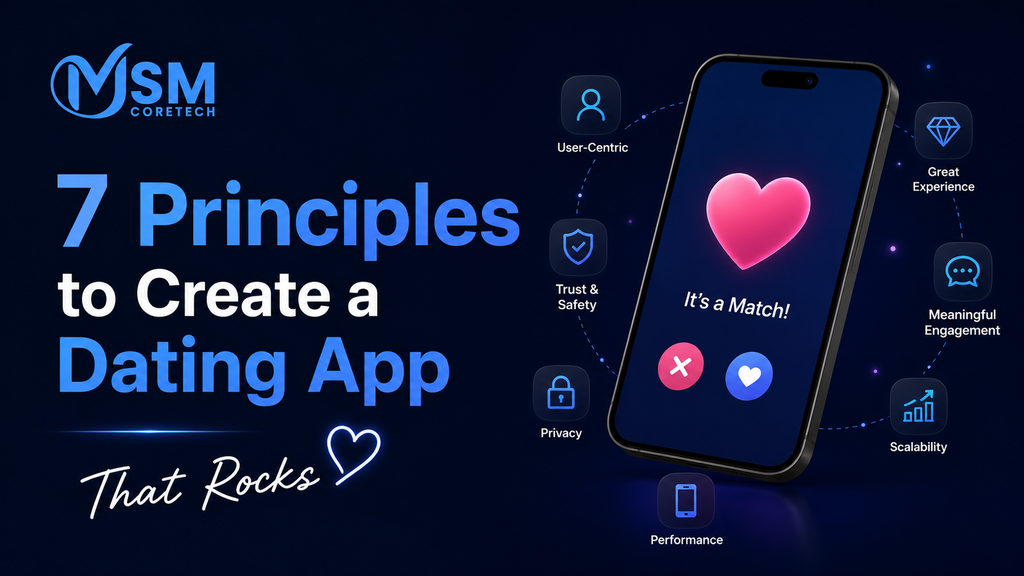
7 Principles to Create a Dating App That Rocks
Finding love, friendship, or meaningful connections is now easier than ever. With just a few taps on a smartphone, people can meet and interact with others from different cities, countries, and backgrounds. This is one of the main reasons why dating apps have become so popular around the world.
The online dating industry has grown rapidly over the past few years, and millions of people now use dating apps every day. Whether they are looking for a serious relationship, casual dating, or new friendships, users expect a smooth, enjoyable, and personalized experience.
But building a successful dating app is not as easy as creating profiles and adding a chat feature. Today’s users have many options to choose from, and they quickly leave apps that feel boring, unsafe, or difficult to use. To stand out in this competitive market, your app must offer something unique and provide real value to its users.
The most successful dating apps focus on user experience, security, engagement, and meaningful connections. They understand what users want and continuously improve their platforms to meet those expectations.
In this guide, we’ll explore seven powerful principles that can help you create a dating app that attracts users, keeps them engaged, and stands out in the fast-growing online dating industry.
Visit: Dating app development company
1. Understand Your Target Audience First
The first step to creating a successful dating app is understanding who will use it. Before you start designing the app or adding features, you need to know your target audience. Researching your audience helps you understand their needs, interests, and dating goals.
Try to learn about things like their age, relationship preferences, hobbies, lifestyle, and how they use online apps. For example, younger users may be interested in casual dating and meeting new people, while older users may be looking for serious relationships or marriage.
You should also understand the problems people face with current dating apps. Common issues include fake profiles, poor matches, difficult-to-use interfaces, privacy concerns, and limited ways to communicate. If your app solves these problems, users will have a better experience and be more likely to choose your platform.
Creating user personas can also help. A user persona is a simple profile that represents a type of user. It helps you make better decisions about your app’s features, design, and marketing.
When your dating app is built around the needs and expectations of its users, people are more likely to use it regularly, stay engaged, and recommend it to others. This creates a strong foundation for long-term success and growth.
Read also: Target Audience for Dating Apps
2. Create a Unique Value Proposition
One of the main reasons many dating apps fail is that they look and work almost the same. Today, there are hundreds of dating apps in the market, and most of them offer similar features like creating profiles, swiping, and chatting. Because of this competition, users need a strong reason to choose your app instead of another one.
To stand out, your dating app needs a clear Unique Value Proposition (UVP). This simply means explaining what makes your app different and why users should use it.
You can make your app unique in several ways, such as:
- Creating niche dating communities for specific professions, religions, interests, or groups.
- Offering interest-based matching that connects people with similar hobbies and passions.
- Using AI-powered matching to provide smarter and more personalized recommendations.
Many successful dating apps became popular by focusing on a specific purpose or audience:
- Casual dating apps help people find relaxed and flexible connections.
- Serious relationship apps focus on long-term relationships and compatibility.
- Community-based apps connect people who share similar values, cultures, or lifestyles.
The most important thing is to show users the real benefits of your features. For example, instead of only saying your app uses AI matching, explain how it helps users find better matches more quickly. When people clearly understand the value of your app, they are more likely to join, stay active, and recommend it to others.
Read Also: How to Develop a Dating App for Gamers

3. Focus on a Simple and Easy User Experience
A good user experience is one of the biggest reasons why a dating app becomes successful. When people open an app for the first time, they quickly decide whether to keep using it. If the sign-up process is confusing or takes too much time, many users may leave the app before trying its features.
Your dating app should have a simple onboarding process that helps users understand how the app works right away. The design should look clean, attractive, and modern without showing too many options at once.
Some important parts of a user-friendly design are:
- Easy navigation so users can move between features without any trouble.
- Simple layouts that make information easy to find and understand.
- Consistent design throughout the app for a smooth experience.
Making registration quick and hassle-free is also important. Most users prefer fast sign-up options, such as:
- Signing up with an email address or phone number.
- Using social logins like Google or Apple.
The matching process should also be simple. Users should be able to create a profile, find potential matches, and start conversations easily.
Since most people use dating apps on their smartphones, a mobile-first design is essential. A fast, responsive, and easy-to-use mobile app helps keep users happy, engaged, and active for a longer time.
Read also: How to Market and Grow a Dating App
4. Build Trust with Safety and Security
Safety and security are very important for any dating app. People share their personal details, photos, and private chats on these apps, so they need to feel safe while using them. If users do not trust your app, they may stop using it and will not recommend it to others.
One of the biggest problems on dating apps is fake profiles, scams, and bad behavior. To prevent these issues, your app should have strong security features that help users feel protected.
Some important security features are:
- Profile verification to reduce fake accounts.
- Two-factor authentication (2FA) for extra account security.
- Identity verification to make sure users are real people.
Privacy is also very important. Users want to know that their personal information is safe and handled properly. Some important privacy features include:
- Data encryption to keep sensitive information secure.
- Secure messaging to keep private conversations protected.
A good moderation system is also needed to create a safe and friendly community. Users should be able to:
- Block users they do not want to interact with.
- Report suspicious activities or inappropriate behavior.
By providing strong security, privacy, and moderation features, you can create a safe space where users feel comfortable meeting and talking to others. A trusted dating app helps increase user engagement, improves retention, and supports long-term growth.
Read also: Korean Dating App Development in the USA
5. Focus on Smart Matching and Personalization
Smart matching is one of the most important parts of a successful dating app. People use dating apps to find meaningful connections, and the quality of matches greatly affects their experience. When users get matches that fit their interests and preferences, they are more likely to stay active and keep using the app.
Matching algorithms help connect users based on their interests, preferences, and activities. A good matching system increases the chances of users finding the right connections.
Many modern dating apps use Artificial Intelligence (AI) and Machine Learning (ML) to make matching more accurate. These technologies study user behavior and learn from their actions over time to provide better recommendations.
Some useful personalization features include:
- Behavioral analysis to understand how users interact within the app.
- Preference learning to improve recommendations based on user choices.
- Customized match suggestions based on individual interests and preferences.
- Location-based matching to connect users with people nearby.
As users continue using the app, the system collects more information and becomes better at finding suitable matches. This helps improve the overall user experience.
Benefits of smart matching systems include:
- Higher user engagement
- Better quality matches
- Greater user satisfaction
- Improved user retention
By focusing on smart matching and personalization, you can create a dating app that offers a more enjoyable and successful experience for users.
Read also: Cost to Develop an App Like Grindr
6. Keep Users Engaged with Interactive Features
Getting users to download your dating app is important, but keeping them active is even more important. User retention is a key factor in the long-term success of any dating app. Finding new users often takes more time and money than keeping existing users engaged. That is why engagement features should be an important part of your app.
Interactive features encourage users to spend more time on the platform and connect with others. Some popular engagement features include:
- Real-time chat for instant messaging.
- Voice messages for more personal communication.
- Video calling allows users to get to know each other before meeting in person.
Gamification can also make the app more fun and exciting. It encourages users to stay active and participate more. Popular gamification features include:
- Daily match suggestions.
- Rewards and achievement badges.
- Profile boosts to increase profile visibility.
Push notifications are another great way to keep users engaged. They can notify users about new matches, messages, profile views, or special activities in the app. However, notifications should be useful and not sent too often.
To keep users active for a long time, regularly add new features, improve the user experience, and encourage meaningful interactions. When users continue to find value and enjoyment in the app, they are more likely to return, stay active, and help your dating app grow.
Visit: Hire Dating App Developer
7. Plan for Scalability and Future Growth
When building a dating app, it is important to think about the future, not just the first version of the app (MVP). Launching quickly is important, but your app should also be ready to grow. A strong technical foundation helps you handle more users, add new features, and provide a smooth experience as your app becomes more popular.
Choosing the right technology is an important part of growth. This includes:
- Frontend technologies that make the app fast and easy to use.
- A strong backend system that can manage more users and data.
- Cloud infrastructure that provides flexibility and reliable performance.
Good performance is also very important because users expect:
- Fast loading when viewing profiles and matches.
- Smooth and reliable messaging for easy communication.
As more people join your app, it should be able to grow without problems. Some important areas to consider are:
- Database scalability to store and manage large amounts of user data.
- Server management to keep the app stable during high traffic periods.
A successful dating app should continue improving over time. Future updates may include:
- Better AI-powered matching features.
- New social and community features.
- Premium subscriptions and other monetization options.
By planning for scalability from the beginning, you can support long-term growth, provide a better user experience, and keep your dating app competitive in the future.
Read also: Cost to Develop an App Like Hinge
Common Mistakes to Avoid When Building a Dating App
Even if you have a great dating app idea, some common mistakes can make it difficult for your app to succeed. Knowing these mistakes can help you create a better app and improve your chances of success.
Ignoring User Feedback: Users can tell you what they like and what problems they face while using your app. If you ignore their feedback, users may become unhappy and stop using the app. Listening to users helps you improve their experience.
Adding Too Many Features: Including too many features can make the app confusing and hard to use. Instead, focus on the most important features that solve user needs and provide a simple, smooth experience.
Weak Security and Safety: Users want to feel safe while using a dating app. Poor security can reduce trust and drive users away. Features like profile verification, secure messaging, data protection, and reporting tools help keep users safe.
Poor Matching System: Users expect to receive relevant matches. If the app shows people who do not match their interests or preferences, they may quickly lose interest. A smart matching system should consider user preferences, behavior, and compatibility.
No Marketing Plan: Building a great app is not enough. People need to know about it. Without a good marketing strategy, it can be difficult to attract new users and keep them engaged.
By avoiding these common mistakes, you can build a dating app that users enjoy, trust, and continue using for a long time.
Read Also: Geolocation in Dating Apps Development: Privacy & UX

Future Trends in Dating App Development
The dating app industry is changing quickly as technology improves and user needs continue to grow. Many new trends are shaping the future of dating apps.
AI-Powered Matchmaking
Artificial intelligence (AI) will help dating apps suggest better matches by understanding users’ interests, behavior, and preferences more accurately.
Video-First Dating Experiences
More dating apps are adding video profiles, video calls, and short videos. This helps users get to know each other better and build trust before meeting in person.
Niche Community Platforms
Dating apps designed for specific groups, interests, careers, lifestyles, or communities are becoming more popular because they help users find like-minded people.
Enhanced User Verification
Better identity verification and security features will help reduce fake profiles and make dating apps safer for everyone.
Virtual and Augmented Reality Dating
VR and AR technologies may allow users to meet and interact in virtual environments, creating more exciting and realistic dating experiences.
Hyper-Personalized User Experiences
Future dating apps will offer personalized matches, content, and features based on each user’s unique interests and preferences.
These trends will make dating apps more engaging, secure, and personalized, helping users enjoy a better and more successful online dating experience.
Conclusion
Building a successful dating app is not just about having a good-looking design or simple matching features. The seven principles discussed in this guide help create a strong foundation for a dating app that users can enjoy and trust. Understanding your target audience, offering something unique, providing a smooth user experience, ensuring security, using smart matching, keeping users engaged, and planning for future growth are all important for long-term success.
One of the biggest challenges in dating app development is balancing user experience, security, and innovation. Users want an app that is easy to use, safe, and effective in helping them build meaningful connections.
Understanding what users need and how they behave is the key to growth. When you create features based on real user expectations, you can deliver a better and more enjoyable experience.
Technology also plays an important role in modern dating apps. Features like AI-powered matching, personalized recommendations, and advanced security tools help improve user satisfaction and build trust.
In today’s competitive dating app market, businesses that focus on attracting new users, keeping them engaged, and continuously improving their platform are more likely to create a dating app that stands out and achieves long-term success.

Related Posts

10 Key Applications of AI in the Food Industry (2026)
Walk into any restaurant kitchen, grocery warehouse, or food delivery control room today, and you will find something quietly running...
Read More
How To Develop An App Like YouTube Music: A Complete Guide
Music is now a part of our everyday life. People listen to songs while getting ready in the morning, working,...
Read More

Must-Have Features in Fintech Apps & Digital Financial Platforms
Think about how often you use your phone to pay bills, send money, shop online, or check your bank balance....
Read More


 Verified Review




 +44 7427829444
 71-75, Shelton Street, Covent Garden, London, United Kingdom, WC2H 9JQ