

Share this article


Taxi Booking App Development: Features, Cost, Tech Stack, and More
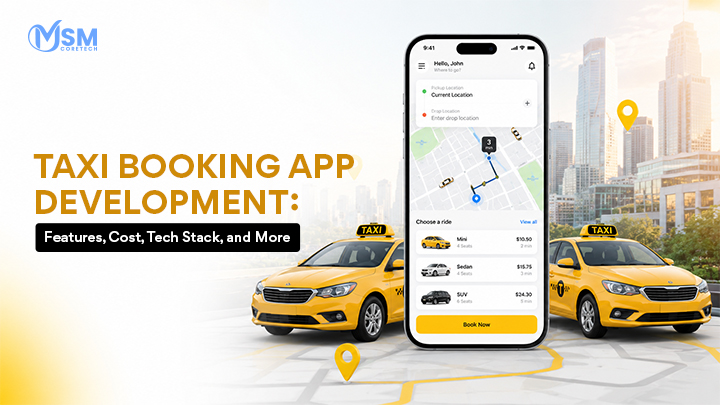
Think about the last time you needed a ride. Chances are, you didn’t stand on a street corner waving your arm; you pulled out your phone, tapped a few buttons, and watched a car make its way to you on a live map. That simple, everyday moment is the result of years of innovation in one specific area: taxi booking app development.
What started as a convenience for city dwellers has turned into a massive global industry. Ride-hailing apps are now a normal part of daily life in big cities and small towns alike, and the market keeps expanding year after year.
Entrepreneurs, taxi fleet owners, and even completely new startups are pouring money into this space because the model is proven, the revenue is recurring, and there’s still plenty of room for regional and niche players to succeed.
From smartphone adoption to AI-powered dispatch, the numbers behind this industry tell a clear story of steady, strong growth.
By the end of this article, you’ll understand exactly what a taxi booking app is, how it works, what taxi booking app development features you need, what it costs, which technologies power it, and how to pick the right development partner.

Also Read: Build a Taxi Booking App Like Uber
What is a Taxi Booking App?
A taxi booking app is a mobile application that lets people request a ride from their phone, instead of calling a taxi dispatcher or flagging one down on the street. It connects riders who need transportation with nearby drivers who can provide it, all through a digital platform.
At a basic level, a rider opens the app, enters their pickup location and destination, and the app finds and connects them with a nearby available driver. The rider can see the driver’s location on a live map, track their trip in real time, and pay automatically through the app once the ride is complete. No cash, no phone calls, no guessing when the car will show up.
How Does a Taxi Booking App Work?
It helps to walk through the complete workflow step by step, because this is really the backbone of any taxi booking app development project. Every single ride, no matter how simple it looks to the rider, goes through these eight stages behind the scenes.
User Registration
Before anyone can book a ride, they need to create an account. This usually takes just a minute, signing up with a phone number, email address, or a social media login. The app verifies the phone number with an OTP (one-time password) to confirm the user is real.
Ride Booking
Once registered, the rider opens the app, enters their pickup point and destination, and selects the type of vehicle they want (economy, premium, SUV, and so on). The app instantly shows an estimated fare and expected wait time before the rider confirms anything.
Driver Matching
This is where the real technology kicks in. The app’s matching system looks at all nearby available drivers and picks the best one based on distance, current traffic, and sometimes driver rating. This whole process typically takes just a few seconds.
Live GPS Tracking
Once a driver accepts the ride, the rider can watch the driver’s car moving toward them on a live map in real time. This single feature does more to build trust than almost anything else in the app, because it removes the uncertainty of “where is my ride?”
Ride Confirmation
Before the trip actually begins, both the rider and driver confirm details: pickup location, destination, and sometimes a short PIN or code the rider shares with the driver to confirm they’re getting into the right car.
Trip Begins
The driver starts the trip inside the app, which kicks off live tracking of the route, distance, and time, all of which feed into the final fare calculation.
Secure Payment
Once the trip ends, payment happens automatically through the rider’s saved payment method: credit card, debit card, digital wallet, or sometimes cash, depending on what the platform supports. A digital receipt is generated instantly.
Ratings & Reviews
Finally, both the rider and driver get a chance to rate each other and leave feedback. This keeps quality high across the whole platform and helps flag any drivers or riders who consistently cause problems.
Understanding this full workflow matters because every one of these steps needs solid, reliable technology behind it. A weak link anywhere in this chain slow driver matching, inaccurate GPS, a failed payment directly hurts the user experience.
Also Read: AI in Taxi App Development
Taxi Booking App Market Overview
If you’re wondering whether now is a good time to invest in this space, the market data makes a pretty strong case. Let’s look at the key numbers and trends shaping the industry.
Global market size
The global ride-hailing market has grown into a massive industry worth well over a hundred billion dollars, with steady expansion expected to continue through the rest of this decade. What used to be a service limited to major Western cities has now spread to nearly every corner of the world.
CAGR
Industry analysts consistently point to a strong compound annual growth rate (CAGR) for ride-hailing, generally landing somewhere in the mid-to-high teens percentage range depending on the specific report and region. That kind of sustained growth is rare and reflects genuinely increasing demand, not just a short-term trend.
Smartphone adoption
None of this growth would be possible without smartphones becoming affordable and widespread, even in smaller towns and developing regions. As more people get access to a smartphone and mobile internet, the pool of potential riders keeps expanding.
Ride-hailing trends
People are increasingly comfortable booking, tracking, and paying for rides entirely through an app, without ever speaking to a human. This shift toward fully digital, self-service experiences is only accelerating, especially among younger riders.
AI adoption
Artificial intelligence has moved from being a “nice extra” to becoming close to a baseline expectation in taxi apps. AI is now commonly used for smarter driver matching, dynamic pricing, demand prediction, and fraud detection and adoption of these features is climbing fast.
Electric vehicle integration
As cities push harder for greener transportation and riders become more environmentally conscious, taxi apps are increasingly adding EV-specific features from EV-only ride options to tracking carbon savings on each trip.
Future market predictions
Looking ahead, expect to see even deeper AI integration, wider EV adoption, early moves toward autonomous vehicle partnerships, and continued expansion into underserved regions where reliable, affordable ride-hailing still doesn’t exist. The businesses that plan for these shifts now will be in a much stronger position later.
Also Read: Develop a Taxi App Like Hala Taxi
Different Types of Taxi Booking Apps
Not every taxi booking app needs to compete directly with Uber. In fact, some of the most successful businesses in this space have grown by focusing on a specific model rather than trying to do everything at once. Here’s a look at the main types.
Ride-Hailing Apps (Uber, Lyft)
This is the classic model most people think of: on-demand rides for everyday city travel, matching riders with nearby drivers in real time.
Corporate Taxi Apps
Built for businesses that need to manage employee travel, with features like centralized billing, expense reports, and account-level controls for HR or admin teams.
Car Rental Apps
Instead of booking a ride with a driver, users rent a vehicle for a set period and drive it themselves, often used for longer trips or specific travel needs.
Bike Taxi Apps
Popular in dense, traffic-heavy cities, these apps connect riders with motorbike or scooter drivers for faster, more affordable short trips.
Airport Taxi Apps
Focused specifically on airport pickups and drop-offs, often with features like flight tracking (so the driver knows if a flight is delayed) and fixed airport pricing.
Outstation Taxi Apps
Designed for longer, intercity trips rather than short local rides, usually with different pricing models based on distance and trip duration.
Luxury Taxi Apps
Focused on premium vehicles and a higher-end experience, targeting business travelers or customers willing to pay more for comfort and reliability.
Women Safety Taxi Apps
Built around enhanced safety features specifically for women riders and drivers, such as verified female drivers, added emergency features, and trusted contact sharing.
Electric Vehicle Taxi Apps
A growing category focused entirely on eco-friendly rides, appealing to environmentally conscious riders and often supported by local green transportation incentives.
Choosing the right model or even combining a couple of these early on shapes almost every other decision you’ll make in your taxi booking app development project, from features to pricing to marketing..
Also Read: On-Demand Home Services Business and Develop an App
Must-Have Features of a Taxi Booking App
Every taxi booking app is really three connected apps working together: one for passengers, one for drivers, and one for the business admin. Let’s go through the essential taxi booking app development features for each.
Passenger App Features
| Feature | Description |
|---|---|
| User Registration | Sign up using email, phone, or social accounts |
| Ride Booking | Instant and scheduled rides |
| Fare Estimation | Cost before booking |
| Multiple Payment Options | Cards, Wallets, UPI, Cash |
| Live Driver Tracking | Real-time GPS |
| Ride History | Previous bookings |
| Ratings & Reviews | Feedback system |
| Push Notifications | Booking updates |
| SOS Button | Emergency support |
| Promo Codes | Discounts |
Each of these plays a specific role. Registration needs to be quick and painless, because a long sign-up form is one of the fastest ways to lose a first-time user. Fare estimation builds trust by showing the price before the rider commits to anything, avoiding unpleasant surprises. Live tracking removes the “where’s my ride” anxiety completely. And a visible SOS button has become close to a non-negotiable safety feature, especially for solo riders traveling at night.
Driver App Features
The driver app needs to be just as thoughtfully built, since a frustrated driver directly translates into a worse experience for riders. Key features include:
| Feature | Description |
|---|---|
| Driver Registration | Quick sign-up for new drivers joining the platform |
| Document Verification | Uploading and verifying licenses, vehicle papers, and identification |
| Ride Request Management | Clear, fast alerts for incoming ride requests, with the ability to accept or decline |
| Navigation | Built-in or integrated turn-by-turn directions to the pickup point and destination |
| Earnings Dashboard | A clear view of daily, weekly, and monthly income |
| Ride History | A record of completed trips for reference and dispute resolution |
| Availability Toggle | A simple on/off switch for whether the driver is accepting rides |
| Ratings | Visibility into their own rider-given ratings, so drivers can track their performance |
| Wallet Management | Tools to view balances, request payouts, and track transactions |
Admin Panel Features
The admin panel is where the actual business gets run day to day. It’s easy to underestimate this piece, but it’s arguably just as important as the two apps riders and drivers see. Core features include:
| Feature | Description |
|---|---|
| Dashboard | a real-time overview of active rides, online drivers, and daily revenue |
| User Management | tools to view, manage, and support registered riders |
| Driver Management | approving new drivers, verifying documents, and handling suspensions when needed |
| Fleet Management | tracking and organizing vehicles across the platform |
| Pricing Management | setting base fares, surge pricing rules, and per-vehicle pricing |
| Commission Management | configuring how much the platform earns per ride |
| Analytics & Reports | data on ride volume, revenue, popular routes, and driver performance |
| Coupon Management | creating and tracking promotional discount codes |
| CMS | managing app content like terms of service, FAQs, and in-app announcements |
| Notifications | sending targeted alerts or promotions to riders and drivers |
Together, these three feature sets form the true foundation of solid taxi booking app development. Skimping on any one of them, especially the admin panel, which often gets overlooked in early planning, tends to create real operational problems once the app is actually live.
Advanced Features Powered by AI
AI isn’t just a buzzword anymore in this industry it’s quickly becoming essential to staying competitive. Riders now expect faster matches, smarter pricing, and quicker support, and AI is what makes that possible at scale. Here’s why it matters and what it typically includes.
AI Driver Matching
Instead of simply picking the nearest driver, AI-based matching considers traffic conditions, driver ratings, and predicted demand to make smarter, faster matches.
Smart Route Optimization
AI analyzes real-time traffic data to suggest the fastest possible route, saving both time and fuel for drivers.
Dynamic Pricing
Prices automatically adjust based on real-time demand and supply, helping balance the number of available drivers with rider demand during busy periods.
Demand Prediction
By analyzing historical data, AI can predict where and when ride demand will spike, helping position drivers proactively instead of reactively.
AI Chatbot
Automated chat support handles common rider and driver questions instantly, reducing the need for human support agents for simple issues.
Voice Assistant
Voice-based booking lets users request a ride hands-free, which adds convenience and improves accessibility.
Fraud Detection
AI systems can flag suspicious activity, fake accounts, payment fraud, or GPS spoofing far faster than manual review ever could.
Driver Behavior Analysis
Monitoring driving patterns (harsh braking, speeding, route deviations) helps maintain safety standards and identify drivers who may need coaching.
Predictive Maintenance
For platforms managing their own fleet, AI can predict when a vehicle is likely to need maintenance, reducing unexpected breakdowns.
Personalized Ride Recommendations
Based on past behavior, the app can suggest saved locations, preferred vehicle types, or frequently traveled routes.
AI-based ETA Prediction
Rather than relying on simple distance calculations, AI factors in live traffic and historical patterns to give riders a much more accurate estimated arrival time.
Not every taxi app needs all of these features on day one, but building your system in a way that can support AI integration later is a smart, forward-looking move.

Also Read: Develop an App like Letgo
Taxi Booking App Development Process
Here’s how a typical taxi booking app development project actually unfolds, step by step process of app development, from the very first idea to a fully working, launched product.
Market Research
Understand your target market, study competitors, and identify a gap or niche you can realistically serve well.
Requirement Gathering
Turn your business idea into a clear, written list of what the app actually needs to do features, user types, and business rules.
Choose Business Model
Decide how the app will make money and what type of taxi service you’re building (ride-hailing, corporate, bike taxi, and so on).
UI/UX Design
Designers create wireframes and visual mockups, focusing heavily on simplicity, since both riders and drivers often use the app while distracted or in a hurry.
Technology Stack Selection
The development team chooses the specific tools, frameworks, and platforms that will power the app, based on your features, budget, and scalability needs.
Backend Development
Engineers build the core systems that handle ride matching, payments, notifications, and data storage the engine running behind the scenes.
Frontend Development
The actual passenger and driver apps get built, focusing on smooth, intuitive interfaces that are easy to use under real-world conditions.
API Integration
Third-party services like maps, payment gateways, SMS verification, and push notifications get connected into the app.
Testing & QA
The app is tested thoroughly across devices, network conditions, and real-world scenarios, including edge cases like a driver canceling mid-ride or a payment failing.
Deployment
Once testing is complete, the apps go live on the Apple App Store and Google Play Store, and the backend is deployed to your cloud hosting provider.
Maintenance & Updates
Launch is really just the beginning. Ongoing bug fixes, security updates, and new features keep the app running smoothly and competitively over time.
Depending on complexity, this entire process typically takes anywhere from a couple of months for a lean MVP to closer to a year for a fully-featured, multi-city platform.
Also Read: Develop a Profitable Home Service App
Technology Stack Used for Taxi Booking App Development
Choosing the right tech stack matters a lot, because it directly affects how fast your app runs, how easily it scales, and how much it costs to maintain over time. Here’s a full breakdown of what’s commonly used.
Frontend
- Flutter
- React Native
- Swift
- Kotlin
Flutter and React Native are the most popular choices today because they let developers build for both iOS and Android from a single codebase, saving significant time and cost. Swift (iOS) and Kotlin (Android) are used when a fully native experience is a priority.
Backend
- Node.js
- Laravel
- Django
- Spring Boot
Node.js is especially popular for taxi apps because it handles many real-time, simultaneous connections efficiently, exactly what’s needed when thousands of drivers and riders are active at once.
Database
- PostgreSQL
- MongoDB
- MySQL
PostgreSQL is often favored for taxi apps because of its strong support for location-based queries, which are essential for quickly finding nearby available drivers.
Cloud
- AWS
- Google Cloud
- Microsoft Azure
These platforms provide the hosting, storage, and scalability needed to support the app as your user base grows from hundreds to potentially millions of users.
Maps & Navigation
- Google Maps API
- Mapbox
These power location search, route calculation, and live navigation, arguably the single most important integration in any taxi app.
Real-Time Communication
- Socket.IO
- Firebase
These tools keep driver locations, ride statuses, and notifications updated instantly, without the rider or driver needing to refresh anything.
Payments
- Stripe
- Razorpay
- PayPal
- Apple Pay
- Google Pay
Supporting multiple payment options is important because preferences vary a lot by region; what works well in the US may not be the top choice in India or the Middle East.
Notifications
- Firebase Cloud Messaging
- OneSignal
These handle all the alerts that keep users informed: ride confirmations, driver arrivals, and promotional offers.
Analytics
- Firebase Analytics
- Mixpanel
These tools help you understand user behavior, track key metrics, and make informed business decisions as your platform grows.
A well-rounded, proven combination for most new taxi booking app development projects looks something like: Flutter or React Native for the apps, Node.js for the backend, PostgreSQL for the database, Google Maps for navigation, Firebase for real-time updates and notifications, and Stripe or Razorpay for payments.
Also Read: Cost To Develop A Hotel Booking App Like Hostelworld
Taxi Booking App Development Cost
This is usually the first question everyone wants answered, so let’s break it down clearly with real numbers.
Cost by Complexity
| App Type | Estimated Cost |
|---|---|
| Basic MVP | $15,000–$30,000 |
| Standard App | $30,000–$60,000 |
| Advanced App | $60,000–$120,000+ |
A Basic MVP typically includes the core essentials rider and driver apps, GPS tracking, basic booking, and simple payments just enough to launch and start testing your business model in the real world.
A Standard App builds on that foundation with more polished features multiple vehicle types, promo codes, ratings, better admin analytics, and improved design.
An advanced taxi booking app development cost includes more sophisticated capabilities like AI-based matching, multi-city support, advanced analytics, and deeper third-party integrations, which is why the cost climbs significantly at this tier.
Factors Affecting Development Cost
Several variables push the final number up or down:
- Features: More features naturally mean more development time and higher cost.
- UI/UX Complexity: A fully custom, branded design costs more than a simpler, template-based one.
- Platforms: Building for both iOS and Android increases cost compared to launching on just one platform first.
- Technology Stack: Some technologies and frameworks are more expensive to develop and maintain than others.
- Third-party APIs: Costs for Google Maps, payment gateways, and SMS services usually start manageable but scale with usage.
- AI Integration: Adding AI-powered features increases both development complexity and cost.
- Testing: Thorough testing across devices and real-world conditions takes time, but it’s essential and shouldn’t be cut short.
- Maintenance: Ongoing updates, bug fixes, and security patches typically add 15–20% of the original cost annually.
- Development Team Location: Rates vary widely; teams in North America and Western Europe generally charge more per hour than teams in Eastern Europe, India, or Southeast Asia, though quality can be excellent at either end.
Most successful taxi platforms start with a focused MVP, prove the model works, and then reinvest revenue into more advanced features rather than trying to build everything at once.
Taxi Booking App Monetization Strategies
Building the app is only half the equation; you also need a clear plan for generating revenue. Here are the most common, proven strategies used across the industry.
- Commission Per Ride: The most widely used model, the platform takes a percentage of every fare, with the rest going to the driver.
- Surge Pricing: Prices increase automatically during high-demand periods, benefiting both platform revenue and driver earnings while balancing supply and demand.
- Subscription Plans: Some platforms charge drivers a flat weekly or monthly fee for continued access to ride requests, instead of or alongside commission.
- In-App Advertisements: Local businesses can pay to advertise within the app, especially valuable once you have a strong, engaged local user base.
- Cancellation Charges: A small fee for last-minute cancellations discourages wasted driver time and compensates them fairly.
- Corporate Partnerships: Offering business accounts with centralized billing for employee travel opens up larger, more predictable revenue streams.
- Featured Driver Listings: Charging drivers a fee for better visibility or priority ride assignments during high-demand windows.
- Loyalty Programs: Rewarding frequent riders with points, discounts, or perks encourages repeat usage and long-term retention.
- Premium Memberships: Offering riders a paid membership tier with benefits like reduced fares, priority matching, or exclusive perks.
Most successful platforms combine two or three of these strategies rather than relying on just one, creating a more stable and diversified income stream.
Also Read: Develop a Doctor Booking App Like Practo
Essential APIs for Taxi Booking Apps
APIs (Application Programming Interfaces) are what let your app connect to outside services instead of building everything from scratch. Here are the essential ones for any taxi booking app development project.
- Google Maps API – powers location search, route calculation, and live navigation
- Stripe API – handles secure payment processing
- Twilio API – manages SMS verification and voice/call masking between riders and drivers
- Firebase API – supports real-time database updates and authentication
- SMS Gateway – sends OTPs and important account or ride alerts
- Push Notification API – delivers instant updates about bookings, driver arrivals, and promotions
- Analytics API – tracks user behavior and app performance for business insights
- Weather API (Optional) – can factor current weather into pricing or provide safety alerts to drivers during severe conditions
Choosing reliable, well-documented APIs from established providers saves a lot of headaches down the road, both in terms of development speed and long-term stability.
Security Features Every Taxi Booking App Needs
Taxi apps handle sensitive information live location, personal identity, and payment details so security has to be treated as a core part of the product, not an afterthought.
- OTP Login: Verifying users through a one-time password during sign-up and login helps confirm real identities and reduce fake accounts.
- End-to-End Encryption: Protects communication between riders and drivers, and between the app and its servers, from being intercepted.
- Secure Payment Gateway: Using trusted, PCI-compliant payment processors protects financial data during every transaction.
- GDPR Compliance: For apps operating in or serving users from Europe, complying with data protection regulations like GDPR isn’t optional it’s a legal requirement.
- Data Encryption: Sensitive data should be encrypted both while it’s being transmitted and while it’s stored on servers.
- Multi-Factor Authentication: Adding an extra layer of verification, especially for admin accounts, significantly reduces the risk of unauthorized access.
- Fraud Detection: Automated systems that flag suspicious activity, such as fake bookings, payment fraud, or GPS manipulation, protect both the business and its users.
- Role-Based Access Control: Ensuring that admin panel users only have access to the specific data and functions relevant to their role reduces internal security risks.
- Secure Cloud Storage: Storing user data and documents on secure, reputable cloud infrastructure with proper access controls and backups.
Building these features in from the start is far easier and far cheaper than trying to retrofit security into an app after a breach or compliance issue has already happened.
Common Challenges in Taxi Booking App Development
It’s worth being upfront about the fact that this isn’t a simple, plug-and-play project. A few challenges tend to come up again and again.
Real-Time GPS Accuracy
Location tracking can be unreliable in dense urban areas with tall buildings or in regions with weaker network infrastructure, so apps need fallback logic to handle this gracefully.
Driver Availability Management
Making sure there are enough active drivers in the right places at the right times is an ongoing balancing act, not a one-time setup.
Peak-Time Demand Handling
Sudden spikes in demand like during rush hour or bad weather can strain matching systems if they’re not built to scale dynamically.
Payment Failures
Payment systems need to fail gracefully and retry intelligently, since a failed transaction at the end of a ride creates a frustrating experience for both rider and driver.
User Data Security
With so much sensitive data flowing through the app, maintaining strong security practices is a constant responsibility, not a one-time checkbox.
Scalability
An app that works smoothly with a few hundred users can behave very differently once it’s handling tens of thousands. Planning for scale early avoids painful, expensive rebuilds later.
Route Optimization
Calculating truly efficient routes, especially with real-time traffic factored in, is more technically complex than it looks from the outside.
Customer Retention
Attracting new riders is one challenge; keeping them coming back consistently, in a market full of alternatives, is a whole different one.
Regulatory Compliance
Different cities and countries have different rules around ride-hailing, driver licensing, and data privacy, so compliance needs to be built in from the start rather than treated as an afterthought.
None of these challenges are dealbreakers they’re simply things a well-planned project accounts for early, rather than discovering the hard way after launch.
Future Trends in Taxi Booking Apps (2026 & Beyond)
The taxi booking industry isn’t standing still, and it’s worth understanding where things are headed if you’re planning a long-term business rather than a quick launch.
- AI-Powered Dispatch Systems: Smarter, faster matching between riders and drivers, powered increasingly by machine learning rather than simple proximity-based logic.
- Autonomous Vehicles: Self-driving taxis are still in early stages in most markets, but pilot programs are expanding, and partnerships between tech companies and existing ride-hailing platforms are likely to grow.
- Electric Vehicle Integration: As environmental concerns and city regulations push harder toward greener transportation, EV-focused features and fleets will keep becoming more common.
- Voice-Based Ride Booking: Hands-free, voice-activated booking will become a more mainstream convenience feature, especially as voice assistant technology continues to improve.
- Predictive Demand Forecasting: More advanced AI models will help platforms anticipate demand hours or even days in advance, improving driver positioning and reducing wait times.
- Blockchain for Payments: Some platforms are exploring blockchain technology for faster, more transparent, and more secure payment processing between riders, drivers, and the platform.
- IoT-Enabled Fleet Management: Internet of Things sensors in vehicles can provide real-time data on vehicle health, fuel or battery levels, and maintenance needs.
- Green Mobility Solutions: Beyond just electric vehicles, expect more platforms to introduce carbon tracking, eco-friendly route options, and sustainability-focused incentives.
- Super App Integration: Many taxi platforms are expanding beyond just rides, adding food delivery, package delivery, and other on-demand services into a single “super app” experience.
Keeping an eye on these trends helps ensure that whatever you build today has room to grow and adapt, rather than becoming outdated within a couple of years.
Also Read: Develop A Hotel Booking App Like Marriott Bonvoy
Why Choose MSM CoreTech for Taxi Booking App Development?
Choosing the right partner matters just as much as choosing the right features. If you’re looking for a taxi booking app development company that genuinely understands this space, here’s what MSM CoreTech brings to the table.
- Experienced app developers: A team with real, hands-on experience building taxi and on-demand apps, not just general mobile development experience.
- Custom taxi app solutions: Rather than forcing your business into a rigid, one-size-fits-all template, the focus is on building a solution tailored to your specific business model, whether that’s ride-hailing, corporate travel, or a specialized niche.
- AI-powered development expertise: Practical experience integrating AI features like smart matching, dynamic pricing, and demand prediction, so your app doesn’t fall behind on capabilities riders increasingly expect.
- Scalable architecture: Systems built with growth in mind from day one, so you’re not forced into a costly rebuild once your user base expands beyond your first city or region.
- Cross-platform development: Efficient use of frameworks like Flutter and React Native to deliver strong iOS and Android experiences without doubling your development cost.
- Agile methodology: A development process built around regular check-ins, iterative progress, and flexibility to adjust as your requirements evolve.
- Post-launch support: Ongoing maintenance, bug fixes, and updates after launch, because a taxi app’s job is never really “done.”
- Transparent pricing: Clear, upfront cost breakdowns with no hidden surprises partway through the project.
- On-time delivery: A track record of sticking to agreed timelines, so your business plans and launch dates stay on schedule.
When you’re investing significant time and money into taxi booking app development, working with a partner who combines technical skill with genuine business understanding makes a measurable difference in how smoothly the project goes and how well the final product actually performs.

Conclusion
Taxi booking app development is a genuinely exciting opportunity, but it’s also a serious undertaking that goes well beyond just designing a nice-looking app. You’re really building three connected systems for riders, drivers, and your own business operations that all need to work together smoothly, in real time, every single day.
The good news is that the path forward is well understood at this point. Start with a clear set of core taxi booking app development features, choose a proven and scalable tech stack, and budget realistically, understanding that costs can range anywhere from around $15,000 for a lean MVP to well over $120,000 for a fully custom, AI-powered platform. Most importantly, partner with a taxi booking app development company that genuinely understands this space rather than treating it like just another app project.
The ride-hailing market isn’t slowing down, and there’s real room for new, well-run players especially those willing to serve specific cities, niches, or customer needs that bigger platforms overlook. With a clear plan, realistic expectations, and the right development partner by your side, there’s no reason your taxi app can’t become the next reliable, trusted way people get around in your target market.
FAQs
Costs generally range from about $15,000 for a basic MVP up to $120,000 or more for an advanced, feature-rich platform, depending on complexity, design, and the development team you choose to work with.
A basic MVP can often be built in a couple of months, while a more complete, standard-to-advanced platform typically takes anywhere from four to nine months, depending on the scope of features.
A common, well-tested combination includes Flutter or React Native for the apps, Node.js for the backend, PostgreSQL for the database, Google Maps for navigation, and Stripe or Razorpay for payments.
At minimum, you need user registration, ride booking, fare estimation, live GPS tracking, multiple payment options, ratings and reviews, and a solid admin panel to manage the whole operation behind the scenes.
Most platforms combine a few revenue streams commission per ride, surge pricing, subscription fees for drivers, cancellation charges, and sometimes corporate partnerships or in-app advertising.

Related Posts

10 Key Applications of AI in the Food Industry (2026)
Walk into any restaurant kitchen, grocery warehouse, or food delivery control room today, and you will find something quietly running...
Read More

How To Develop An App Like YouTube Music: A Complete Guide
Music is now a part of our everyday life. People listen to songs while getting ready in the morning, working,...
Read More

Must-Have Features in Fintech Apps & Digital Financial Platforms
Think about how often you use your phone to pay bills, send money, shop online, or check your bank balance....
Read More


 Verified Review




 +44 7427829444
 71-75, Shelton Street, Covent Garden, London, United Kingdom, WC2H 9JQ