

Share this article


Car Rental App Development Guide: Features, Benefits, and Cost
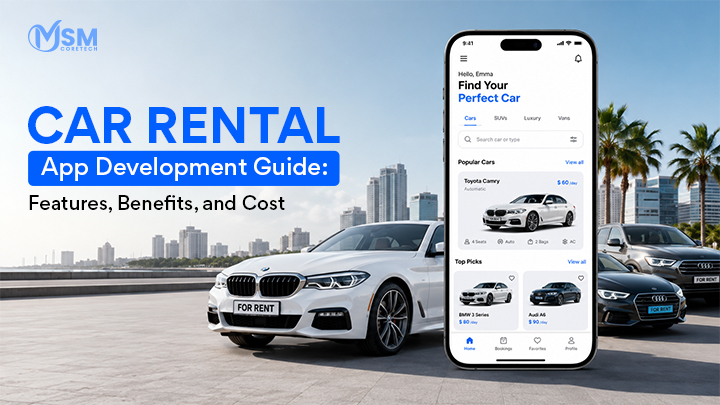
“The way people travel is changing, and people now prefer simple and convenient ways to make their journeys better.” Today, customers want fast, flexible, and easy transportation options, which has increased the demand for car rental apps. Instead of visiting rental offices or calling rental companies, users can easily find, book, and manage rental cars directly through their smartphones.
Mobile technology is changing the car rental industry by making the complete rental process quicker and easier. Features like real-time car availability, GPS tracking, online payments, instant booking, and digital verification help customers get a smooth and convenient rental experience. These apps also help businesses manage their services better and provide better support to their customers.
Creating a simple and feature-rich car rental app is important for businesses that want to grow and compete in today’s transportation market. A well-built app helps improve customer experience, manage vehicles easily, and get more booking opportunities.
Investing in a custom car rental app allows businesses to build a solution that matches their specific needs and goals. It helps automate daily tasks, attract more customers, and offer better and more personalized services. With the right features, technology, and development process, a car rental app can become a valuable tool for business growth and achieve long-term success.

What is a Car Rental App?
A car rental app is a mobile application that helps people search, book, and rent cars easily using their smartphones. These apps allow users to find available cars, check rental prices, choose how long they need the car, make payments, and manage their bookings without going to a rental office. Businesses that want to create these types of apps can hire a reliable car rental app development company to build a custom and easy-to-use solution.
Car rental apps connect customers with car rental companies by providing a simple platform where both can interact directly. Customers can view different cars, compare options, and choose a vehicle according to their requirements. Rental businesses can add their vehicles to the app, manage bookings, check car availability, and offer better services to customers through the application.
Traditional car rental services often require customers to visit a rental office, fill out paperwork, and contact the company to check vehicle availability and prices. This process can take more time and may not be very convenient for customers. On the other hand, app-based car rental solutions make the process easier by allowing users to book cars quickly, check real-time vehicle availability, make digital payments, track vehicles through GPS, and enjoy a better rental experience. By developing a car rental app, businesses can automate their daily operations, connect with more customers, and offer a simple, smooth, and convenient car rental service.
Read Also: Taxi Booking App Development: Guide
Why Invest in a Car Rental App?
The demand for on-demand transportation services is growing rapidly as more people prefer quick, easy, and flexible travel options. A car rental app allows customers to search for available cars, compare prices, book vehicles, and make payments directly from their smartphones. This saves time and provides a smooth rental experience without the need to visit rental offices.
Today, customers prefer online booking and digital payment options because they are faster and more convenient. With a car rental app, users can book a car anytime, check availability in real time, and receive instant booking confirmations.
For rental businesses, investing in a car rental app offers many benefits. It helps them reach more customers, manage vehicles efficiently, track bookings, and reduce manual work. Businesses can also increase their revenue by offering better services and attracting more users. A well-designed app improves customer satisfaction and helps rental companies stay competitive in the growing digital market.
Key Features of a Car Rental App
A successful car rental app should include useful features that make the booking process simple for customers and easy to manage for businesses. A well-designed app usually has three main parts: a customer app, a driver or car owner app, and an admin panel. Each part helps users complete their tasks smoothly.
Customer App Features
The customer app is designed to provide a fast and convenient car booking experience. Users can create an account through user registration and login using email, phone number, or social media accounts. With profile management, customers can update their personal details, saved information, and booking preferences.
The search and filter cars feature helps users quickly find suitable vehicles based on car type, price, location, availability, and other preferences. Each vehicle should have a car details and availability section where customers can view photos, features, rental prices, and available dates.
With real-time car location tracking, users can check the vehicle location and get better visibility during rentals. The online car booking feature allows customers to select a car, choose rental dates, and confirm their booking directly from the app.
The app should support multiple payment options such as cards, digital wallets, and online payment gateways for a smooth checkout process. Customers can also view their booking history to check previous and current rentals. Ride or car rental notifications keep users updated about booking confirmations, reminders, payments, and return dates.
Adding reviews and ratings helps customers share their experience and builds trust among users. A customer support chat feature allows users to quickly contact support teams whenever they need help.
Driver/Car Owner App Features
For peer-to-peer car rental platforms, the driver or car owner app helps vehicle owners manage their listings. Owners can complete registration and verification to provide necessary details and build trust with customers.
The vehicle listing management feature allows owners to add car details, images, pricing, and rental terms. Through availability management, they can update when their vehicles are available or unavailable.
Owners can accept or reject booking requests based on their schedule. The earnings tracking feature helps them monitor rental income and payment details. A customer communication feature allows direct interaction between car owners and renters.
Admin Panel Features
The admin panel helps businesses easily manage and control the complete platform. User and vehicle management allows admins to manage customers, vehicle owners, and all listed vehicles in one place. Booking management helps admins track bookings, cancellations, and rental activities.
Admins can use payment and commission management to manage transactions, payments, and business revenue. Analytics and reports help them understand booking details, earnings, and user activities. The notifications management feature allows admins to send important updates and alerts to users. Lastly, customer support management helps admins handle customer issues, solve complaints, and provide a better user experience.
Read Also: Cost To Develop A Travel App Like Booking.com
Advanced Features for a Car Rental App
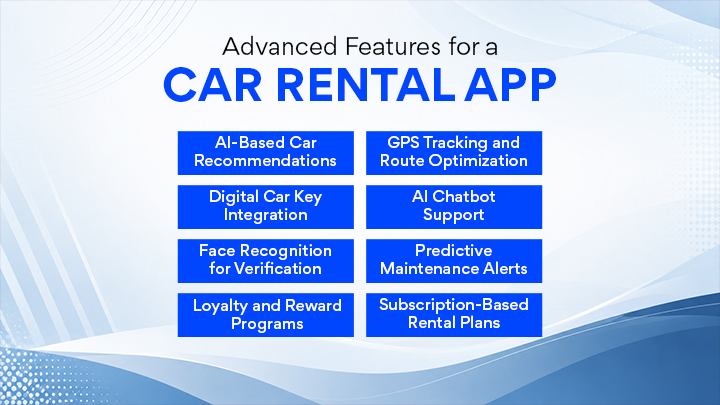
Modern car rental apps are not only used for simple car booking and payments. Today, businesses are adding advanced features with the help of new technologies to make the user experience better and improve daily operations. These features help customers easily find the right car, make the rental process simple, and help businesses manage their vehicles in a more effective way.
AI-Based Car Recommendations
AI-based recommendations help users find the right car based on their needs. The app can understand customer choices, past bookings, budget, travel distance, and available cars to suggest the best options. For example, it can suggest a small car for city trips or an SUV for long journeys. This makes car booking easier, faster, and improves the customer experience.
GPS Tracking and Route Optimization
GPS tracking helps customers and rental companies check the car’s location in real time. It improves safety and allows users to easily track their rented vehicles. Route optimization helps drivers find faster and better routes by checking traffic conditions and road updates. It also helps rental businesses manage their cars better and avoid unnecessary delays.
Digital Car Key Integration
Digital car key integration allows users to unlock and start a car using their smartphones. Customers do not need to carry physical keys or visit rental offices to collect them. With the help of Bluetooth, NFC, or connected car technology, users can access the vehicle directly from the app. This makes the car rental process faster, easier, and completely contactless.
AI Chatbot Support
AI chatbots help customers get instant support anytime they need it. They can answer common questions, help users with bookings, share details about rental rules, and solve payment-related problems. Chatbots reduce the pressure on customer support teams and help customers get quick answers whenever they need assistance.
Face Recognition for Verification
Face recognition helps make the rental process more secure. Customers can confirm their identity by scanning their face before booking a car. This reduces the chances of fraud, keeps rentals safe, and creates trust between customers and rental companies. It also makes the verification process faster than checking documents manually.
Predictive Maintenance Alerts
Predictive maintenance uses AI and vehicle data to check the condition of cars. The app can monitor details like engine health, mileage, and past service records. It sends alerts when a vehicle needs servicing or repairs. This helps rental businesses keep their cars in better condition, avoid sudden breakdowns, and provide safer vehicles to customers.
Loyalty and Reward Programs
Loyalty programs help car rental businesses keep their customers coming back. These programs can offer reward points, discounts, special deals, and extra benefits to regular users. Customers can earn points by booking vehicles and use those points for future rentals. This encourages customers to book again and helps businesses build a better relationship with them.
Subscription-Based Rental Plans
Subscription-based rental plans allow customers to rent vehicles for a longer time with easy and flexible payment options. Instead of booking a car every time, users can choose monthly or yearly rental plans according to their needs. This gives customers more convenience and helps rental businesses earn regular income.
Adding these advanced features can make a car rental app more useful, competitive, and easy to use. Businesses that use modern technologies can provide a better customer experience, get more bookings, and create a successful car rental platform.
Read Also: Cost to Develop a Hotel Booking App Like Agoda
Benefits of Developing a Car Rental App
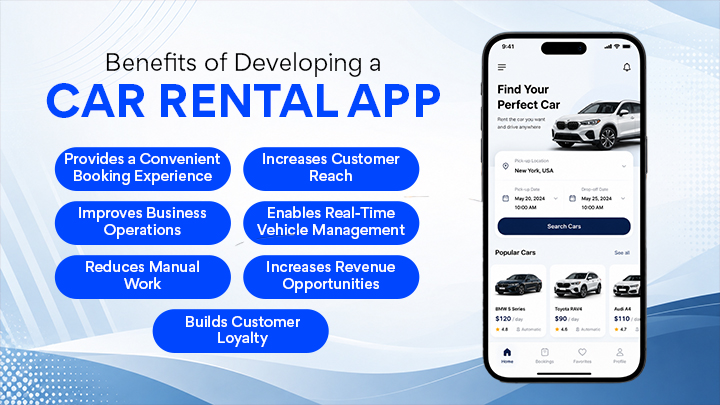
A car rental app helps businesses offer faster, simpler, and more reliable rental services to customers. Today, more people use smartphones and prefer booking cars online instead of visiting rental offices or calling for bookings. A well-designed car rental app makes the booking process easier for customers and helps businesses manage their rental services in a better way.
Provides a Convenient Booking Experience
A car rental app makes booking a car easy and fast for customers. Users can find available cars, check rental prices, choose dates, and book a vehicle anytime using their smartphones. Features like online payment, instant booking confirmation, and booking history make the rental process simple and stress-free.
Increases Customer Reach
A mobile app helps car rental businesses reach more customers, even outside their local area. Customers can easily find rental services through the app and book a car whenever they need one. Better online visibility and easy access help businesses attract more users and grow their customer base.
Improves Business Operations
Car rental apps help businesses manage their daily work in a simple and organized way. Business owners can manage bookings, check vehicle details, store customer information, and track payments from one platform. This reduces mistakes and makes the workflow smoother, helping businesses provide better service to customers.
Enables Real-Time Vehicle Management
Real-time vehicle management is an important benefit of a car rental app. It allows businesses to track vehicle locations, check which cars are available, and see the current rental status easily. With GPS integration, owners can know where their vehicles are, improve security, and manage their fleet more effectively.
Reduces Manual Work
Traditional car rental businesses often depend on paperwork and phone calls for managing bookings. A car rental app automates tasks like reservations, payments, customer updates, and vehicle records. This saves time, reduces errors, and allows employees to spend more time on important business tasks.
Increases Revenue Opportunities
A car rental app helps businesses find new ways to earn more money. Companies can offer luxury cars, subscription plans, business rentals, and extra services through the app. Features like smart suggestions and special offers can also encourage customers to book more vehicles.
Builds Customer Loyalty
A simple and easy-to-use car rental app helps businesses build better relationships with customers. Features like loyalty rewards, discounts, ratings, reviews, and personalized offers make customers happier. When users get a smooth and trustworthy experience, they are more likely to rent vehicles again in the future.
Overall, creating a car rental app is a smart choice for rental businesses that want to provide better customer service, improve daily operations, and grow in the competitive transportation market. With the right features and modern technology, a car rental app helps businesses offer a better user experience and create opportunities for long-term growth.

How Does a Car Rental App Work?
A car rental app makes renting a car easy, quick, and convenient for both customers and rental companies. Users do not need to visit a rental office or make phone calls to book a car. They can search for cars, choose a vehicle, make a booking, and manage their rental easily through the mobile app. The entire rental process happens online, which saves time and gives customers a better experience.
User Searches for Available Cars
The process begins when the customer opens the car rental app and looks for available cars. They enter details like the pickup location, pickup date, return date, and the type of car they want. The app then shows a list of available cars with useful information such as the car model, rental price, features, location, and availability.
Customers can also use filters to find the right car more easily. They can search by budget, number of seats, fuel type, or car brand. This helps them quickly choose a car that fits their needs.
Customer Selects a Vehicle and Rental Duration
After comparing different options, the customer chooses the car they want to rent. The app shows complete details about the selected car, including photos, rental price, features, and rental terms.
Next, the customer selects how long they want to rent the car. It can be for a few hours, one day, a week, or even longer. The app then automatically calculates the total rental cost based on the selected rental period and any extra services added by the customer.
User Completes the Booking and Payment
After choosing the car and rental time, the customer moves to the booking step. The app asks for important details like their name, contact information, and driving license for verification.
The customer can pay directly through the app using different payment options, such as a credit card, debit card, digital wallet, or online payment gateway. A secure payment system keeps personal and payment information safe and helps customers book with confidence.
Rental Provider Confirms the Booking
After the payment is successful, the rental provider receives the booking request through the admin panel or provider app. The provider checks the booking details and makes sure the selected car is available.
Once the booking is confirmed, the customer gets a confirmation message in the app. The message includes the pickup location, rental date and time, car details, and payment information. This automatic process helps both the customer and the rental provider stay updated and avoids unnecessary communication.
Customer Picks Up or Receives the Vehicle
After the booking is confirmed, the customer can pick up the car from the chosen rental location. Some modern car rental apps also offer home delivery, where the rental company brings the car directly to the customer’s location.
Features like GPS tracking, digital document verification, and smart locks make the pickup process quick, easy, and more secure.
App Manages Returns, Payments, and Feedback
When the rental time is over, the customer returns the car based on the rental agreement. The app helps manage the return by checking the rental time, calculating any extra charges, and completing the final payment.
Customers can also give ratings and write reviews about their experience. This helps rental companies improve their service and gives future customers more confidence.
Overall, a car rental app makes the whole rental process simple and smooth. From finding a car to returning it, every step is easy, fast, and well-managed through the app.
Read Also: How to Develop a Taxi App Like Hala Taxi: Guide
Car Rental App Development Cost
The cost of building a car rental app depends on several factors. Every business has different needs and goals, so the total cost can vary. It mainly depends on the features you want, the app design, the technology used, and the development process.
A basic car rental app with simple booking features costs less. On the other hand, an advanced app with AI features, GPS tracking, online payments, and real-time vehicle management costs more.
Below are the main factors that affect the overall app development cost.
App Complexity and Features
The features you add to your car rental app have the biggest effect on the development cost. A simple app with basic features like user registration, car listings, booking, and online payment is faster and less expensive to build. If you want advanced features such as AI-based car recommendations, live GPS tracking, digital keys, subscription plans, and business analytics, the app will take more time to develop. As a result, the overall development cost will also be higher.
| App Type | Estimated Cost |
|---|---|
| Basic App | $20,000–$30,000 |
| Medium App | $30,000–$50,000 |
| Advanced App | $50,000+ |
Platform Selection (iOS, Android, or Both)
The cost of app development depends on the platform you choose. Building an app for only Android or only iOS costs less than building it for both platforms. Many businesses choose cross-platform app development with Flutter or React Native because it helps reduce development costs while allowing the app to work on both Android and iOS, reaching more users.
| Platform | Estimated Cost |
|---|---|
| Android or iOS Only | $20,000–$60,000 |
| Both Platforms | $40,000–$120,000+ |
UI/UX Design Requirements
A simple and user-friendly design makes it easy for customers to book a car without any confusion. If you want custom animations, high-quality graphics, and unique screen designs, the UI/UX design cost will be higher than a basic and simple design.
| Design Type | Estimated Cost |
|---|---|
| Basic UI/UX | $3,000–$8,000 |
| Custom UI/UX | $8,000–$20,000+ |
Backend Development
The backend manages bookings, customer accounts, payments, vehicle availability, and admin functions. A strong backend is important for smooth app performance, especially when many users are using the app at the same time.
| Backend Type | Estimated Cost |
|---|---|
| Basic Backend | $8,000–$20,000 |
| Advanced Backend | $20,000–$60,000+ |
Read Also: Cost to Develop a Doctor Booking App Like HealthTap
Third-Party Integrations
Most car rental apps connect with external services such as payment gateways, Google Maps, GPS tracking, SMS, email, and push notifications. Adding more integrations increases development effort and overall cost.
| Integration Level | Estimated Cost |
|---|---|
| Basic Integrations | $3,000–$10,000 |
| Advanced Integrations | $10,000–$30,000+ |
Development Team Location
Development rates vary depending on where your development team is located. Teams in North America and Western Europe usually charge more, while experienced developers in countries like India often provide high-quality solutions at a more affordable cost.
| Team Location | Average Hourly Rate |
|---|---|
| North America | $100–$200/hour |
| Europe | $60–$150/hour |
| India | $25–$60/hour |
Overall Development Cost
The final cost depends on your business goals, app features, design, technology stack, and development partner. Starting with an MVP (Minimum Viable Product) is a smart way to launch quickly, test your idea, and add advanced features later as your business grows.
| App Level | Estimated Development Cost |
|---|---|
| Basic Car Rental App | $10,000–$15,000 |
| Medium-Level Car Rental App | $15,000–$20,000 |
| Advanced Car Rental App | $20,000–$75,000+ |
Choosing the right app development company can help you build a secure, scalable, and user-friendly car rental app while keeping the project within your budget.
Read Also: Cost To Develop A Hotel Booking App Like Hotels.com
Technology Stack for Car Rental App Development
Choosing the right technology stack is one of the most important steps in the app development process for a car rental app. A good technology stack helps the app run smoothly, load quickly, stay secure, and handle many users at the same time. It also makes it easier to add new features and keep the app updated in the future. Below are the main technologies commonly used to build a modern car rental app.
Frontend Technologies
The frontend is the part of the app that users see and use. It should be simple, fast, and easy to navigate.
- React Native helps developers build Android and iOS apps using one codebase. This saves time and reduces app development costs.
- Flutter is another popular framework that creates attractive and high-performance mobile apps for multiple platforms.
- Swift is used to build native iOS apps. It provides excellent speed, security, and a smooth user experience on Apple devices.
- Kotlin is the preferred language for android app development. It helps create fast, reliable, and secure Android applications.
Backend Technologies
The backend is the engine of the app. It manages bookings, user accounts, payments, and other important functions.
- Node.js is a fast and scalable technology that can handle many users and requests at the same time.
- Python is widely used because it is simple, secure, and supports AI-based features like smart car recommendations and chatbots.
- Java is a trusted backend technology known for its stability, security, and ability to manage large-scale applications.
Database
A database stores all the important information used by the app, such as customer details, vehicle information, bookings, payments, and rental history.
- MySQL is a reliable database for storing structured business data.
- PostgreSQL offers high performance and strong security for handling large amounts of data.
- MongoDB is a flexible database that works well for apps with changing data and growing user needs.
Cloud Services
Cloud platforms help store app data securely and allow the app to grow as the business expands.
- AWS, Google Cloud, and Microsoft Azure provide secure storage, cloud hosting, automatic backups, and high availability. They also improve app performance and make it easier to manage traffic during busy times.
APIs
APIs connect the app with useful third-party services.
- Google Maps API helps users find nearby cars, rental locations, and get directions.
- Payment Gateway APIs allow customers to make safe and quick online payments.
- Notification APIs send booking confirmations, payment updates, reminders, and promotional offers directly to users, helping them stay informed throughout the rental process.
Read Also: How to Start Your Own Taxi Business App
Monetization Strategies for Car Rental Apps
A car rental app can earn money in different ways while providing a smooth experience for customers and vehicle owners. Choosing the right monetization strategy helps increase revenue and supports long-term business growth.
Commission-Based Model
The app can charge a small commission on every successful booking. Whenever a customer rents a car, the platform keeps a percentage of the booking amount while the remaining payment goes to the car owner or rental company.
Subscription Plans
Offer monthly or yearly subscription plans with extra benefits. Subscribers can enjoy discounts, free cancellations, priority booking, or access to premium vehicles, making the service more valuable.
Premium Listings
Car owners or rental companies can pay to feature their vehicles at the top of search results. This gives their listings more visibility and helps them attract more bookings.
Advertising
The app can display relevant ads from insurance providers, travel agencies, hotels, fuel stations, or car accessory brands. This creates an additional source of income without affecting the main rental service.
Convenience Fees
A small convenience or service fee can be added to each booking to cover payment processing, customer support, and platform maintenance costs.
Corporate Rental Partnerships
Partner with businesses that need vehicles for employees or business travel. Offering customized rental plans and long-term contracts can generate steady income while building strong relationships with corporate clients.
Read Also: Cost To Develop A Restaurant App Like OpenTable
Steps to Develop a Car Rental App
Building a successful car rental app starts with proper planning. Every step is important to create an app that is easy to use, secure, and ready for business growth.
- Market Research and Planning: Start by studying your target audience, competitors, and market trends. This helps you understand what customers expect and what features your app should include.
- Define Features and Requirements: List the main features such as user registration, car search, booking, payments, GPS tracking, and an admin panel. Clear requirements make development faster and more organized.
- Create UI/UX Design: Design a clean and simple interface that allows users to find, book, and pay for a car without confusion. A good design improves the overall user experience.
- Select Technology Stack: Choose the right technologies for the frontend, backend, database, and cloud services. A reliable tech stack keeps the app secure, fast, and scalable.
- Develop MVP Version: Build a Minimum Viable Product (MVP) with only the essential features. This allows you to launch quickly, gather user feedback, and improve the app over time.
- Testing and Quality Assurance: Test every feature carefully to fix bugs, improve performance, and ensure the app works smoothly on different devices.
- App Launch: Publish the app on Android and iOS platforms and make it available to users.
- Regular Updates and Maintenance: Continue improving the app by adding new features, fixing issues, improving security, and keeping up with customer needs and market changes.
Read Also: How to Build a Restaurant App: Guide
Why Choose MSM CoreTech for Car Rental App Development?
Choosing the right development partner is important for building a successful car rental app. MSM CoreTech has an experienced team that creates custom car rental apps based on your business needs. We do not use one-size-fits-all solutions. Instead, we build apps that are easy to use, secure, and ready to grow with your business.
Our team develops feature-rich apps with online booking, secure payment options, GPS tracking, real-time vehicle availability, push notifications, and user-friendly dashboards. We focus on creating a simple and smooth experience for customers, car owners, and administrators.
At MSM CoreTech, we use the latest technologies to build fast, reliable, and scalable applications for Android, iOS, and the web. Every app goes through detailed testing to ensure high performance, security, and a bug-free experience.
We also provide complete support after launch, including regular updates, maintenance, feature improvements, and technical assistance to keep your app running smoothly. Whether you want to start a local car rental business or build a large rental platform, our team can help turn your idea into a successful mobile app.
Partner with MSM CoreTech to build a modern, secure, and easy-to-use car rental app that delivers a great customer experience and helps your business grow.
Conclusion
Car rental app development is a smart investment for businesses that want to grow in today’s digital market. More people now prefer booking rental cars through mobile apps because the process is quick, simple, and convenient. A well-designed app helps customers find, book, and pay for a vehicle without any hassle while making daily operations easier for rental businesses.
Adding advanced features such as AI-based car recommendations, GPS tracking, digital payments, real-time vehicle availability, chat support, and contactless booking can greatly improve the customer experience. These features make the app more reliable, save users time, and help businesses manage their vehicles more efficiently. As a result, companies can attract more customers, increase bookings, improve customer satisfaction, and build long-term loyalty.
To achieve these benefits, it is important to invest in a scalable and secure car rental app that can support business growth and handle increasing numbers of users. A strong app also protects customer data and ensures smooth performance as your business expands.
Partnering with an experienced car rental app development company like MSM CoreTech can help you build a custom, feature-rich, and future-ready solution that matches your business goals and delivers a great experience for your customers.
FAQs
A car rental app is a mobile application that allows users to search, compare, book, and pay for rental cars online. It makes the car rental process simple, fast, and convenient.
The cost depends on the app’s features, design, platform, and development complexity. A basic app may cost around $20,000–$50,000, while an advanced app with premium features can cost $100,000 or more.
Some essential features include user registration, car search and filters, online booking, secure payment, GPS tracking, booking history, push notifications, reviews, and customer support.
Development time varies based on the project’s complexity. A basic app may take 3–5 months, while a feature-rich app can take 6–12 months or longer.
Yes. You can build the app for both platforms using cross-platform technologies like Flutter or React Native, or develop separate native apps for Android and iOS.
A car rental app helps you reach more customers, automate bookings, improve fleet management, reduce manual work, increase revenue, and provide a better customer experience.
An experienced development company can build a secure, scalable, and customized app with modern features, ensuring high performance, better user experience, and long-term business growth.

Related Posts

10 Key Applications of AI in the Food Industry (2026)
Walk into any restaurant kitchen, grocery warehouse, or food delivery control room today, and you will find something quietly running...
Read More

How To Develop An App Like YouTube Music: A Complete Guide
Music is now a part of our everyday life. People listen to songs while getting ready in the morning, working,...
Read More

Must-Have Features in Fintech Apps & Digital Financial Platforms
Think about how often you use your phone to pay bills, send money, shop online, or check your bank balance....
Read More


 Verified Review




 +44 7427829444
 71-75, Shelton Street, Covent Garden, London, United Kingdom, WC2H 9JQ