Share this article


Handyman App Development Cost: A Comprehensive Guide
On average, the cost of developing a handyman app can range from $10,000 to $80,000 or more, depending on your business goals and customization requirements.
Running a handyman business successfully is exciting, but it also brings many challenges. As the number of customers grows, it can become difficult to manage service bookings, customer requests, payments, and technician schedules.
To make business operations easier and improve customer satisfaction, many business owners are investing in handyman mobile apps. A handyman app allows customers to book services quickly, track the status of their jobs, make secure payments, and communicate directly with service providers all from their smartphones.
Before moving forward, one of the most important questions to answer is:
How Much Does It Cost to Develop a Handyman App?
As the famous saying goes:
“Quality is remembered long after the price is forgotten.”
— Aldo Gucci
Creating a handyman app with useful features and an easy-to-use design requires a good investment. The total cost depends on several factors, such as the app’s complexity, features, platform choice, design needs, and the development team’s experience.

In this detailed guide, we will explain the cost of handyman app development, discuss the main factors that affect the price, and help you understand the budget needed to bring your app idea to life.
Let’s get started.
Why Build a Handyman App?
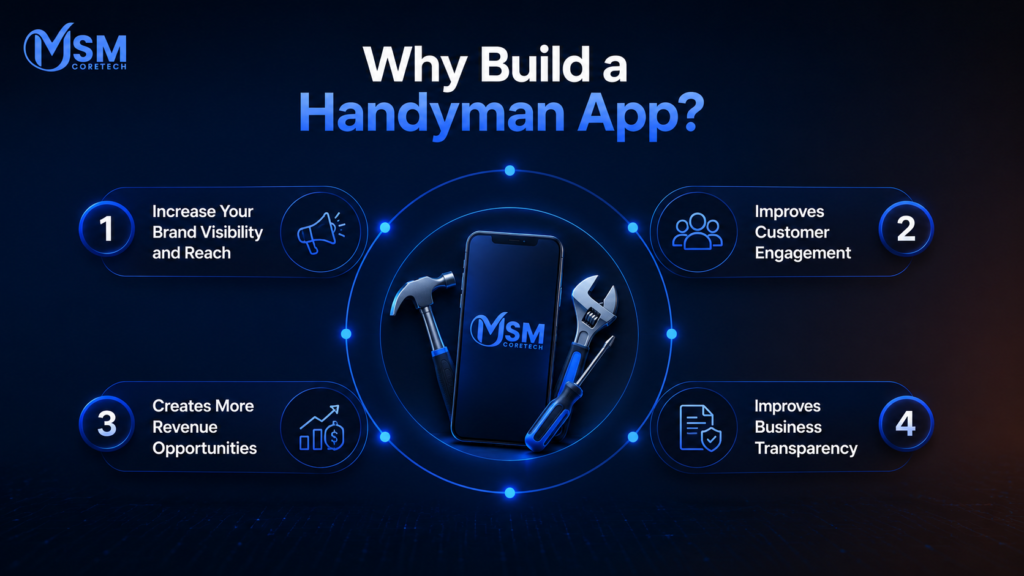
More people now prefer booking handyman services through mobile apps. Building a handyman app can help you manage your business more easily, attract more customers, and improve customer satisfaction. Here are some important reasons why investing in a handyman app is a good business decision.
1. Increase Your Brand Visibility and Reach
A handyman app helps more people discover your business. Customers can easily find your services, check what you offer, and book appointments directly from their phones. Having a mobile app makes your business available anytime and anywhere, helping you attract new customers and stay ahead of your competitors.
2. Improves Customer Engagement
A dedicated app helps you stay connected with your customers more easily. Features like push notifications, service reminders, in-app chat, and customer support make communication simple and effective. Customers can quickly book services, track their appointments, and share feedback, which improves their overall experience and helps build stronger relationships with your business.
3. Creates More Revenue Opportunities
A handyman app can help your business earn money in different ways. You can generate income through service bookings, premium memberships, featured listings, advertisements, and extra service fees. By offering easy online payments and additional services, you can increase customer convenience while creating new revenue opportunities for your business.
Read Also: Cost To Create An App In Florida
4. Improves Business Transparency
Transparency is important for gaining customer trust. A handyman app allows customers to easily see service details, pricing, technician information, and job progress in real time. Features like job tracking, customer ratings, reviews, and secure payment options make the entire process clear and trustworthy. This helps customers feel more confident when using the service and encourages them to come back again.
Overall, a handyman app helps businesses reach more customers, improve customer satisfaction, increase revenue, and build stronger trust. This makes it a smart investment for long-term business growth.
How Much Does It Cost to Develop a Handyman App?
The cost of developing a handyman app usually ranges from $20,000 to $150,000 or more. The total cost depends on several factors, such as the app’s features, design complexity, platform choice, technology used, and the experience of the development team.
Before estimating the overall cost of handyman app development, it is important to understand the factors that affect the price. Knowing these factors can help you plan your budget better and make the right decisions during the development process.
The table below shows the main factors that influence handyman app development costs, along with their estimated price ranges.
| Cost Factor | Description | Estimated Cost Range (USD) |
|---|---|---|
| App Complexity | Basic app with simple booking features or advanced app with tracking, chat, and payments | $5,000 – $40,000 |
| Platform Selection | Development for Android, iOS, or cross-platform solutions | $3,000 – $25,000 |
| UI/UX Design | Standard interface or custom user-friendly design | $2,000 – $15,000 |
| Essential Features | Service listings, booking, user profiles, reviews, and notifications | $5,000 – $30,000 |
| Advanced Functionalities | Live tracking, chat, multilingual support, and digital wallet | $8,000 – $25,000 |
| Backend Development | Server setup, APIs, admin dashboard, and database management | $5,000 – $20,000 |
| Third-Party Integrations | Payment gateways, maps, SMS, email, and other external services | $3,000 – $12,000 |
| Database & Cloud Services | Data storage for customer information, images, and documents | $2,000 – $8,000 |
| Admin Panel Development | Management of users, bookings, services, and reports | $4,000 – $12,000 |
| Security & Compliance | User authentication, data protection, and security measures | $2,000 – $7,000 |
| Quality Assurance & Testing | Performance testing, bug fixing, and app optimization | $2,000 – $10,000 |
| App Launch & Deployment | Publishing on app stores and hosting configuration | $1,000 – $5,000 |
| Maintenance & Support | Regular updates, enhancements, and technical support | $3,000 – $15,000+ per year |
Understanding these cost factors helps you get a better idea of the total cost of developing a handyman app. In the next section, we will explain each factor in detail and show how it affects the overall development cost.
Read Also: Cost To Create a Mobile App In New York
Factors That Affect the Cost of Creating a Handyman App
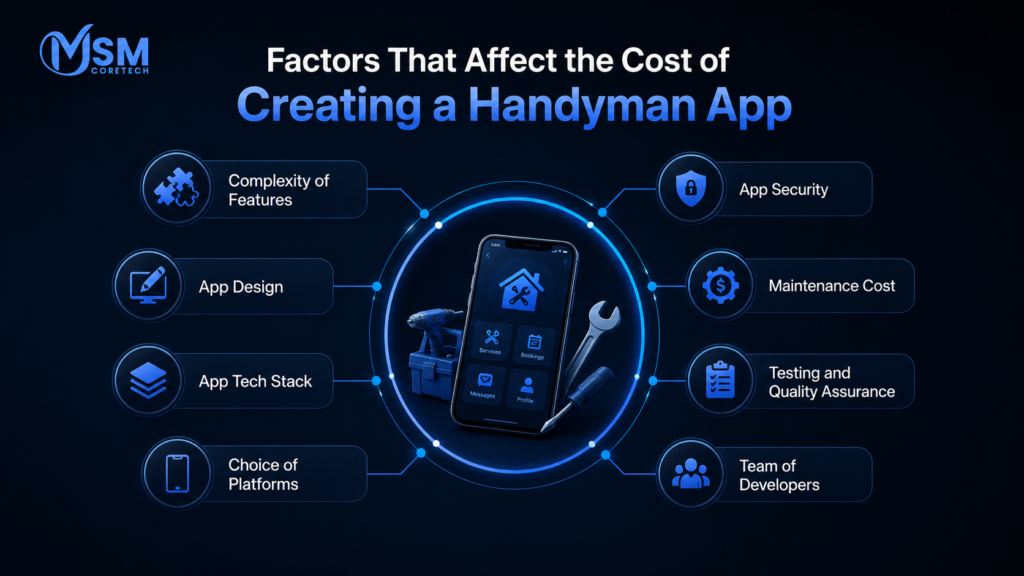
The cost of developing a handyman app depends on several factors. Every business has different needs, so the total cost can change based on the features you want, the technology used, and the overall development process. Understanding these factors can help you plan your budget better and make smarter decisions before starting your handyman app project.
| Factor | Impact on Cost |
|---|---|
| Complexity of Features | High |
| App Design | Medium to High |
| App Tech Stack | Medium |
| Choice of Platforms | High |
| App Security | Medium to High |
| Maintenance Cost | Medium |
| Testing and Quality Assurance | Medium |
| Team of Developers | High |
Complexity of Features
The features you include in the app play a big role in the total development cost. Simple features like user sign-up, service booking, and online payments usually cost less to build. However, advanced features such as live tracking, in-app messaging, AI-based suggestions, and managing multiple services require more time, effort, and technical skills, which increases the overall development cost.
| Feature Category | Specific Features | Cost Impact (Estimated) |
|---|---|---|
| Basic Features | User Registration, User Profiles | $2,000 – $5,000 |
| Service Listings & Categories, Basic Search | Included in Basic Features Cost | |
| Core Functionality | Basic Booking & Scheduling, In-app Notifications | $5,000 – $12,000 |
| Basic Payment Gateway, Simple Admin Panel | Included in Core Functionality Cost | |
| Enhanced Features | In-app Chat, Reviews & Ratings, GPS Tracking for Handymen | $12,000 – $20,000 |
| Advanced User Profiles, Promo Codes | Included in Enhanced Features Cost | |
| Advanced & AI Features | Real-time Customer Tracking, AI-based Matching | $20,000 – $30,000 |
| Dynamic Pricing, Multiple Payment Gateways | Included in Advanced Features Cost | |
| Video/Voice Calls, Comprehensive Analytics | Included in Advanced Features Cost |
Read Also: Top AI Trends in 2026
App Design
A simple app design usually costs less. If a business wants a unique design, smooth navigation, animations, and a personalized user experience, the design cost can be higher. A good design helps users enjoy the app and keeps them engaged.
| Design Aspect | Complexity Level | Cost Impact (Estimated) |
|---|---|---|
| UI/UX Design | Basic (Templates, Standard Elements) | $5,000 – $8,000 |
| Custom (Branded, Unique Layouts) | $8,000 – $15,000 | |
| Advanced (Highly Interactive, Personalized) | $15,000 – $20,000+ | |
| Wireframing & Prototyping | Basic (Rough Sketches, Simple Flows) | Included in UI/UX |
| Detailed (Clickable Prototypes, User Testing) | $1,000 – $3,000 (Additional) | |
| Graphic Design & Branding | Basic (Logo Integration, Standard Icons) | Included in UI/UX |
| Custom (Unique Icons, Illustrations, Brand Guidelines) | $1,500 – $4,000 (Additional) | |
| Animations & Micro-interactions | Minimal (Basic Loading, Taps) | Included in UI/UX |
| Moderate (Smooth Transitions, Feedback Animations) | $1,000 – $3,000 (Additional) | |
| Advanced (Complex Transitions, Custom Effects) | $3,000 – $5,000 (Additional) | |
| Platform-Specific Design | Single Platform (iOS or Android) | Base UI/UX Cost |
| Dual Platform (iOS & Android – Native) | +30% to +60% of Base UI/UX | |
| Cross-Platform (Flutter/React Native) | +10% to +30% of Base UI/UX |
Read Also: Cost To Create a Mobile App In Texas
App Tech Stack
The technology used to build the app also affects the overall cost. Using modern tools, programming languages, cloud services, and third-party integrations may increase the development budget. However, these technologies can help make the app faster, more secure, and easier to scale in the future.
| Tech Stack Complexity & Type | Key Characteristics | Cost Impact (Estimated) |
|---|---|---|
| Basic / Standard Stack | • Cross-platform development (Flutter/React Native) for iOS and Android • Standard backend (Firebase, Node.js with basic APIs)• Common databases (Firestore, MongoDB) • Minimal third-party integrations | $10,000 – $18,000 |
| Moderate / Custom Stack | • Native iOS (Swift) or Native Android (Kotlin/Java) • Custom backend (Python/Django, Ruby on Rails) • Relational databases (PostgreSQL, MySQL) • Multiple integrations such as payments, maps, and SMS services | $18,000 – $25,000 |
| Advanced / Specialized Stack | • Native development for both iOS and Android • Microservices-based backend architecture• Advanced real-time databases (Cassandra) • AI/ML, IoT, and complex third-party API integrations• Enhanced security protocols | $25,000 – $30,000+ |

Choice of Platforms
Building an app for only one platform, such as Android or iPhone (iOS), usually costs less. If you want the app to work on both Android and iOS, more development work and testing are needed, which increases the overall cost.
| Platform Type | Description | Cost Impact (Estimated) |
|---|---|---|
| Single Platform (iOS Only) | App developed exclusively for Apple devices using Swift or Objective-C. Requires testing on fewer device models, which can reduce development effort. | $10,000 – $18,000 |
| Single Platform (Android Only) | App developed exclusively for Android devices using Kotlin or Java. May require additional testing due to the wide variety of Android devices and screen sizes. | $10,000 – $18,000 |
| Cross-Platform | Built using frameworks such as Flutter or React Native, allowing a single codebase to run on both iOS and Android. This approach saves development time and cost. | $15,000 – $22,000 |
| Dual Platform (Native) | Separate native applications developed for both iOS and Android platforms. Provides excellent performance and user experience but involves the highest development cost. | $20,000 – $25,000+ |
Read Also: Web Design Companies in New York City
App Security
App security is important to keep customer information, payment details, and business data safe. Features like secure logins, protected payments, and data security systems can increase development costs, but they are necessary to build user trust and keep information secure.
| Security Level | Key Aspects | Cost Impact (Estimated) |
|---|---|---|
| Basic Security | Data Encryption, Password Hashing, Input Validation, Secure APIs | $10,000 – $15,000 |
| Standard Security | 2FA/OTP, Role-Based Access, Secure Payment Integration | $15,000 – $22,000 |
| Advanced Security | Biometric Authentication, Fraud Detection, Penetration Testing, GDPR Compliance | $22,000 – $30,000+ |
Read Also: Cost to Create a Mobile App in California
Maintenance Cost
After the app is launched, it still needs regular updates, bug fixes, performance improvements, and server maintenance. These ongoing costs should be included in the total app budget.
| Maintenance Aspect | Description | Cost Impact (Estimated Annual) |
|---|---|---|
| Essential Upkeep | Bug fixes, OS compatibility updates, server and database management | $3,000 – $8,000 |
| Security & Enhancements | Security patches, minor feature additions, UI/UX improvements | $8,000 – $15,000 |
| Proactive & Growth | Major updates, app scaling, advanced API management, and performance optimization | $15,000 – $20,000 |
Read Also: 9+ Best Video Streaming App Development Companies in USA
Testing and Quality Assurance
Proper testing helps find and fix problems before the app goes live. Quality assurance makes sure the app works smoothly on different devices and operating systems, providing users with a reliable experience.
| Testing Scope / Approach | Key Activities Included | Cost Impact (Estimated) |
|---|---|---|
| Basic Testing | Manual Functional Testing (core features), Limited Device Testing, Basic Bug Reporting | $2,000 – $5,000 |
| Standard Testing | Comprehensive Functional Testing, Usability Testing, Compatibility Testing on Major Devices, Regression Testing, Basic Performance & Security Checks, Detailed Reporting | $5,000 – $12,000 |
| Advanced QA | Automated Testing (UI & API), Performance & Load Testing, Penetration Testing, Extensive Device Coverage, User Acceptance Testing (UAT) | $12,000 – $20,000+ |
Read Also: 9+ Best Insurance App Development Companies in USA
Team of Developers
The number of developers, their experience level, and their location can affect the total cost of the project. Experienced developers may charge more, but they can help build a better-quality app and often complete the work more quickly.
| Developer Skill/Expertise | Location (Typical Hourly Rate) | Cost Impact (Estimated for App) |
|---|---|---|
| Junior to Mid-level Team | Asian Countries ($20-$50/hr) | $20,000 – $40,000 |
| Junior to Mid-level Team | European Countries ($40-$80/hr) | $30,000 – $70,000 |
| Senior/Specialized Team | European Countries ($80-$150/hr) | $70,000 – $120,000 |
| Senior/Specialized Team | UK / US ($100-$200+/hr) | $100,000 – $150,000+ |

Additional Costs That Can Increase Handyman App Development Costs
Besides app features, design, and development, there are several other factors that can affect the total cost of building a handyman app. Understanding these factors can help businesses plan their budget better and prevent unexpected expenses during the development process.
Market Research and Planning
Market research is an important first step in building a successful handyman app. Before starting development, businesses need to study their competitors, understand their target customers, analyze current market trends, and set clear business goals. This helps developers identify the right features and understand what users expect from the app.
Even though this stage comes before actual development, it still requires time, effort, and professional knowledge. Spending time on proper research and planning can help avoid problems later and ensure the app meets customer needs more effectively. The more detailed the research and planning process, the higher the initial development cost may be.
Read Also: Top 10 Decentralized Crypto Wallets
Type of App Development
The type of app development you choose has a big impact on the overall project cost. Businesses can either build separate native apps for Android and iOS or use cross-platform development, which allows one codebase to work on both platforms.
Native apps usually offer better performance and a smoother user experience. However, they are more expensive because separate development is often required for each platform. On the other hand, cross-platform apps can help reduce both development costs and development time.
Also, custom-built handyman apps with unique features and advanced functionality generally cost more than standard handyman apps that include only basic features.
Project Management and Communication
Good project management is important for every successful app development project. Project managers help coordinate designers, developers, testers, and stakeholders to make sure work is completed on time, tasks are properly managed, and communication stays clear throughout the project.
For larger projects involving multiple teams, businesses may need project management tools, regular team meetings, progress reports, and quality testing processes. These activities can increase the overall development cost, but they help prevent mistakes, reduce delays, and ensure everyone stays aligned during the development process.
Read Also: 9+ Best IoT App Development Companies in USA
Third-Party Integrations
Most handyman apps use third-party services to add useful features and improve the user experience. These services may include payment gateways, GPS and map services, push notifications, customer support tools, analytics platforms, and cloud storage.
Although these integrations make the app more useful and user-friendly, many third-party providers charge setup fees, monthly subscription fees, or usage-based costs. As a result, the more third-party services you add to your app, the higher the development and ongoing maintenance costs will be.
Business Model and Monetization Strategy
The way your app makes money can also affect the development cost. If you want to earn through commissions, subscription plans, memberships, advertisements, or in-app purchases, extra features may need to be developed.
A good monetization strategy helps your business earn profits in the long run. However, adding features like payment systems, billing management, and user account management can increase the initial development cost. That is why businesses should choose a monetization model that matches their goals and the needs of their target audience.
Read Also: 9+ Best Construction Software Development Companies in USA
Popular Handyman Apps and Their Development Cost
Many handyman service apps have changed the on-demand home services industry by helping customers easily connect with skilled professionals. If you are planning to create a similar app, knowing about these popular platforms and their estimated development costs can help you plan your budget better.
TaskRabbit
TaskRabbit is one of the most popular handyman service apps. It allows users to hire professionals for home repairs, furniture assembly, moving help, cleaning, and many other household jobs. The app offers useful features such as service booking, real-time chat, secure payment options, and customer reviews. Building an app like TaskRabbit can cost anywhere from $50,000 to $120,000, depending on the features you include and the level of customization required.
Handy
Handy is an on-demand home services app that helps users book services such as home cleaning, plumbing, electrical repairs, furniture assembly, and other maintenance work. The platform is known for its simple booking process and reliable service professionals. The cost of developing an app like Handy usually ranges from $40,000 to $100,000, depending on the app’s features, complexity, and functionality.
Read Also: B2B Web Design Companies in USA
Urban Company
Urban Company is a popular home services platform that offers beauty, wellness, cleaning, repair, and maintenance services. It comes with advanced features such as appointment scheduling, real-time service tracking, multiple payment methods, and service provider management. Because of its wide range of features, the cost of building an app like Urban Company generally ranges from $80,000 to $150,000 or even higher, depending on the project requirements.
Thumbtack
Thumbtack is a platform that helps people find local professionals for different services such as home repairs, home improvement, landscaping, and event-related work. Users can easily connect with service providers, request price quotes, send messages, and read customer reviews before hiring someone.
The cost of developing an app like Thumbtack usually ranges from $60,000 to $130,000. The final cost depends on the features, integrations, and specific business needs of the app.
These examples show that the cost of developing a handyman app can vary a lot. Factors such as app features, technology used, design complexity, and scalability requirements can affect the overall budget. Businesses can reduce initial development costs by launching a Minimum Viable Product (MVP) first and testing their app idea in the market before investing in advanced features.
Read Also: 9+ Best Travel App Development Companies in USA
How to Calculate the Cost of Developing a Handyman App?
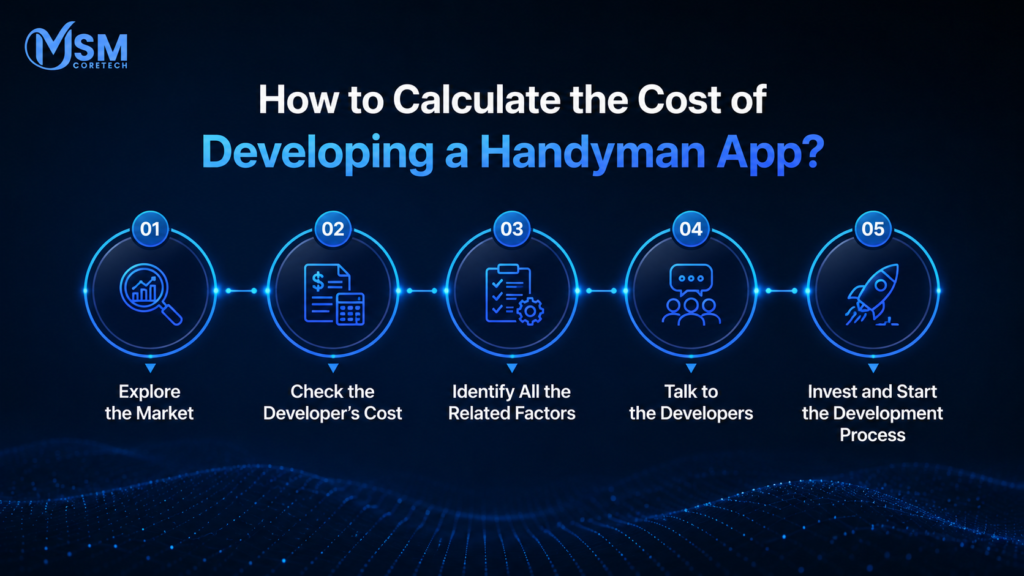
Calculating the cost of a handyman app is an important step before starting development. It helps you understand how much budget you will need for the project. By knowing your app requirements, current market trends, and development costs, you can plan your budget more effectively.
On average, the cost of developing a handyman app can range from $20,000 to $150,000 or more. The final cost depends on factors such as the app’s complexity, features, and the technologies used.
The steps below will help you estimate the total cost of building a handyman app.
| Step | What to Do | Impact on Cost |
|---|---|---|
| Explore the Market | Analyze competitors and industry trends | Helps define app requirements |
| Examine Developer’s Cost | Compare development teams and hourly rates | Major cost factor |
| Identify Related Factors | Evaluate features, design, and integrations | Determines final budget |
| Connect with Developers | Discuss project scope and estimates | Provides accurate pricing |
| Invest and Lead | Start development and launch the app | Converts planning into reality |
Step 1: Explore the Market
The first step is to carefully research the handyman service market. Look at popular handyman apps and see what features they provide, such as service booking, live tracking, online payments, ratings, and customer reviews. Understanding what customers need and analyzing your competitors will help you decide which features to include in your app and estimate the overall development cost.
Read Also: 9+ Best Travel App Development Companies in USA
Step 2: Check the Developer’s Cost
The cost of app development depends on the developer’s location, skills, and experience. Freelancers usually charge lower fees, while professional app development companies may cost more but often offer better quality, security, and ongoing support. It is a good idea to compare different service providers so you can choose the best option that fits both your quality requirements and budget.
Step 3: Identify All the Related Factors
Many factors can affect the cost of developing a handyman app. These factors include the app’s complexity, the number of features, UI/UX design, platform choice (Android, iOS, or both), third-party integrations, cloud services, and ongoing maintenance. Creating a clear list of all the features and functions you need before development begins can help prevent unexpected costs later.
Read Also: Top 7 Mobile App Development Companies in Texas
Step 4: Talk to the Developers
After you have a clear idea of your requirements, connect with experienced developers or app development companies. Explain your business goals, required features, and budget. They can give you an estimated development cost, project timeline, and useful technical advice to help you make the right decision.
Step 5: Invest and Start the Development Process
Once you choose the right app development company, you can start building your handyman app. Investing in a good-quality handyman app can help improve customer satisfaction, make daily business operations easier, and increase your revenue. A well-developed app helps you manage services more efficiently and gives your business an advantage in the growing on-demand home services industry.
By following these steps, you can get a better idea of the handyman app development cost and plan your budget with greater confidence.
Read Also: Cost To Develop A Travel App Like Booking.com
How to Minimize the Cost to Develop a Handyman App?
Building a handyman app can require a good amount of investment, especially if you want advanced features and a smooth user experience. However, there are several ways to reduce app development costs without affecting the quality of the app.
With proper planning and by focusing on the most important features first, businesses can create and launch a successful handyman app while keeping development expenses under control and staying within their budget.
| Strategy | How It Helps Reduce Costs |
|---|---|
| Build an MVP | Launches with essential features only |
| User-Centric Approach | Prevents spending on unnecessary functionalities |
| Avoid Feature Creep | Keeps the project scope under control |
| Optimize Development Process | Improves efficiency and reduces development time |
Build an MVP
One of the best ways to save money during development is to first build a Minimum Viable Product (MVP). Instead of making a full app with all features, you should start with only the most important functions like user sign-up, service booking, payments, and notifications.
An MVP helps you launch your app quickly and start getting real feedback from users. Based on how people use it, you can then improve and add new features later. This method lowers your starting cost and also reduces the risk of spending money on features that users may not actually need.
Read Also: 9+ Best Subscription App Development Companies in USA
User-Centric Approach
Before starting development, it is important to understand your target users. This helps save both time and money. You should do market research to find out which features customers really need.
When you focus on user needs and real problems, you can avoid adding extra or unnecessary features.
This approach also increases customer satisfaction, which leads to better app usage and helps your business grow in the long run.
Avoid Feature Creep
Feature creep happens when new features keep getting added during the development process. Even though these new ideas may look useful, they usually make the project more complicated, take more time, and increase the cost.
To avoid this, you should make a clear plan for the project and focus only on the most important features for the first version of the app. Extra features can be added later in updates after the app becomes popular and starts earning money.
Optimize the Development Process
Making the app development process well-organized can help reduce costs a lot. Using agile methods, reusable code parts, and cross-platform tools can make development faster and cheaper.
Regular communication between business owners, designers, and developers helps find problems early. This avoids expensive changes later. Good planning and project management make sure all resources are used in the right way during the whole development process.
By using these methods, businesses can control the cost of handyman app development and still build a good-quality app that meets customer needs and supports long-term growth.
Read Also: Develop a Hotel Booking App Like Agoda
Monetization Strategies to Overcome the Cost of Building a Handyman App
Building a handyman app requires investment, but the good news is that you can recover this cost and even generate strong profits through different monetization strategies. A well-planned revenue model helps you maintain cash flow, scale your business, and achieve long-term success. Below are some of the most effective ways to earn from your handyman app.
Subscription-Based Fees
In this model, service providers such as plumbers, electricians, or carpenters pay a monthly or yearly subscription fee to be listed on your platform. This gives them access to customer leads, booking requests, and business visibility. For business owners, this creates a stable and predictable income stream. You can also offer different subscription plans like basic, premium, or enterprise based on features and visibility.
In this model, service providers like plumbers, electricians, or carpenters pay a monthly or yearly fee to be listed on your platform. In return, they get access to customer leads, booking requests, and more visibility for their business.
For platform owners, this creates a steady and regular income. You can also offer different plans such as basic, premium, or enterprise, depending on the features and level of visibility included.
Read Also: 9+ Best Legal Software Development Companies in USA
In-app Advertising
In-app advertising is another good way to earn money. In this method, you allow other businesses to show ads inside your app. For example, tool suppliers, hardware shops, or home improvement brands can advertise their services.
You earn money when users see the ads or click on them. This method works best when your app has many active users.
However, ads should be placed carefully so they do not interrupt or annoy the users while using the app.
Commission-Based Model
This is one of the most popular monetization strategies. In this model, you charge a small commission on every completed booking made through the app. For example, when a customer hires a handyman for a service, you take a percentage of the total payment. This model grows naturally as your platform scales, since more bookings mean more revenue for your business.
Read Also: 9+ Best Pet Care App Development Companies in USA
Featured Listings
Service providers can pay extra money to appear at the top of search results or category pages. This helps them get more attention and attract more customers. In return, you earn extra income by giving them this top placement. This works especially well in competitive markets where many service providers want better visibility.
By using all these ways to earn money together, a handyman app can recover its development cost and also make steady long-term income. A balanced system helps the business stay profitable while keeping both customers and service providers happy.

Connect with MSM Coretech and Build Your Handyman App
If you are planning to grow your handyman business or turn your service idea into a successful digital platform, the right development partner makes a big difference. A handyman app is not just about coding it is about building a complete solution that helps you manage customers, technicians, bookings, and payments in one place.
At MSM Coretech, we focus on creating powerful, easy-to-use, and scalable handyman apps that match your business needs. Whether you are a startup or an established service provider, our team helps you design an app that improves your daily operations and increases customer satisfaction.
We understand that every business works differently. That is why we first study your requirements, target audience, and service model before starting development. From simple booking apps to advanced on-demand service platforms, we build solutions that are smooth, fast, and user-friendly.
Our development process includes UI/UX design, app development, backend setup, third-party integrations, testing, and deployment. We also make sure your app works perfectly on both Android and iOS platforms.
With the right handyman app, you can reduce manual work, handle more bookings, track your staff easily, and grow your revenue. It also helps your customers book services quickly, track job status, and make secure payments without any hassle.
If you are ready to take your handyman business to the next level, MSM Coretech is here to support you at every step. We turn your idea into a real, working mobile app that delivers value and long-term success.
Let’s work together and build a strong digital future for your handyman business.
Conclusion
Creating a handyman app is a smart decision for any business that wants to grow in today’s digital world. As more customers start using services and managing work becomes harder, a mobile app can make everything simple. It helps you run your business in a better and more organized way. With a handyman app, you can easily handle service bookings, manage technicians, accept payments, and communicate with customers all in one place.
In this guide, we also saw that the cost of building a handyman app can be around $20,000 to $150,000 or even more. This depends on different things like the features you want, app design, platform choice (Android or iOS), technology used, security needs, and the experience of the development team.
We also learned that factors like UI/UX design, third-party integrations, and ongoing maintenance can affect the total cost of the app.
At the same time, businesses can save money by starting with an MVP (a basic version of the app), focusing only on the most important features, and choosing the right development approach. A proper plan helps control the budget and also supports long-term success.
Different earning methods like subscriptions, commissions, advertisements, and featured listings can help recover the development cost and create regular income.
In the end, investing in a handyman app is not just about the cost. It is about long-term value, keeping customers happy, and growing the business in a competitive market.
FAQs
The cost to develop a handyman app usually ranges from $20,000 to $150,000 or more. The final price depends on features, design complexity, platform choice, and the development team you hire.
Several factors impact the cost, including app features, UI/UX design, technology stack, platform selection (Android/iOS), third-party integrations, security requirements, and ongoing maintenance.
Yes, you can reduce costs by starting with a Minimum Viable Product (MVP), focusing only on essential features, avoiding unnecessary add-ons, and using cross-platform development instead of separate native apps.
A handyman app can earn money through subscriptions, commissions on bookings, in-app advertising, and featured listings. These models help recover development costs and generate long-term profit.
A handyman app helps you manage bookings, improve customer experience, increase brand visibility, and grow revenue. It also makes operations more efficient and supports long-term business expansion.

Related Posts

9+ Best Video Streaming App Development Companies in USA
The video streaming industry in the USA is growing very fast. Recent reports show that the U.S. video streaming market...
Read More
How We Created a Secure LGBTQ+ Dating Application
The project was started by a US-based entrepreneur from a big city in the United States. He has strong experience...
Read More

9+ Best Insurance App Development Companies in USA
Did you know that more than 70% of insurance customers today prefer using mobile apps to manage their policies instead...
Read More