

Share this article


How to Develop a Healthcare Fintech Solution: Features, Process, and Cost
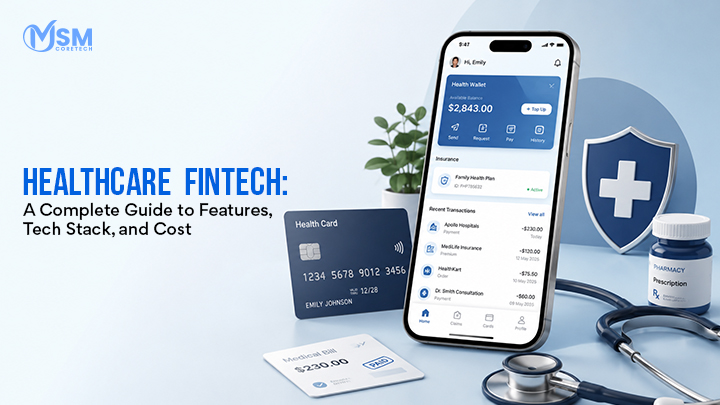
The healthcare industry is rapidly using digital financial solutions to make payments, billing, insurance, and money management simpler for patients and healthcare providers. Fintech solutions help healthcare businesses reduce manual work, improve payment security, and deliver faster and more convenient financial services.
According to Grand View Research, the global healthcare digital payment market was valued at USD 20.19 billion in 2025 and is expected to grow at a CAGR of 23.2% from 2025 to 2033. This growth highlights the increasing demand for secure and convenient digital payment solutions in healthcare.
Fintech solutions for healthcare use financial technology to make healthcare payments, billing, insurance claims, and money management easier and faster. Patients can make payments through digital wallets and online payment methods, while healthcare organizations can handle transactions, billing, and insurance processes more smoothly.
Secure digital financial solutions are becoming very important in today’s healthcare industry because they help protect patient information and payment details. Technologies like artificial intelligence, blockchain, cloud computing, and encryption help build safe and trusted healthcare finance systems. As healthcare becomes more digital, fintech solutions are helping create a faster, smarter, and more convenient healthcare experience for both patients and healthcare providers.
What Are Fintech Solutions for Healthcare?
Fintech solutions for healthcare are digital financial tools that make it easier for hospitals, clinics, patients, and insurance companies to handle payments and other financial tasks. These solutions use modern technologies like mobile apps, cloud platforms, artificial intelligence (AI), and secure payment systems to make healthcare payments fast, safe, and simple.
Healthcare fintech brings together healthcare services and financial technology to solve common payment and billing problems. In the traditional healthcare system, payments and billing often involve a lot of paperwork, delays, and complicated processes. Fintech solutions make these tasks much easier by allowing patients to pay medical bills online, submit insurance claims digitally, and choose flexible payment options. They also help hospitals and healthcare providers create accurate bills, reduce manual work, and manage their income more efficiently. Many businesses work with a fintech app development company to build secure, easy-to-use healthcare payment solutions that fit their business needs.
One of the most common healthcare fintech solutions is digital payment platforms. These platforms let patients pay quickly for doctor visits, medicines, lab tests, and hospital bills using debit or credit cards, online banking, digital wallets, or other online payment methods. This makes the payment process fast, easy, and convenient.
- Health insurance solutions are also an important part of healthcare fintech. They help people buy health insurance plans, view their policy details, submit insurance claims, and track the claim status online. These platforms also help insurance companies process claims more quickly and reduce paperwork.
- Medical billing systems help hospitals and clinics handle their billing work automatically. They manage bills, payments, patient records, and insurance claims in one system. This helps reduce billing errors and makes the payment process clear for both healthcare providers and patients.
- Healthcare wallets let users safely save their payment information, track their healthcare spending, and pay for medical services quickly. They can also include useful features like health savings accounts and payment reminders.
- Patient financing platforms help people pay for costly medical treatments by offering easy payment plans, healthcare loans, or monthly installments. This makes healthcare services more affordable and easier for patients to access.
Overall, fintech solutions are changing the way healthcare payments and financial services work. By combining healthcare and finance, these solutions create a simpler, faster, and more secure experience for everyone involved.
Also Read: Top 10 FinTech Startup Ideas to Build a Successful Finance App
Why Are Fintech Solutions Important in Healthcare?
Fintech solutions are making healthcare payments easier and faster. Hospitals, clinics, pharmacies, and telemedicine apps use digital payment systems to handle payments in a simple and secure way. This makes it easier for both patients and healthcare providers. It also reduces paperwork and saves time by making financial tasks more efficient.
One of the biggest benefits of fintech is quick and easy payments. Patients can pay their medical bills using credit cards, digital wallets, UPI, or online banking in just a few seconds. Healthcare providers also receive payments faster, which improves cash flow and helps reduce payment delays.
Fintech solutions make the patient experience much better. Patients can easily check their medical bills online, pay in small installments if needed, view their payment history, and get instant payment confirmation. This makes paying medical bills simple and hassle-free, so patients can focus more on their health instead of dealing with paperwork.
Another big benefit is fewer billing mistakes and less manual work. Automated billing systems calculate costs correctly, create invoices quickly, and reduce human errors. This saves time for hospital staff, allowing them to spend more time caring for patients instead of handling paperwork.
Patients also get a clear view of their healthcare expenses. They can easily check treatment costs, insurance coverage, pending payments, and payment history in one place. Healthcare providers can also track their income, expenses, and financial reports through simple real-time dashboards.
Fintech platforms also keep healthcare payments safe and secure. They use features like data encryption, multi-factor authentication, and secure payment gateways to protect sensitive financial and medical information from cyber threats. Partnering with a healthcare software development company helps healthcare businesses build secure, scalable, and industry-compliant fintech solutions that improve daily operations and provide a better experience for patients.
Also Read: What Is FinTech? A Complete Guide
Key Features of Healthcare Fintech Solutions
Healthcare fintech solutions help make payments, billing, insurance, and money management simple for patients, hospitals, clinics, and insurance companies. They reduce paperwork, speed up payments, and make the whole financial process easier and smoother for everyone. Below are some of the main features of healthcare fintech solutions.
Patient-Side Features
Patients want healthcare payments to be easy, fast, and safe. A healthcare fintech solution offers useful features that make paying for healthcare much simpler.
- Digital Wallet and Online Payments: Patients can pay hospital bills using credit cards, debit cards, UPI, digital wallets, or internet banking without standing in long queues.
- Medical Bill Payments: Users can easily view and pay doctor consultation fees, hospital bills, lab test charges, and medicine costs from one place.
- Insurance Claim Management: Patients can upload the required documents, submit insurance claims, and check the claim status online without filling out lots of paperwork.
- Payment History Tracking: The platform safely stores all payment records, so users can view past transactions and download receipts whenever they need them.
- Health Savings Account Integration: If health savings accounts are available, patients can use them to pay for eligible medical expenses directly through the platform.
- Subscription-Based Healthcare Payments: Users can choose monthly or yearly healthcare plans for regular health checkups, online doctor consultations, or wellness services.
- Notifications and Reminders: The app sends reminders for upcoming bill payments, insurance renewals, and subscription due dates, helping patients avoid missing important payments.
Healthcare Provider Features
Hospitals, clinics, and pharmacies need simple financial tools to handle their daily work smoothly.
- Automated Billing Management: The system creates bills automatically, saving time and reducing billing mistakes.
- Payment Processing System: It supports different payment methods and completes payments quickly and safely.
- Invoice Generation: Digital invoices are created instantly and shared with patients, making it easy to keep payment records.
- Insurance Verification: The system checks a patient’s insurance details in real time, so providers can confirm coverage before treatment.
- Revenue Tracking Dashboard: Providers can easily see completed payments, pending bills, and total revenue in one place.
- Financial Reports and Analytics: The system provides easy-to-understand reports on income, expenses, payment trends, and overall business performance, helping healthcare providers make better financial decisions.
Insurance Company Features
Healthcare fintech solutions make insurance work easier by reducing manual tasks and saving time.
- Digital Claim Processing: Insurance claims can be submitted, checked, and processed online, making approvals faster.
- Policy Management: Insurance companies can easily manage customer policies, renewals, and coverage details from one place.
- Fraud Detection: AI-powered tools help find suspicious activities and reduce fake or fraudulent claims.
- Customer Payment Tracking: Companies can easily track premium payments, pending payments, and claim settlements.
- Automated Approvals: Smart systems automatically approve eligible claims, reducing delays and improving customer satisfaction.
Admin Panel Features
The admin panel helps manage and control the entire healthcare fintech platform.
- User Management: Admins can add, update, and manage patient, healthcare provider, insurance company, and staff accounts.
- Transaction Monitoring: Admins can view and track all payments and financial transactions to keep everything clear and secure.
- Data Analytics: Simple dashboards show payment details, user activity, and business performance in real time.
- Compliance Management: The system helps follow healthcare and financial rules while keeping important data safe.
- Security Controls: Features like data encryption, role-based access, and multi-factor authentication protect patient and financial information from unauthorized access.
Also Read: FinTech App Design Guide for Beginners: Best Practices & Tips
Advanced Technologies Used in Healthcare Fintech Solutions
Modern healthcare fintech solutions use advanced technologies to make medical payments faster, safer, and easier. These technologies help hospitals, clinics, insurance companies, and patients manage financial tasks smoothly while improving security and reducing manual work.
Artificial Intelligence (AI) for Fraud Detection and Personalized Financial Services
Artificial Intelligence (AI) helps healthcare fintech apps keep payments safe by finding suspicious transactions before they become a bigger problem. It looks at payment patterns and quickly detects unusual activities that could be fraud. AI also makes the user experience better by offering payment plans that match each user’s needs, sending helpful payment reminders, and suggesting the most suitable insurance or financing options. This saves time and helps users make better financial decisions.
Machine Learning for Risk Analysis and Payment Predictions
Machine Learning (ML) helps healthcare fintech systems learn from past payment and financial data. It improves over time by using this data to make better decisions. ML can predict payment delays, estimate whether insurance claims are likely to be approved, and find financial risks before they become bigger problems. This helps healthcare providers manage their money more smoothly and allows insurance companies to process claims more accurately. As the system collects more data, its predictions become more accurate and reliable.
Blockchain for Secure Healthcare Transactions
Blockchain technology keeps healthcare payments and financial records safe and secure. Every payment and insurance transaction is stored in a secure digital record that cannot be changed without proper permission. This helps reduce fraud, avoid billing problems, and build trust between patients, healthcare providers, and insurance companies. It also makes it easier to check medical payments and insurance claims while keeping sensitive financial information safe.
Cloud Computing for Scalable Financial Systems
Cloud computing helps healthcare fintech platforms store, manage, and process large amounts of financial data without using expensive physical servers. As more people use the platform, cloud services can easily handle more users and transactions. They also keep data safely backed up, make software updates simple, and allow healthcare organizations to manage their financial work from anywhere.
Big Data Analytics for Healthcare Financial Insights
Healthcare organizations collect a large amount of financial and patient data every day. Big Data analytics helps turn this data into useful information. It shows spending patterns, tracks payment performance, improves revenue management, and predicts future financial needs. This helps hospitals and clinics make better business decisions, plan their finances more effectively, and improve overall operations.
IoT Integration for Connected Healthcare Payments
The Internet of Things (IoT) connects medical devices, health wearables, and healthcare systems through the internet. When IoT is connected with healthcare fintech solutions, it can automatically send treatment and service details to the billing system. This makes the payment process faster and more accurate. For example, smart medical devices can automatically create bills, update insurance information, and send payment reminders to patients. This reduces manual work, lowers the chance of mistakes, and makes payments easier for both patients and healthcare providers.
When technologies like IoT are used in healthcare fintech solutions, payments become safer, faster, and easier to manage. They help improve payment accuracy, protect financial data, reduce paperwork, and make financial management simple. As a result, healthcare organizations can provide better services, while patients enjoy a smooth, quick, and hassle-free payment experience.
Also Read: Cost to Develop a Fintech App Like Wise
Development Process of Healthcare Fintech Solutions
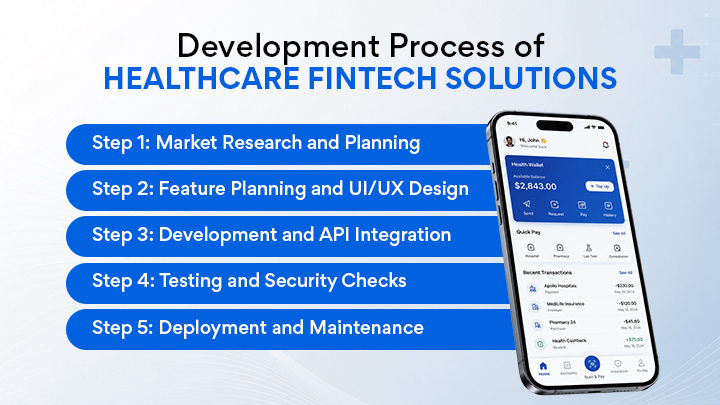
Creating a healthcare fintech solution needs careful planning, secure development, and regular updates. A step-by-step process helps build a platform that provides safe payments, easy financial management, and a better experience for both patients and healthcare providers. Below are the main steps involved in the app development process.
Step 1: Market Research and Planning
The first step is to understand the healthcare market and find out what problems your fintech solution will solve. Set clear goals, such as making medical payments easier, speeding up insurance claims, or helping patients pay for their treatment in simple ways. You should also know who will use your platform, such as patients, hospitals, clinics, pharmacies, and insurance companies.
It is also important to study your competitors. Look at other healthcare fintech platforms to understand what features they offer, what is popular in the market, and where you can provide a better user experience. Doing this research before development helps you build a stronger and more useful solution.
Step 2: Feature Planning and UI/UX Design
After the research is complete, the next step is to decide which features the app should have based on business goals and user needs. Important features may include digital payments, insurance claim management, medical billing, transaction history, digital wallets, and financial dashboards.
At the same time, designers create a simple, clean, and easy-to-use design. Patients should be able to pay bills and manage insurance without any difficulty. Healthcare providers should also be able to quickly view billing details and financial reports. An easy-to-use design helps save time, reduces errors, and provides a better experience for everyone.
Step 3: Development and API Integration
After the design is complete, developers start building the healthcare fintech solution. They create both the frontend and the backend. The frontend is the part that users see and use, while the backend handles important tasks like storing data, processing payments, managing user accounts, and running the system.
Next, the platform is connected to other services using APIs. These connections can include payment gateways, banks, insurance verification systems, healthcare software, and notification services. API integration helps all these systems work together smoothly, making sure payments and financial information are shared safely, quickly, and without delays.
Step 4: Testing and Security Checks
Before launching the solution, developers carefully test every feature to make sure everything works properly. They check if payments are processed correctly, transactions are fast, data is accurate, and the system runs smoothly.
They also perform security tests to protect sensitive healthcare and financial information from threats. The team checks that the solution follows all healthcare and financial rules, fixes any bugs, improves performance, and makes sure it works well on different devices. This helps build user trust and reduces the chance of problems in the future.
Also Read: How Much Does It Cost To Build A Fintech App
Step 5: Deployment and Maintenance
After the healthcare fintech solution is fully tested, it is launched for users. But the work does not end after the launch.
Developers regularly check the platform to make sure it works smoothly and stays secure. They fix bugs, release security updates, improve existing features, and add new features based on user feedback and changing industry needs.
Regular maintenance helps keep the platform safe, reliable, up to date, and ready to support future business growth.
Cost to Develop a Fintech Solution for Healthcare
The cost of building a healthcare fintech solution depends on the features you want, the level of security, third-party integrations, and how complex the platform is. A basic solution with online payment features costs less. A more advanced platform with AI, blockchain, and insurance integrations costs more. Planning your budget based on your business needs helps you build a secure, scalable, and reliable solution.
Basic Healthcare Fintech Solution
| Feature Level | Estimated Cost |
|---|---|
| Basic Solution | $10,000–$20,000 |
A basic healthcare fintech solution is a good choice for startups and small healthcare providers that want to launch their platform quickly. It includes all the important features, such as user registration, secure login, online payments, transaction history, billing management, and a simple dashboard. Patients can easily pay their medical bills online, and healthcare providers can track and manage payments without any difficulty. This is a cost-effective way to start your business without spending too much at the beginning. As your business grows, you can easily add more advanced features in the future.
Medium-Level Healthcare Fintech Solution
| Feature Level | Estimated Cost |
|---|---|
| Medium Solution | $20,000–$45,000 |
A medium-level healthcare fintech solution is a good choice for businesses that need more than basic payment features. It includes health insurance integration, financial reports, payment analytics, invoice management, role-based dashboards, automatic billing, and better security with multi-factor authentication and encrypted data storage. These features make payment management easier, faster, and more secure. They also help hospitals, clinics, and healthcare organizations reduce manual work, improve daily financial operations, and provide a better experience for both staff and patients.
Advanced Healthcare Fintech Solution
| Feature Level | Estimated Cost |
|---|---|
| Advanced Solution | $45,000–$75,000+ |
An advanced healthcare fintech solution is designed for large hospitals, healthcare organizations, and enterprises. It includes smart features like AI to detect fraud, blockchain for secure payments, automatic claim processing, financial reports, future cost predictions, cloud-based systems, and strong security. It can also manage payments and financial operations for multiple hospitals, insurance companies, and healthcare networks from one platform. Although it costs more to build at the beginning, it helps save time, improves security, automates many tasks, and provides better value for the business in the long run.
Building a healthcare fintech solution is not just about adding payment features. It is about creating a safe, reliable, and easy-to-use payment system that helps people make healthcare payments quickly and without hassle. Choosing the right features and technology based on your budget helps your business grow steadily and gives both patients and healthcare providers a better experience.
Also Read: Top FinTech Trends: Transforming the Future of Financial Services
Factors Affecting Healthcare Fintech Development Cost
The cost of developing a healthcare fintech solution depends on many factors. Understanding these factors helps businesses plan their budget and avoid unexpected expenses.
Number and Complexity of Features
The cost depends on how many features you want in your healthcare fintech solution. A basic solution with online payments and billing costs less. If you add features like AI, insurance claim management, digital wallets, and financial reports, the development cost will be higher.
Platform Selection (iOS, Android, Web)
The platforms you choose also affect the cost. Building the solution for just one platform costs less. If you want it for iOS, Android, and the web, it will take more time, testing, and development, which increases the cost.
UI/UX Design Requirements
A simple and user-friendly design gives people a better experience. Creating custom screens, easy navigation, and a clean layout takes extra design work, so it can increase the overall development cost.
Backend Infrastructure
A strong backend helps the platform manage user accounts, payments, medical bills, and a large amount of data smoothly. If the platform has more features, it needs better servers, databases, and cloud services, which can increase the app development cost.
Third-Party API Integrations
Adding services like payment gateways, banking systems, insurance platforms, and notification tools takes extra development time. Some of these services also charge monthly or usage-based fees, which increases the overall cost.
Security and Compliance Requirements
Healthcare fintech platforms store sensitive financial and medical data. Features like data encryption, secure login, fraud protection, and compliance with rules such as HIPAA and GDPR require extra work, which increases development time and cost.
Development Team Location and Expertise
The cost of development depends on where the development team is located and how experienced they are. Skilled developers may charge more, but they usually build secure, high-quality solutions faster and help avoid expensive mistakes later.
Also Read: Top 7 Fintech Web Design Companies in Australia
Benefits of Investing in Healthcare Fintech Solutions
- Investing in healthcare fintech solutions helps hospitals, clinics, pharmacies, and healthcare startups manage payments and financial services more easily. It makes the payment process simple and convenient for both patients and healthcare providers.
- One of the biggest benefits is a better payment experience for patients. Patients can pay their medical bills online, use digital wallets, choose easy payment options, and get instant payment confirmations. They do not have to wait in long lines to make payments.
- Healthcare fintech solutions also help healthcare businesses work more efficiently. They automatically handle billing, invoices, payment collection, and insurance claims. This reduces manual work, saves time, and allows doctors and healthcare staff to spend more time caring for patients.
- Another big benefit is better money management. Healthcare providers can track payments in real time, view financial reports, and send automatic payment reminders. This helps reduce late payments and keeps cash flow steady.
- These platforms also keep data safe and secure. They use features like data encryption, secure payment systems, multi-factor authentication, and follow healthcare security rules to protect patient and financial information.
- Healthcare fintech solutions also make healthcare payments faster. Patients, insurance companies, and healthcare providers can complete payments and insurance claim settlements more quickly, making the entire billing process faster and smoother.
Finally, built-in dashboards and analytics provide better financial decision-making. Healthcare organizations can monitor income, expenses, payment trends, and business performance in one place, helping them make smarter decisions, improve financial planning, and support long-term business growth.
Future Trends of Fintech in Healthcare
The future of healthcare fintech is becoming smarter, faster, and more patient-friendly. New technologies are helping hospitals, clinics, insurance companies, and healthcare startups manage payments and financial services more easily.
AI-Powered Financial Healthcare Assistants
AI-powered financial healthcare assistants help patients understand their medical bills in a simple way. They can suggest payment options, send reminders for upcoming payments, and answer basic payment-related questions instantly.
Blockchain-Based Medical Payments
Blockchain makes healthcare payments safer and more transparent. It helps reduce fraud, keeps financial information secure, and makes payment verification faster between patients, hospitals, and insurance companies.
Digital Health Insurance Platforms
Digital health insurance platforms make insurance easier to manage. Patients can buy insurance plans, check their coverage, submit claims, and track claim approvals from one mobile app or website.
Embedded Finance in Healthcare Apps
Embedded finance lets users make healthcare payments directly inside the healthcare app. They can pay medical bills, apply for healthcare loans, buy insurance, or use digital wallets without switching to another app.
Automated claims processing
Automated claims processing will reduce paperwork and make insurance approvals faster. AI can check documents, find mistakes, and process insurance claims much quicker than doing everything manually.
Also Read: Best FinTech App Development Companies in the USA
Personalized healthcare financing
Personalized healthcare financing solutions will help patients get payment plans that match their medical needs and budget. This makes healthcare more affordable and easier for more people to use.
As these technologies continue to improve, healthcare fintech solutions will make healthcare payments simpler, lower costs, improve security, and provide a better experience for both patients and healthcare providers.

Conclusion
Fintech solutions are changing the way healthcare organizations manage payments, billing, insurance, and financial services. They make it easier for patients to pay medical bills, submit insurance claims, and access healthcare services without long waiting times. For hospitals, clinics, and healthcare providers, these solutions reduce manual work, improve payment accuracy, and help manage finances more efficiently.
Building a successful healthcare fintech platform starts with choosing the right technology, features, and development approach. Secure payment gateways, strong data protection, cloud infrastructure, AI-powered automation, and user-friendly design all play an important role. Selecting the right tech stack also makes the platform easier to maintain, expand, and update as business needs grow.
The future of healthcare fintech looks very promising. New technologies like artificial intelligence, blockchain, digital wallets, and automated claim processing will continue to improve healthcare payments and financial management. These innovations will help create faster, safer, and more convenient experiences for both patients and healthcare providers.
Businesses that invest in secure, scalable, and reliable healthcare fintech solutions today will be better prepared for future growth. By focusing on user needs, security, and modern technology, they can build a platform that improves healthcare services, increases customer trust, and supports long-term business success in the fast-growing digital healthcare industry.
FAQs
Healthcare fintech solutions are digital platforms that help hospitals, clinics, and healthcare businesses manage payments, medical billing, insurance claims, patient financing, and other financial services safely and efficiently.
A healthcare fintech solution should include secure online payments, digital billing, insurance claim management, payment tracking, user dashboards, transaction history, data security, and admin management tools.
Common technologies include React Native or Flutter for the frontend, Node.js or Python for the backend, PostgreSQL or MongoDB for databases, cloud platforms like AWS or Azure, and secure payment gateway integrations.
The development cost depends on the project’s complexity. A basic solution may cost $10,000–$20,000, a medium-level platform $20,000–$45,000, and an advanced solution with AI and blockchain can cost $45,000–$75,000+.
Healthcare fintech solutions improve payment processing, reduce billing errors, simplify insurance management, enhance data security, increase operational efficiency, and provide a better payment experience for patients.

Related Posts

Top 10 FinTech Startup Ideas to Build a Successful Finance App
FinTech is one of the most exciting spaces to build a startup in right now. Every year, more people are...
Read More

How to Build a Medicine Delivery App: Features, Cost & Complete Guide
The way people buy medicines is changing quickly. Today, customers want healthcare services that are fast, simple, and available from...
Read More

How to Develop an App Like eSound Music: A Complete Guide
Imagine having millions of songs that you can listen to anytime and anywhere with just a few taps. That is...
Read More


 Verified Review




 +91 9426029999
 311, 3rd Floor, Space 7, Sector 7, Shipra Path, Mansarovar, Jaipur, Rajasthan 302020