

Share this article


How to Outsource Mobile App Development? A Complete Guide
Over 90% of the time people spend on their smartphones is inside apps, not browsers, which means your website alone is no longer enough to capture and hold attention. Although building a high-quality app in-house is expensive, slow, and requires specialized talent most organizations do not have available.
That is why mobile app development outsourcing has become a strategic priority in 2026, not just a cost-cutting tactic. Slack, WhatsApp, Skype, and Basecamp were all built using outsourced development teams. Outsourcing is a deliberate approach used by some of the most successful product teams in the world.
This guide is written for startup founders, product managers, and CTOs who want to outsource mobile app development the right way. You will learn how to choose a partner, protect your IP, control costs, manage the team, and scale through PPC after launch.
Mobile App Outsourcing Market Statistics 2026
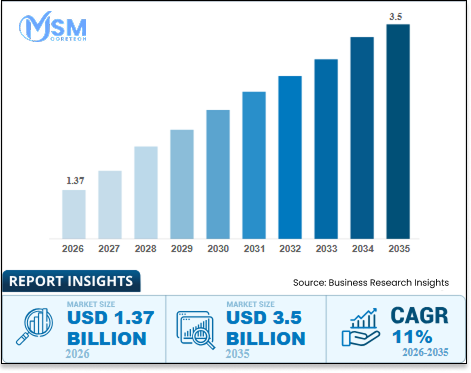
The global mobile app development outsourcing market is valued at US$1.37 billion in 2026 and is expected to reach US$3.5 billion by 2035, growing at a CAGR of 11%. This growth is driven by rising demand for cost-efficient development, access to global talent, and faster project delivery. Businesses are increasingly outsourcing to stay competitive and adopt advanced technologies without heavy in-house investment.
- Companies reduce hiring and infrastructure costs while scaling teams quickly through outsourcing partners.
- Android holds 70%+ market share, making it the primary focus for outsourced app development projects.
- Strong developer base, lower costs, and supportive policies make it the top outsourcing hub.
- Increasing use of AI, AR/VR, and blockchain by outsourcing firms is pushing innovation and market expansion.
What Is Mobile App Development Outsourcing?
Mobile app development outsourcing means hiring an external company or team to design, build, test, and launch your mobile application instead of doing it with in-house resources. In 2026, this goes well beyond handing a spec document to an offshore team and waiting for a finished product.
Modern outsourcing means working with a partner who functions as an extension of your product team. The best outsourcing companies today embed themselves in your business goals, push back when something does not make sense, flag risks before they become problems, and care about your app succeeding in the market, not just shipping lines of code.
Also Read: Music Streaming App Development Cost
In-House vs Outsourcing: Full Comparison
| Factor | In-House Team | Outsourcing Partner |
|---|---|---|
| Upfront Cost | High (salaries, benefits, tools) | Lower (pay for what you need) |
| Time to Start | 3 to 6 months to hire and onboard | 2 to 4 weeks to kick off |
| Talent Access | Limited to local market | Global pool of specialists |
| Scalability | Slow, expensive to scale up or down | Flexible, adjust team size easily |
| Control | Full direct control | Managed via PM and sprint reviews |
| Risk | Long-term payroll commitment | Contractual, milestone-based |
| Best For | Core product with long-term roadmap | MVP, first build, specific expertise |
When Should You Outsource Mobile App Development?
Here are the situations of when to and when to not outsource mobile app development.
Situations Where Outsourcing Makes Clear Sense
- Your internal team is already at capacity and cannot take on a new build without delaying existing work
- You need iOS, Android, or cross-platform expertise that would take 4 to 6 months to hire for internally
- If you have a hard deadline tied to a funding milestone, product launch, or seasonal window
- You want to validate an MVP idea before committing to permanent headcount
- Your core competency is the business model, not the engineering, and you need experts to execute the technical vision
When Outsourcing Is NOT the Right Choice
- Your app contains proprietary algorithms or core IP that cannot be shared outside your organization under any circumstances
- You are building in a highly regulated environment and lack the internal capability to vet vendor compliance
- There is no internal product owner available to manage the vendor relationship and review deliverables regularly
Also Read: Develop a Food Delivery App Like Deliveroo
Outsourcing by App Type
Outsourcing types depend on the industry and app type. Here are the Outsourcing recommendations based on types.
| App Type | Key Complexity | Recommended Model | Watch Out For |
|---|---|---|---|
| E-commerce App | Payments, catalog, real-time inventory | Fixed Price or Dedicated Team | Integration with existing ERP/CRM systems |
| Fintech App | Security, compliance, regulatory requirements | Dedicated Team | PCI-DSS, GDPR, and banking API licensing |
| Healthcare App | HIPAA, data encryption, audit trails | Dedicated Team | Medical device software regulations |
| On-Demand App | Real-time tracking, scalability, notifications | Time and Material | Infrastructure costs at scale |
| SaaS Mobile App | Long roadmap, frequent iteration | Dedicated Team | Knowledge continuity across sprints |
Types of Outsourcing Models
Choosing the right outsourcing model is not just about cost. It shapes how you collaborate, how quickly you can course-correct, and how much control you maintain throughout the project.
Offshore Outsourcing
You hire a team in a geographically distant country, typically India, Southeast Asia, Eastern Europe, or Latin America. The main draw is cost. Offshore teams can deliver quality work at 60 to 80% lower cost than onshore alternatives. The trade-off is time zone gaps, which can be managed with proper communication workflows.
Nearshore Outsourcing
You hire from a neighboring country or region with overlapping business hours. For US companies, Latin America is the go-to nearshore option. For European businesses, Eastern Europe and Ukraine offer strong talent with minimal time zone friction. Cost savings are moderate at 40 to 60% compared to onshore, but collaboration quality is significantly higher.
Onshore Outsourcing
You hire a local development company in your own country. The highest cost option, but it offers full time zone alignment, no language barriers, and straight forward legal jurisdiction. Best suited for regulated industries like finance and healthcare where vendor vetting and compliance are paramount.
Hybrid Model
The most successful approach in 2026. Product leadership, UX design, and architecture decisions stay close to home while the core development engine is an experienced offshore or nearshore partner. This gives you high-quality strategic decision-making at the top with cost-efficient execution at the build layer.
Also Read: Fintech Apps Make Money
Outsourcing Model Comparison
The table below shows a clear comparison between different outsourcing models.
| Model | Cost Level | Collaboration Quality | Best For |
|---|---|---|---|
| Offshore | Lowest | Moderate (managed async) | Budget-conscious builds, large projects |
| Nearshore | Medium | High (timezone overlap) | US/EU companies needing real-time collaboration |
| Onshore | Highest | Highest | Regulated industries, enterprise projects |
| Hybrid | Medium-Low | High | Most startups and scaling products in 2026 |
Engagement Models in App Development
Staff augmentation deserves special mention because it is often confused with a dedicated team model. In staff augmentation, individual developers join your existing team and work under your direct management. In a dedicated team model, the vendor provides a complete team with its own project manager and delivery process. The right choice depends on whether you have the internal management capacity to run developers directly.
| Model | Best For | Budget Control | Flexibility |
|---|---|---|---|
| Fixed Price | MVPs and well-defined scope | High (predictable) | Low (change orders add cost) |
| Time and Material | Evolving requirements | Moderate (cap monthly) | High |
| Dedicated Team | Long-term product roadmaps | Moderate | High |
| Staff Augmentation | Filling specific skill gaps in an existing team | High | Moderate |
Step-by-Step Process to Outsource Mobile App Development
Outsourcing mobile app development requires defining your project goals, sining contracts and managing development. This is to make sure the project quality is top-notch. Here is a clear outsourcing mobile app development process you can follow:
Step 1: Define Requirements and Set Budget
Document your app’s core purpose, target audience, key features, and success metrics before approaching any vendor. A mid-level app in 2026 typically costs $40,000 to $150,000. Set your budget with a 15 to 20% buffer for scope adjustments.
Step 2: Choose Your Models and Shortlist Vendors
Decide on outsourcing model (offshore, nearshore, hybrid) and engagement model (fixed price, dedicated team, time and material) before shortlisting. Use Clutch, GoodFirms, LinkedIn, and direct referrals to build a list of 4 to 6 qualified vendors.
Step 3: Evaluate, Interview, and Shortlist
Ask for outcome-based case studies, not just feature lists. A vendor that has built 10 apps in your industry will outperform one with 100 unrelated builds. Use discovery calls to assess technical depth and communication quality. A vendor that agrees with everything you say is not a true partner.
Step 4: Finalize Contract, NDA, and IP Assignment
Never start work without a signed NDA and a contract that explicitly assigns IP ownership to you upon payment. Insist on live repository access from day one. Milestone-based payment structures protect both parties and keep the vendor accountable.
Step 5: Development, QA, Launch, and Support
Run development in 2-week sprints reviewing working software at each demo. Require comprehensive QA including functional, performance, and security testing. Agree on a 90-day post-launch support period in the contract before signing to cover bug fixes and OS compatibility updates.
Also Read: Fantasy Sports App Development Cost
IP Protection, NDA, and Contract Checklist
Protecting your intellectual property before a single line of code is written is standard business practice, not paranoia. This is the section most outsourcing guides skip and the one that matters most when something goes wrong.
What Your Contract Must Include
- IP assignment clause confirming that all code, designs, and assets transfer to you upon payment at each milestone
- NDA covering all project details, business logic, and technical specifications shared during the engagement
- Live repository access from day one so you always control the codebase regardless of the vendor relationship
- GDPR and data handling compliance clauses if your app processes personal data from EU users
- Exit clause with a defined knowledge transfer process if you need to switch vendors or bring development in-house
- Milestone-based payment schedule tied to delivered and tested features, not time elapsed
Red Flags in Vendor Contracts
- Vague IP language that does not explicitly assign ownership to you
- Request for large upfront payments before any discovery or design work
- Reluctance to sign an NDA before the first discovery call
- No clause covering what happens if the vendor goes out of business or cannot complete the project
Cost to Outsource Mobile App Development in 2026
Here is the table showing outsource mobile app development cost estimation based on different factors.
Overall Cost Ranges
Here is the list of cost ranges based on app complexity.
| App Complexity | Cost Range | Timeline | Examples |
|---|---|---|---|
| Simple App | $10,000 to $60,000 | 2 to 4 months | Basic utility app, single-feature MVP |
| Medium Complexity | $40,000 to $150,000 | 4 to 7 months | E-commerce, on-demand, social app |
| Complex / Enterprise | $150,000 to $400,000+ | 8 to 14 months | Fintech, healthcare, AI-powered platform |
Cost by Region
Here is the list of cost ranges based on region.
| Region | Hourly Rate | 1,000 Hour Project Cost | Best For |
|---|---|---|---|
| India | $15 to $30/hr | $15,000 to $30,000 | Best cost-to-quality ratio globally |
| Southeast Asia | $20 to $45/hr | $20,000 to $45,000 | Strong for mobile and web builds |
| Eastern Europe | $35 to $65/hr | $35,000 to $65,000 | Complex builds, EU timezone overlap |
| Latin America | $30 to $60/hr | $30,000 to $60,000 | Nearshore advantage for US companies |
| USA / W. Europe | $100 to $200/hr | $100,000 to $200,000 | Regulated industries, onshore compliance |
Detailed Cost Breakdown by Component
Here is the list of cost ranges based on development components.
| Development Component | Estimated Cost | Notes |
|---|---|---|
| UI/UX Design | $5,000 to $15,000 | Wireframes, prototypes, design system |
| Frontend Development | $15,000 to $30,000 | React Native or Flutter |
| Backend Development | $20,000 to $40,000 | APIs, database, auth, integrations |
| QA and Testing | $5,000 to $12,000 | Manual and automated test coverage |
| DevOps and Deployment | $3,000 to $8,000 | CI/CD pipeline, cloud setup |
| Project Management | $5,000 to $10,000 | Sprint planning, client comms, reporting |
| Total (Mid-Level App) | $53,000 to $115,000 | Varies by region and team seniority |
Hidden Costs You Must Plan For
Here is the list of cost ranges based on hidden cost categories.
| Cost Category | Estimated Annual Cost | Notes |
|---|---|---|
| App Maintenance and Updates | 15 to 20% of build cost/year | OS updates, bug fixes, security patches |
| Third-Party APIs and Licenses | $1,000 to $20,000/year | Payments, maps, notifications, analytics |
| Cloud Infrastructure and Hosting | $500 to $10,000/month | Scales with user base and traffic |
| Security and Compliance Audits | $3,000 to $15,000/year | GDPR, HIPAA, PCI-DSS depending on app type |
| Knowledge Transfer and Onboarding | $2,000 to $8,000 one-time | If switching vendors or bringing in-house |
| App Store Fees | 15 to 30% of in-app revenue | Apple and Google Play commissions |
How to Choose the Right Outsourcing Company
Here are some guidelines that will help you pick the right outsourcing company.
Portfolio and Domain Experience
Look for outcome-based case studies from your vertical, not just feature lists. A company with 10 apps in your industry will outperform one with 100 unrelated builds.
Client Reviews and Technical Depth
Check Clutch and GoodFirms for verified reviews, then contact two or three listed clients directly. Confirm hands-on experience with your required stack: React Native, Flutter, Node.js, AWS, and any specific integrations.
AI Tooling and Communication Quality
Ask whether the vendor uses GitHub Copilot or Cursor and how AI-generated code is reviewed. Evaluate response quality during the sales process. Slow, vague responses before signing predict poor project communication afterward.
Also Read: Build a Food Delivery App Like Uber Eats
Red Flags When Evaluating an Outsourcing Vendor
These are the warning signs experienced outsourcers identify before signing any contract.
- They quote a price before conducting any discovery or understanding your requirements in depth
- Their portfolio shows design mockups but no live apps with verifiable download or user data
- They agree with every requirement without pushing back or asking clarifying questions
- There is no dedicated project manager assigned to your account from day one
- They resist providing live repository access or use vague language about code ownership
- Their contract lacks milestone-based payment terms and asks for large lump-sum payments upfront
- Response times during the evaluation phase exceed 24 hours without explanation
Risks of Outsourcing and How to Mitigate Them
| Risk | How to Mitigate |
|---|---|
| Data security and IP exposure | NDA + IP assignment clause + live repo access from day one |
| Communication breakdown | Agree on tools, meeting cadence, and escalation paths before kickoff |
| Quality control issues | Require automated test coverage and sprint-end working demos |
| Scope creep and budget overrun | Milestone-based contracts with a formal change order process |
| Time zone friction | Nearshore or hybrid model, or a 2 to 3-hour daily overlap window |
| Talent continuity risk | Key person clauses and knowledge documentation in the contract |
Best Countries to Outsource Mobile App Development
India leads globally for cost-to-quality, Eastern Europe is the top choice for technically complex builds with EU timezone alignment, and Latin America has emerged as the strongest nearshore option for US companies needing daily real-time collaboration.
| Country / Region | Hourly Rate | Talent Pool | Timezone (vs US) | Best For |
|---|---|---|---|---|
| India | $15 to $30 | Very Large | +9.5 to +11.5 hrs | Full-stack, cost-efficient, all app types |
| Ukraine / Poland | $35 to $65 | Large, high quality | +7 to +9 hrs | Complex builds, EU-facing products |
| Argentina / Colombia | $30 to $55 | Medium, growing fast | -1 to +2 hrs | Nearshore for US companies |
| Vietnam / Philippines | $20 to $40 | Large | +11 to +13 hrs | Mobile-first, UI-heavy apps |
| USA | $100 to $200 | Premium | Same | Regulated industries, enterprise apps |
AI-Assisted Development and What It Means for You
Tools like GitHub Copilot and Cursor are now standard in leading outsourcing workflows in 2026, reducing build time by 20 to 30% and improving code consistency. Ask your vendor which AI tools they use, how AI-generated code is reviewed before production, and whether you can opt out if your IP policy requires it. Vendors using AI responsibly deliver faster without creating technical debt.
Also Read: Ride-Hailing Apps in Dubai
PPC Strategy to Scale Your Outsourced App
Getting your app built is only half the job. Without a structured paid acquisition strategy, even the best app will struggle to find its first 10,000 users. This section gives you the PPC framework that most app development guides do not cover at all.
Why PPC Is Critical at Launch
Organic app store discovery is dominated by established brands with massive review counts. PPC compresses your user acquisition timeline by putting your app in front of high-intent audiences from day one. It also produces performance data, specifically cost per install and Day-7 retention by channel, that organic traffic cannot generate at launch scale.
Best PPC Platforms for Mobile App Marketing
- Google Universal App Campaigns: Distribute ads across Search, Play Store, YouTube, and Display Network from a single campaign. Best for volume installs at controlled CPI.
- Meta Ads (Facebook and Instagram): Strong audience targeting based on interests, behaviors, and lookalike audiences built from your best users. Reel ads perform particularly well for consumer apps.
- Apple Search Ads: Captures users actively searching in the App Store. Higher CPI but stronger intent and better Day-30 retention than most other channels.
- YouTube Pre-Roll Ads: Ideal for apps with a strong visual or audio identity. Six-second bumper ads with a clear value proposition drive strong brand recall at low CPM.
- TikTok Ads: The highest-reach platform for the 18 to 34 demographic. Spark Ads that boost organic creator content outperform traditional display formats significantly for consumer apps.
PPC Cost Benchmarks 2026
| Platform | iOS CPI | Android CPI | Best Audience |
|---|---|---|---|
| Google UAC | $1.80 to $4.20 | $0.90 to $2.50 | Broad intent-based targeting |
| Meta Ads | $2.00 to $5.50 | $1.00 to $3.00 | Interest and lookalike audiences |
| Apple Search Ads | $2.50 to $7.00 | N/A | Active App Store searchers |
| YouTube Ads | $1.50 to $4.00 | $0.80 to $2.20 | Video-first brand awareness |
| TikTok Ads | $1.50 to $4.00 | $0.80 to $2.20 | 18 to 34 consumer apps |
Campaign Structure of PPC
- Awareness campaigns (20% of budget): Broad targeting to introduce your app and brand. Use video creatives showing core features and value propositions.
- App install campaigns (60% of budget): Optimized for installs using lookalike audiences built from your highest-quality users, not just any install.
- Retargeting campaigns (20% of budget): Re-engage users who installed but did not complete onboarding, or who went inactive before Day 7.
PPC Optimization Tips
- A/B test creatives every two weeks. Test static vs video, short benefit-focused copy vs longer narrative copy, and different CTAs.
- Build lookalike audiences from users who completed a key in-app action, not just installs. Quality seeds produce quality lookalikes.
- Set up Day-1, Day-7, and Day-30 retention cohorts in your analytics from launch day. Know your retention curve before scaling any channel’s spend.
- Combine paid campaigns with App Store Optimization. Strong ASO improves conversion from paid traffic by 15 to 25% without adding to your ad budget.
Also Read: Develop a Food Delivery App Like Hungerstation
How to Manage Your Outsourced Team Effectively
Communication and Tools
Use Slack for daily async communication, Jira for sprint management, Notion for documentation, and Loom for async video updates. Agree on tools, meeting cadence, and escalation paths before any code is written.
Agile Sprints and Quality Control
Run 2-week sprints with working software demos at the end of each cycle. Require code reviews on every pull request and track three KPIs throughout: velocity (story points per sprint), bug rate, and milestone adherence. These three numbers tell you whether the engagement is on track before a problem becomes a crisis.
How to Reduce Outsourcing Costs Without Reducing Quality
- Start with an MVP: Build only the core experience first. Launch, collect real user data, and invest in features that actual users want rather than features you assumed they would want.
- Use cross-platform frameworks: React Native or Flutter reduces iOS plus Android development cost by 30 to 40% compared to two separate native builds without meaningful sacrifice in performance for most app types.
- Leverage third-party APIs: Use Stripe, Firebase, Twilio, and Cloudflare instead of building custom infrastructure. This saves $20,000 to $40,000 on a typical mid-level app.
- Choose cost-effective regions and AI-assisted vendors: India and Southeast Asia offer quality teams at $15 to $45 per hour. Vendors using Copilot responsibly deliver the same output in 20 to 30% fewer hours.
Future Trends in Mobile App Development Outsourcing
- AI-integrated development as standard: Vendors without AI-assisted tools will be at a delivery disadvantage by the end of 2026. The question is no longer if AI is used, but how responsibly.
- Outcome-based engagement: Clients are shifting from paying for developer hours to paying for delivered milestones tied to business metrics.
- Cloud-native and serverless architecture: More apps launch on serverless infrastructure from day one, cutting hosting costs and eliminating manual scaling overhead.
- Low-code for standard features: Low-code tools accelerate delivery of standard modules, freeing senior development hours for complex, differentiated product features.
How Long Does It Take to Outsource App Development?
| Phase / App Type | Timeline | Key Milestones |
|---|---|---|
| Discovery and Scoping | 1 to 2 weeks | Requirements doc, tech stack decision, vendor contract signed |
| MVP Build | 2 to 4 months | Design complete at Week 3, Beta at Week 8, Launch at Week 14 |
| Mid-Level App | 4 to 7 months | Feature complete at Month 5, QA at Month 6, App store live at Month 7 |
| Enterprise App | 8 to 14 months | Core complete at Month 6, integrations at Month 10, global launch at Month 14 |
Why Choose MSM CoreTech for Mobile App Development?
MSM CoreTech is a full-service mobile app development company with proven experience delivering high-quality iOS, Android, and cross-platform applications for startups, scale-ups, and enterprise clients. We do not just build apps. We partner with you from the first planning conversation through post-launch growth.
Proven Experience and Portfolio
Our team has delivered mobile apps across e-commerce, healthcare, fintech, on-demand, and SaaS verticals. Every engagement includes a dedicated project manager, transparent sprint reporting, and live repository access from day one.
Cost-Effective Without Cutting Corners
Based in India with senior-level talent across the full stack, MSM CoreTech delivers enterprise-quality development at offshore rates. Our clients consistently achieve 50 to 65% cost savings compared to equivalent US or European development teams.
End-to-End Services
We cover everything from product strategy and UI/UX design through development, QA, app store submission, and post-launch support. You do not need to manage multiple vendors across different parts of the project.
Post-Launch Support and Scaling
Every project includes a 90-day post-launch support period as standard. Beyond that, we offer ongoing maintenance retainers, feature development sprints, and performance optimization as your user base grows. When you are ready to scale your acquisition strategy, our team can support your PPC setup across Google, Meta, and Apple Search Ads.
Ready to Build Your App?
Contact MSM CoreTech today for a free consultation and a detailed project estimate tailored to your specific requirements and budget. We will help you turn your app idea into a live product that competes from day one.
Conclusion
Outsourcing mobile app development in 2026 is not a compromise. It is a strategic decision that gives you access to world-class talent, faster delivery timelines, and a cost structure that makes building competitive apps accessible to businesses of every size.
The businesses that succeed with outsourcing are not the ones that simply find the cheapest vendor. They are the ones who define clear requirements, choose the right model for their situation, protect their IP with strong contracts, manage the engagement with discipline, and invest in user acquisition from day one.
Whether you are building your first MVP or scaling an existing product, MSM CoreTech has the experience, the team, and the process to deliver. Reach out today and let us build something worth launching.
FAQs
Costs range from $10,000 to $60,000 for a simple app, $40,000 to $150,000 for a medium-complexity app, and $150,000 to $400,000 or more for an enterprise-grade product. The biggest variables are app complexity, your chosen region, and the engagement model.
India offers the best cost-to-quality ratio globally, with experienced teams at $15 to $30 per hour. Eastern Europe is the top choice for technically complex builds. Latin America is ideal for US companies that need nearshore time zone alignment.
Sign an NDA before sharing any project details. Ensure your contract includes an explicit IP assignment clause transferring all code ownership to you upon payment. Insist on live repository access from day one so you always control the codebase.
Staff augmentation adds individual developers to your existing team under your direct management. A dedicated team model provides a complete squad with its own PM and delivery process. Staff augmentation suits companies with internal management capacity. Dedicated teams suit those who want full-service delivery.
Yes. Many companies handle product management and design internally while outsourcing backend development, QA, or a specific platform like iOS or Android.
Check Clutch and GoodFirms reviews, contact listed clients directly, review live portfolio apps, and ensure the contract includes strong IP clauses and milestone-based payments.

Related Posts

Top 10 Dating App Development Companies in Australia
The way Australians meet and build relationships has changed dramatically over the past decade. Mobile dating apps have become a...
Read More
Top 7 React Native App Development Companies in Australia
Mobile apps are now a vital part of business growth across Australia. From fintech startups in Sydney and healthcare providers...
Read More
Top 5 Android App Development Companies in Australia
Android is the world’s most widely used mobile operating system, making it an ideal platform for businesses looking to reach...
Read More


 Verified Review




 +44 7427829444
 71-75, Shelton Street, Covent Garden, London, United Kingdom, WC2H 9JQ