

Share this article


How To Get Started With Handyman App Monetization?
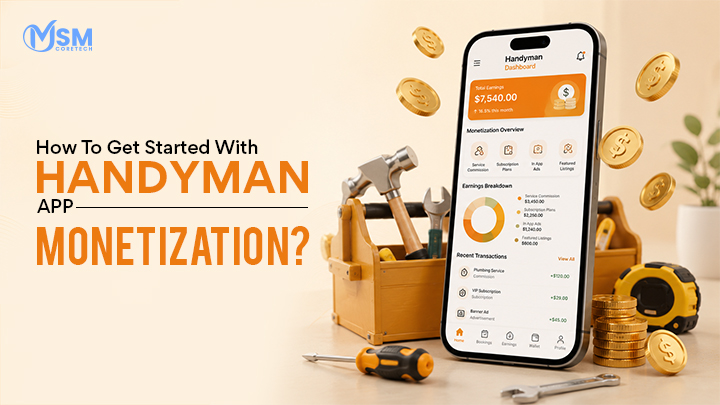
Home repairs used to mean flipping through old newspaper ads or asking a neighbor for a recommendation. That world is fading fast. Today, people open an app, pick a service, and a skilled handyman shows up at their door within hours. This shift toward on-demand home services has created a genuine gold rush for entrepreneurs, and the handyman app space is right in the middle of it.
But here is the part most first-time founders get wrong: they build the app first and think about money later. That backwards approach almost always leads to a great-looking product that quietly bleeds cash. Handyman app monetization is not a switch you flip after launch. It is a decision you make on day one, because it shapes your features, your pricing screens, your onboarding flow, and even the way you talk to your first hundred users.
In this guide, we will walk through everything you need to know to plan, build, and grow a handyman app that actually makes money. You will learn the most popular monetization models, how to combine them, which features drive revenue, what it costs to build this kind of app, and how a good handyman app development company can help you avoid expensive mistakes along the way.

Understanding the Handyman App Market in 2026
Before you pick a monetization model, it helps to understand the ground you are standing on. The handyman and home services space has changed a lot over the last few years, and 2026 looks very different from even 2022. Let’s break down what is actually happening in this market and why it matters for anyone thinking about handyman app monetization.
Current Market Size and Growth Trends
The on-demand home services industry, which includes handyman platforms, cleaning apps, and repair marketplaces, has grown into one of the most active corners of the app economy. One industry report projects the global online on-demand home services market to expand from about $1,862 billion in 2026 to over $15,526 billion by 2035, at a CAGR near 26.57%, as reported by.
Separately, a broader home services market report values the industry at $463.93 billion in 2026, rising to $652.67 billion by 2030. Either way you slice it, the direction is the same: more people are booking home repairs digitally, and the market has years of growth ahead of it, not months. This is exactly the kind of environment where a well-planned monetization strategy pays off, because you are not fighting for scraps in a shrinking pool. You are entering a pool that keeps getting bigger.
Growth projections through 2030 point to continued expansion across nearly every region, with North America currently holding the largest share of the market thanks to high smartphone penetration, strong digital payment infrastructure, and consumers who are already comfortable booking services through an app rather than a phone call. Europe and Asia-Pacific are catching up quickly, driven by urbanization and rising middle-class incomes that make outsourcing home repairs an easy decision rather than a luxury.
Also Read: Handyman App Maintenance Guide
Why Handyman Apps Are Becoming Highly Profitable
There are three forces working together to make handyman apps genuinely profitable businesses rather than just convenient tools.
- Convenience-driven economy: People increasingly value their time more than their money. A customer who could technically find a cheaper handyman by making calls all afternoon will happily pay a bit more to book someone in two taps. That willingness to pay for speed and certainty is the foundation of almost every monetization model in this space.
- Increasing smartphone adoption: Smartphone penetration keeps climbing across every income bracket and every region, which means the pool of potential app users keeps growing on its own, without you spending extra on marketing. More phones in more pockets means more people who could realistically download your app tomorrow.
- Digital payments and real-time booking: A few years ago, cash-on-delivery was still common for home services. Now digital wallets, UPI, cards, and buy-now-pay-later options are everywhere, and customers expect to pay inside the app the moment a job is done. This removes friction from every transaction and makes it far easier to introduce fees, subscriptions, and add-ons without customers feeling like they are being nickel-and-dimed.
What Is Handyman App Monetization?
Let’s keep this simple. Handyman app monetization is the set of methods you use to turn app activity, bookings, service providers, and customer relationships into actual revenue for your business. It is the answer to the question, ‘Where does the money come from?’
A handyman app, on its own, is just a piece of software that connects people who need repairs with people who can fix things. It does not make money by existing. Money starts flowing only when you build in a mechanism that captures a slice of the value being exchanged, whether that is a percentage of each booking, a monthly membership fee, or a charge for showing up higher in search results.
So how do handyman apps actually generate revenue in practice? Most successful platforms rely on a mix of the following: taking a commission from each completed job, charging service providers or customers a subscription for ongoing access to premium features, collecting fees for leads or featured placement, adding convenience or booking fees on top of the job cost, and selling advertising space to local businesses or home improvement brands. We will go deep into each of these models later in this guide.
Maximizing profitability means structuring your pricing, your costs, and your customer relationships so that the revenue you collect actually turns into healthy margins after you account for payment processing fees, customer acquisition costs, support staff, and technology upkeep. A handyman app that generates a lot of bookings but charges too little commission, or spends too much acquiring each customer, can still lose money even while looking busy and successful on the surface. That is why monetization planning has to happen alongside, not after, your product and growth planning.
Also Read: AI in Handyman Apps
Why Choosing the Right Monetization Model Matters?
It is tempting to pick whatever monetization model your competitor is using and copy it. Resist that urge. The right model for your app depends on your audience, your city or region, your service categories, and how much trust your brand has already built. Getting this decision right, or wrong, has effects that ripple through your entire business.
Sustainable business growth
A monetization model that is too aggressive early on, like charging a high commission before you have enough customer demand, will scare away the very service providers you need to build your marketplace. A model that is too passive, like relying only on ads, may never generate enough cash to fund your growth. The right balance lets you reinvest in marketing, technology, and support without constantly worrying about running out of runway.
Better customer retention
Monetization is not just about extracting money, it is about aligning incentives. When your pricing model rewards repeat bookings, like loyalty discounts or subscription perks, customers have a reason to keep coming back to your app instead of calling a random handyman from a local ad. Good monetization design quietly builds habits.
Higher lifetime value (LTV)
A one-time commission from a single booking is worth far less than the lifetime value of a customer who books four times a year for five years. Subscription models, loyalty programs, and personalized upsells all push your average customer’s lifetime value higher, which in turn lets you spend more on acquiring new customers profitably.
Competitive advantage
In crowded markets, the app with the smartest monetization strategy often wins, not the app with the most features. A well-designed pricing structure can make your platform feel fairer to both customers and service providers, which becomes a genuine competitive moat that is hard for copycats to replicate quickly.
Also Read: Handyman App Features
Top Handyman App Monetization Models
This is the heart of the guide. Below are the monetization models that power almost every successful handyman and home services app on the market today. Most platforms do not rely on just one of these; they blend two or three, but it helps to understand each one on its own first.
Commission-Based Model
This is the most common monetization model in the handyman app world, and for good reason. Here is how it works: every time a service provider completes a booking through your platform, you take a percentage of the total job value, typically somewhere between 10% and 25% depending on the category and competition in your market.
The appeal is obvious. Your revenue grows automatically as your booking volume increases, and you do not need to charge customers anything extra upfront, keeping the download-and-book experience frictionless. The challenges are just as real, though. Service providers can feel like the commission eats too much into their earnings, especially for lower-priced jobs, and this can push experienced handymen to try to take repeat customers off-platform to avoid the fee entirely. You need strong trust and value-add features to keep providers loyal despite the cut you take.
Two of the best-known examples of this model in action are TaskRabbit, which connects customers with taskers for a wide range of home jobs and takes a service fee on completed tasks, and Urban Company, which operates a large-scale home services marketplace across multiple countries and blends commission with other fees. Both prove that commission-based monetization can scale into a massive, profitable business when execution is strong.
Subscription Plans
Subscriptions flip the revenue model from per-transaction to recurring, and recurring revenue is what investors and founders both love because it is predictable. There are a few different ways to structure subscriptions inside a handyman app.
- Monthly memberships: Customers pay a set monthly fee in exchange for perks like free convenience fees, faster booking slots, or discounted rates on every job. This works especially well for households that need regular maintenance, think seasonal AC servicing, plumbing checks, or general upkeep.
- Premium customer plans: A tiered version of the membership idea, where a higher-priced plan unlocks priority support, guaranteed same-day service, or extended warranties on completed work.
- Professional service provider subscriptions: On the supply side, you can charge handymen and contractors a monthly fee to access more leads, appear higher in search results, or unlock advanced business tools like invoicing and scheduling inside your app. This is a great secondary revenue stream that does not touch customer pricing at all.
Featured Listing Charges
Just like online marketplaces let sellers pay to appear at the top of search results, handyman apps can let service providers pay to boost their visibility. A plumber who wants more bookings in a competitive city can pay a fee to have their profile appear in the top three results for relevant searches, or to show a ‘Sponsored’ badge on their listing.
This model works particularly well once you have a healthy number of service providers competing for the same customer base, because visibility genuinely becomes valuable to them. It is worth being careful here, though. Overloading search results with sponsored listings can frustrate customers if it feels like quality is being pushed aside for whoever pays the most, so this model needs to be balanced with strong ranking algorithms that still reward good ratings and reliability.
Lead Generation Fees
Instead of taking a cut after a job is completed, some platforms charge service providers for each qualified lead they receive, regardless of whether the job actually closes. This is a pay-per-lead model, and it shifts risk in an interesting way: you get paid as soon as a customer expresses interest, even before any work happens.
This model is especially suitable for marketplaces where jobs are large, infrequent, and high-value, like major home renovations or specialized repairs, where a single closed lead can be worth a lot to a contractor. Thumbtack is a well-known example of a platform that leans heavily on lead generation fees, charging professionals to connect with potential customers who have posted a job request.
Service Booking Fees
A simpler, more transparent option is to add a flat convenience fee or platform fee directly onto every booking, separate from whatever the handyman charges for labor and materials. This fee usually covers your payment processing costs, customer support, and platform maintenance, and it is shown clearly at checkout so customers know exactly what they are paying for.
The upside of this model is predictability. You know exactly how much revenue you will collect per booking regardless of the job size, which makes financial planning easier. The downside is that customers can be sensitive to fees that feel like a tax on top of the actual service cost, so the fee needs to be kept reasonable and clearly explained, or paired with visible value like guaranteed satisfaction or insurance coverage.
Freemium Model
The freemium approach lets anyone download and use the core app for free, browsing handymen, checking prices, and making basic bookings, while charging for premium features layered on top. This lowers the barrier to entry dramatically, which is great for growing your user base quickly in a competitive market.
- Advanced booking options: Features like scheduling recurring appointments automatically, booking multiple services in one go, or reserving a specific highly-rated handyman in advance can all sit behind a premium paywall while basic single bookings remain free.
The key to making freemium work is making sure the free tier is genuinely useful on its own, so people actually adopt the app, while the premium features solve real pain points that heavy users will happily pay to remove.
In-App Advertising
Once you have meaningful traffic, your app itself becomes valuable ad real estate. There are two main flavors of this in the handyman space.
- Display ads: Standard banner or interstitial ads shown between screens, which can generate passive revenue but need to be used sparingly so they do not annoy users mid-booking.
- Local business promotions: Hardware stores, paint shops, and other local businesses can pay to promote themselves to your exact target audience, homeowners who are actively fixing things up right now.
- Home improvement brands: National brands selling tools, appliances, or building materials often have marketing budgets specifically for this kind of highly relevant placement, and can become long-term advertising partners rather than one-off buyers.
In-app advertising is rarely a primary revenue driver on its own, but it is a solid supplementary stream that costs you almost nothing to maintain once the ad network integration is set up.
In-App Purchases
Beyond subscriptions, you can sell one-off add-ons that solve a specific, urgent need at the moment a customer is booking.
- Emergency bookings: A premium fee for guaranteed service within an hour or two, for situations like a burst pipe or a broken lock, where customers are highly motivated to pay extra for speed.
- Priority scheduling: A small fee to jump the queue and get the next available time slot instead of waiting in line behind other bookings.
- Extended warranties: An optional add-on that extends the guarantee period on completed repair work, giving cautious customers peace of mind for a small additional charge.
These in-app purchases work particularly well because they are optional, tied to a real and immediate need, and easy for customers to say yes to in the moment without feeling like they were forced into it.

Also Read: Develop a Handyman App like Angi
Most Profitable Revenue Strategies for Handyman Apps
The apps that make the most money rarely rely on a single monetization model. Instead, they combine several strategies into a layered system that captures value from different types of customers and different moments in the booking journey.
Hybrid monetization approach
Combining commission on completed jobs with a subscription option for professionals and an optional booking fee for customers is one of the most common and effective combinations. Each stream covers a different weak spot: commission scales with volume, subscriptions provide predictable baseline revenue, and booking fees cover fixed operational costs.
Dynamic pricing
Adjusting prices based on real factors like distance, time of day, job complexity, and provider availability lets you capture more value during high-demand periods without overcharging during quiet ones.
Surge pricing
Similar to what ride-hailing apps do, charging a bit more during peak demand windows, like weekend mornings or right after a storm when everyone suddenly needs a repair, lets you monetize urgency directly while still incentivizing more providers to come online and meet demand.
Seasonal promotions
Running discounts or bundled service packages around predictable seasonal needs, like AC servicing before summer or heating checks before winter, drives booking volume during periods that would otherwise be quieter.
Loyalty memberships
Rewarding repeat customers with points, discounts, or free perks after a certain number of bookings keeps them choosing your app over a competitor, and steadily raises their lifetime value.
Referral incentives
Giving both the referrer and the new customer a small credit or discount turns your existing user base into an active marketing channel, which is often cheaper than paid ads and brings in customers who already trust the platform because a friend vouched for it.
Also Read: Develop A Restaurant App Like OpenTable
AI-Powered Monetization Opportunities
Artificial intelligence has moved from a buzzword to a genuinely useful tool for squeezing more revenue out of the same user base, without making the app feel pushy or salesy. Here are the areas where AI is already reshaping handyman app monetization.
Personalized Service Recommendations
By analyzing a customer’s past bookings, home type, and even the season, AI can suggest services they are likely to need soon, like recommending a gutter cleaning in autumn or an AC checkup right before summer heat hits. These personalized nudges convert far better than generic promotions because they feel genuinely helpful rather than like an advertisement.
Smart Dynamic Pricing
Instead of manually setting surge multipliers, machine learning models can continuously analyze demand, provider availability, weather conditions, and historical booking patterns to set prices that maximize both bookings and revenue in real time, adjusting far faster and more accurately than a human team ever could.
Predictive Maintenance Suggestions
AI can look at patterns, like the average lifespan of a water heater or the typical wear cycle of an AC filter, and proactively suggest maintenance bookings before something actually breaks. This creates a new, steady revenue stream built around prevention rather than emergency repairs, and customers genuinely appreciate avoiding a bigger, more expensive problem down the road.
AI-Based Upselling
When a customer books a basic service, AI can intelligently suggest relevant add-ons at the right moment, like recommending a filter replacement alongside an AC repair, or a minor plumbing inspection alongside a kitchen sink fix. Because these suggestions are contextual and timed well, they convert at a much higher rate than generic pop-ups.
Customer Behavior Analytics
AI-driven analytics can identify which customers are at risk of churning, which pricing tiers are underperforming, and which service categories have room to increase prices without hurting demand. This turns your monetization strategy into a living system that improves over time, rather than a fixed decision made once at launch and never revisited.
Essential Features That Improve Revenue
A monetization strategy is only as good as the features that support it. Here are the features every revenue-focused handyman app needs, and why each one matters to your bottom line.
Secure Payment Gateway
Nothing kills a transaction faster than a payment that fails or feels unsafe. A secure, fast, multi-option payment gateway supporting cards, wallets, and local payment methods is the single most important piece of monetization infrastructure in the entire app, because every revenue model ultimately depends on money moving smoothly from customer to platform.
Membership & Subscription Management
If you plan to offer any kind of subscription, you need robust tools for handling recurring billing, automatic renewals, upgrades, downgrades, and cancellations, all without requiring manual intervention from your support team.
Coupon & Promo Engine
A flexible system for creating discount codes, referral credits, and seasonal promotions lets your marketing team run campaigns without needing an engineer every time, which speeds up how quickly you can react to competitor moves or slow seasons.
Referral System
Built-in referral tracking, with automatic credit distribution to both parties, turns satisfied customers into an organic acquisition channel and directly supports the referral incentive strategy covered earlier in this guide.
Reviews & Ratings
Trust is the currency of any service marketplace. A strong reviews and ratings system helps customers choose confidently, helps good service providers rise above bad ones, and directly supports monetization models like featured listings, since visibility becomes more valuable when it is paired with credible social proof.
Push Notifications
Timely, relevant push notifications, reminding a customer their AC filter is due for a check, or letting a provider know a high-value lead just came in, keep engagement high and directly drive repeat bookings and upsell conversions.
CRM Integration
Connecting your app to a customer relationship management system lets your team track customer history, spending patterns, and support tickets in one place, which makes upselling, retention campaigns, and loyalty programs far easier to execute well.
Analytics Dashboard
You cannot improve what you cannot measure. A solid analytics dashboard showing booking trends, revenue by category, churn rates, and provider performance is what lets you make smart, data-backed decisions about pricing and promotions instead of just guessing.
Also Read: How to Build a Restaurant App?
Technology Stack for a Revenue-Generating Handyman App
The technology you choose has a direct impact on how smoothly your monetization features actually work in practice. Here is a practical technology stack that supports everything covered in this guide, from secure payments to AI-powered pricing.
| Component | Recommended Technologies |
|---|---|
| Frontend | Flutter, React Native |
| Backend | Node.js, Laravel, Django |
| Database | PostgreSQL, MongoDB |
| Payment | Stripe, PayPal, Razorpay |
| Maps | Google Maps API |
| Notifications | Firebase Cloud Messaging |
| Cloud | AWS, Azure, Google Cloud |
| Analytics | Google Analytics, Mixpanel |
Flutter and React Native let you build for both iOS and Android from a single codebase, which keeps development costs down without sacrificing a polished user experience. On the backend, Node.js, Laravel, and Django are all mature, well-supported frameworks capable of handling real-time bookings, payment processing, and scaling as your user base grows. PostgreSQL and MongoDB cover both structured data, like transactions and user profiles, and flexible data, like service categories and dynamic pricing rules.
Stripe, PayPal, and Razorpay together cover most of the payment needs across global and regional markets, supporting cards, wallets, and local payment rails. Google Maps API is essential for location-based matching, distance-based pricing, and real-time tracking of service providers. Firebase Cloud Messaging powers the push notifications that drive so much of your retention and upsell strategy. Finally, hosting on AWS, Azure, or Google Cloud gives you the reliability and scalability needed as booking volume grows, while Google Analytics and Mixpanel give your team the visibility needed to keep refining your monetization strategy over time.
Step-by-Step Guide to Monetize Your Handyman App
Knowing the models and features is one thing. Actually putting them together into a working monetization plan is another. Here is a practical, step-by-step path you can follow.
Step 1: Identify Your Target Audience
Figure out exactly who you are building for. Are you targeting busy urban professionals who want convenience above all else, or price-sensitive households who care more about affordability? Your audience shapes which monetization model will actually work.
Step 2: Choose the Right Business Model
Based on your audience and market research, decide on your primary monetization model- commission, subscription, lead generation, or a hybrid, and design your pricing around it from the very beginning.
Step 3: Add Revenue-Generating Features
Build in the features covered earlier in this guide, from secure payments to referral systems, so your chosen monetization model has the infrastructure it needs to actually function smoothly.
Step 4: Integrate Secure Payments
Set up a reliable, well-tested payment gateway that supports the payment methods your target audience actually prefers, and make sure refunds and disputes are handled smoothly to protect trust.
Step 5: Launch an MVP
Release a minimum viable product with your core monetization model active from day one, even if it is simple, so you can start collecting real data on how customers and providers respond to your pricing.
Step 6: Track User Behavior
Use your analytics dashboard to watch how people actually interact with pricing, promotions, and subscription offers, rather than relying on assumptions made before launch.
Step 7: Optimize Pricing
Adjust commission rates, subscription prices, and fees based on real data, testing small changes and measuring the impact on both booking volume and revenue per booking.
Step 8: Scale Using AI and Automation
Once you have enough data, layer in AI-powered dynamic pricing, personalized recommendations, and predictive maintenance suggestions to squeeze more revenue out of the same user base without adding friction.
Common Monetization Mistakes to Avoid
Even well-funded, well-designed handyman apps stumble on monetization sometimes. Here are the mistakes that show up again and again, and why they hurt more than they might seem to at first.
- Charging users too early: Introducing fees before you have built trust and a loyal user base can drive early adopters straight to a competitor who is still free. Give your app room to prove its value first.
- Poor pricing strategy: Pricing based on gut feeling instead of real market research and competitor analysis often leads to either scaring away customers or leaving significant revenue on the table.
- Ignoring customer feedback: If users consistently complain about a specific fee or pricing structure, ignoring that feedback because ‘the model is working on paper’ usually leads to slow, quiet churn that is hard to reverse later.
- Overloading the app with ads: Too many banner ads or interstitials, especially during the booking flow, frustrates users and can actually reduce overall revenue by driving people away before they complete a transaction.
- Weak onboarding experience: If new users do not understand your pricing, fees, or subscription value within their first session, they are unlikely to convert into paying customers, no matter how good your monetization model is on paper.
- Lack of analytics: Without proper tracking, you are essentially flying blind, unable to tell which parts of your monetization strategy are actually working and which need adjustment.
Real-World Examples of Successful Handyman Apps
Looking at how established players approach monetization gives you a useful benchmark for your own strategy. Here is a quick snapshot of how some of the most recognized names in the space generate revenue.
| App | Monetization Strategy |
|---|---|
| TaskRabbit | Commission + Service Fees |
| Thumbtack | Lead Generation + Ads |
| Urban Company | Commission + Subscription |
| Handy | Booking Fees + Membership |
TaskRabbit built its business around connecting customers with taskers for everyday jobs, layering service fees on top of commission earned from completed tasks. Thumbtack took a different route, leaning heavily on charging professionals for qualified leads while also monetizing through advertising, since many of the jobs on its platform are larger, less frequent projects.
Urban Company combined commission on completed bookings with subscription plans for both customers seeking recurring perks and professionals seeking better visibility. Handy focused on straightforward booking fees paired with a membership option that gives repeat customers better rates. None of these platforms rely on a single revenue stream, which reinforces just how important a hybrid approach really is.
Also Read: How to Start an On-Demand Home Services Business?
Cost of Building a Monetized Handyman App
Budget is always one of the first questions founders ask, and understandably so. The cost of building a handyman app varies significantly based on how many features you want, how complex your monetization system is, and how polished the user experience needs to be at launch.
Basic MVP
A simple version with core booking functionality, one primary monetization model like commission or booking fees, and basic payment integration typically costs less and takes a shorter development cycle. This is a smart starting point for founders who want to validate demand before investing heavily.
Mid-Level Marketplace
A more complete platform with multiple monetization streams, like commission plus subscriptions plus a referral system, along with reviews, ratings, and a proper analytics dashboard, requires more development time and a noticeably higher budget, but delivers a far more competitive product.
Enterprise-Level AI App
A full-featured platform with AI-powered dynamic pricing, predictive maintenance suggestions, personalized recommendations, and enterprise-grade infrastructure represents the highest investment tier, but also unlocks the highest revenue ceiling since every monetization lever covered in this guide is active at once.
Timeline follows a similar pattern, a basic MVP can be built in a few months, a mid-level marketplace generally takes longer to account for the additional integrations and testing, and an enterprise-level AI-powered app takes the longest given the complexity of training and integrating machine learning models properly.
Several factors affect the final app development cost beyond just the feature list: the number of platforms you launch on (iOS, Android, web), the complexity of your chosen tech stack, whether you need custom AI models or can use existing services, the number of service categories and cities you support at launch, and how much ongoing support and maintenance you budget for after release. Working with an experienced handyman app development company helps you get a realistic, honest estimate upfront instead of discovering hidden costs halfway through the project.
Marketing Strategies to Increase App Revenue
Even the smartest monetization model will not generate meaningful revenue if nobody is using your app. Marketing and monetization go hand in hand, because more qualified users means more transactions across every revenue stream you have built.
- SEO for local search: Optimizing your website and app store listing for local search terms, like ‘handyman near me’ or ‘AC repair in [city]’, helps you capture customers who are actively searching for a solution right now, which converts far better than cold outreach.
- Google Ads: Paid search campaigns targeting high-intent keywords can drive quick, measurable traffic while your organic SEO efforts build up over time in the background.
- Social media campaigns: Platforms like Instagram and Facebook work well for showcasing before-and-after repair photos, customer testimonials, and seasonal promotions that catch attention while people are scrolling.
- Referral marketing: As covered earlier, incentivizing existing customers to bring in friends and family is one of the most cost-effective ways to grow your user base with people who already trust the platform.
- Email marketing: Regular emails with maintenance reminders, seasonal offers, and personalized recommendations keep your app top of mind between bookings, directly supporting repeat business.
- Influencer collaborations: Partnering with local home improvement influencers or content creators can build credibility quickly in a new city or market, especially when trust is still being established.
- Local partnerships: Teaming up with hardware stores, real estate agents, or property management companies can create a steady stream of referred customers who already have a relevant need for handyman services.
Future Trends in Handyman App Monetization
The handyman app space is still evolving quickly, and staying aware of where things are headed helps you build a platform that will not feel outdated in a couple of years.
- AI-powered pricing: Expect dynamic, AI-driven pricing to become the norm rather than the exception, with prices adjusting automatically based on real-time supply, demand, and even weather conditions.
- Voice-based booking: As voice assistants become more capable, booking a handyman through a simple spoken request is likely to become a normal, expected feature rather than a novelty.
- Predictive home maintenance: AI-driven predictions about when appliances or systems are likely to fail will shift more revenue toward proactive maintenance bookings rather than emergency repairs.
- IoT-enabled service requests: Smart home devices will increasingly be able to detect issues themselves, like a water leak sensor automatically triggering a service request, opening up an entirely new, automated booking channel.
- Blockchain-powered payments: Some platforms are beginning to explore blockchain for transparent, tamper-proof payment records and faster cross-border transactions, particularly useful for platforms operating across multiple countries.
- Subscription economy growth: As consumers become more comfortable paying monthly for convenience across nearly every category of their life, subscription-based handyman plans are likely to become far more common and far more profitable than they are today.
Why Choose MSM Coretech Handyman App Development Company?
Planning the right monetization strategy is only half the battle, executing it properly inside a well-built app is the other half. This is where working with an experienced handyman app development company like MSM Coretech makes a real difference. MSM Coretech has deep experience building app, web, and software solutions across the home services space, and understands exactly how monetization decisions need to shape technical architecture from the very first line of code.
- Custom monetization strategy: Rather than forcing every client into the same generic template, MSM Coretech works closely with founders to design a monetization approach tailored to their specific audience, region, and service categories.
- Scalable architecture: The technology foundation is built to handle growth from day one, so you are not stuck rebuilding your backend from scratch the moment your booking volume starts climbing.
- Secure payment integration: Every payment flow is built with security and reliability as a top priority, protecting both your customers and your revenue from disruptions or fraud.
- AI-powered features: From dynamic pricing to personalized recommendations, MSM Coretech integrates modern AI capabilities that directly support the monetization strategies covered throughout this guide.
- Ongoing maintenance and optimization: Launch is just the beginning. MSM Coretech provides continued support to help you refine pricing, add new revenue streams, and keep the app performing well as your business grows.
If you are serious about building a handyman app that is designed to generate revenue from day one rather than as an afterthought, partnering with a development team that understands handyman app monetization inside and out is one of the smartest decisions you can make.
Also Read: Steps to Develop a Profitable Home Service App
Conclusion
Handyman app monetization is not something you figure out after your app is live, it is something you plan for from the very beginning. The market opportunity is real and growing fast, but growth alone does not guarantee profitability. The apps that win long-term are the ones that combine the right mix of monetization models, from commission and subscriptions to AI-powered dynamic pricing, with genuinely useful features that make customers and service providers want to stick around.
Throughout this guide, we covered the market landscape, the core monetization models, AI-driven opportunities, essential revenue-boosting features, a practical step-by-step roadmap, common mistakes to avoid, and real examples of apps doing this well. Use this as your starting checklist, not a rigid rulebook, since your ideal monetization mix will depend on your specific audience and market.
If you are ready to turn this planning into an actual, working product, partnering with an experienced handyman app development company can save you months of trial and error. MSM Coretech brings hands-on experience building profitable, scalable handyman and home services apps, and can help you design a monetization strategy that fits your business from day one. Reach out to MSM Coretech today to start building a handyman app that is built to earn, not just built to launch.
FAQs
There is no single best model for every app. Most successful platforms use a hybrid approach, combining commission on completed bookings with subscriptions or service fees, since this balances scalable revenue with predictable income.
Most platforms charge somewhere between 10% and 25% per completed job, depending on the service category, local competition, and how much value the platform adds beyond just the booking connection.
Yes, and in fact most profitable handyman apps do exactly this. Combining commission, subscriptions, featured listings, and in-app purchases spreads revenue across multiple sources and reduces reliance on any single one.
Recurring revenue mainly comes from subscription plans for customers and service providers, along with loyalty memberships that encourage repeat bookings over time rather than one-off usage.
Stripe, PayPal, and Razorpay are among the most reliable choices, offering strong security, support for multiple payment methods, and solid documentation for handling subscriptions, refunds, and split payments.

Related Posts

10 Key Applications of AI in the Food Industry (2026)
Walk into any restaurant kitchen, grocery warehouse, or food delivery control room today, and you will find something quietly running...
Read More
How To Develop An App Like YouTube Music: A Complete Guide
Music is now a part of our everyday life. People listen to songs while getting ready in the morning, working,...
Read More
Must-Have Features in Fintech Apps & Digital Financial Platforms
Think about how often you use your phone to pay bills, send money, shop online, or check your bank balance....
Read More


 Verified Review




 +44 7427829444
 71-75, Shelton Street, Covent Garden, London, United Kingdom, WC2H 9JQ